10 Key Differences Between 1/2 Inch Drill Vs 3/8 Inch Drill
Choosing between a 1/2-inch drill and a 3/8-inch drill can feel confusing, especially when you need the right tool for a specific project. You’re not alone—many people struggle to balance power, comfort, price, and versatility.
A 1/2-inch drill accepts larger bits, delivers more torque, and handles thick wood, masonry, metal, and heavy-duty fasteners better than a 3/8-inch model. You’ll usually get a stronger motor, greater durability, and broader accessory compatibility, but with added weight, cost, and fatigue.
A 3/8-inch drill is lighter, easier to control, and better for furniture assembly, household repairs, pilot holes, and tight spaces.
Consider your materials, workload, battery platform, and accessories before choosing; the differences below can help you decide.
Key Takeaways
- Chuck capacity: A 1/2-inch drill accepts larger-shank bits and accessories, while a 3/8-inch drill handles smaller bits and lighter applications.
- Power and torque: 1/2-inch models typically deliver greater torque for hardwood, masonry, thick metal, and large fasteners.
- Weight and handling: 3/8-inch drills are generally lighter, more maneuverable, and easier to control in tight spaces or during extended use.
- Best applications: Choose 3/8-inch drills for household repairs and assembly; choose 1/2-inch drills for demanding construction and workshop projects.
- Cost and versatility: 1/2-inch drills offer broader accessory compatibility and durability, while 3/8-inch models usually provide better portability and affordability.
What Separates 1/2-Inch and 3/8-Inch Drills?
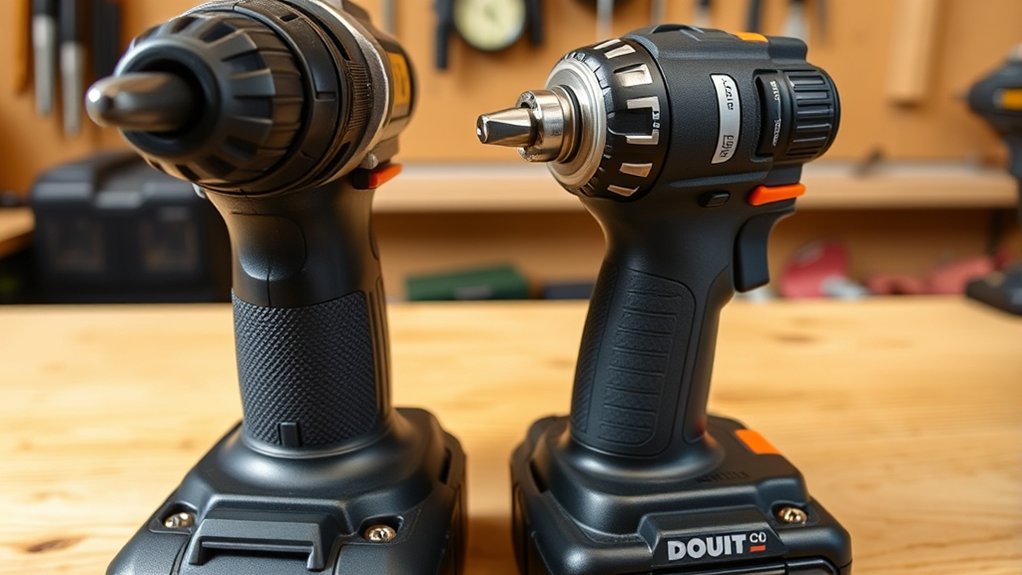
The main difference between 1/2-inch and 3/8-inch drills is chuck capacity, which affects the size of bits each tool can hold. You’ll also notice differences in motor strength, weight, torque, and intended workload.
A 1/2-inch model typically supports heavier-duty construction, renovation, and metalworking, while a 3/8-inch drill often suits household repairs, furniture assembly, and lighter projects.
That distinction can affect comfort, control, and fatigue during extended use. You should compare speed settings, clutch adjustments, handle design, and overall balance before choosing either size.
Compare speed settings, clutch adjustments, handle design, and balance to improve comfort, control, and reduce fatigue during extended drilling tasks.
Power source matters, too. Corded drills deliver consistent operation, while cordless models offer mobility but depend on battery capacity and charging time.
Check Battery compatibility if you already own tools from a particular platform. Shared packs can reduce costs and simplify storage.
Brand reputation also deserves attention because dependable manufacturers usually provide stronger warranties, replacement parts, and service support.
Choose the format that matches your regular tasks, workspace, and comfort preferences.
Which Drill Chuck Holds Larger Bits?
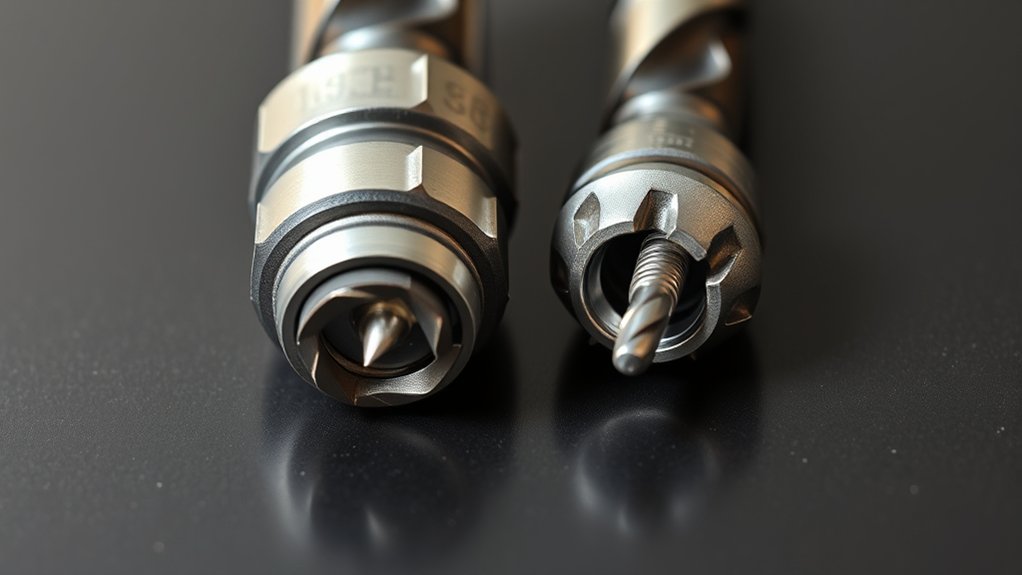
Chuck capacity determines the largest bit diameter your drill can accept. A 1/2-inch drill chuck holds larger bits than a 3/8-inch chuck, giving you broader bit compatibility for demanding drilling tasks.
You can typically install bits with shanks up to 1/2 inch in the larger chuck, while a 3/8-inch chuck accepts shanks up to 3/8 inch.
That difference matters when you use large twist bits, hole saws, spade bits, or other accessories with thicker shanks. A 1/2-inch chuck also gives you more flexibility when switching between small and large accessories.
However, you shouldn’t assume every large bit will fit. Always check the bit’s shank size and your drill’s specifications.
Before drilling, tighten the jaws evenly and verify chuck alignment. Proper alignment keeps the bit centered, reducing wobble and improving hole accuracy.
If you mainly use small bits for household projects, a 3/8-inch chuck may meet your needs. For a greater accessory range, choose the 1/2-inch option.
Which Drill Has More Power?
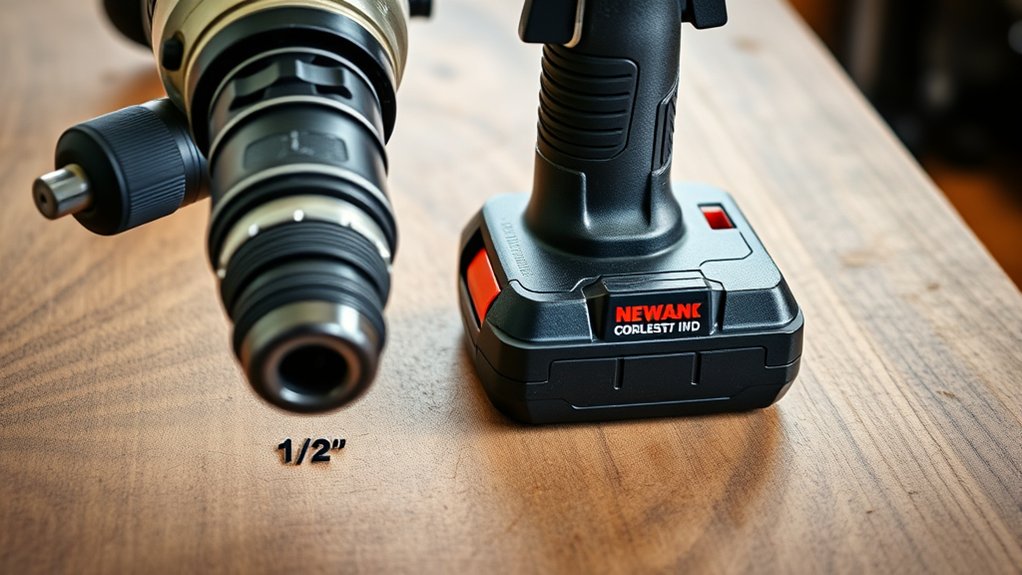
You’ll typically get more power from a 1/2-inch drill because it has a stronger motor and produces more torque. That extra strength makes it better for demanding materials and larger bits, giving you greater control as you work. Choose a 1/2-inch model for heavy-duty tasks, especially when a 3/8-inch drill doesn’t provide enough force.
Motor Strength
Motor strength is where a 1/2-inch drill typically outpaces a 3/8-inch model. Its larger motor generally handles demanding work with greater consistency, especially when you drill through thick lumber, masonry, or metal.
You’ll often notice fewer slowdowns under sustained workloads, so the tool feels better suited to construction and renovation projects. A 3/8-inch drill usually uses a smaller motor, making it lighter and easier to control for household repairs, cabinetry, and other moderate tasks.
However, motor size doesn’t tell the whole story. Check the manufacturer’s rated wattage, operating speed, cooling design, and duty cycle before deciding.
Battery compatibility also matters: a high-capacity battery can help either cordless drill maintain performance. Finally, compare noise levels, since stronger motors may produce more sound during demanding use.
Torque Output
Torque Output
Two factors largely determine torque output: the drill’s motor and its gear reduction. A 1/2-inch drill typically delivers more torque than a 3/8-inch model, helping you drive larger fasteners and use wider bits with less strain.
However, you shouldn’t judge power by chuck size alone. Compare each model’s torque rating, speed settings, and control features before choosing.
- 1/2-inch drill: Higher torque suits demanding fastening and drilling tasks.
- 3/8-inch drill: Lower torque offers smoother control for routine projects.
- Battery compatibility: The right battery platform can maintain consistent output and simplify replacements.
- Accessory versatility: A 1/2-inch chuck accepts larger accessories, while a 3/8-inch chuck handles common household bits.
If you value maximum twisting force, choose the 1/2-inch option. If you prioritize lighter handling and precision, the 3/8-inch drill may better fit your needs.
Heavy-Duty Performance
For heavy-duty work, a 1/2-inch drill generally delivers more power than a 3/8-inch model, making it better suited to large holes, dense materials, and oversized fasteners. Its stronger motor and larger chuck accept bigger bits, so you can handle demanding jobs with less strain and fewer interruptions.
You’ll notice the advantage when drilling through hardwood, masonry, or thick metal. However, more power often means added weight, which can cause fatigue during extended use.
A 3/8-inch drill offers easier handling and may provide longer battery lifespan because its motor typically consumes less energy. Choose a model with an ergonomic design, variable speed, and a comfortable grip to improve control.
For frequent construction or renovation work, choose the 1/2-inch drill. For lighter tasks, the 3/8-inch model may suit you.
Which Drill Delivers More Torque?
To figure out which drill delivers more torque, compare the motor power ratings and how each model performs during demanding tasks. A 1/2-inch chuck often comes with a stronger motor, but chuck size alone doesn’t guarantee higher torque. You’ll also want to consider how well each drill maintains its torque under load.
Motor Power Ratings
Motor power ratings reveal why a 1/2-inch drill typically delivers more torque than a 3/8-inch model: it usually has a larger motor and handles higher electrical loads. When you compare models, look beyond voltage and check amperage, wattage, and stated torque.
Higher ratings usually help you drive large fasteners, bore through dense materials, and maintain speed under resistance. However, extra power can increase weight and reduce battery life in cordless tools.
- Choose a 1/2-inch drill for demanding construction and renovation tasks.
- Choose a 3/8-inch drill for lighter drilling and everyday repairs.
- Match the motor to your materials, workload, and expected runtime.
- Consider ergonomic design, since sustained torque can increase hand fatigue.
You’ll get the best results when power matches your application. Don’t assume the highest rating always wins. Balanced control, suitable settings, and comfortable handling can matter just as much during extended work sessions.
Chuck Size Impact
A 1/2-inch chuck doesn’t automatically create more torque, but it typically supports a larger, stronger drill design that delivers higher torque than a 3/8-inch chuck. When you compare models, look beyond chuck size and check the motor, gearing, battery, and manufacturer’s torque rating.
A 1/2-inch drill chuck accepts larger bits and often appears on heavy-duty drills built for demanding applications. That combination usually gives you greater twisting power and improved compatibility with large accessories.
A 3/8-inch chuck keeps the tool lighter, more compact, and easier to control for routine drilling and driving. You’ll generally choose the 1/2-inch option when maximum torque matters, while the 3/8-inch version suits convenience and portability.
Torque Under Load
Chuck size only hints at torque; performance under load shows what a drill can actually do. A 1/2-inch drill usually delivers more torque because its larger motor, stronger gears, and higher load capacity handle demanding tasks better.
You’ll notice the advantage when driving long screws, boring large holes, or mixing thick materials. However, a 3/8-inch drill can still perform well for lighter work and offers easier handling.
- Heavy drilling: Choose the 1/2-inch model for larger bits and tougher materials.
- Extended use: Its robust design resists slowing when pressure increases.
- Control: Set the clutch mechanism carefully to prevent stripped screws.
- Everyday projects: Pick the 3/8-inch drill for smaller bits and routine fastening.
Although speed ratings may look similar, torque under load separates these drills. You’ll get stronger sustained performance from the 1/2-inch option.
Which Drill Handles Thicker Materials?
When you need to drill through thicker materials, a 1/2-inch drill is usually the better choice because its larger chuck accommodates bigger bits and its stronger motor delivers more torque. You can use it for hardwood, thick metal, masonry, and other demanding applications that may overwhelm a 3/8-inch model.
Its higher capacity also lets you select larger hole saws, auger bits, and masonry bits without pushing the tool beyond its limits.
A 3/8-inch drill still works well for light- and medium-duty projects, such as assembling furniture, drilling pilot holes, or working with thin lumber and sheet metal. However, you may notice slower progress and more strain when you tackle dense or thick materials.
If you choose a cordless 1/2-inch drill, check its Battery life before starting a large job. Cordless convenience gives you freedom from outlets, but demanding drilling can drain a battery quickly, so keep a spare charged.
Which Drill Is Easier to Handle?
You’ll usually find the 3/8-inch drill easier to handle because it’s lighter and more balanced, making it easier to maneuver. Its smaller grip also gives you better control during precise tasks. Plus, you’ll experience less fatigue during extended use.
Weight And Balance
For weight and balance, a 3/8-inch drill is usually easier to handle because it’s lighter and more compact, making it comfortable for overhead work, tight spaces, and longer projects. You’ll notice less fatigue when you carry it between tasks or position it for extended periods.
A 1/2-inch drill typically weighs more because its larger motor and chuck support demanding applications, so it may feel front-heavy during repeated use.
- Overhead work: Choose the lighter 3/8-inch model to reduce shoulder strain.
- Tight areas: Its compact body fits more easily around cabinets and framing.
- Extended projects: Lower weight helps you work longer before fatigue sets in.
- Selection: Compare battery placement, handle position, and total tool weight.
Consider these ergonomics considerations alongside brand comparisons, since designs vary notably. A well-balanced 1/2-inch drill can still feel manageable, while an awkwardly balanced 3/8-inch model may tire you sooner.
Check specifications before buying.
Grip And Control
A 3/8-inch drill is generally easier to grip and control because its smaller body and lighter weight reduce wrist strain during precise work. You’ll find its compact handle fits smaller hands better, helping you position the bit accurately in tight spaces.
Still, ergonomics considerations matter when you compare either size. Look for a handle with a balanced trigger, a comfortable palm swell, and controls you can reach without shifting your grip.
Different grip material options, such as textured rubber or molded plastic, also affect traction, especially when your hands are dusty.
A 1/2-inch drill can offer confident control when you need its larger handle and auxiliary side handle, particularly for demanding applications. Choose the model that lets you keep the tool steady, adjust pressure smoothly, and maintain clear visibility of your work area.
Fatigue During Use
Grip and balance affect more than precision. They also determine how quickly your hands and arms tire. A 1/2-inch drill often weighs more, especially with its larger chuck and motor, so you may feel fatigue sooner during overhead or extended work.
A 3/8-inch model usually feels lighter and easier to steer, making it the better choice for repeated fastening or drilling in awkward spaces. Consider these factors:
- Tool weight: Less weight reduces wrist and shoulder strain.
- Ergonomic design: A balanced body keeps the motor’s mass centered.
- Grip comfort: Rubberized, contoured handles help you maintain control without squeezing tightly.
- Task demands: Choose the 1/2-inch drill when high torque matters more than endurance.
You’ll handle either drill longer when you use both hands, take short breaks, and let the tool do the work.
Which Drill Offers Better Speed Control?
When comparing speed control, a 3/8-inch drill often feels more manageable for light-duty tasks because its smaller motor responds smoothly to trigger adjustments. You can ease into low speeds for starting screws, drilling pilot holes, or working with delicate materials. Its lighter chuck also helps you maintain precision when you release or feather the trigger.
A 1/2-inch drill usually delivers more torque, but that power can make gradual speed changes feel less forgiving. Many models still include variable-speed triggers, multiple settings, and electronic controls, so you can match speed to the bit and material. However, you may need a steadier hand, especially at very low speeds.
Your choice also affects Battery life and Noise levels. A 3/8-inch model generally consumes less energy and operates more quietly during controlled work. Choose it for finesse and frequent adjustments; choose a 1/2-inch drill when you need stronger performance and can manage its more forceful response.
Which Drill Is More Durable?
Durability depends more on build quality and workload than chuck size alone. A 1/2-inch drill often includes a stronger motor, tougher gearbox, and metal chuck, so you can use it for demanding tasks without excessive strain.
A quality 3/8-inch model can still last for years when you match it to lighter jobs and avoid overheating.
Check these durability indicators before choosing:
- Motor protection: Overload and thermal protection help prevent damage during prolonged drilling.
- Gearbox construction: Reinforced gears handle high torque and repeated use better.
- Housing quality: Impact-resistant materials protect internal components from drops and job-site wear.
- Maintenance features: Replaceable brushes, accessible vents, and a secure chuck support reliable operation.
Your handling also affects lifespan. Use the correct bit, keep vents clear, and don’t force the tool through material.
Battery life may decline faster when you push a compact drill beyond its limits. An ergonomic design helps you maintain control, reducing accidental drops and unnecessary stress on the drill.
Which Drill Offers Better Long-Term Value?
Long-term value depends on how well the drill matches your typical projects, not just its purchase price. A 3/8-inch model often costs less and saves money for routine maintenance, while a 1/2-inch drill may justify its higher price through greater capacity and versatility.
Compare ownership factors before deciding.
| Value factor | 3/8-inch drill | 1/2-inch drill |
|---|---|---|
| Upfront cost | Usually lower | Usually higher |
| Battery compatibility | Broad on compact lines | Varies by platform |
| Replacement parts | Often affordable | Can cost more |
| Brand reputation | Strong options available | Strong professional options |
Battery compatibility matters if you already own cordless tools. Staying within your current battery platform can reduce long-term expense and simplify charging.
Also, consider Brand reputation: reliable support, warranties, and available replacement parts can protect your investment.
A cheaper drill isn’t a bargain if it fails early or becomes difficult to service. Review total ownership costs, warranty coverage, and accessory availability, then choose the model that delivers dependable performance without unnecessary spending.
This approach gives you value beyond the initial checkout price.
Which Drill Size Fits Your Projects?
The right drill size depends on the materials, fasteners, and hole sizes you’ll handle most often. Choose a 3/8-inch drill for routine household repairs, furniture assembly, pilot holes, and smaller screws.
It’s lighter, easier to control, and usually costs less, making it practical for occasional users.
Choose a 1/2-inch drill when your projects demand higher torque, larger bits, or tougher materials. It handles lag screws, masonry, thick lumber, and demanding construction work with greater confidence.
- 3/8-inch: Best for light-duty repairs and compact handling.
- 1/2-inch: Better for heavy-duty drilling and large fasteners.
- Battery compatibility: Check whether the drill shares batteries with your existing tools.
- Accessory versatility: Confirm the chuck accepts the bits, hole saws, and adapters you’ll use.
If you’re building a versatile workshop, a 1/2-inch model offers more capacity. If portability and precision matter most, a 3/8-inch drill may fit your projects better.
Match the tool to your typical workload, not occasional tasks.
Frequently Asked Questions
Can I Use 1/2-Inch Drill Bits in a 3/8-Inch Drill?
No, you can’t use a 1/2-inch drill bit in a standard 3/8-inch chuck because its opening won’t accommodate the larger shank.
Check chuck compatibility and bit size compatibility before choosing accessories. You can use a bit with a reduced 3/8-inch shank if the cutting diameter remains 1/2 inch, provided your drill has enough power.
Otherwise, choose a compatible bit, use a larger drill, or switch to a suitable chuck.
Are Cordless Drills Available in Both 1/2-Inch and 3/8-Inch Sizes?
Yes, you can find cordless drills in both 1/2-inch and 3/8-inch sizes. You’ll see the same convenience, the same battery-powered freedom, and different chuck capacities.
A 3/8-inch model usually feels lighter and suits smaller tasks, while a 1/2-inch drill handles larger bits and tougher materials.
Check battery compatibility before buying, especially if you already own tools from a brand. Consider weight differences, too, because extended overhead work can quickly cause fatigue during demanding projects.
How Often Should I Maintain and Clean My Drill?
Clean your drill after every major project, or whenever you notice dust, debris, or reduced performance. Wipe the housing, brush the vents, and clear the chuck with compressed air.
Check the cord or battery contacts regularly, and inspect bits for damage. Lubricate moving parts according to the manual.
This routine supports battery life, preserves chuck compatibility, and helps prevent overheating. Schedule a deeper inspection every few months with frequent use.
Are Hammer-Drill Functions Available in Both Chuck Sizes?
Yes, you’ll find hammer-drill functions in both chuck sizes, but compatibility varies wildly! Hammer drill compatibility depends on the model, motor, and intended workload—not just the chuck.
Chuck size variations affect which bits you can use and how much torque the tool handles. A 3/8-inch hammer drill suits lighter masonry tasks, while a 1/2-inch version handles larger bits and tougher materials.
Check the manufacturer’s specifications before buying or attaching accessories.
What Safety Gear Should I Wear When Operating Either Drill?
Wear Personal protective equipment whenever you operate either drill: safety glasses with side shields protect your eyes from flying debris, while hearing protection reduces noise exposure.
Choose snug work gloves for handling materials, but keep them away from rotating bits and chucks. Wear sturdy, slip-resistant footwear and avoid loose clothing, jewelry, or long hair.
Follow essential Safety precautions: secure your workpiece, inspect the cord, maintain balance, and disconnect power before changing bits.
Conclusion
Choosing between a 1/2-inch drill vs. 3/8-inch drill comes down to matching the tool to your work. If you regularly tackle thick materials, large bits, and demanding jobs, a 1/2-inch model gives you the muscle to power through.
For lighter projects, tighter spaces, and easier handling, a 3/8-inch drill may fit better. Consider your typical tasks, not just the chuck size.
Choose wisely, and your 1/2-inch drill vs. 3/8-inch drill comparison will help you find a dependable partner instead of dead weight in your toolbox.