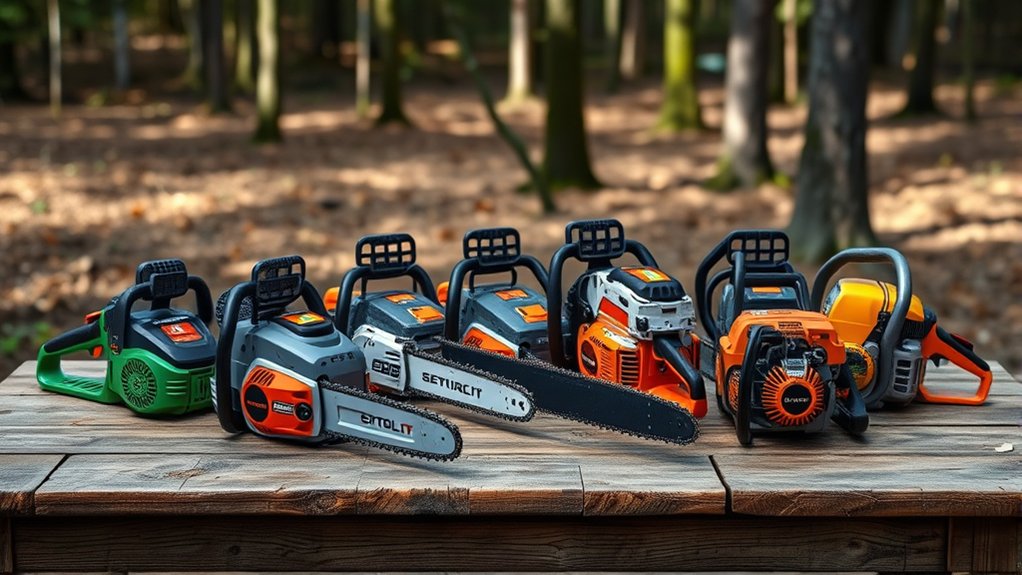
10 Types of Chainsaws You Should Know
Choosing the right chainsaw can feel overwhelming when every model seems designed for a different job. You’re not alone—many homeowners and professionals struggle to compare power, reach, and safety features.
In this guide to the 10 Types of Chainsaws You Should Know, you’ll find options for everything from heavy cutting and pruning to emergency rescue work. We’ll help you match each chainsaw type with the right task, key features, and essential safety practices.
You’ll find 10 chainsaw types suited to different jobs: gas chainsaws for heavy cutting, corded electric models for home projects, battery saws for quiet yard work, mini saws for pruning, and manual pole saws for high branches.
Top-handle saws serve trained arborists, while rear-handle models handle ground work. Rescue saws clear emergencies, harvesting saws support felling and delimbing, and gas pole saws reach elevated limbs.
Keep going to match each type with the right task, features, and safety practices.
Key Takeaways
- Gas chainsaws deliver the power and runtime needed for large trees, thick logs, hardwood, and storm cleanup.
- Corded electric chainsaws suit household pruning and small logs, offering instant starts, quiet operation, and minimal maintenance.
- Battery-powered chainsaws provide cordless, low-noise convenience for trimming, pruning, and cutting small logs around residential properties.
- Mini chainsaws are lightweight tools designed for light pruning, shrub shaping, and small branches.
- Specialized models include pole saws, top-handle arborist saws, rear-handle ground saws, and rescue chainsaws for professional applications.
Gas Chainsaws for Heavy-Duty Cutting
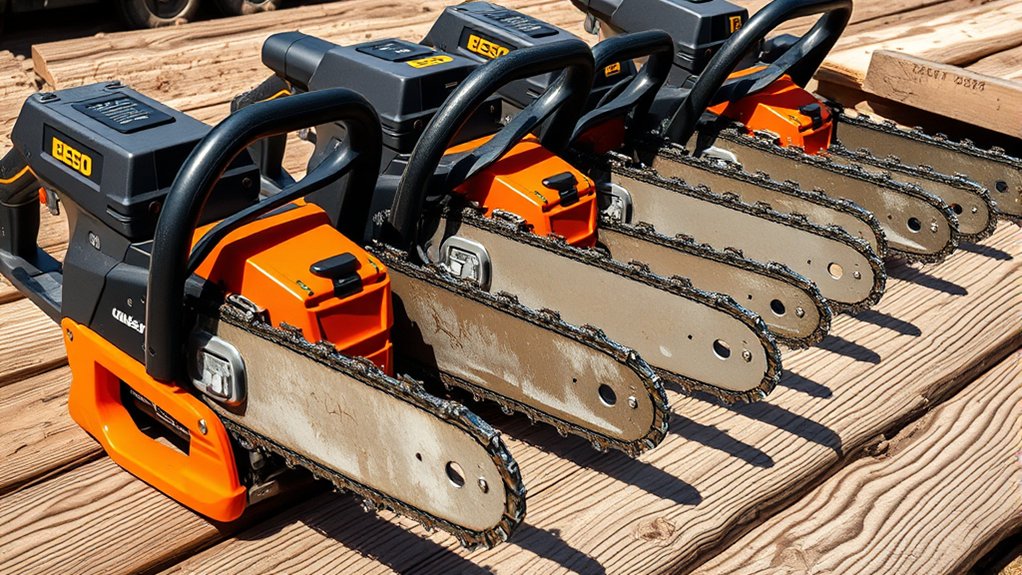
Gas chainsaws deliver the power and long runtime needed for heavy-duty cutting, making them ideal for felling large trees, bucking thick logs, and clearing dense timber. You’ll appreciate their strong engines when you tackle oversized trunks, hardwood, or demanding storm cleanup.
Gas chainsaws provide the power and endurance needed for large trees, thick logs, hardwood, and demanding storm cleanup.
Unlike lighter saws, they maintain cutting performance under sustained loads, helping you finish difficult jobs efficiently.
When choosing a gas model, consider bar length, engine displacement, weight, and vibration control. A longer bar reaches deeper into thick wood, while greater displacement supplies more torque.
Look for features that improve fuel efficiency, such as adjustable carburetors, efficient combustion systems, and automatic oiling.
Regular maintenance protects engine durability: clean the air filter, sharpen the chain, inspect the spark plug, and use fresh fuel mixed at the correct ratio.
You’ll also need proper protective gear, including chaps, gloves, eye protection, hearing protection, and a helmet. With careful handling and consistent upkeep, a gas chainsaw can provide dependable service for demanding outdoor work.
Corded Electric Chainsaws for Home Use
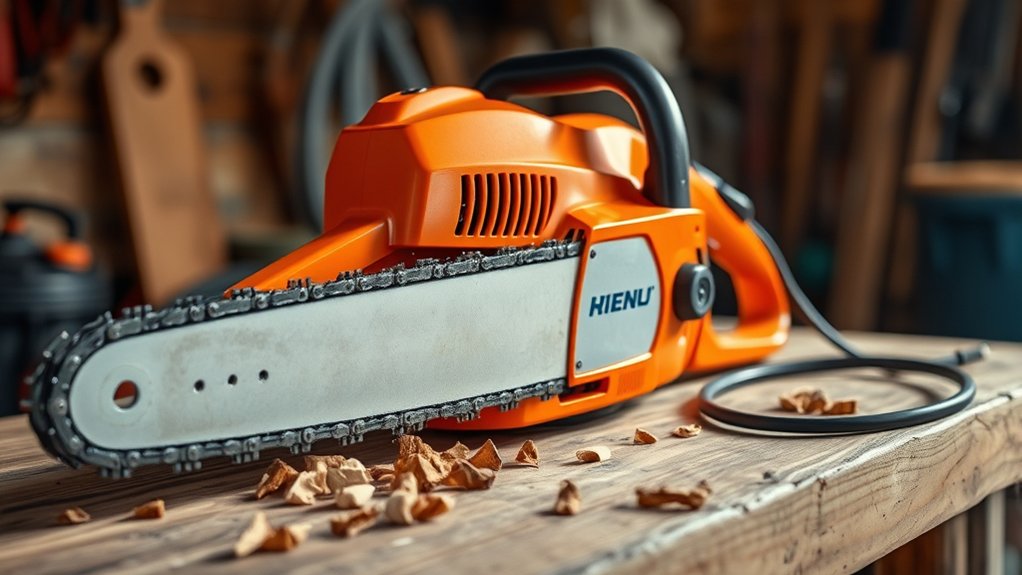
For lighter yardwork, corded electric chainsaws offer a quieter, cleaner alternative to gas models. You can use one to prune branches, cut small logs, and trim storm-damaged limbs around your property.
Corded electric models start instantly, require little upkeep, and produce no exhaust fumes while you work. They’re also typically lighter than gas saws, so you’ll experience less fatigue during short cutting sessions.
A nearby outdoor outlet and suitable extension cord give you consistent power without refueling. However, you’ll need to manage the cord carefully and keep it away from the bar and cutting path.
These saws work best for homeowners with manageable yards, accessible outlets, and modest cutting needs. For home maintenance, choose a model with a chain brake, hand guard, automatic oiling, and a comfortable handle.
Inspect the cord before each use, wear eye and hearing protection, and follow the manufacturer’s safety instructions. With proper care, a corded electric chainsaw makes routine property upkeep straightforward.
Battery Chainsaws for Quiet Yard Work
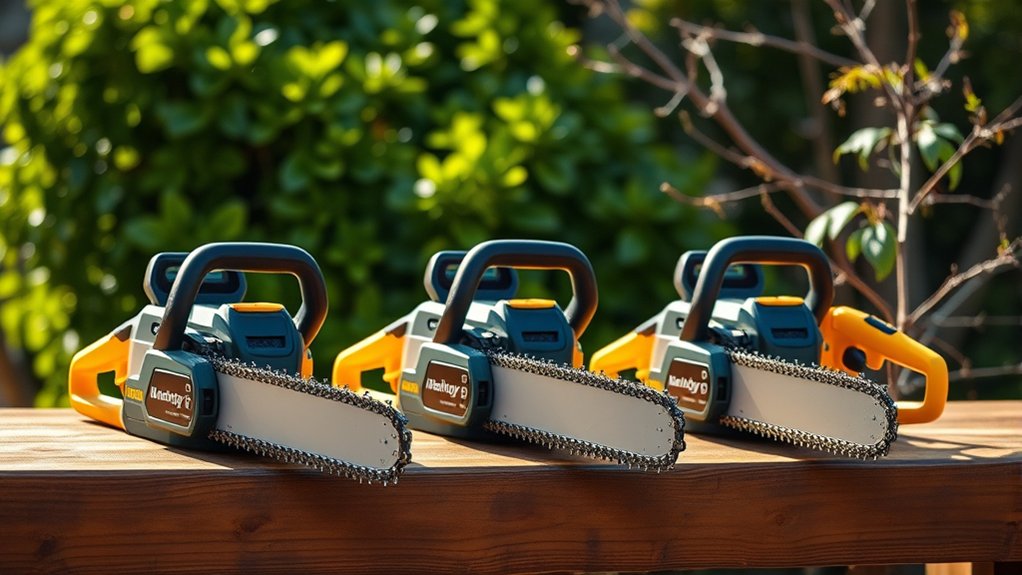
Battery chainsaws make yard work quieter and more convenient, without fuel fumes. Since they’re cordless, you can easily trim branches, prune trees, and cut small logs without dealing with a gas engine or extension cord. Their quiet operation also makes them a great choice for residential yards, especially during early-morning projects.
Low-Noise Performance
Cordless chainsaws let you trim branches and cut firewood with far less noise than gas-powered models, making them a considerate choice for early-morning or neighborhood yard work. Their electric motors avoid loud exhaust and engine vibration, so you can work without overwhelming nearby conversations, pets, or sleeping households.
Although no saw runs silently, thoughtful design delivers noticeable noise reduction.
- Choose a model with a brushless motor for smoother, quieter operation.
- Look for a chain brake and balanced housing that limit rattling.
- Keep the chain sharp to prevent harsh, unnecessary strain sounds.
- Wear hearing protection, especially during extended cutting sessions.
Manufacturers may add sound insulation around motor components, but you’ll still benefit from reasonable cutting hours and respectful distance from neighbors.
Check local noise rules before starting, and stop periodically to assess your surroundings. A battery saw’s subdued sound helps you protect neighborhood peace while completing routine outdoor tasks.
Cordless Cutting Convenience
Quieter operation is only part of the appeal; cordless chainsaws also make yard work simpler by eliminating fuel, pull-starting, and extension cords. You can press a button, guide the saw comfortably, and work without managing fuel fumes or tangled cables.
Battery life determines how long you can cut between charges, so check the amp-hour rating and keep a charged spare nearby for uninterrupted work. Some models use interchangeable batteries, letting you share power packs with compatible outdoor tools.
Charging stations provide a dedicated place to restore depleted packs while protecting them from moisture and extreme temperatures. You’ll also appreciate the reduced maintenance: no fuel stabilizer, carburetor cleaning, or oil mixing.
Just inspect the chain, tension it properly, and recharge the battery after each session so your saw stays ready.
Ideal Yard Applications
For light yard work, you can use a battery chainsaw to prune branches, cut small logs, and clear storm debris without disturbing neighbors. Its quiet motor suits suburban yards, early-morning projects, and spaces near wildlife.
You’ll also avoid fuel mixing, exhaust fumes, and complicated starting procedures.
- Pruning: Shape trees and remove dead limbs safely from ground level.
- Firewood: Cut manageable branches for kindling or small seasonal logs.
- Storm cleanup: Clear fallen limbs before they become tripping hazards.
- Garden projects: Build trellises, cut posts, or prepare landscape materials.
Choose a lightweight model with a comfortable grip and enough battery capacity for your property. Automated chain maintenance can simplify adjustments, while Eco friendly chainsaw options reduce local emissions and noise.
Charge batteries indoors, inspect the chain before each cut, and wear eye, hearing, hand, and foot protection. A battery saw works best when you match its bar length to the material.
Mini Chainsaws for Light Pruning
Mini chainsaws are compact and lightweight, making small pruning tasks easier to handle. They’re ideal for trimming branches and shaping shrubs in tight spaces. For safe operation, use both hands, wear protective gear, and keep the chain away from your body while cutting.
Compact And Lightweight
Compact, lightweight chainsaws make quick pruning jobs easier without the bulk of a full-size model. You’ll appreciate their slim profiles when you need controlled cutting in tight spaces or overhead. Most models weigh only a few pounds, so you can maneuver them with less fatigue.
An ergonomic design, balanced handle, and soft grip improve comfort, while simple controls support ease of use.
When comparing a mini chainsaw, check these practical details:
- Bar length: Choose a suitable size for the tool’s intended cutting capacity.
- Power source: Battery models eliminate cords and simplify setup.
- Safety features: Look for a chain brake, hand guard, and trigger lock.
- Maintenance: Select accessible tensioning and straightforward chain lubrication.
You’ll still need secure footing, eye protection, gloves, and careful handling. Its compact construction enhances portability without sacrificing basic cutting control.
Ideal For Pruning
When small branches crowd shrubs or trees, a mini chainsaw lets you prune them quickly with controlled cuts. Its compact bar suits limbs that are too thick for hand pruners but too small for a full-size saw.
You can shape hedges, remove dead twigs, and clear crossing branches without maneuvering bulky equipment. Select a model with enough cutting capacity for your plants, then match each cut to the branch’s size and position.
Clean, intentional cuts support tree health by reducing torn surfaces and limiting unnecessary stress. Use proper pruning techniques, such as cutting just outside the branch collar and avoiding excessive removal at once.
A mini chainsaw also helps you reach dense growth more efficiently, making routine maintenance simpler. Choose a lightweight cordless model for occasional yard work and seasonal shaping tasks.
Safe Handling Tips
Before pruning, put on eye and hearing protection, secure loose clothing, and keep both hands on the saw unless the manufacturer states otherwise. Protective gear reduces injury risks, while clear safety procedures help you stay focused.
- Inspect the mini chainsaw: Check the chain, guide bar, battery, and trigger before each use. Don’t operate damaged equipment.
- Prepare your work area: Remove obstacles, keep children and pets away, and watch for overhead branches, power lines, and unstable footing.
- Cut deliberately: Start the saw before contacting wood, maintain a firm grip, and let the chain do the work. Don’t force cuts or reach too far.
- Finish safely: Release the trigger, engage the brake, and wait for the chain to stop before setting the saw down or moving between branches.
Never prune in rain or when you’re tired.
Manual Pole Saws for High Branches
Manual pole saws let you trim high branches from the ground without fuel, batteries, or a motor. You operate a lightweight saw by pulling a rope or moving the pole, making it useful for occasional branch trimming around your property.
Trim high branches from the ground with a lightweight manual pole saw—no fuel, batteries, or motor required.
Its extendable handle helps you reach overhead limbs while keeping your feet safely on the ground. Choose a model with a sharp, curved blade and a secure locking mechanism.
Before cutting, inspect the branch for cracks and estimate its falling path. Clear people, pets, and obstacles from below.
Wear eye protection, gloves, sturdy footwear, and a hard hat when appropriate. Keep both hands on the pole, maintain stable footing, and never work near power lines.
A manual pole saw suits small branches and routine tree maintenance, but it requires patience and physical effort. Make controlled strokes, avoid overreaching, and stop when a limb exceeds the tool’s recommended diameter.
Clean and oil the blade after use to preserve smooth cutting performance.
Gas Pole Saws for Professional Trimming
Gas pole saws combine a powerful engine with an extended shaft, letting you cut high branches quickly without climbing. You’ll get more cutting power and longer runtime than battery models, making this equipment valuable for demanding property maintenance and commercial trimming. However, its fuel, vibration, and weight require disciplined handling.
Before each job, inspect the chain, bar, fasteners, fuel lines, and shaft connections. Wear safety gear, including eye and hearing protection, gloves, a helmet, sturdy boots, and protective clothing.
Keep bystanders away, check for overhead hazards, and never cut near power lines. Plan your retreat before removing heavy limbs.
Use these professional maintenance tips:
- Mix fuel accurately and use fresh gasoline.
- Sharpen and tension the chain regularly.
- Clean the air filter and cooling vents.
- Lubricate the bar and inspect the sprocket.
Hold the saw firmly with both hands, keep the cutting head below shoulder height, and work from stable ground. Schedule breaks to control fatigue, especially during extended trimming sessions.
Top-Handle Chainsaws for Arborists
Top-handle chainsaws give trained arborists the compact control they need when pruning or removing branches from a tree canopy. You’ll find the handle above the engine, allowing you to operate the saw with one hand when positioning yourself or managing branches with the other. However, you should use one-handed cutting only when your training and the task specifically require it.
Top-handle chainsaws offer trained arborists precise, compact control for pruning and removing branches in tree canopies.
Choose a lightweight model with an ergonomic design, balanced controls, and a responsive chain brake. Before climbing, inspect the saw, secure your climbing system, and wear appropriate Safety gear, including a helmet, eye protection, hearing protection, gloves, chainsaw trousers, and boots.
Attach the saw with a rated lanyard, and keep it secured whenever you reposition yourself. You’ll need professional training to judge cutting angles, branch tension, and kickback risks from an elevated position.
These saws suit aerial pruning and dismantling, not casual use. Follow the manufacturer’s instructions and local arboricultural regulations every time.
Rear-Handle Chainsaws for Ground Work
Rear-handle chainsaws give you reliable control when cutting at ground level. Their stable design makes it easier to work confidently from a secure stance, while their powerful performance handles demanding tasks with ease.
Ground-Level Cutting
For cutting logs, bucking firewood, and felling small trees from the ground, a rear-handle chainsaw gives you the advantage and control you need. Its longer bar and powerful motor help you slice through thick wood efficiently without climbing or using specialized equipment.
You can also tackle storm debris, clear fallen branches, and prepare firewood in your yard.
- Logs: Cut sections into manageable lengths for hauling or splitting.
- Firewood: Buck trunks evenly to simplify stacking and seasoning.
- Small trees: Fell suitable trees while checking nearby structures and escape routes.
- Cleanup: Remove fallen limbs before they attract pests or obstruct paths.
Avoid cutting directly into soil, since dirt quickly dulls the chain and can damage the bar. Don’t disturb exposed roots unnecessarily.
Careful cutting helps prevent soil erosion and limits the need for root excavation. Always inspect the work area first.
Stable Handling Position
When you’re cutting from the ground, a balanced stance helps you control a rear-handle chainsaw safely and accurately. Stand with your feet shoulder-width apart, keeping one foot slightly ahead for stability.
Bend your knees, keep your back comfortably straight, and hold the saw close to your body without crowding the cutting area. Maintain an ergonomic grip by wrapping both hands firmly around the handles, with your thumbs underneath for control.
Keep your elbows slightly bent so you can guide the saw without locking your arms. Practice balance optimization by positioning yourself directly behind the saw and avoiding overreaching.
Shift your feet instead of twisting your torso as you move. Before cutting, check your footing, clear obstacles, and confirm that you can retreat safely if needed.
Powerful Cutting Performance
A powerful rear-handle chainsaw gives you the torque and chain speed needed to cut logs, limbs, and dense firewood efficiently from the ground. Its balanced design helps you guide the bar through demanding cuts while maintaining control.
Choose the right model and use these practices:
- Match the bar length to your typical wood diameter.
- Keep the chain sharp for faster, cleaner cuts.
- Apply steady pressure; don’t force the saw through binding wood.
- Use proper cutting techniques to manage tension and prevent pinching.
You’ll get better performance when you maintain correct chain tension, clean the air filter, and fuel the engine properly.
Always prioritize chainsaw safety: wear eye and hearing protection, boots, gloves, and chaps. Check the work area, secure unstable logs, and keep bystanders away before you start cutting.
Rescue Chainsaws for Emergency Crews
Rescue chainsaws give emergency crews the cutting power to clear fallen trees, damaged structures, and trapped vehicles quickly. During rescue operations, you’ll value compact designs, dependable starts, and guards that protect you in unstable environments.
These saws often include specialized chains, reinforced housings, and high-torque motors for cutting wood, roofing, doors, and light metal.
| Feature | Benefit |
|---|---|
| High torque | Cuts dense debris efficiently |
| Specialized chain | Handles mixed materials |
| Compact body | Improves control in tight spaces |
Your emergency response team should choose a model that matches its hazards and training. Look for vibration reduction, bright controls, automatic chain lubrication, and easy-access maintenance points.
Battery-powered options reduce fumes indoors, while gas models can deliver longer operation where charging isn’t practical. Keep protective chaps, gloves, eye protection, hearing protection, and a helmet ready before you start.
Inspect the chain, brake, fuel, or battery before every deployment. Use a spotter, secure unstable debris, and shut down immediately when conditions change.
These tools support urgent cutting tasks, not routine timber harvesting or delimbing.
Harvesting Chainsaws for Felling and Delimbing
Harvesting chainsaws give you the power, balance, and durability needed to fell trees and remove branches efficiently. You’ll find them built for long workdays, with strong engines, extended guide bars, anti-vibration systems, and ergonomic handles.
Harvesting chainsaws deliver the power, balance, and durability needed for efficient tree felling and branch removal.
Their dependable performance helps you make accurate cuts while reducing fatigue in demanding forests.
Use these practices to improve safety and productivity:
- Inspect the saw, chain, fuel, and safety equipment before each shift.
- Plan your felling direction, checking lean, wind, terrain, and escape routes.
- Apply suitable harvesting techniques, including controlled undercuts and back cuts.
- Support efficient felled tree management by limbing carefully, bucking accurately, and clearing work areas.
You should match the bar length and engine output to the tree’s diameter and species. Keep the chain sharp, maintain proper tension, and follow manufacturer instructions.
Always wear a helmet, eye and hearing protection, chainsaw chaps, gloves, and sturdy boots. Don’t work alone in isolated areas, and stop immediately when conditions become unsafe or visibility declines.
Frequently Asked Questions
How Should I Maintain and Sharpen a Chainsaw Chain?
Maintain and sharpen your chainsaw chain by cleaning it after each use and checking for damaged or dull cutters. Adjust chain tension so the chain fits snugly against the bar but still moves freely by hand.
Keep chain lubrication adequate by filling the oil reservoir and confirming oil reaches the bar. Sharpen cutters with a round file matching your chain’s size, maintaining consistent angles and depth-gauge height.
Replace cracked or excessively worn parts promptly.
What Safety Gear Should I Wear When Operating Any Chainsaw?
Chainsaw injuries send thousands of people to emergency rooms yearly, so you’ll need complete protective gear before starting.
Wear a helmet with face shield and hearing protection, safety glasses, chainsaw chaps or trousers, steel-toe, slip-resistant boots, and cut-resistant gloves.
Follow essential safety precautions: inspect equipment, secure your footing, keep both hands on the saw, clear bystanders, and avoid cutting above shoulder height.
You’ll reduce risks by staying alert and maintaining your escape path.
How Do I Choose the Correct Chainsaw Bar Length?
Choose a chainsaw bar length based on the wood’s diameter and your experience. Pick a bar at least 2 inches longer than the material you’ll cut, allowing safe clearance.
For occasional yard work, 12–16 inches usually works; larger trees may need 18–24 inches or more. Use a Bar length comparison to match reach and control.
During Chain pitch selection, choose a chain compatible with your saw, bar, and sprocket.
What Causes a Chainsaw to Kick Back Unexpectedly?
A chainsaw kicks back unexpectedly when the guide bar’s nose contacts wood, a branch, or another object, or when the chain pinches during cutting. A dull, loose, or improperly sharpened chain increases this risk.
You can reduce danger by using kickback prevention techniques: maintain a firm two-handed grip, keep the bar visible, avoid cutting with its upper tip, and stay balanced. Confirm chain brake activation works before every use, and wear protective gear.
How Should I Store a Chainsaw During the Off-Season?
Store your chainsaw like a sleeping tool, protected from winter’s damp breath. Empty the fuel tank, then run the engine until it stops, preventing stale fuel from clogging the carburetor.
Clean sawdust and debris from the bar, chain, and housing. Apply chain lubrication to prevent rust, and cover the chain with its guard.
For fuel storage, use an approved container, not the saw. Keep everything in a dry, locked place, away from heat and children.
Conclusion
Choosing the right chainsaw starts with matching the tool to your task. You’ll want gas power for demanding cuts, electric or battery convenience for yard work, and compact models for pruning.
Pole saws help you reach high branches, while specialized top-handle, rescue, and harvesting saws belong in trained hands. Think of each type as a different key on a tool belt: select the one that fits your job, follow safety rules, and use the right chainsaw with confidence.