3 Key Differences Between Hammer Drill and Rotary Hammer Drill
Choosing the right tool for masonry work can be frustrating, especially when both a hammer drill and rotary hammer drill seem capable. You’re not alone—many DIYers and professionals struggle to decide which option fits their projects, materials, and budget.
A hammer drill suits you for occasional masonry, tile, brick, and household repairs, while a rotary hammer handles dense concrete and demanding construction.
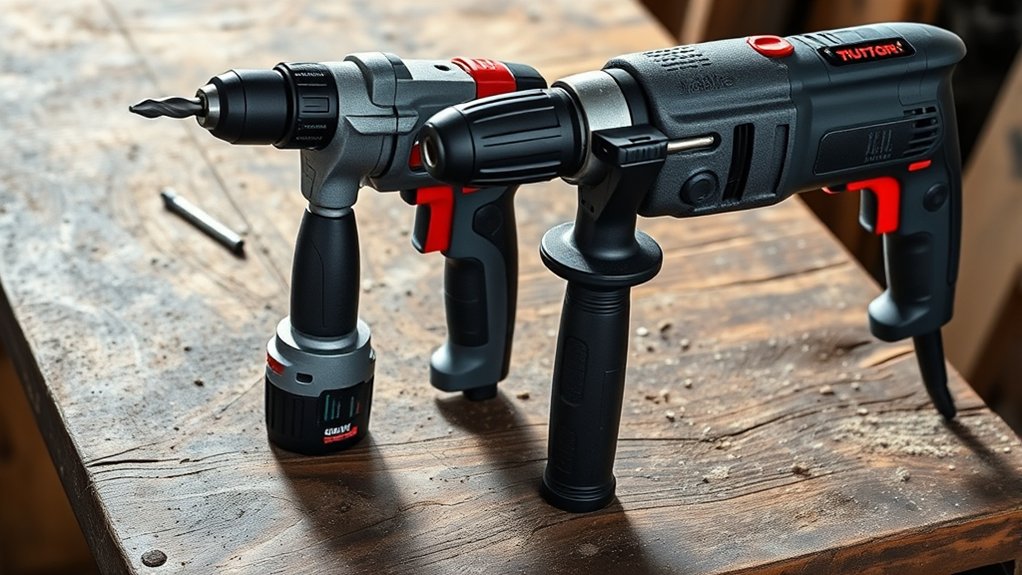
Hammer drills deliver lighter impacts and accept standard round-shank bits. Rotary hammers produce stronger blows and use SDS-Plus or SDS-Max bits, often with chiseling modes.
You’ll also find hammer drills lighter, quieter, and more affordable, whereas rotary hammers offer greater power at increased weight, vibration, and cost.
The details below can help you choose confidently.
Key Takeaways
- Impact power: Hammer drills deliver lighter, rapid impacts, while rotary hammers provide stronger blows for dense concrete and demanding masonry.
- Materials and applications: Hammer drills suit brick, block, tile, wood, and metal; rotary hammers handle concrete, stone, and reinforced surfaces.
- Bit compatibility: Hammer drills use standard round-shank bits, whereas rotary hammers accept SDS-Plus or SDS-Max bits and often chisels.
- Size and handling: Hammer drills are lighter, more compact, and easier to control; rotary hammers are bulkier but built for tougher jobs.
- Cost and versatility: Hammer drills cost less for household repairs, while rotary hammers offer drilling, hammering, and chiseling for heavy-duty work.
Hammer Drill vs Rotary Hammer: Key Differences
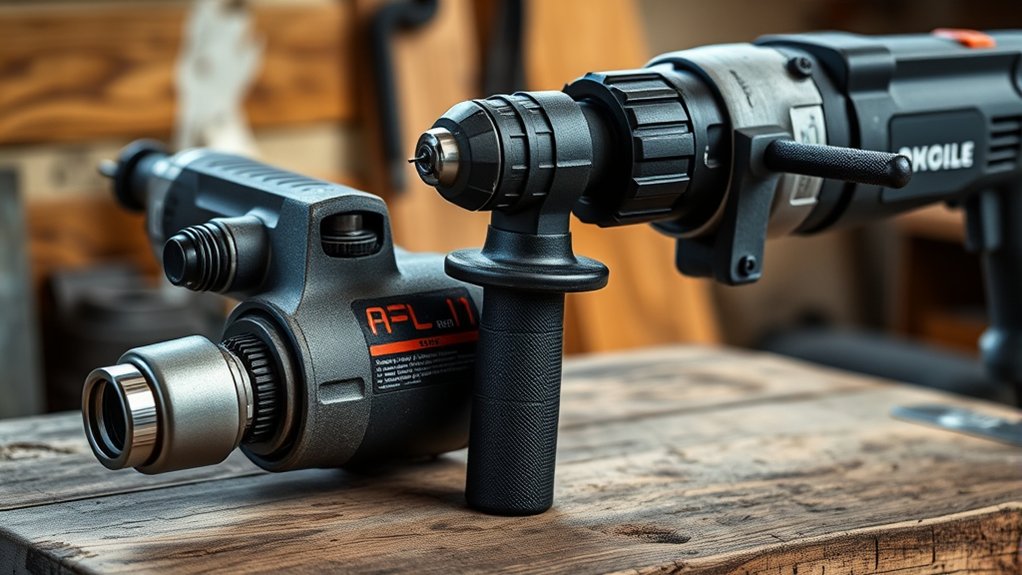
When choosing between a hammer drill and a rotary hammer, focus on the project’s material, scale, and required power. A hammer drill resembles a standard drill but adds a rapid, forward tapping motion. You can use it for occasional masonry work, household repairs, and lighter tasks while retaining regular drilling functions.
Choose between a hammer drill and rotary hammer based on your project’s material, scale, and power requirements.
A rotary hammer uses a piston-driven mechanism, delivering stronger blows with less effort from you. It suits demanding construction work and often includes dedicated modes for drilling, hammering, or both.
You’ll also notice differences in handling and convenience. Hammer drills typically weigh less, fit tighter spaces, and cost less, making them practical for general home use.
Rotary hammers feel bulkier, but their design supports longer, tougher jobs. Consider Battery compatibility if you already own cordless tools, since matching platforms can reduce costs.
Check Noise levels, too. Both tools require hearing protection, though rotary hammers usually sound more forceful during operation. Your choice should match your workload, workspace, and comfort.
Compare Impact Power, Materials, and Bit Types
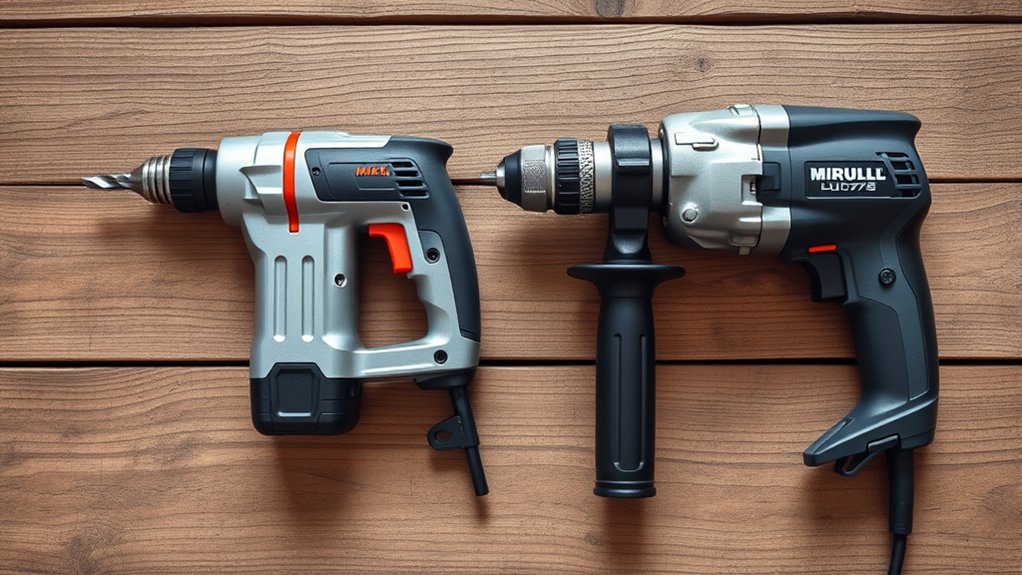
Impact power is the clearest difference between these tools. A hammer drill delivers lighter, rapid impacts that help you bore through brick, block, and tile. A rotary hammer produces far stronger blows, so it removes masonry faster and handles tougher concrete with less effort. You’ll notice higher Noise levels and vibration from its heavier mechanism.
Materials also influence performance. Hammer drills suit softer masonry and occasional holes, while rotary hammers withstand demanding work in dense concrete, stone, and reinforced surfaces. Their larger motors and robust housings add durability, but they also increase weight.
Bit types set them apart, too. You can use a hammer drill with standard round-shank masonry bits, often alongside regular drill bits. Rotary hammers typically accept SDS-Plus or SDS-Max bits, which lock in securely and transfer impact energy efficiently.
Many rotary models also support chisels for breaking or chasing masonry. Battery compatibility varies by brand and platform, so check the tool and charger system before comparing cordless options.
Which Drill Fits Your Project?
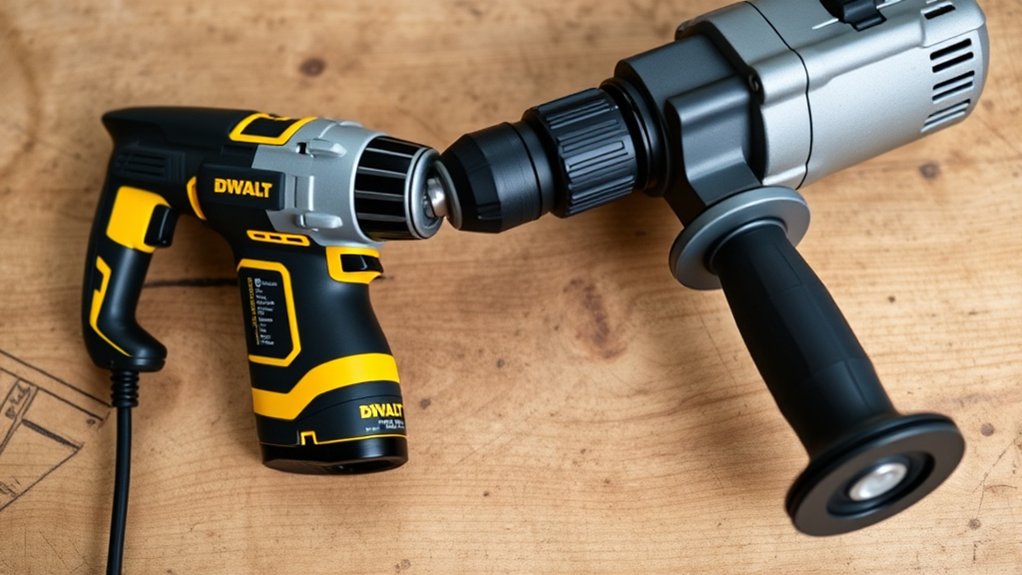
Choose a hammer drill for occasional holes in brick, block, or tile, especially if you’ll also drill wood or metal. Its lighter body and versatile chuck make it practical for home repairs, shelving, anchors, and mixed-material projects.
Check battery compatibility if you already own cordless tools. Matching platforms can save money and keep your batteries useful. Look for ergonomic design, a comfortable grip, and manageable weight when you’ll work overhead or for extended periods.
Choose a rotary hammer drill when masonry makes up most of your workload. Its stronger impact mechanism handles concrete, stone, and repeated drilling with less strain on you.
Select an SDS chuck for efficient bit changes and chiseling. Choose a model with adjustable modes for drilling, hammering, or both.
You’ll also benefit from a rotary hammer for large anchor holes, demolition, and renovation work. If you rarely tackle heavy masonry, renting one may cost less than buying and storing it.
Frequently Asked Questions
How Loud Are Hammer Drills and Rotary Hammer Drills During Operation?
You’ll find that both tools produce high noise levels during operation, often requiring hearing protection. A hammer drill typically sounds sharper and more rattly, while a rotary hammer creates a deeper, heavier pounding noise.
In a direct sound comparison, hammer drills commonly reach about 95–105 decibels, whereas rotary hammers may reach 100–110 decibels, depending on the model and material.
You shouldn’t operate either tool near others without protection or communication precautions.
What Safety Equipment Should You Wear When Using Either Drill?
Wear personal protective gear whenever you use either drill: safety glasses with side shields, hearing protection, sturdy work gloves, steel-toe boots, and a dust mask or properly fitted respirator when drilling masonry.
Don’t assume gloves alone prevent injuries. Rotating bits can catch loose material, so keep clothing and hair secured.
Follow essential safety precautions: inspect the tool, clamp your workpiece, maintain stable footing, unplug before changing bits, and never force the drill.
How Do You Maintain and Clean a Hammer Drill Properly?
To maintain and clean your hammer drill properly, unplug it first and wipe its housing with a dry cloth. Use compressed air or a soft brush for thorough dust removal around vents, switches, and the chuck.
Inspect the cord, brushes, chuck, and accessories for damage or wear. Apply manufacturer-approved drill lubrication to moving parts as directed.
Don’t use water or harsh solvents. Store the drill in a dry, protected case after cleaning and inspection.
Can These Drills Be Used in Cold or Wet Environments?
Yes, you can use these drills in cold or wet environments—but don’t throw them into an Arctic storm or a downpour and expect miracles! Check the manufacturer’s weather resistance rating before operating.
Cold temperatures can stiffen lubricants, reduce battery life, and lower power efficiency, so warm batteries and tools gradually.
Keep water away from electrical components, use grounded power protection, and dry everything immediately afterward. Never operate a damaged or soaked drill.
What Warranty Coverage Is Typically Offered for Each Drill Type?
You’ll typically find one- to three-year limited warranty policies for both drill types, covering defects in materials and workmanship. Hammer drills often receive shorter standard coverage, while rotary hammers may include longer protection because they’re designed for heavier use.
Coverage details usually exclude normal wear, overloaded tools, accessories, batteries, and damage from misuse or wet storage. Check the manufacturer’s terms, registration requirements, and authorized-service rules before buying, since conditions vary considerably.
Conclusion
Choosing between a hammer drill and a rotary hammer depends on what you’re about to tackle. If you’re drilling occasional holes in brick or block, a hammer drill may deliver the control and convenience you need.
But when tough concrete, larger holes, or chiseling enters the picture, a rotary hammer’s greater impact power and specialized bits can change everything. Pick the wrong tool, and progress may stall.
Choose wisely, and understanding the key differences between a hammer drill and rotary hammer drill may help your next project finish faster than expected.