How to Choose the Right Car Engine Oil
Choose the Right Car Engine Oil? It can feel overwhelming, especially with so many options on the market. You’re not alone—many people struggle to figure out what’s best for their vehicle. But picking the right oil is crucial for keeping your engine running smoothly and avoiding costly repairs.
You should choose engine oil based on your car’s manual recommendations, focusing on the right viscosity for your climate and driving habits. Thicker oils suit hot weather and older engines, while thinner oils help cold starts.
Decide between conventional, synthetic, or blends depending on your budget and performance needs. Pay attention to quality additives that protect your engine.
Proper oil selection boosts performance, saves money, and extends engine life. Keep exploring to learn how to maintain your engine best.
Choose the Right Car Engine Oil Key Takeaways
- Check your vehicle’s owner manual for recommended viscosity, grade, and oil specifications to ensure compatibility.
- Select oil viscosity based on your climate. Use thinner oils for cold weather and thicker oils for hot conditions.
- Choose oil type (conventional, synthetic, or blend) according to driving conditions and engine requirements.
- Consider engine age and driving habits. Older engines may need higher viscosity or specialized formulations.
- Opt for high-quality oils with appropriate additives to enhance engine protection, performance, and longevity.
Why Picking the Right Engine Oil Matters for Your Car
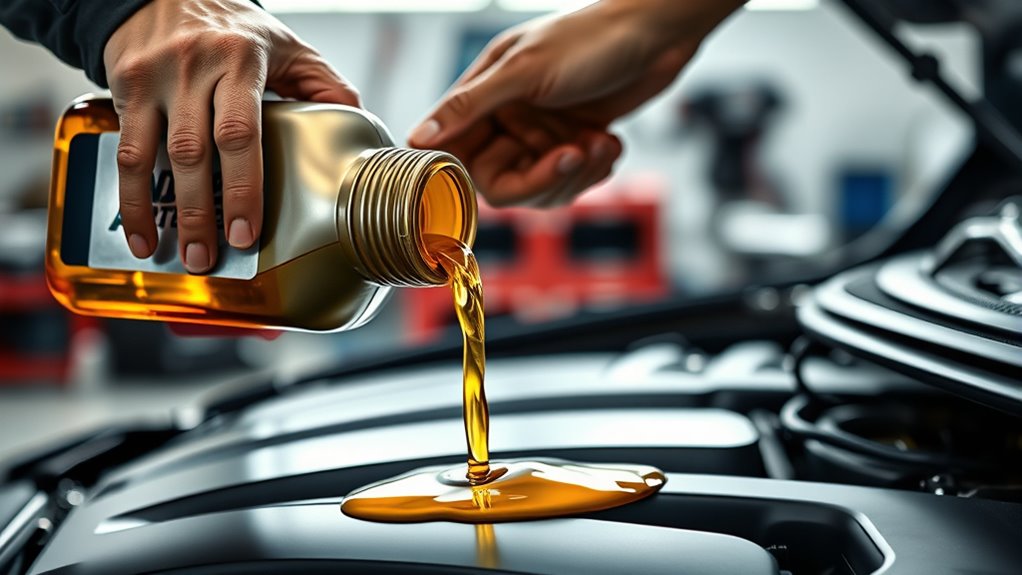
Although it might seem like a small detail, choosing the right engine oil directly affects your car’s performance and longevity. You need oil that maintains proper viscosity at varying engine temperatures. Too thick or too thin oil can cause wear or reduced efficiency. The right oil keeps engine parts lubricated, preventing friction and overheating. That means your engine runs smoothly even under extreme conditions.
You’ll also want to think about oil recycling. High-quality engine oil not only protects your engine but also allows for longer intervals between oil changes, reducing waste and environmental impact. Using the right oil minimizes sludge buildup, making recycling easier and more effective. So, when picking your oil, ponder how it performs under different engine temperatures and its role in sustainable oil recycling. This way, you’re not just caring for your car but also contributing to a cleaner environment.
How Using the Right Engine Oil Saves You Money
When you choose the right engine oil, you protect your car’s engine from unnecessary wear and tear. This can save you significant repair costs down the line. Using the correct oil improves engine durability, helping your vehicle run smoothly for longer.
Choosing the right engine oil protects your engine and saves you costly repairs over time.
It also boosts fuel efficiency, so you spend less at the pump. Skimping on quality oil or using the wrong type can cause premature engine damage. That leads to costly fixes you definitely want to avoid.
Here’s how the right engine oil saves you money:
- Reduces friction, minimizing wear on engine parts
- Maintains ideal engine temperature, preventing overheating
- Boosts fuel combustion efficiency for better mileage
- Prolongs engine lifespan, lowering replacement expenses
- Decreases maintenance frequency by keeping components cleaner
What Engine Oil Viscosity Numbers Mean
Since engine oil viscosity directly affects how well your car runs, understanding the numbers on the label is essential. These numbers, like 5W-30, represent how thick or thin the oil is at different temperatures. This impacts engine performance and protection.
The first number with a “W” stands for winter, showing the oil’s flow at low temperatures, which is critical for cold starts. The second number indicates the oil’s thickness at normal operating temperatures. This ensures your engine stays lubricated during heat.
Viscosity testing determines these values by measuring how the oil flows under specific conditions. When choosing oil, consider your engine oil climate. Thicker oils work better in hot environments, while thinner oils suit colder areas.
Using the right viscosity helps your engine start smoothly, reduces wear, and improves fuel efficiency. So, always match the viscosity numbers to your car’s requirements and driving climate for ideal engine health.
Choosing Between Conventional, Synthetic, and Blend Engine Oils
You’ll want to know the benefits of conventional oil first. It’s affordable and reliable, making it great for everyday driving. Now, synthetic oil steps it up a notch. It offers better performance and protection, especially if you’re dealing with extreme temperatures or putting your engine through heavy use. Then there are blend oils, which kind of give you the best of both worlds. They combine qualities from both conventional and synthetic oils to meet specific needs. So, depending on what you’re looking for, there’s an option that fits.
Benefits of Conventional Oil
Many drivers still choose conventional oil because it offers reliable engine protection at an affordable price. If you want to keep your engine safe without breaking the bank, conventional oil is a solid choice. It effectively reduces engine wear by providing a protective layer between moving parts, helping your engine run smoothly.
While it may experience faster oil degradation compared to synthetic oils, regular oil changes can easily manage this.
Here are some benefits you’ll appreciate:
- Lower upfront cost compared to synthetic oils
- Proven effectiveness in protecting older engines
- Easy availability at most service stations
- Compatible with a wide range of vehicles
- Simplifies maintenance with established change intervals
Choosing conventional oil means balancing cost with dependable performance for your everyday driving needs.
Advantages of Synthetic Oil
Although synthetic oil tends to cost more upfront, it delivers superior engine protection and performance that can save you money over time. You’ll benefit from improved synthetic advantages like better oil durability, stronger resistance to breakdown, and superior performance in extreme temperatures. This means your engine stays cleaner and runs smoother for longer.
Here’s a quick comparison of synthetic oil benefits:
| Feature | Synthetic Oil | Conventional Oil |
|---|---|---|
| Oil Durability | High, resists breakdown | Moderate, breaks down faster |
| Engine Protection | Superior wear reduction | Basic protection |
| Temperature Performance | Excellent in extremes | Less effective in heat/cold |
Choosing synthetic oil means fewer oil changes and better engine longevity, making it a smart investment.
When to Use Blends
While synthetic oils offer excellent protection and conventional oils come at a lower price, blend oils combine the best of both worlds to meet specific needs. You should consider blends when you want improved performance without the full cost of synthetic. Blend compatibility is key, especially if you’re topping off or switching oils, as improper oil mixing can reduce effectiveness.
Use blends when:
- Your vehicle needs better protection than conventional oil offers.
- You want a cost-effective alternative to full synthetics.
- You drive in moderate climates with occasional stress on the engine.
- You prefer gradual adaptation from conventional to synthetic oil.
- Your manufacturer approves or recommends blends for your engine.
Choosing blends wisely ensures you balance performance, price, and protection.
How to Read Your Car’s Owner Manual for Engine Oil Specs
When you open your car’s owner manual, you’ll find a section dedicated to engine oil specifications that provides crucial information for maintaining your engine’s health. This part outlines the recommended oil viscosity, grade, and performance standards tailored for engine compatibility. It ensures your engine runs smoothly and efficiently.
Pay attention to the manufacturer’s guidelines on synthetic versus conventional oils and any specific additives your engine requires. Additionally, the manual might include tips on oil change intervals and how to handle oil recycling responsibly.
Following these instructions helps reduce environmental impact by encouraging proper disposal and recycling of used oil. By closely adhering to your owner manual’s specs, you avoid using incompatible oils that can damage engine components or reduce fuel efficiency. Always keep your manual handy; it’s your best resource for making informed decisions about engine oil that protects your car’s longevity and performance.
How to Pick the Best Engine Oil for Your Driving Conditions
Since driving conditions vary widely, choosing the right engine oil means considering factors like temperature, terrain, and your typical driving style. The oil you pick directly impacts your engine’s fuel efficiency and how well it meets emission standards.
Selecting the right engine oil is key to optimizing fuel efficiency and meeting emission standards.
Here’s what to think about:
- Climate: Use oils with lower viscosity in cold climates for easier starts. Thicker oils work better in hot conditions to maintain protection.
- Driving habits: Frequent short trips demand oils that handle condensation better. Meanwhile, highway driving benefits from oils designed for sustained performance.
- Terrain: Rough or off-road driving needs oils with improved wear protection.
- Vehicle age: Older engines might require oils with higher viscosity or special formulations to reduce leaks.
- Emission standards compliance: Choose oils that help your car meet local environmental regulations without sacrificing engine health.
How Oil Additives and Brand Formulas Affect Engine Performance
Understanding how oil additives and brand-specific formulas influence engine performance can help you make smarter choices for your vehicle. Additive effects play a vital role in improving oil properties, such as reducing friction, preventing corrosion, and enhancing viscosity stability. These additives help keep your engine cleaner and running more efficiently, especially under extreme conditions.
When choosing oil, consider the brand reputation. Well-established manufacturers invest heavily in research to optimize their formulas. High-quality brands tend to offer oils with balanced additive packages tailored for specific engine types and driving demands. While cheaper oils may include fewer or lower-grade additives, they might not provide the same level of protection or performance consistency.
Signs Your Engine Oil Needs Changing
Choosing the right engine oil and additives helps keep your engine running smoothly. But even the best oil needs to be changed regularly. Over time, oil degrades and loses its ability to protect essential engine parts, directly impacting your engine lifespan.
Effective oil filtration also declines, allowing contaminants to accumulate and cause wear.
Here are clear signs your engine oil needs changing:
- Dark, gritty oil on the dipstick instead of amber and clear
- Unusual engine noises or knocking sounds
- Decreased fuel efficiency or sluggish performance
- Warning light on the dashboard indicating oil issues
- Strong, burnt oil smell inside or near the engine compartment
Ignoring these signs risks damaging engine components and shortening engine lifespan. Staying on top of oil changes ensures efficient oil filtration and keeps your engine running at its best.
How to Check and Change Your Engine Oil Properly
Now that you know when to change your engine oil, let’s talk about how to check the oil level properly. I’ll show you how to use the dipstick and what signs to look for in the oil’s condition.
After that, we’ll go over the essential tools you’ll need and walk through the step-by-step process to change the oil yourself. It’s easier than you might think, and I’ll make sure you get it done right.
Checking Oil Level
How often do you check your engine oil level? Regular checks help maintain engine performance and prevent costly damage. To do this correctly, follow these steps:
Park your car on level ground and turn off the engine. Wait a few minutes for the oil to settle.
Pull out the dipstick, wipe it clean, then reinsert it fully. Remove the dipstick again and check the oil level against the marked indicators.
Inspect oil color and consistency for signs of contamination.
Changing Oil Steps
When should you change your engine oil to keep your car running smoothly? Generally, every 3,000 to 5,000 miles is a good rule, but always check your owner’s manual since engine design affects oil change intervals.
Start by warming up the engine to help the oil drain easily. Next, place a drain pan under the oil pan, remove the drain plug, and let the old oil flow out completely. Replace the drain plug securely.
Then remove the old oil filter because dirty oil filters can harm engine performance, and install a new one. Finally, refill with the recommended oil type and quantity. Check the oil level with the dipstick to guarantee it’s right.
Properly changing your oil keeps your engine clean and running efficiently.
Where to Buy Quality Engine Oil Without Overpaying
Although quality engine oil is essential for your car’s performance, you don’t have to pay a premium to get it. You can find reliable, eco-friendly options without overspending by knowing where to shop. Start by checking local automotive stores that often offer competitive prices and occasional discounts.
Don’t overlook online retailers, where you can compare brands and benefit from customer reviews. Some specialized shops focus on oil recycling, providing sustainable choices that save you money and help the environment. Moreover, membership clubs or warehouse stores sometimes stock bulk quantities at lower rates.
Consider these tips to buy quality engine oil without overpaying:
- Compare prices between local shops and online stores
- Look for brands offering eco-friendly options and oil recycling programs
- Use coupons or membership discounts
- Buy in bulk for long-term savings
- Check reviews to ensure product authenticity and performance
Frequently Asked Questions
Can Engine Oil Improve Fuel Efficiency?
Yes, engine oil can improve fuel efficiency. When you use synthetic blends, they reduce friction better than conventional oils, helping your engine run smoother and consume less fuel.
Plus, oil additives improve lubrication and protect engine parts from wear, which keeps performance ideal. By choosing the right oil with these features, you’ll notice better mileage and a more efficient engine overall.
Don’t overlook the impact oil quality has on fuel economy!
How Does Engine Oil Affect Turbocharged Engines?
Your turbocharged engine relies heavily on oil compatibility to handle the intense heat and pressure from the turbo boost. Using the right engine oil ensures proper lubrication, reducing wear and preventing turbocharger damage.
If the oil isn’t compatible, it can break down faster, causing sludge buildup and harming performance. So, always pick oil that meets your turbo’s specifications to keep your engine running smoothly and maintain that powerful turbo boost.
What Environmental Impact Does Used Engine Oil Have?
Think of used engine oil as the “dark water” spilling into nature’s veins. You’ve got to know it poses serious environmental hazards, contaminating soil and waterways if not handled right.
But you’re not powerless. Oil recycling can turn this threat into a resource, protecting ecosystems and conserving energy. By recycling your used oil, you’re helping prevent pollution and keeping the environment healthier for everyone’s future.
Can Using the Wrong Oil Void My Car Warranty?
Yes, using the wrong oil viscosity or choosing synthetic over conventional oil against your car manufacturer’s recommendations can void your warranty. Manufacturers specify certain oil types to guarantee ideal engine performance and protection.
If you don’t stick to the recommended oil viscosity or switch between synthetic and conventional without approval, you risk damaging the engine and losing warranty coverage. Always follow your owner’s manual to keep your warranty intact.
How Often Should I Dispose of My Engine Oil Container?
Like a wise gardener knows when to clear old leaves, you should dispose of your engine oil container promptly after use. Don’t let it linger; oil recycling programs rely on timely container disposal to keep the environment safe.
After emptying, seal the container and take it to a local recycling center or auto shop. This way, you help protect nature and guarantee your used oil doesn’t cause harm.
Conclusion
Choosing the right engine oil might seem confusing, but it’s simpler than you think and totally worth it. Using the correct oil protects your engine, boosts performance, and saves you money on repairs.
You might worry it’s too much effort, but once you know your car’s specs and how to check the oil, it becomes second nature. Trust me, a little care now keeps your car running smoothly for miles to come.
Remember, choosing the right car engine oil is key to maintaining your vehicle’s health and performance over time.