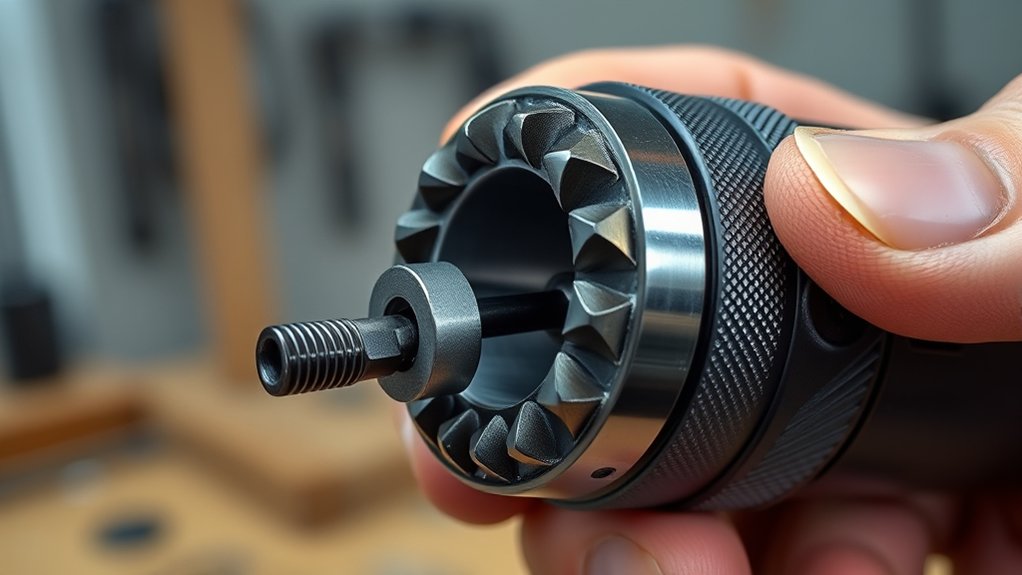
What Is a 3/8 Chuck and How Does It Work?
Choosing the right chuck can be frustrating, especially when you need a secure fit for different bits. You’re not alone—many DIYers struggle to understand chuck sizes and how they affect drilling and fastening performance.
A 3/8 chuck lets you secure drill and driver bits with shanks up to 3/8 inch in diameter. You insert the bit between its three jaws, then tighten the sleeve so the jaws move inward, center the shank, and grip it firmly.
A keyless chuck tightens by hand, while a keyed version uses a chuck key for extra holding power.
You’ll find it useful for household repairs, woodworking, light metalwork, and fastening, with more helpful details ahead.
Key Takeaways
- A 3/8-inch chuck is an adjustable drill component that securely holds bits with shanks up to 3/8 inch in diameter.
- Its three jaws move inward simultaneously, centering and gripping the bit as the chuck sleeve tightens.
- It accepts various round or hex-shank bits, including twist, masonry, spade, driver, and brad-point bits.
- Keyless chucks tighten by hand for quick changes, while keyed chucks use a key for stronger gripping force.
- Keep the chuck clean, lubricated, and properly tightened to prevent bit slippage and ensure safe operation.
What Is a 3/8 Chuck?
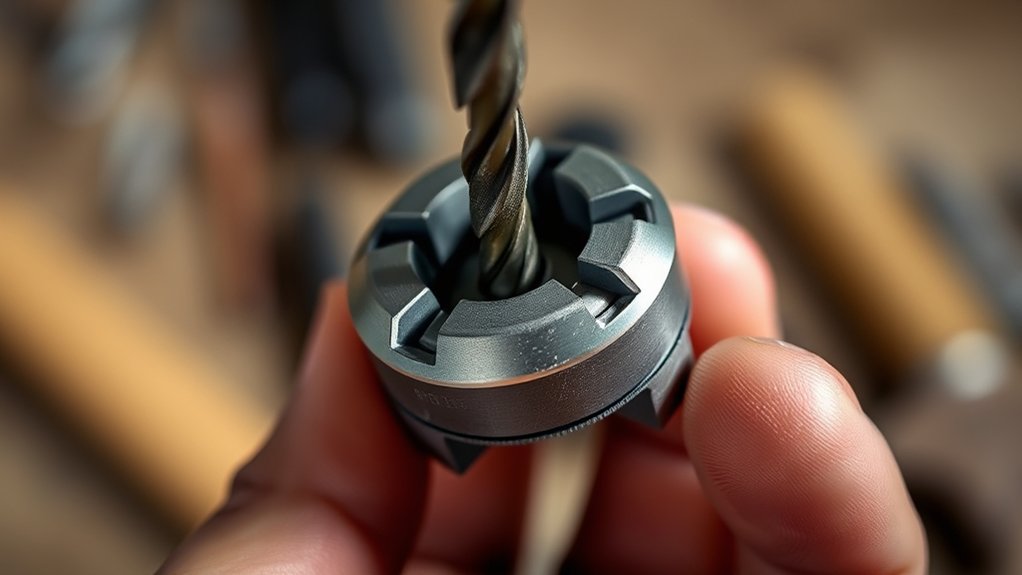
A 3/8-inch chuck is the drill’s adjustable mechanism that grips bits with shanks up to 3/8 inch in diameter. You tighten or loosen its jaws by turning the chuck sleeve, allowing you to install twist bits, driver bits, and other compatible accessories without specialized tools.
Many modern drills use keyless chucks, so you can secure a bit by hand. Keyed versions require a chuck key, which provides extra tightening force but adds another item to manage.
Keyless chucks offer convenient, tool-free bit changes, while keyed chucks provide extra tightening power for secure accessory installation.
You’ll find this chuck size on compact cordless drills, household drivers, and some corded models. Before choosing a drill, check Battery compatibility if you already own tools from a platform. Matching batteries can save money and simplify charging.
Follow basic Safety precautions: remove the battery or unplug the drill before changing accessories, tighten the chuck firmly, and keep your hands away from the rotating bit. Use the correct accessory and inspect it for damage before operating the drill.
What Does 3/8-Inch Capacity Mean?
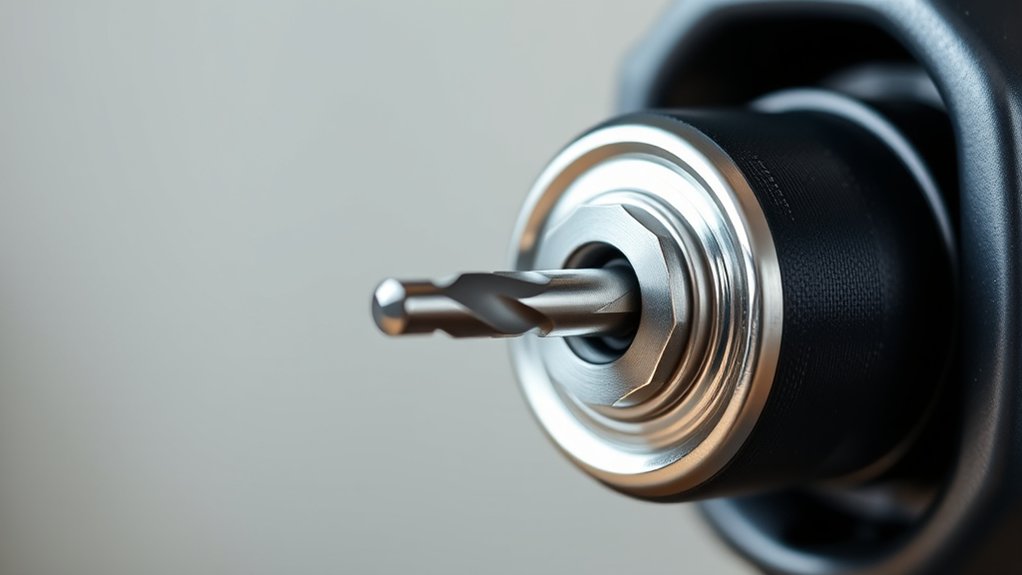
What does 3/8-inch capacity mean? It describes the largest shank diameter the chuck can securely hold: 3/8 inch, or 0.375 inch. The rating doesn’t indicate the drill’s length, motor power, or the size of every bit you can use.
You can still install smaller bits, provided their shanks fit the chuck’s gripping range.
- Maximum size: Accepts bits with shanks up to 3/8 inch.
- Smaller options: Holds common bits below that diameter.
- Compatibility: Check each bit’s shank, not its cutting width.
- Tool choice: Match capacity to your projects and materials.
This size became popular through the historical evolution of portable drills, balancing useful drilling capacity with a compact, manageable design.
You’ll find it suitable for many household repairs, woodworking tasks, and light metalwork. However, don’t force an oversized shank into the chuck.
Follow the manufacturer’s safety tips, inspect the chuck for damage, and tighten it appropriately before use.
Capacity describes fit, so you should also verify the bit’s material rating and your drill’s specifications before starting any project.
How Does a 3/8 Chuck Work?
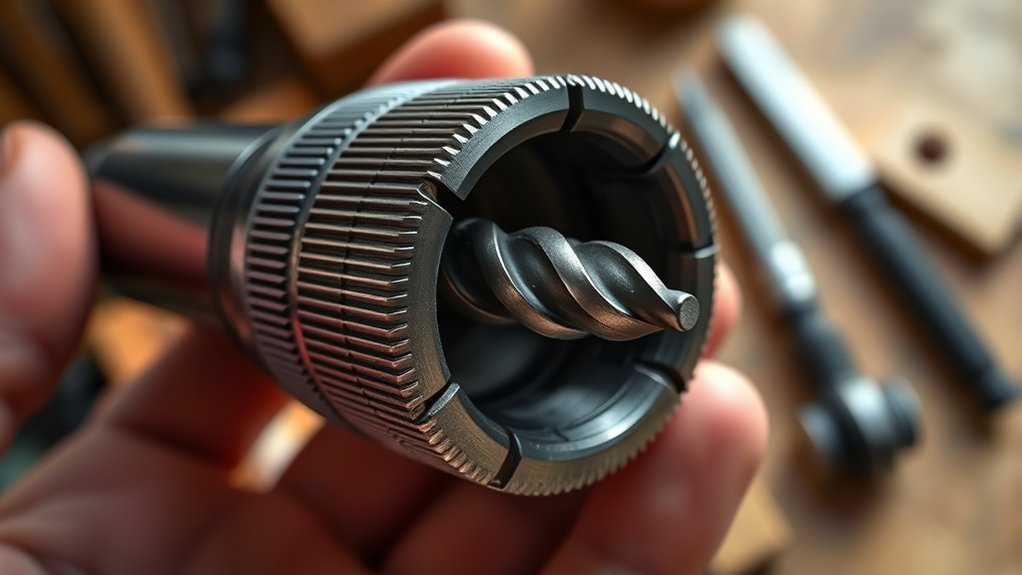
When you tighten a 3/8-inch chuck, its jaws move inward to grip the drill bit’s shank securely. You turn the chuck sleeve, which drives an internal threaded mechanism and moves the jaws evenly.
To release the bit, you rotate the sleeve in the opposite direction, opening the jaws. Keyless models let you make these adjustments by hand, while keyed chucks require a chuck key for added tightening force.
Rotate the sleeve opposite the tightening direction to open the jaws; use a chuck key when extra tightening force is needed.
Before operating the drill, check tool compatibility. A 3/8-inch chuck accepts accessories with shanks up to 3/8 inch, but you should also confirm the bit’s design suits your drill’s speed, power, and intended material.
The chuck connects the accessory to the spindle and transfers rotational force as the motor runs.
Follow basic safety precautions: disconnect power before changing accessories, tighten the chuck fully, and inspect it for damage. Start at low speed, maintain a firm grip, and stop immediately if you notice unusual vibration, noise, or slippage.
How Do Chuck Jaws Hold a Bit?
As you turn the sleeve, the chuck jaws move inward and grip the bit evenly. They help keep it centered and aligned in the chuck. Once you tighten the sleeve, the bit stays secure and is less likely to slip during use.
Jaw Movement and Grip
Three jaws move inward together as you turn the chuck’s sleeve, centering the bit and gripping its shank securely. Their tapered surfaces translate your rotation into even pressure around the shank.
This design lets you tighten the bit firmly without crushing it, while releasing it quickly when you turn the sleeve in the opposite direction. Keep the jaws and sleeve clean so debris doesn’t weaken their grip.
Follow these care points:
- Use suitable lubrication techniques on moving threads and jaw surfaces.
- Check material compatibility before applying grease or cleaners.
- Tighten the sleeve by hand until the jaws hold the shank firmly.
- Avoid oversized, damaged, or irregular shanks that can slip.
A keyed 3/8 chuck gives you extra tightening advantage, while a keyless model offers faster changes. Don’t force either type; excessive pressure can damage the chuck or bit.
Bit Alignment Process
Proper bit alignment starts as the chuck jaws contact the shank at three evenly spaced points. As you insert a bit into a 3/8 chuck, the jaws move inward together, centering the shank along the drill’s axis.
Their symmetrical contact helps prevent wobble and keeps the cutting edge tracking a straight path. You should seat the bit fully and check that its shank rests cleanly between the jaws, without debris or damage interfering with contact.
The bit material affects how reliably the jaws grip. Smooth steel typically centers predictably, while coated, worn, or uneven surfaces may shift slightly.
Clean jaw faces and an undamaged shank also support chuck durability by reducing uneven loading. Before operation, rotate the chuck by hand and confirm the bit remains centered throughout the turn.
Tightening for Stability
Once the bit sits centered, tighten the chuck so its jaws press evenly against the shank. Turn the sleeve clockwise by hand, or use the chuck key if your 3/8 chuck has keyed teeth.
Tighten each position evenly to center the bit and prevent slipping during operation. Don’t overtighten, because excessive force can damage the chuck or distort the shank.
Check these points before starting:
- Confirm Tool compatibility between the bit, chuck, and drill.
- Keep the shank clean, dry, and fully inserted.
- Remove the chuck key before powering the drill.
- Follow Safety precautions, including eye protection and a secure grip.
After tightening, pull the bit gently to verify that the jaws hold it firmly. Run the drill briefly at low speed, then stop and check for wobble.
If movement appears, release, realign, and retighten the chuck.
Keyed vs. Keyless 3/8 Chucks
Keyed 3/8-inch chucks secure bits with a gear-driven tightening mechanism. Keyless chucks, on the other hand, let you change bits faster by hand without needing a separate key. Understanding the difference helps you choose the right balance between holding power and convenience.
Keyed Chuck Operation
A keyed 3/8-inch chuck uses a toothed chuck key to tighten or loosen its jaws around a drill bit, while a keyless chuck lets you secure the bit by twisting the chuck sleeve by hand.
To operate the keyed design, insert the key into one of the chuck’s gear holes and turn it clockwise. The jaws close evenly, gripping the bit firmly.
Turn the key counterclockwise to release the bit, then remove it. For power tool safety, always unplug the tool before changing accessories and remove the chuck key before starting the motor.
An ergonomic design makes key placement and turning more comfortable during repeated use.
- Insert the bit straight
- Tighten each gear position
- Check the grip
- Remove the key before drilling
Keyless Chuck Convenience
When convenience matters, a keyless 3/8-inch chuck lets you change bits by hand without searching for a chuck key. You twist the chuck sleeve to loosen or tighten its jaws, making quick bit changes practical when you move between tasks.
This design improves Tool ergonomics because you can work faster with fewer accessories and less interruption.
However, a keyed chuck can grip bits more securely and provide greater tightening force, especially during demanding drilling. Your choice should also reflect Material compatibility.
A keyless chuck handles common drill bits, driver bits, and materials such as wood, plastic, and light metal. For heavy-duty metalwork or frequent high-torque use, a keyed model may offer better holding power.
Choose keyless convenience when speed matters; choose keyed control when maximum grip matters.
Which Bits Fit a 3/8-Inch Chuck?
A 3/8-inch chuck accepts bits with round or hex shanks up to 3/8 inch in diameter, including standard twist, brad-point, spade, masonry, and driver bits.
You can use any bit that matches the chuck’s capacity and suits the material or fastening task. Check the bit’s shank size before installation; a larger shank won’t fit, while a smaller one may slip if you don’t tighten the jaws evenly.
- Twist bits: Drill wood, plastic, and metal with the correct type.
- Brad-point bits: Create clean, accurate holes in wood.
- Spade bits: Bore larger holes through wood efficiently.
- Masonry and driver bits: Handle brick, block, concrete, or screws when properly rated.
For tool compatibility, match the bit’s shank shape and diameter to your chuck. Round shanks provide broad compatibility, while hex shanks can improve grip when the chuck clamps securely.
Follow basic safety precautions: inspect bits for damage, tighten the chuck fully, and keep the bit straight during use. Always choose a bit rated for your drill’s speed and intended material.
When Should You Use a 3/8 Chuck?
Choose a 3/8-inch chuck when you need a versatile drill for everyday tasks such as drilling pilot holes, driving screws, or boring through wood, plastic, and light metal. It suits home repairs, furniture assembly, shelving, and small workshop projects where convenient handling matters.
| Task | Recommended approach |
|---|---|
| Driving screws | Use a hex-shank driver bit and controlled speed. |
| Drilling wood | Select a sharp twist, brad-point, or spade bit. |
Check tool compatibility before attaching accessories. Confirm that the bit’s shank fits the chuck and that the drill’s speed and torque match your material.
A keyed or keyless chuck can hold compatible bits securely, but you should tighten it fully to prevent slipping.
Follow basic safety precautions every time. Wear eye protection, secure your workpiece, keep loose clothing away from moving parts, and disconnect power before changing bits.
Choose a 3/8 chuck when you value portability, quick bit changes, and enough capacity for routine drilling and fastening rather than heavy-duty work.
3/8 Chuck vs. 1/2-Inch Chuck
A 3/8-inch chuck offers better portability and control, while a 1/2-inch chuck accepts larger bits and handles higher torque. Choose the 3/8-inch size for routine drilling, driving, and lighter materials.
Its smaller design usually reduces tool weight, so you’ll experience less fatigue during extended work. Select a 1/2-inch chuck when you regularly use large bits, drill dense materials, or need stronger performance from a corded or cordless tool.
Your power source also matters. A high-voltage cordless drill or corded model can take better advantage of the larger chuck’s torque capacity.
A high-voltage cordless or corded drill maximizes the torque advantages of a 1/2-inch chuck.
- 3/8-inch: lighter, compact, and easier to control
- 1/2-inch: stronger, larger capacity, and suited to demanding work
- Bit range: match the chuck to your typical accessories
- Tool safety: wear eye protection and choose a tool rated for the task
Consider your material, bit sizes, workload, and comfort before deciding. Neither chuck is universally better; the right choice depends on how you’ll use the tool.
How Do You Install and Remove Bits?
To install a bit securely, open the 3/8-inch chuck, insert the bit fully, and tighten the chuck firmly. To remove it safely, stop the tool, disconnect the power, and loosen the chuck before pulling out the bit.
Next, let’s walk through both steps.
Installing Bits Securely
Installing a bit securely in a 3/8-inch chuck starts with opening the jaws, inserting the bit straight and fully, then tightening the chuck evenly until it grips the shank firmly. Before tightening, inspect the shank for dirt, damage, or burrs.
Keep the bit centered; poor alignment can cause wobbling, inaccurate holes, or excessive vibration. If your drill uses a keyed chuck, insert the key into each hole and tighten all positions evenly.
For a keyless chuck, hold the body and twist the sleeve firmly by hand. Check material compatibility: choose a bit designed for wood, metal, masonry, or another intended surface.
Also review warranty considerations, since using incompatible accessories may affect coverage.
- Clean the chuck jaws and bit shank.
- Insert the bit to full, stable depth.
- Tighten every jaw evenly.
- Test alignment at low speed.
Removing Bits Safely
Removing a bit safely starts with switching off and unplugging the drill, or removing its battery, before loosening the chuck. Hold the drill steady, then turn the chuck sleeve counterclockwise by hand.
If your 3/8 chuck uses a key, insert it fully into each gear position and rotate it counterclockwise. Keep your fingers away from the bit’s cutting edges as you withdraw it.
Never pull a stuck bit with excessive force. Inspect the chuck for damage and use the manufacturer’s recommended method.
After removal, wipe the bit and chuck clean to prevent debris from affecting grip. Check the jaws for wear, rust, or buildup before installing another bit.
These Safety precautions protect your hands and equipment, while regular Tool maintenance helps the chuck clamp bits securely and operate smoothly. Store bits dry and organized.
How Do You Maintain a 3/8 Chuck?
Keep your 3/8-inch chuck clean, lubricated, and properly adjusted to guarantee smooth, accurate operation. Before maintenance, unplug the drill or remove its battery, then follow basic Safety precautions to prevent accidental starts.
Wipe dust and metal shavings from the jaws, sleeve, and housing with a dry cloth or soft brush. Don’t use water, which can cause corrosion.
Apply a small amount of manufacturer-approved chuck lubricant to the jaws and threads. Open and close the chuck several times to distribute it, then wipe away excess oil that could attract debris.
Check for loose screws, damaged jaws, or uneven gripping, and replace worn parts promptly.
- Inspect the chuck before each use.
- Clean debris after drilling.
- Lubricate sparingly at recommended intervals.
- Verify Tool compatibility before inserting bits.
Tighten bits firmly by hand or with the chuck key, depending on your model. Avoid over-tightening, and store the tool in a dry place.
Regular care improves runout, grip, and service life.
Frequently Asked Questions
Can a 3/8 Chuck Be Replaced With a Different Chuck Size?
Yes, you can replace a 3/8-inch chuck with a different chuck size, provided your drill’s spindle, mounting method, and motor support the replacement.
Check Tool compatibility before purchasing, because a larger chuck may not fit or handle your drill’s torque safely. Choose a keyed or keyless model matching your work needs.
During installation, follow the manufacturer’s instructions, tighten everything securely, and maintain proper Chuck maintenance to prevent wobbling, slippage, or premature wear.
Are 3/8 Chucks Compatible With Impact-Rated Bits?
Yes, you can use impact-rated bits in many 3/8-inch chucks, but compatibility depends on the chuck type and bit shank. Picture your drill releasing a miniature thunderstorm: impact bits withstand twisting better than standard bits.
For reliable bit compatibility, match the bit’s shank size to your chuck and avoid exceeding its capacity. Chuck maintenance matters, too; clean the jaws, inspect for damage, and tighten the chuck securely before every demanding job.
How Long Does a Typical 3/8 Chuck Last?
You can expect a typical 3/8-inch chuck to last five to ten years with regular home use, though heavy-duty work may shorten its life. Watch for slipping, uneven clamping, rust, or excessive wobble, which signal replacement time.
Maintenance tips include cleaning debris, lightly lubricating moving parts, and avoiding over-tightening. Consider Compatibility concerns before using impact-rated bits, since repeated impact forces can damage a standard chuck and reduce its service life.
Can a 3/8 Chuck Become Misaligned During Drilling?
Yes, your 3/8 chuck can become misaligned during drilling, especially if you apply excessive side pressure, clamp the bit unevenly, or operate with worn jaws. You’ll notice wobbling, inconsistent holes, or unusual vibration.
Stop drilling and inspect the chuck, arbor, and bit for damage. Good chuck maintenance helps prevent alignment problems.
Also, confirm drill bit compatibility, because oversized, damaged, or unsuitable bits can increase runout and accelerate wear during regular use.
What Safety Precautions Should You Follow When Using a 3/8 Chuck?
You’d think a spinning chuck would appreciate loose clothing, but it doesn’t. Follow these Safety guidelines: wear eye protection, secure your workpiece, remove the chuck key before starting, and keep hands, hair, and clothing away from moving parts.
Use the correct bit, inspect the chuck for damage, and tighten it evenly. For Proper handling, disconnect power before adjustments, maintain stable footing, and stop immediately if you notice wobbling, unusual noise, or overheating.
Conclusion
A 3/8-inch chuck gives your drill a firm handshake with bits up to 3/8 inch in diameter. Whether you choose keyed precision or keyless convenience, you’ll get reliable control for everyday drilling and driving.
Install each bit securely, match the chuck to your project, and keep its jaws clean and lightly lubricated. With simple care, your 3/8-inch chuck will keep turning smoothly through repairs, crafts, and countless weekend projects.