How to Find Out My Car Engine Size Quickly
Finding out your car engine size quickly can feel like a hassle, especially when you’re in a rush or don’t know where to start. You’re not alone—many people struggle with this and don’t realize how simple it can be once you know the right steps.
You can find your car’s engine size quickly by checking your owner’s manual or vehicle registration for engine capacity info. You can also enter your VIN into trusted online decoders or manufacturer websites to get detailed specs instantly.
Another fast method is to look under the hood for labels or stamped engine codes. Cross-referencing these sources guarantees accuracy.
If you want to understand why engine size matters or learn about other helpful tips, there’s plenty more useful info ahead.
Key Takeaways
- Check your vehicle’s registration or insurance documents for engine size or displacement details. These papers usually have the info you need.
- Use online VIN lookup tools or manufacturer websites by entering your car’s VIN or details. It’s a quick way to get accurate engine specs.
- Look under the hood for engine block stamps, cover labels, or emission stickers indicating size. Sometimes the info is right there if you know where to look.
- Refer to the owner’s manual in the specifications section for engine displacement information. This is often the most reliable source.
- Cross-verify engine size from multiple sources to ensure accuracy and avoid common mistakes. Double-checking never hurts!
What Is Engine Size and Why Does It Matter?
What exactly is engine size, and why should you care about it? Engine size refers to the total volume of all the cylinders in your car’s engine, usually measured in liters or cubic centimeters. It directly impacts how your car performs and how much fuel it consumes.
If you have a larger engine size, you’re likely to experience stronger engine performance, meaning more power and acceleration. However, bigger engines often use more fuel, reducing your fuel efficiency. On the other hand, smaller engines typically offer better fuel efficiency but may sacrifice some performance.
Understanding your engine size helps you balance your needs, whether you prioritize speed and power or want to save on fuel costs. It also affects insurance rates, maintenance, and even resale value. By knowing what engine size means, you can make smarter decisions about buying, maintaining, or upgrading your vehicle.
How to Find Engine Size in Your Owner’s Manual
Although locating your engine size might seem tricky at first, your owner’s manual provides clear information to help you find it quickly. Start by checking the specifications section, usually near the beginning or end of the manual. There, you’ll find detailed engine specs, including the displacement measured in liters or cubic centimeters. This info is essential if you’re considering engine upgrades or want to understand your car’s fuel efficiency better.
The manual often explains how engine size affects performance and fuel consumption, helping you make informed decisions. If you’re planning modifications or replacements, knowing the exact engine size ensures compatibility and best results. Keep your owner’s manual handy. It’s the most reliable source for accurate engine details tailored to your vehicle.
How to Use Your VIN to Find Engine Size
Wondering how to quickly pinpoint your car’s engine size without digging through manuals? Your Vehicle Identification Number (VIN) holds the key. This 17-character code, found on your dashboard or driver’s side door frame, contains detailed info about your vehicle, including engine type and size.
To use your VIN, simply enter it into an online VIN decoder or visit your manufacturer’s website. These tools decode the VIN and reveal specs like engine displacement, which directly affects fuel efficiency and performance.
Knowing your engine size via the VIN is especially helpful if you’re considering engine upgrades or comparing fuel efficiency across models. It saves time and guarantees you get accurate info without guesswork.
Plus, this method works even if you don’t have access to physical documents. So, keep your VIN handy. It’s a quick, reliable way to find your engine size whenever you need it.
Where to Look Under the Hood for Engine Size
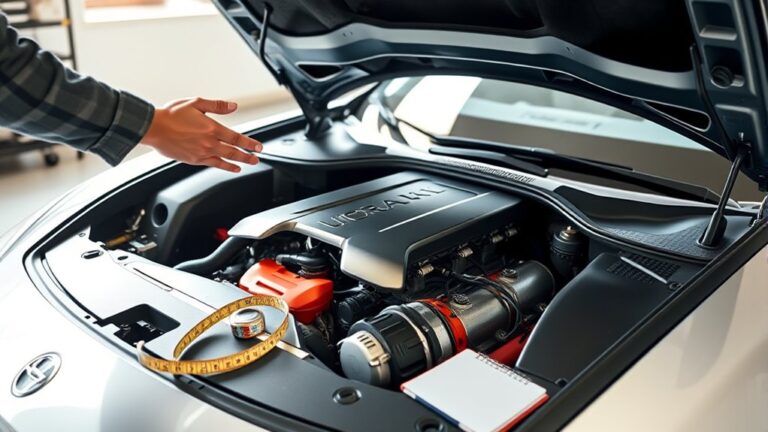
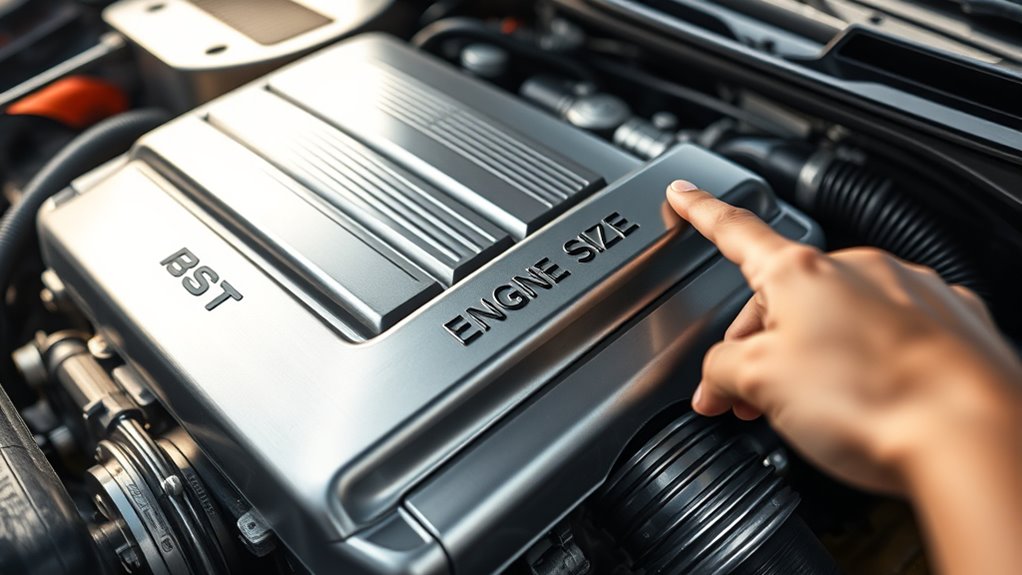
When you pop the hood, start by checking the engine block for stamped markings that show the size. You can also take a look at the engine cover—sometimes there are labels there that list key specs, including displacement. And don’t forget to spot the vehicle emission sticker; it often includes engine details too.
Engine Block Markings
If you want to find your car’s engine size quickly, checking the engine block markings is a reliable method. These markings are usually stamped or cast directly onto the engine block and often include critical information like engine displacement.
To locate them, pop your hood and look around the sides or front of the engine block. The numbers and letters here will tell you the engine size without any guesswork.
| Feeling | Reaction |
|---|---|
| Confident | You can identify size |
| Relieved | Avoids guesswork |
| Empowered | Understand your engine |
| Curious | Discover hidden info |
| Satisfied | Quick, clear results |
Engine block markings give you direct, trustworthy data on engine displacement, saving time and effort.
Engine Cover Labels
Where exactly should you look under the hood to find your engine size? One of the easiest places is on the engine cover labels. These labels often display engine size symbols such as displacement numbers (e.g., 2.0L, 3.5L) prominently.
You’ll typically find the engine cover right on top of the engine block, often a plastic or metal piece designed to protect and insulate. Check this cover carefully. Manufacturers include engine size symbols here for quick identification.
If the labels aren’t obvious, look for stamped or printed markings on the underside or edges of the cover. By focusing on these engine cover labels, you can quickly determine your engine’s size without digging deeper, saving time and effort when you need this information fast.
Vehicle Emission Sticker
Although it might not be the first place you think to check, the vehicle emission sticker under your hood often lists your engine size clearly. You’ll usually find this sticker near the radiator support or on the underside of the hood.
It’s designed to provide essential information about your car’s compliance with emission standards, which directly relate to fuel efficiency and environmental impact. On this sticker, you’ll spot details like engine displacement, fuel type, and sometimes even recommended maintenance tips.
Checking this sticker saves you time because it’s an official source that manufacturers use to certify emissions. So next time you want a quick, reliable reference to your engine size, look for the vehicle emission sticker under the hood. It’s right where you need it.
Finding Engine Size From the Engine Code
You can find your engine size by decoding the engine code stamped right on your engine block. These engine codes usually follow common formats that include important details like the displacement and engine type. Once you get the hang of recognizing these patterns, figuring out your engine size becomes a whole lot quicker and easier.
Decoding Engine Code
If you want to quickly determine your car’s engine size, decoding the engine code is one of the most reliable methods. This alphanumeric string holds key information about your engine’s specifications. Here’s how you can decode it:
- Locate the engine code on your car, usually stamped on the engine block.
- Break down the code into sections. Each part represents specific details like displacement or cylinder count.
- Cross-reference the code with your vehicle’s manual or manufacturer’s website for exact engine size.
- Use this info to assess fuel efficiency and plan performance upgrades tailored to your engine.
Common Engine Code Formats
Understanding how to decode your engine code sets the stage for identifying common engine code formats used by manufacturers. These codes often reveal your engine size, helping you plan engine upgrades or assess fuel efficiency.
You’ll usually find codes combining letters and numbers that indicate displacement, model year, or engine type.
Here’s a quick look at common formats:
| Code Format | Meaning |
|---|---|
| L4-2.0T | Inline 4-cylinder, 2.0L turbo |
| V6-3.5 | V6 engine, 3.5 liters |
| I4-1.8 | Inline 4-cylinder, 1.8 liters |
| V8-5.0 | V8 engine, 5.0 liters |
| H4-2.4T | Horizontally opposed 4, 2.4L turbo |
Knowing these helps you quickly identify engine size for upgrades or improving fuel efficiency.
How to Check Engine Size in Your Registration or Insurance Documents
Although it might not seem obvious at first, your car’s engine size is often listed in your vehicle registration or insurance documents. These papers are dependable sources that can quickly tell you the engine displacement without guesswork.
Knowing this can be vital if you’re considering an engine upgrade or want to understand your car’s fuel efficiency better.
Here’s how to check:
- Locate your vehicle registration certificate or insurance policy.
- Look for terms like “engine capacity,” “engine size,” or “cubic centimeters (cc).”
- Note the number, usually expressed in liters (e.g., 2.0L) or cc (e.g., 2000cc).
- Compare this with your current engine specs to evaluate if an upgrade could improve fuel efficiency.
Using your documents saves time and guarantees you get accurate details before making any decisions about your car’s performance.
How to Use Online Tools to Find Engine Size Quickly
You can quickly find your car’s engine size by using online tools like a Vehicle Identification Number (VIN) lookup. Just enter your VIN into a trusted database, and it will give you detailed info about your engine. It’s pretty straightforward.
Also, many manufacturer websites offer search features where you can enter your car’s details. This way, you’ll get accurate engine specs without any hassle. It’s a handy option if you don’t have your VIN on hand.
Vehicle Identification Number Lookup
When you want to find your car’s engine size quickly, using the Vehicle Identification Number (VIN) lookup tools online can save you time and effort. These tools decode your VIN to reveal key details, including engine size. This helps you understand your vehicle’s fuel efficiency and engine performance better.
Here’s how to use them effectively:
- Locate your VIN on the dashboard or driver’s door frame.
- Enter the VIN into a reliable online VIN decoder.
- Review the detailed report focusing on engine specifications.
- Compare engine data to fuel efficiency ratings for informed decisions.
Using VIN lookup tools empowers you to quickly get accurate engine size info, enhancing your knowledge of your car’s capabilities without guesswork.
Manufacturer Database Search
Since manufacturers maintain detailed records of their vehicles, accessing their online databases lets you quickly find your car’s engine size. You just need your car’s make, model, and year to start. This method is especially useful if you’re considering an engine upgrade or want to compare fuel efficiency before buying parts or a new vehicle.
Here’s how to get started:
| Step | Action |
|---|---|
| Visit Manufacturer’s Site | Locate the vehicle info section |
| Enter Vehicle Details | Input make, model, and year |
| Retrieve Engine Size | Review engine specs provided |
Using these manufacturer tools guarantees you get accurate engine size details and helps you make informed decisions about upgrades or maintenance.
When to Visit a Mechanic for Engine Size Help
Although many methods exist to check your car’s engine size on your own, certain situations call for professional help. If you notice your engine performance dropping or your fuel efficiency suddenly worsening, it’s time to consult a mechanic. They have the tools and expertise to accurately identify your engine size and diagnose related issues.
When engine performance declines or fuel efficiency drops, professional diagnosis ensures accurate engine size identification and problem-solving.
Here are four key moments to visit a mechanic for engine size help:
- Your car’s manual or database search doesn’t match the physical engine.
- You experience unusual noises or vibrations linked to engine problems.
- You plan to upgrade or replace parts and need exact engine specifications.
- Your vehicle’s fuel consumption has changed noticeably without explanation.
Common Mistakes When Finding Your Engine Size
Mistakes often happen because you rely solely on one source or overlook key details when checking your engine size. For example, if you only check the owner’s manual, you might miss recent engine modifications that affect the actual size or performance. Engine modifications like turbochargers or swapped parts can change how your engine runs, impacting fuel efficiency and overall capacity.
Another common error is assuming that engine size listed on registration documents is always accurate. It may not reflect aftermarket changes.
You should also avoid confusing engine displacement with horsepower or torque, as they measure different things. Checking under the hood for stamped engine codes helps but only if you know how to decode them correctly.
Finally, don’t ignore the vehicle identification number (VIN). It can provide precise details on your engine size when decoded properly. By cross-referencing multiple sources and understanding possible modifications, you’ll get a more accurate engine size quickly.
Why Knowing Your Engine Size Makes Maintenance Easier
Knowing your engine size helps you choose the right parts and fluids, making maintenance more efficient and effective. When you know the exact engine size, you avoid guesswork that can lead to poor choices. Those mistakes might harm your car’s fuel efficiency and engine performance. Here’s why this knowledge matters:
- You pick the correct oil and filters, preventing damage and ensuring smooth engine operation.
- You save money by avoiding unnecessary parts replacements or repairs due to wrong components.
- You keep your engine running at peak performance, which boosts fuel efficiency and extends your car’s lifespan.
- You make informed decisions during routine checks or repairs, reducing stress and unexpected breakdowns.
Frequently Asked Questions
How Does Engine Size Affect Fuel Efficiency?
Engine size directly impacts your fuel economy because larger engine displacement usually means your car uses more fuel. When you have a bigger engine, it burns more fuel to generate power, especially during acceleration or heavy loads.
Smaller engines with less displacement tend to be more fuel-efficient since they consume less fuel for everyday driving. So, if you want better fuel economy, you’ll likely prefer a car with a smaller engine displacement.
Can Engine Size Impact My Car’s Resale Value?
Like choosing the right sword in a battle, engine size can definitely impact your car’s resale value. Bigger engines often mean louder engine noise and higher maintenance costs, which can scare off some buyers.
However, if you’re selling a performance or luxury car, a larger engine might boost its appeal. So, depending on your buyer, your engine size could either raise or lower your car’s resale price.
Does Engine Size Determine My Car’s Insurance Rates?
Engine size doesn’t solely determine your car’s insurance rates, despite common engine size misconceptions. Insurers consider many factors like your driving history, vehicle type, location, and safety features.
While a larger engine might suggest higher risk, it’s just one piece of the puzzle. To keep your insurance premium factors balanced, focus on safe driving and maintaining your car well, rather than worrying only about engine size.
How Is Engine Size Measured in Electric Vehicles?
In electric vehicles, engine size isn’t measured like in traditional cars. Instead, you look at battery capacity, usually in kilowatt-hours (kWh), which shows how much energy the battery can store.
Motor power, measured in kilowatts (kW), indicates how strong the electric motor is. Together, these give you a clear idea of the vehicle’s performance and range, replacing the typical engine displacement measurement you’d find in combustion engines.
Are Larger Engines Always More Powerful?
Larger engines aren’t always more powerful. For example, a turbocharged 2.0L engine can outperform a naturally aspirated 3.0L one because of better engine compatibility with forced induction.
You’ll also notice that bigger engines often produce more engine noise, but power depends on design, fuel delivery, and tuning. So, don’t assume size equals power; technology and compatibility play huge roles in performance.
Conclusion
Knowing your car’s engine size is like holding the key to a powerful engine’s heartbeat. It guides every maintenance decision, fuels your understanding, and keeps your vehicle running smoothly.
Whether you check your manual, decode the VIN, or peek under the hood, each step uncovers the engine’s true identity. So, keep this knowledge close.
It’s the compass that steers your car’s health and performance toward a long, reliable journey. Knowing how to find out my car engine size quickly makes all the difference.