5 Essential Tips for Caring for Engineered Hardwood
Taking care of engineered hardwood floors can feel tricky, right? You want to keep them looking beautiful without accidentally causing damage. If you’ve ever struggled with warping, scratches, or dullness, you’re not alone. Many people find maintaining these floors a challenge, but with the right tips, it gets a lot easier.
To care for your engineered hardwood floors, avoid excess moisture by using a damp mop and drying immediately. Vacuum regularly with a soft brush attachment.
Keep indoor humidity between 35% and 55% to prevent warping or damage. Protect your floors by attaching felt pads to furniture legs and using breathable area rugs with non-slip backings.
Clean spills quickly and address scratches promptly to maintain durability. Keep following for detailed steps on preserving your floor’s beauty and longevity.
Key Takeaways
- Avoid excess moisture by using a damp mop and drying floors immediately. This helps prevent wood damage.
- Maintain indoor humidity between 35% and 55%. It protects floors from warping or swelling.
- Use felt pads under furniture legs, and lift heavy items instead of dragging them. This prevents scratches and surface damage.
- Regularly vacuum with a hardwood floor setting or a soft brush. It removes dirt and reduces finish wear.
- Clean spills promptly, and use cleaners designed specifically for engineered hardwood floors. This keeps them looking their best.
Cleaning Engineered Hardwood Floors Safely
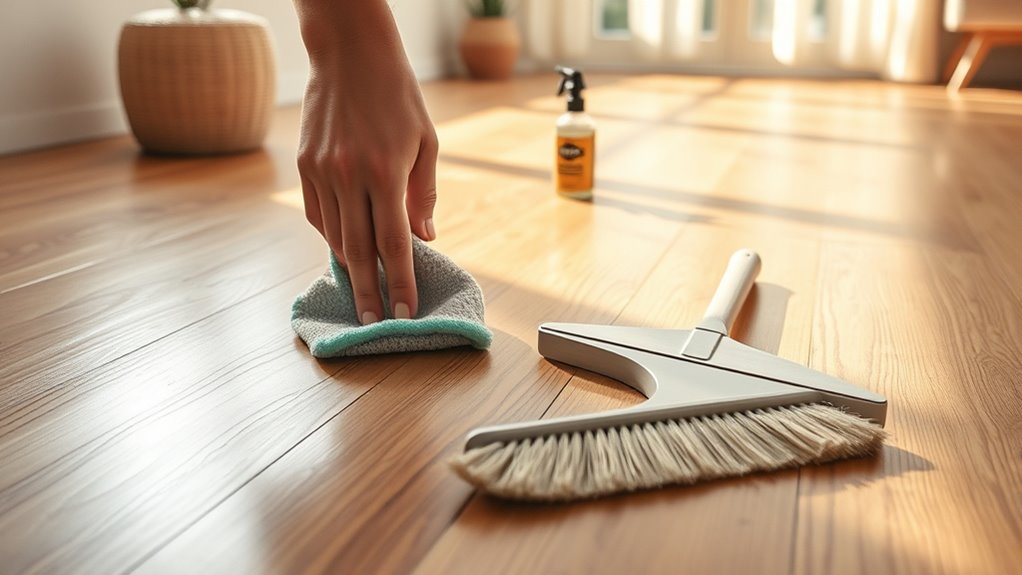
When cleaning engineered hardwood floors, you’ll want to avoid excess moisture because it can damage the wood layers. Start by using vacuuming techniques that are gentle on your floors. Opt for a vacuum with a hardwood floor setting or a soft brush attachment to prevent scratching.
Regular vacuuming removes dirt and debris that can wear down the finish over time. Place area rugs in high-traffic spots to protect your floors from dirt and reduce wear. Make sure to shake out or clean these rugs frequently to prevent trapped grit from scratching your floors.
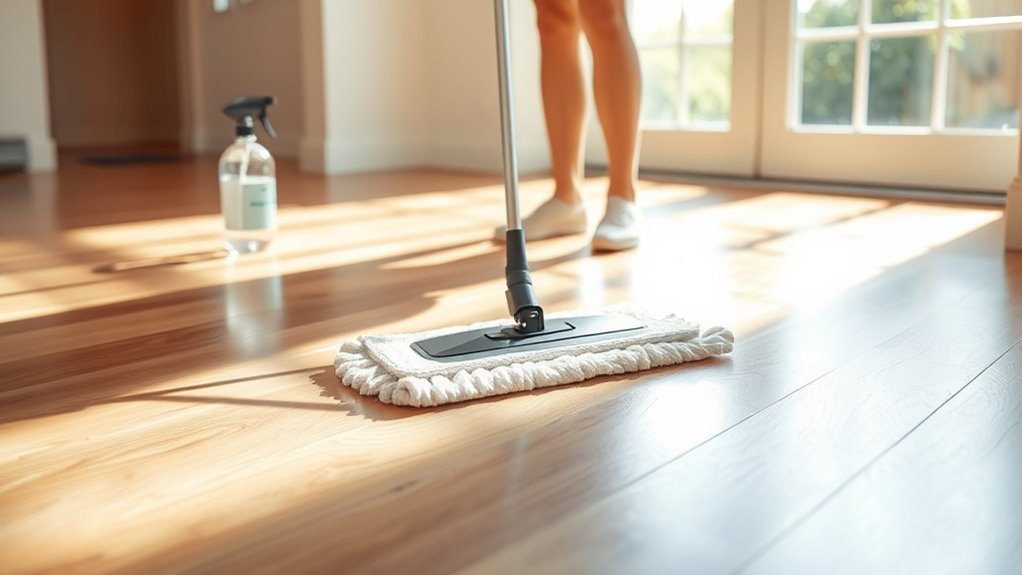
When you mop, use a damp mop rather than a wet one and dry the floor immediately afterward. Avoid harsh chemicals and stick to cleaners specifically designed for engineered hardwood. By combining careful vacuuming with strategic use of area rugs and proper mopping, you’ll keep your floors looking beautiful without risking damage from moisture or abrasive particles.
Controlling Moisture and Humidity to Protect Your Floors
Since engineered hardwood reacts to changes in moisture and humidity, you need to maintain a stable environment to prevent warping or buckling. Proper humidity control is essential to protect your floors and extend their lifespan.
Start by monitoring indoor humidity levels and keeping them between 35% and 55%. Use a dehumidifier or humidifier as needed to maintain this range. Installing moisture barriers under your flooring can also prevent moisture from seeping up from the subfloor. Also, avoid exposing your floors to excessive water or damp conditions.
Here are some effective ways to control moisture and humidity:
- Use a hygrometer to track humidity levels regularly
- Place moisture barriers beneath flooring during installation
- Run dehumidifiers in damp areas like basements
- Ventilate rooms well to reduce humidity buildup
- Clean up spills immediately to prevent moisture damage
Preventing Scratches and Surface Damage on Engineered Hardwood
Although engineered hardwood is durable, it still requires careful handling to prevent scratches and surface damage. You can keep your floors looking great by practicing effective scratch prevention.
One key step is to use proper furniture protection. Attach felt pads or similar soft materials to the bottoms of chairs, tables, and other movable furniture. This simple action reduces the risk of gouges or marks when you slide or shift items.
Be mindful when moving heavy objects; lift them instead of dragging across the floor. Regularly inspect high-traffic areas and furniture contact points for any signs of wear or damage.
Also, avoid walking on your engineered hardwood with shoes that have sharp edges or high heels, as they can easily cause scratches.
Selecting Protectors and Rugs for Engineered Hardwood Floors
How do you choose the right protectors and rugs to keep your engineered hardwood floors safe? Picking the right floor protectors and area rugs can prevent dents, scratches, and fading. Start by selecting floor protectors that won’t trap moisture or scratch the surface. Look for felt pads or rubber caps designed for hardwood.
When choosing area rugs, opt for breathable materials and non-slip backings that won’t discolor or stick to your floors.
Keep these tips in mind:
- Use felt protectors under furniture legs to prevent scratches.
- Choose area rugs with natural fibers to allow air circulation.
- Avoid rubber-backed rugs that can trap moisture and cause damage.
- Regularly clean both rugs and floor protectors to remove grit.
- Replace worn protectors promptly to maintain full protection.
Refinishing and Repairing Engineered Hardwood Floors
When your engineered hardwood floors show signs of wear or damage, refinishing and repairing can restore their original beauty without needing a full replacement. Thanks to engineered hardwood durability, you often have options to refresh your floors without starting over.
First, identify whether the damage is superficial or deeper. Light scratches and scuffs can usually be buffed out or spot repaired using appropriate finishing techniques, like applying matching stains or sealants.
For more extensive wear, a professional sanding and refinishing might be necessary, but keep in mind engineered hardwood has a thinner veneer layer than solid wood, limiting how many times you can refinish.
Always use products designed specifically for engineered hardwood to maintain its protective finish and longevity. By addressing issues promptly and using the right refinishing methods, you can keep your floors looking fresh and durable for years without costly replacements.
Frequently Asked Questions
How Does Engineered Hardwood Differ From Solid Hardwood?
Engineered hardwood differs from solid hardwood mainly in its manufacturing process. You’ll find that engineered hardwood has multiple layers of plywood topped with a thin layer of real wood, so the wood grain is real but only on the surface.
Solid hardwood is a single piece of wood all the way through, showing consistent wood grain. This makes engineered hardwood more stable and less prone to warping than solid hardwood.
What Types of Finishes Are Best for Engineered Hardwood Floors?
You know what they say, “A stitch in time saves nine.” For engineered hardwood floors, finishes like aluminum oxide and polyurethane offer the best durability comparisons, protecting against scratches and wear.
These finishes make maintenance easier by sealing the surface, so you can clean spills quickly without damage. Stick to water-based polyurethane if you want low odor and faster drying.
Following these maintenance tips guarantees your floors stay stunning longer with less hassle.
Can Engineered Hardwood Be Installed in Basements?
Yes, you can install engineered hardwood in basements, but you need to be careful about basement moisture. Make certain you thoroughly check and manage moisture levels before installation.
Proper subfloor preparation is essential to prevent water damage and guarantee stability. Use a moisture barrier or vapor retarder on the subfloor, and consider engineered hardwood with a waterproof core for added protection.
Taking these steps helps your floors last longer and stay beautiful.
How Long Does Engineered Hardwood Flooring Typically Last?
Engineered hardwood flooring typically lasts 20 to 30 years, but durability concerns might make you question that timeframe. While it’s not as long-lasting as solid hardwood, you can extend its life with the right maintenance tips.
Regular cleaning, avoiding excessive moisture, and using protective pads under furniture help preserve its finish. By balancing durability concerns with proper upkeep, you guarantee your floors stay beautiful longer than you might expect.
Are Engineered Hardwood Floors Environmentally Friendly?
Yes, engineered hardwood floors can be environmentally friendly if you choose products with sustainable sourcing and eco-friendly finishes. You’ll want to look for flooring made from responsibly harvested wood and finishes low in volatile organic compounds (VOCs).
This way, you reduce environmental impact and improve indoor air quality. By selecting eco-conscious options, you’re supporting sustainable practices and making a greener choice for your home’s flooring.
Conclusion
Caring for your engineered hardwood floors doesn’t have to be complicated. Did you know that properly maintained hardwood can last up to 100 years?
By cleaning safely, controlling moisture, preventing scratches, choosing the right protectors, and addressing repairs promptly, you’ll keep your floors looking stunning for decades. Follow these tips, and your floors will stay as beautiful as the day you installed them, making your home cozy, stylish, and a joy to live in.
With the right care, your engineered hardwood floors will remain a timeless and elegant feature in your home for years to come.