How to Vacuum the Car Air Conditioning System in 3 Easy Steps
If you’ve ever dealt with a car air conditioning system that just won’t cool properly, you’re not alone. Many people struggle with maintaining their AC to keep it running efficiently and avoid costly repairs. Whether it’s due to leaks or poor airflow, knowing how to vacuum your car’s AC system can make a huge difference in its performance.
To vacuum your car’s AC system, first gather all necessary tools like a vacuum pump and manifold gauge set, and make certain the system is off and leak-free by checking with a detection solution.
Next, connect the vacuum pump to the service ports and run it for about 30-45 minutes, watching the gauge to confirm a steady vacuum.
Finally, clean components such as the condenser and evaporator to guarantee ideal airflow and prepare for recharge.
Keep going to uncover detailed tips for best results.
Key Takeaways
- Connect the manifold gauge set to the AC system’s low and high-pressure service ports securely.
- Attach the vacuum pump to the manifold gauge and ensure all valves are closed before starting.
- Turn on the vacuum pump and run it for 30-45 minutes to remove air and moisture from the system.
- Monitor the vacuum gauge to confirm the system holds a steady vacuum, indicating no leaks.
- Close the valves and turn off the pump, then wait a few minutes to ensure the vacuum level remains stable.
Gather Tools and Prepare Your Car’s Air Conditioning System
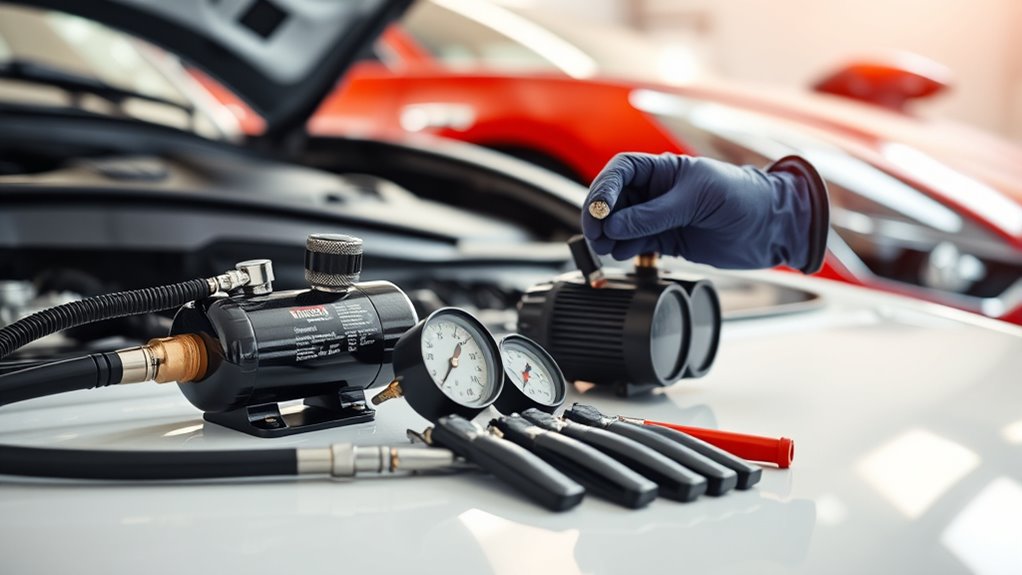
Before you begin, make sure you have all the necessary tools ready, including a vacuum pump, manifold gauge set, and safety gloves. These items are crucial for a smooth refrigerant recharge and effective system leak detection.
First, verify your car’s engine is off and the air conditioning system is fully depressurized. Connect the manifold gauge set to the service ports carefully, identifying the low and high-pressure sides. Wear safety gloves to protect yourself from refrigerant exposure.
Before vacuuming, perform a thorough system leak detection to avoid losing refrigerant later. You can do this by applying a leak detection solution or using an electronic leak detector around hoses and connections.
Once you confirm there are no leaks, you’re ready to proceed with vacuuming. Proper preparation not only safeguards your vehicle but also ensures the refrigerant recharge is efficient and the air conditioning operates at its best. Taking these steps will save you time and prevent costly mistakes.
Vacuum Your Car’s Air Conditioning System Step-by-Step
Once you’ve confirmed there are no leaks, you can start vacuuming your car’s air conditioning system to remove moisture and air. First, connect your vacuum pump to the service ports after completing refrigerant recovery and system leak detection.
Turn on the pump and let it run for about 30 to 45 minutes to create a deep vacuum. This process pulls out unwanted moisture and air that could harm your system’s efficiency. Monitor the vacuum gauge to ensure it holds steady, indicating no leaks.
After the vacuuming, close the valves and turn off the pump. Wait a few minutes to confirm the vacuum level doesn’t drop, confirming a sealed system.
Clean Components and Restore Your Car’s AC System Function
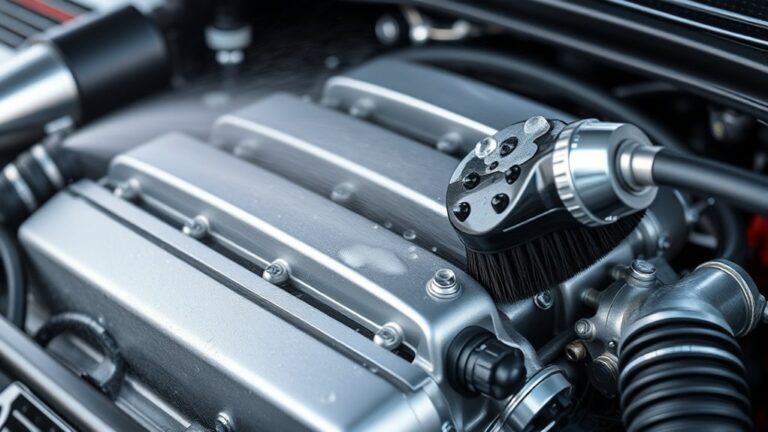
After confirming your system holds a steady vacuum, the next step is cleaning the individual components to guarantee peak performance. Start by inspecting and cleaning the condenser coils, evaporator, and hoses to remove dirt and debris. This prevents blockages and improves airflow.
Ensure peak AC performance by thoroughly cleaning condenser coils, evaporator, and hoses to remove debris and improve airflow.
Next, follow these steps to restore your car’s AC system function:
- Perform a thorough system leak detection to find and fix any leaks.
- Replace damaged or worn parts like O-rings and seals.
- Clean or replace the cabin air filter to maintain air quality.
- Complete a refrigerant recharge using the correct specifications for your vehicle.
Frequently Asked Questions
How Often Should I Vacuum My Car’s AC System?
You should vacuum your car’s AC system about once a year or whenever you notice a drop in cooling performance. Regular car maintenance helps keep your AC efficient and prevents mold or debris buildup.
If you’re into DIY tips, vacuuming your system yourself can save money and improve air quality. Just be sure to follow proper steps to avoid damaging components and keep your car’s interior fresh and comfortable.
Can Vacuuming Fix a Refrigerant Leak?
Vacuuming your car’s AC won’t fix a refrigerant leak; it’s like trying to fill a bucket with a giant hole! Vacuuming removes air and moisture but doesn’t stop refrigerant loss.
To truly fix the issue, you need a proper seal repair or component replacement. So, if you notice a leak, don’t rely on vacuuming alone. Address the root cause to keep your AC running smoothly and efficiently.
Is Professional AC Vacuuming Necessary for All Car Models?
Professional AC vacuuming isn’t necessary for all car models, but it’s often the safest bet. You can try DIY techniques if you’re confident, but some systems require specialized equipment.
Considering cost comparison, professional services might seem pricier upfront but can save you from costly mistakes or incomplete fixes. If your car’s AC is complex or under warranty, it’s smarter to leave it to the pros to guarantee proper vacuuming and avoid damage.
What Safety Precautions Should I Take During Vacuuming?
Picture yourself working under your car’s hood. Always wear protective gear like gloves and safety glasses to shield against refrigerant exposure.
Make sure you use proper ventilation methods; open doors or work outside to avoid inhaling harmful fumes. Keep a fire extinguisher nearby, and never rush the process.
These steps help you stay safe while vacuuming your car’s AC system, preventing accidents and protecting your health.
Will Vacuuming Improve My Car’s Overall Air Quality?
Yes, vacuuming your car’s air conditioning system can improve overall air quality by removing dust, debris, and moisture that cause mold and bacteria buildup. This helps reduce unpleasant cabin odor and guarantees the air filter works more efficiently.
Conclusion
Now that you know how to vacuum your car’s air conditioning system in just three easy steps, you can keep it running smoothly and efficiently. Did you know that a poorly maintained AC system can reduce fuel efficiency by up to 10%?
Taking the time to properly vacuum and clean your AC not only improves comfort but also saves you money in the long run. Stay proactive, and your car will thank you with cooler, cleaner air from a well-vacuumed car air conditioning system.