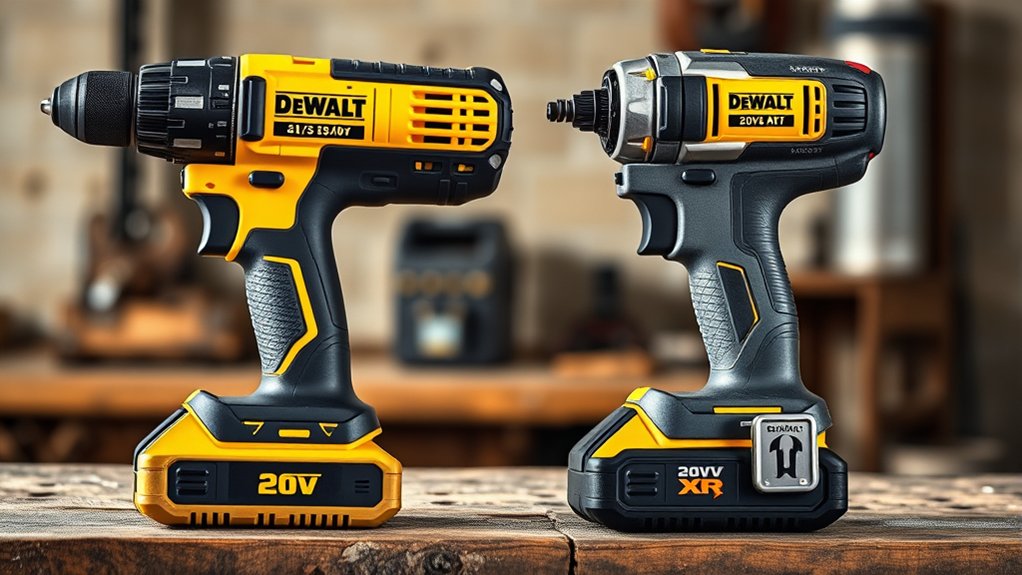
Dewalt 20V Vs 20V XR €“ 5 Key Differences
Choosing between DeWalt 20V and 20V XR tools can be confusing, especially when you want reliable performance without overspending. You’re not alone—many DIYers and professionals struggle to understand whether the added cost of XR is truly worthwhile.
This guide breaks down the key differences to help you choose confidently.
DeWalt 20V and 20V XR tools share the same battery platform, but XR models deliver more power, stronger load handling, and better performance under demanding conditions. XR tools typically use brushless motors and advanced electronics for longer runtime, cooler operation, overload protection, and reduced maintenance.
They may also add tougher housings and precision controls. Standard 20V tools cost less and suit occasional DIY jobs, while XR is worth the premium for frequent, intensive work.
Investigate the key differences to choose confidently.
Key Takeaways
- Power: DeWalt XR tools generally provide more torque, stronger load handling, and better performance than standard 20V models.
- Motor and efficiency: XR tools commonly use brushless motors, improving runtime, cooling, efficiency, and maintenance requirements.
- Features and durability: XR models often include advanced electronic controls, reinforced components, metal gear housings, and enhanced speed control.
- Price: Standard 20V tools cost less, while XR tools command a premium for improved performance and longer-term durability.
- Best use: Choose standard 20V for occasional light-duty tasks. Choose XR for frequent, demanding work and extended operation.
What Are DeWalt 20V and 20V XR Tools?
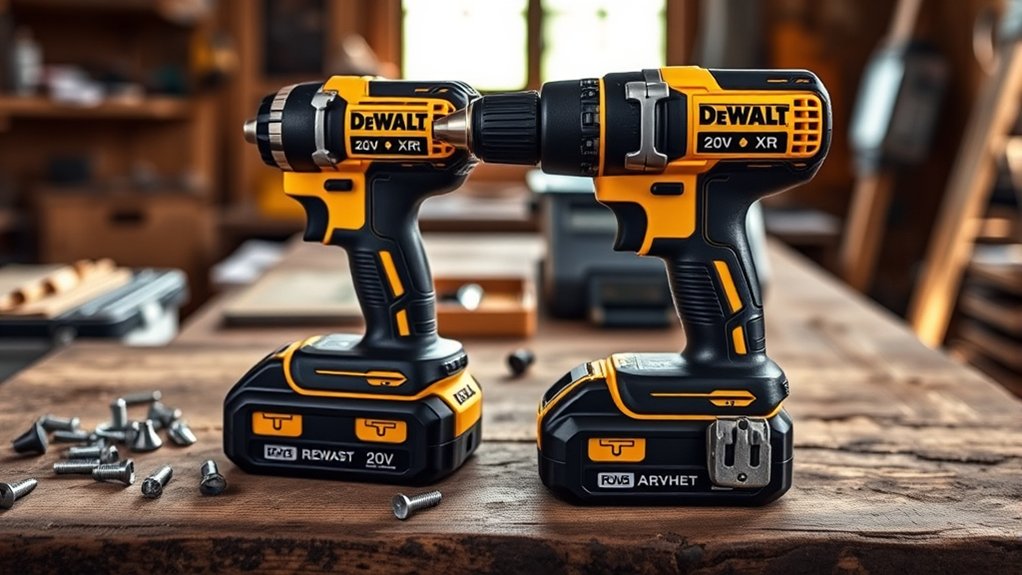
DeWalt 20V and 20V XR tools are cordless power tools that use the same 20V MAX battery platform. When you choose either line, you get convenient cordless operation, interchangeable battery options, and access to a broad range of drills, saws, drivers, lights, and other equipment.
The standard 20V lineup gives you practical tools for routine repairs, DIY projects, maintenance, and general construction tasks. You can select compact models for easier handling or larger tools for more demanding jobs.
The XR label identifies an expanded range designed for users who want additional features, refined designs, or more specialized choices within the same platform.
Battery compatibility helps you switch a charged pack between compatible tools, reducing the number of batteries you need. However, you should check each product’s specifications before buying, since some packs or accessories may have particular requirements.
You’ll also notice differences in tool weight, shape, controls, and included features as you compare individual models.
How Do DeWalt 20V and XR Power Differ?
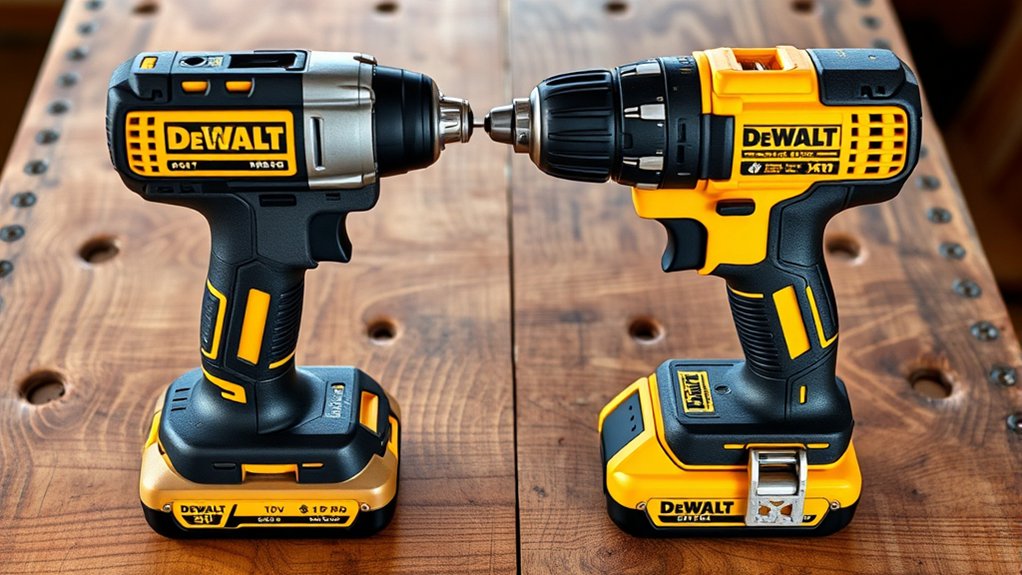
Although both lines use the same 20V MAX battery platform, XR tools typically deliver more power and efficiency through upgraded motors, electronics, and mechanical components. When you drive screws, drill dense materials, or cut hardwood, XR models generally maintain stronger torque and respond better under load.
You’ll notice the difference most during demanding applications, while standard 20V tools suit routine repairs and lighter jobs.
| Feature | 20V | 20V XR |
|---|---|---|
| Motor output | Standard | Higher |
| Load handling | Moderate | Stronger |
Battery compatibility remains a major advantage: you can use compatible 20V MAX packs across both lines, though the tool determines performance. Check each model’s specifications before pairing a battery.
XR upgrades may also add tool weight because reinforced components and advanced electronics increase size. That extra weight can improve durability and control, but it may cause fatigue during overhead work.
Choose standard 20V for occasional tasks. Choose XR when you need greater power, sturdier construction, and confident performance under demanding loads.
Which Line Offers Better Runtime and Cooling?
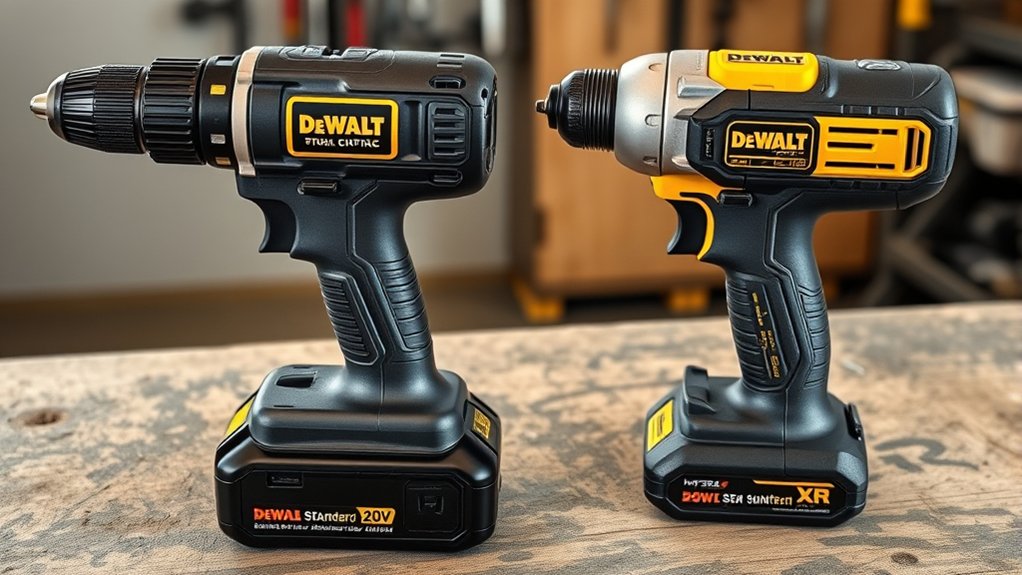
XR tools typically offer better runtime and cooling because their brushless motors and electronic controls use battery power more efficiently while managing heat under load. That improved battery efficiency helps you complete more cuts, fasteners, or drilling tasks on one charge, especially during demanding work.
Standard 20V tools can still deliver dependable performance, but their brushed motors generally create more friction and waste more energy as heat. As a result, you may notice shorter runtime and slower recovery during extended use.
XR models also improve heat dissipation through refined motor designs and electronic management. These systems limit unnecessary stress, regulate output, and help prevent excessive temperature buildup.
You’ll feel the advantage when you work continuously or use higher-capacity batteries, since the tool can maintain performance longer before thermal protection reduces power. For occasional household tasks, the standard line may provide enough runtime.
For frequent, heavy-duty use, choose XR when longer operation and cooler running matter most to you.
What Extra Features Does DeWalt XR Add?
Beyond better runtime and cooling, the XR line adds features that improve control, durability, and convenience on demanding jobs. You’ll often find brushless motors, which reduce maintenance and deliver smoother power than brushed designs.
XR tools enhance demanding jobs with brushless power, improved control, greater durability, and convenient features.
Many XR tools also include electronic controls that help prevent overload, overheating, and deep battery discharge. That protection can extend tool and battery life while keeping performance more consistent.
You’ll notice practical upgrades, too. Some models offer variable-speed triggers, multiple operating modes, LED work lights, belt hooks, and improved grips.
High-torque tools may add selectable speed settings or precision control, helping you match output to the material and task. Metal gear housings and reinforced components can withstand frequent use and jobsite abuse.
Before buying, check Battery compatibility: XR batteries fit most 20V MAX tools, but features vary by model. Also compare Tool weight, since added electronics or metal components may affect balance and handling during extended work.
Which DeWalt 20V Line Offers Better Value?
The standard DeWalt 20V line often offers better value for occasional DIY tasks and light-duty work because the tools and kits typically cost less. If you’re building a starter collection, you can buy a drill, impact driver, and battery kit without stretching your budget.
A careful Price comparison should include included batteries, chargers, and accessories, not just the tool’s shelf price.
You’ll usually get better value from 20V XR when you use your tools frequently, tackle demanding materials, or need longer runtimes. XR models may cost more initially, but brushless motors, improved performance, and higher-capacity batteries can justify that premium.
Better Battery longevity may also reduce replacement costs over time, especially for contractors and serious DIYers.
Choose standard 20V if you prioritize lower upfront costs and occasional use. Choose XR if productivity, durability, and runtime matter more than initial savings.
Your workload, battery needs, and planned tool purchases should guide the final decision. Both lines share battery compatibility, so you can upgrade gradually as your needs grow.
Frequently Asked Questions
Can Dewalt 20V and 20V XR Batteries Be Used Interchangeably?
Yes, you can generally use DeWalt 20V and 20V XR batteries interchangeably with compatible DeWalt 20V tools. Both batteries share the same connection system, so an XR battery will power standard tools, while a standard battery will run XR tools.
However, you may notice differences in runtime, performance, and power capacity. Check your tool’s manual for battery compatibility, and use only genuine DeWalt batteries to ensure proper fit, safety, and reliability.
How Long Do Dewalt 20V and 20V XR Batteries Typically Last?
You’ll typically get three to five years from DeWalt 20V and 20V XR batteries with regular use, though charging habits, storage, temperature, and workload affect lifespan. A single charge may last anywhere from 30 minutes to several hours, depending on battery capacity and tool demands.
Higher-capacity packs run longer, while XR batteries often maintain power output better under heavy loads. Store packs cool, dry, and partially charged to extend service life.
Are Dewalt 20V XR Tools Compatible With Older Dewalt Chargers?
Yes, you can generally charge DeWalt 20V XR batteries with older DeWalt 20V chargers, provided the charger supports lithium-ion batteries. You’ll get proper battery compatibility because XR packs use the same voltage platform, though charging speed may differ.
Check your charger’s model and manual before connecting anything. Older chargers won’t improve tool performance, and they may charge XR batteries more slowly than newer chargers designed for higher-capacity packs.
Which Dewalt 20V Batteries Are Best for Outdoor Storage Conditions?
You’ll be on safe ground with DeWalt 20V XR batteries, especially models featuring larger capacity and advanced cell protection. Choose a 5.0Ah or 6.0Ah pack for strong runtime, but keep in mind that battery capacity doesn’t make a battery weatherproof.
For outdoor storage, prioritize weather resistance by keeping packs in a dry, shaded, temperature-controlled case. Don’t leave them in rain, direct sunlight, freezing conditions, or a hot vehicle. Store batteries partly charged for longer life.
Does Dewalt Offer Warranties Covering Both 20V and 20V XR Tools?
Yes, DEWALT offers warranties for both 20V and 20V XR tools, though coverage varies by model and product category. You’ll typically find a three-year limited warranty, one-year free service contract, and 90-day money-back guarantee on many cordless tools.
Check your tool’s registration documents for exact terms. Battery warranties may differ, so review coverage separately.
Higher battery capacity and power efficiency don’t automatically extend warranty protection or change eligibility.
Conclusion
Ultimately, choosing between DeWalt 20V and 20V XR comes down to how you’ll work. Standard 20V tools offer dependable performance at a lower cost, while XR models provide more power, longer runtime, cooler operation, and extra features.
If you’re tackling occasional DIY projects, 20V should serve you well. If you demand more from every cut, drive, and charge, XR may justify the investment. Choose the power, runtime, and features that best fit your needs.