5 Tips to Keep Mice Out of Your Car Engine
If you’ve ever found unexpected damage under your car’s hood, you’re not alone. Many people struggle with keeping mice out of their car engine, which can lead to costly repairs and frustration.
Luckily, there are effective ways to protect your vehicle and avoid those pesky critters making themselves at home.
You can keep mice out of your car engine by sealing gaps around the hood, firewall, and undercarriage with weather stripping or steel wool. Use natural repellents like peppermint oil-soaked cotton balls near entry points to deter them.
Regularly inspect your engine bay for chewed wires, droppings, or nesting materials, and clear away debris or food sources around your vehicle. Maintaining a clean area and securing openings will help prevent costly damage.
To protect your car further, find out more ways to spot and block these pests.
Key Takeaways
- Seal all gaps and openings around the hood, firewall, and undercarriage to block mice entry points.
- Regularly inspect the engine bay for chewed wires, droppings, and nesting materials. This helps catch infestations early.
- Use natural repellents like peppermint oil-soaked cotton balls and cayenne pepper flakes near the engine area.
- Keep the area beneath and around the car clean and free of food, debris, and potential nesting materials.
- Install mesh screens over air vents and repair damaged seals to prevent mice from accessing the engine compartment.
Why Mice Love Hiding in Your Car Engine
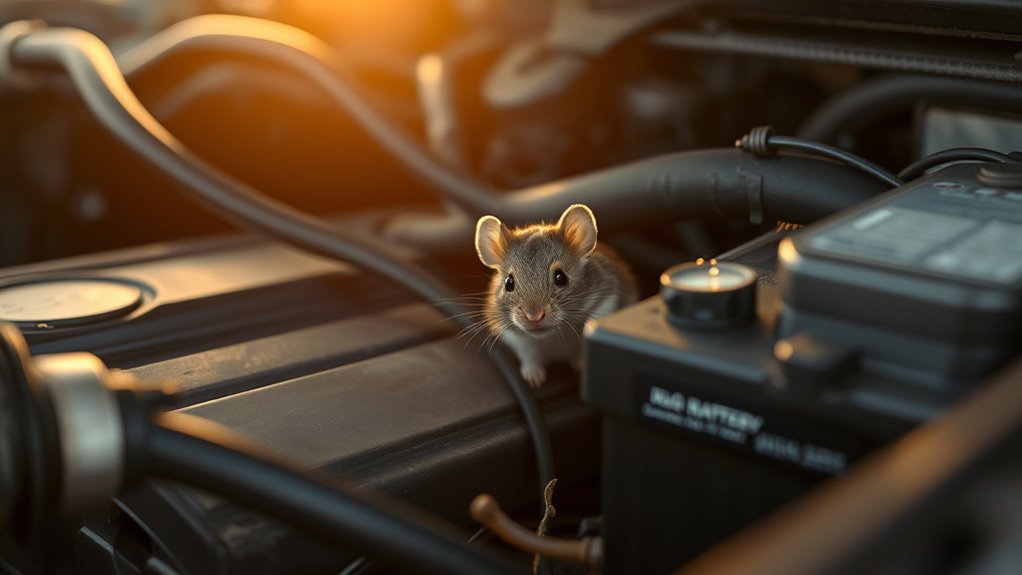
Because your car engine provides warmth and shelter, mice find it an ideal hiding spot, especially during colder months. When temperatures drop, you might not realize that your vehicle becomes a cozy refuge for these tiny invaders.
Your car engine offers warmth and shelter, making it a perfect hideaway for mice during cold months.
They seek protection from the cold, and your car engine offers just that, along with plenty of nooks to nest in. While you’re inside the car, you may not notice any signs because the car interior remains undisturbed.
However, the engine noise when you start your vehicle can sometimes mask their movements, making it harder to detect their presence. Mice are small and stealthy, so they can easily slip in through gaps around wires and hoses.
They’re drawn not only to the warmth but also to the quiet spaces where they can build nests without interruption. Understanding why mice love your car engine helps you stay one step ahead in protecting your vehicle.
How to Spot Mouse Nesting in Your Car Engine
If you suspect mice have taken up residence in your car engine, look for signs like chewed wires, droppings, or nesting materials such as shredded fabric or leaves. These clues can indicate active nesting, which can cause serious damage if left unchecked.
Open the hood and inspect the engine bay carefully, paying close attention to hidden corners and warm spots where mice prefer to nest. Use a flashlight to spot any unusual debris or odors that might signal their presence.
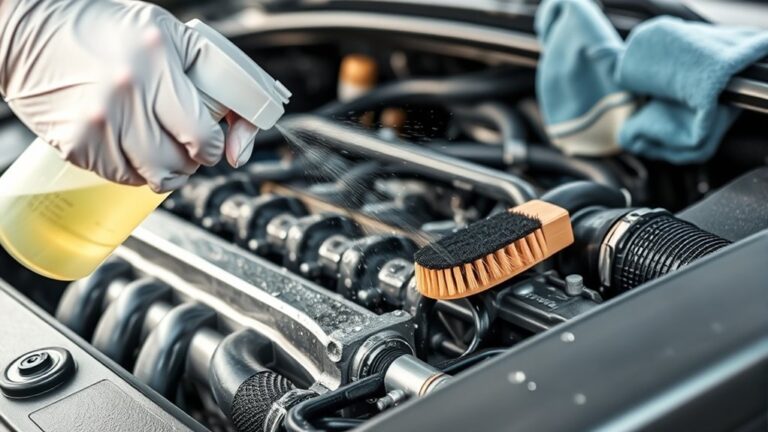
Once you identify nesting, it’s essential to address it promptly. Thorough engine cleaning helps remove food sources and nesting debris, making your car less attractive to pests. Combine this with professional pest removal if the infestation is severe.
Regular inspections after cleaning will help you catch any new signs early. Staying vigilant and maintaining a clean engine bay is your best defense against mice causing costly damage.
How to Block Mice From Getting Into Your Engine
Though mice can squeeze through surprisingly small openings, you can take simple steps to block their access to your engine bay. Start by sealing any gaps or holes around the hood and firewall with weather stripping or steel wool. Check undercarriage panels and wheel wells for openings and secure them tightly.
Seal gaps and check panels to keep mice from entering your engine bay.
Installing mesh screens over air vents can prevent entry without restricting airflow. Keeping the area beneath your car clear of debris and food sources also reduces attraction.
Blocking mice is vital because their nests and chewed wires can cause engine overheating and costly tire damage. Rodents tend to gnaw on rubber components and wiring, which can disrupt your car’s cooling system and tire integrity.
Regularly inspect your engine bay for signs of tampering and promptly repair any damaged seals or covers. By staying proactive and thorough, you’ll effectively keep mice out of your engine and protect your vehicle from costly repairs.
Natural Repellents to Keep Mice Out of Your Car
While sealing gaps and securing panels can keep mice physically out, using natural repellents adds an extra layer of protection by deterring them from approaching your car in the first place. You can easily create DIY deterrents using common household remedies.
For instance, peppermint oil is a powerful scent mice dislike. Soak cotton balls in peppermint oil and place them near your engine or under the hood. Refresh the oil every few days to maintain effectiveness.
Another simple remedy is using dryer sheets with a strong fragrance; tuck them around areas where mice might enter. You can also sprinkle cayenne pepper or crushed red pepper flakes around the car’s perimeter to discourage rodents.
These natural options are safe, inexpensive, and avoid harsh chemicals. By combining these DIY deterrents with other prevention methods, you’ll considerably reduce the chances of mice nesting in your vehicle. Keep these natural repellents refreshed regularly for best results.
Maintenance Tips to Prevent Mouse Damage in Your Car
Because mice can cause serious damage by chewing through wires and insulation, regular maintenance is essential to protect your car. Start with thorough car cleaning. Remove any food crumbs, trash, or nesting materials that might attract rodents.
Pay special attention to the engine bay, where debris can accumulate and provide shelter for mice. Next, perform routine engine inspections. Look closely for signs of chewing, droppings, or nests around wiring harnesses and hoses.
Catching these early can prevent costly repairs. Furthermore, seal any gaps or openings in the engine compartment to block entry points. Keeping your car in a clean, well-maintained state discourages mice from making it their home.
Frequently Asked Questions
Can Mice Cause Damage to My Car’s Electrical System?
Yes, mice can cause serious electrical damage to your car’s wiring by chewing through cables and insulation. This can lead to costly repairs and even car malfunctions.
To protect your vehicle, focus on rodent prevention by keeping your garage clean, using deterrents like peppermint oil or traps, and regularly inspecting your engine bay. Taking these steps helps you avoid electrical damage and maintain your car’s reliability.
Are Certain Car Models More Prone to Mouse Infestations?
Yes, certain car models show higher car model susceptibility to mouse infestations. If your vehicle has easier engine compartment access, mice find it more inviting to nest and cause damage.
Older models or cars with larger gaps around the engine bay often attract rodents. You should check your car’s design and consider extra protective measures if it’s more vulnerable.
Sealing entry points helps reduce the risk of unwanted critters inside your engine.
How Quickly Can Mice Damage Car Wiring?
Mice can chew through your car wiring faster than you’d expect, sometimes in just a few days. They can turn your engine bay into a tangled mess.
To stop this, you’ll want to use natural deterrents like peppermint oil and mothballs to keep them at bay. Pair these with nesting prevention tactics, such as sealing gaps and removing cozy hiding spots.
Taking action quickly helps protect your car’s essential circuits from becoming their next snack.
Is It Safe to Use Chemical Repellents Inside My Car?
It’s generally best to avoid chemical repellents inside your car because they can pose chemical safety risks to you and passengers. Instead, you should try natural repellents like peppermint oil or dryer sheets, which are safer and still effective.
You can place these near the engine or vents to deter mice without exposing yourself to harsh chemicals. Always prioritize natural options to keep your car safe and comfortable.
Can Professional Pest Control Help With Car Mouse Problems?
Absolutely, professional pest control can tackle your car mouse problem like a superhero on a mission! They use expert inspection methods to find every sneaky hiding spot, ensuring no mouse escapes.
Their pest prevention strategies go beyond quick fixes, creating barriers that keep rodents far from your engine. You’ll get thorough, lasting protection, so you won’t have to worry about tiny invaders turning your car into their playground again.
Conclusion
If you want to keep your car engine safe from mice, don’t wait until you’re dealing with a tiny army of invaders chewing through wires. By spotting early signs, blocking entry points, and using natural repellents, you’ll make your car a mouse-free zone.
Regular maintenance is your secret weapon. Think of it as an invisible force field protecting your ride. Follow these tips, and you’ll never have to worry about unwanted furry passengers again.
Keep these 5 tips to keep mice out of your car engine in mind, and enjoy peace of mind every time you hit the road!