5 Essential Tools Mechanics Need in Every Garage
If you’re tired of guessing what’s wrong with your vehicle or scrambling for the right equipment mid-repair, you’re not alone. Many DIY mechanics struggle to build a reliable garage setup, but these five essential tools mechanics need in every garage can make repairs safer, faster, and more manageable.
Every garage needs five essential tools: an OBD2 scanner to find trouble codes and monitor live engine data, a metric and SAE socket set for versatile repairs, and a floor jack with jack stands for safe lifting.
Add a digital multimeter to test batteries, wiring, sensors, and charging systems.
Finally, keep safety glasses, mechanic’s gloves, and wheel chocks nearby.
These basics help you diagnose and repair vehicles confidently, and the details below will help you use each tool safely.
Key Takeaways
- Use an OBD2 scanner to identify trouble codes, monitor live data, and verify repairs.
- Keep metric and SAE socket sets with extensions, universal joints, and durable ratchets for varied repairs.
- Use a quality floor jack, jack stands, and wheel chocks to lift and support vehicles safely.
- Keep a digital multimeter for testing batteries, charging systems, wiring, and electrical components.
- Wear safety glasses and appropriate gloves while maintaining organized, inspected protective equipment.
Diagnose Faster With an OBD2 Scanner
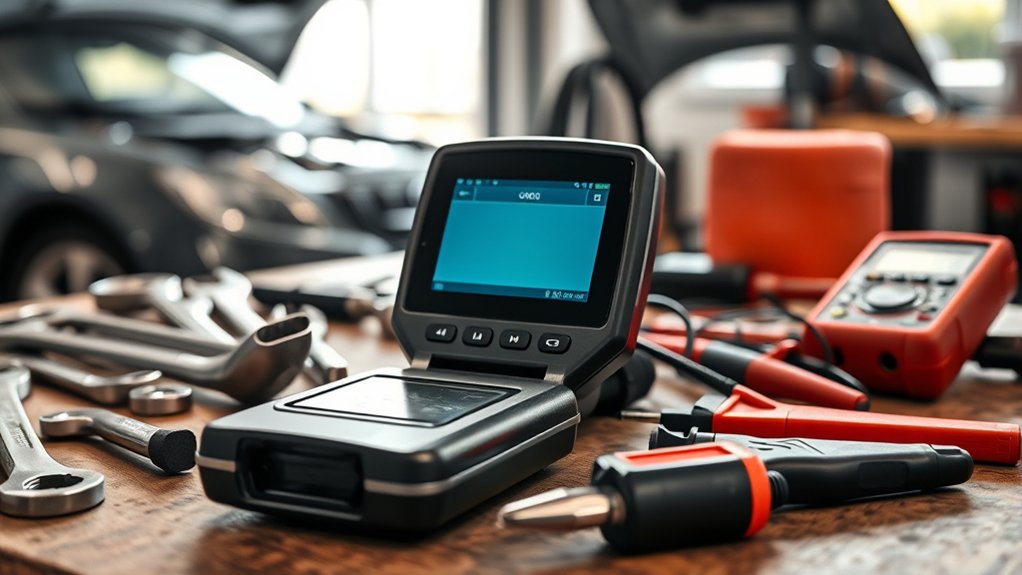
When a dashboard warning light appears, an OBD2 scanner helps you identify the problem before replacing parts or visiting a shop. Plug it into your vehicle’s diagnostic port, switch on the ignition, and read stored trouble codes within seconds.
Identify dashboard problems quickly with an OBD2 scanner before replacing parts or visiting a repair shop.
You’ll see whether the issue involves ignition, fuel delivery, sensors, or emissions equipment.
Use the scanner’s live-data function to monitor readings while the engine runs. Comparing values with manufacturer specifications can help you confirm a fault instead of guessing.
You can also clear codes after completing repairs, then verify that the warning light stays off.
An OBD2 scanner proves especially useful during Vehicle emission testing because it reveals readiness monitors and recent fault activity. Some models connect to Engine diagnostic software, letting you view graphs, save reports, and access repair information on a phone or laptop.
Choose a unit with clear explanations and frequent software updates, so you’ll diagnose problems quickly and confidently.
Choose a Metric and SAE Socket Set
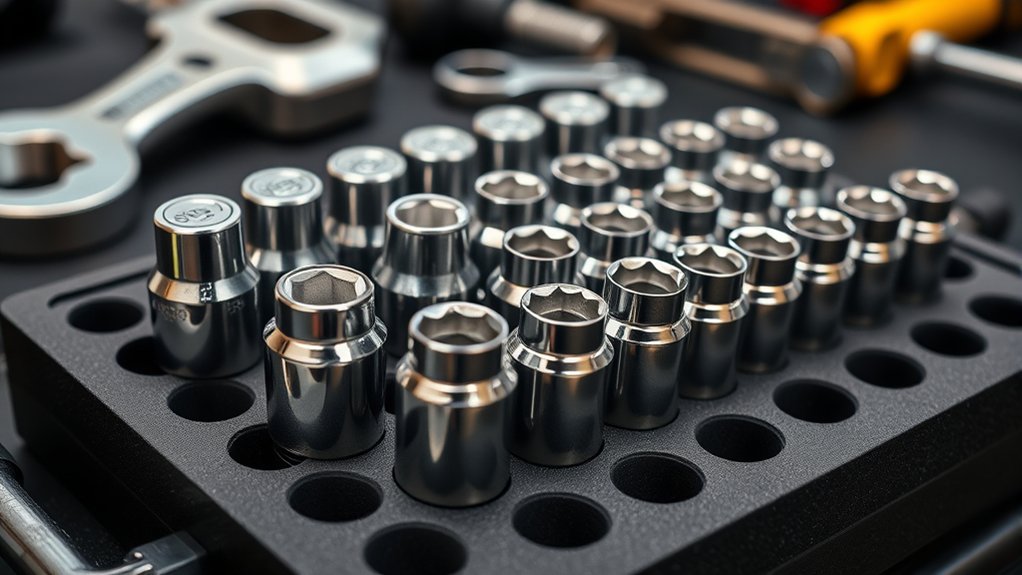
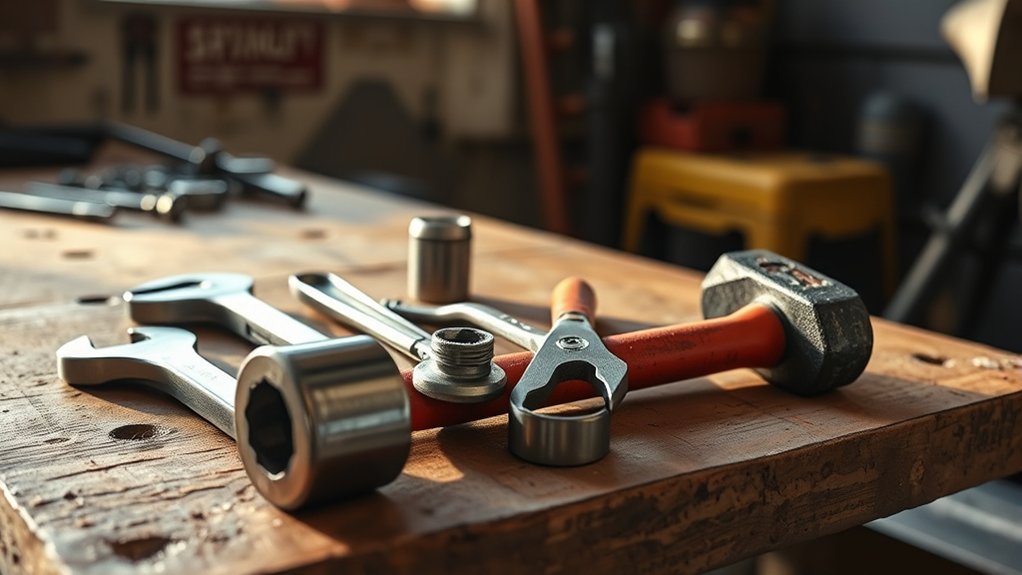
After diagnosing a problem, you’ll need the right sockets to remove and replace parts. Choose a set that includes both metric and SAE sizes, since vehicles and aftermarket components may use either measurement system. Metric SAE compatibility helps you avoid improvised fits that can round fasteners or slow repairs.
Prioritize durable chrome vanadium sockets with clear, laser-etched markings. A complete set should offer shallow and deep sockets, common drive sizes, and six-point designs for better grip on stubborn fasteners.
Include extensions, universal joints, and a ratchet with a fine tooth count so you can work in tight engine bays. Socket set versatility matters when you service cars, trucks, motorcycles, and household equipment.
Keep sockets organized in a labeled case or drawer. You’ll find the correct size faster and prevent missing pieces.
Add impact-rated sockets if you use an impact wrench, because standard chrome sockets can crack under repeated impact force. Inspect worn sockets regularly and replace damaged pieces promptly.
Lift Vehicles With a Floor Jack and Stands
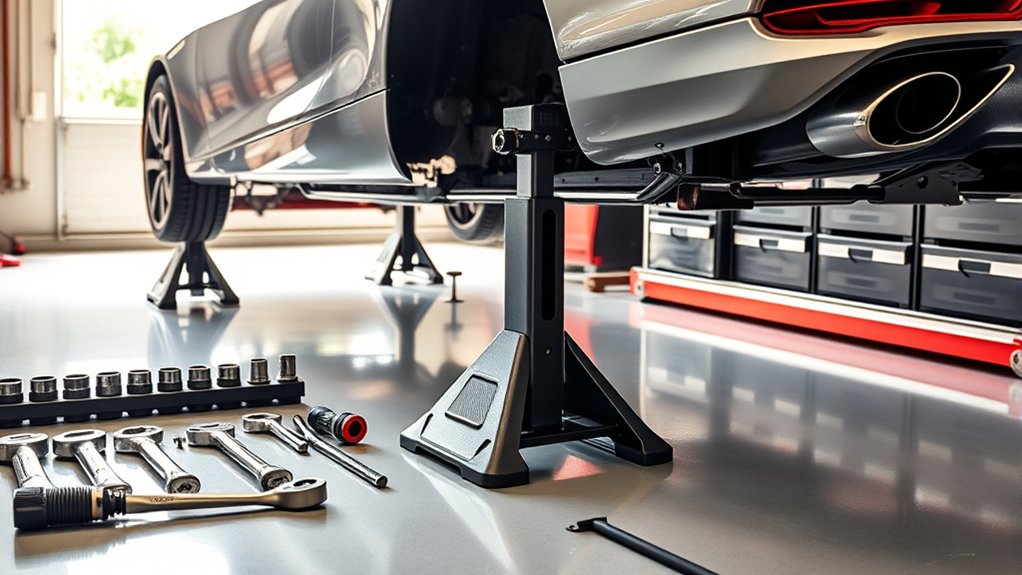
Choose a quality floor jack and a pair of sturdy jack stands before working beneath any vehicle. Park on level ground, engage the parking brake, and chock the wheels that stay on the ground.
Check your owner’s manual for approved lifting points, then position the jack squarely beneath one. Pump the handle slowly until the tires clear the floor.
Place stands under reinforced points, lower the vehicle gently, and confirm that its weight rests securely on them. Never rely on the jack alone; a hydraulic lift can lose pressure without warning.
Give the vehicle a firm shake before crawling underneath.
| Tool | Primary use | Safety check |
|---|---|---|
| Floor jack | Raise vehicle | Center saddle |
| Jack stands | Support vehicle | Lock height |
| Wheel chocks | Prevent rolling | Seat firmly |
Use your new access for an underbody inspection, checking suspension, exhaust, leaks, and rust. Keep tools organized and maintain clear escape space.
Raise the vehicle only as high as necessary for the repair. Lower it carefully when finished.
Test Electrical Systems With a Multimeter
A digital multimeter helps you diagnose battery, charging, wiring, and sensor problems without guessing. Set it to the correct function and range before testing voltage, resistance, or current. For basic checks, connect the black probe to the COM port and the red probe to the appropriate input.
Touch the probes firmly to the terminals, then compare your reading with the vehicle manufacturer’s specifications.
Prioritize electrical safety whenever you work around a vehicle’s electrical system. Don’t measure resistance on a powered circuit, and never place an ammeter across a battery or voltage source.
Inspect leads for damage before each use, and keep probe tips from bridging adjacent terminals.
Reliable results also depend on multimeter calibration. Check the meter against a known reference or follow the manufacturer’s calibration schedule.
Use continuity mode to locate broken wires, voltage-drop tests to find poor connections, and resistance checks to evaluate sensors, fuses, and switches. Record unusual readings before replacing parts.
Stock Safety Glasses, Gloves, and Wheel Chocks
Once you’ve finished electrical testing, protect yourself from the next set of garage hazards with safety glasses, work gloves, and wheel chocks. These essentials form your personal protective equipment and help prevent common injuries while you work.
After electrical testing, use safety glasses, work gloves, and wheel chocks to protect yourself from common garage hazards.
- Safety glasses: Choose impact-rated lenses that fit securely and resist fogging. Wear them when grinding, drilling, spraying, or working beneath a vehicle.
- Work gloves: Keep several pairs available. Use flexible mechanic’s gloves for assembly, cut-resistant gloves for sharp parts, and chemical-resistant gloves for fluids.
- Wheel chocks: Place chocks tightly against the tires before lifting or servicing a vehicle. Use them even when you’ve set the parking brake.
- Smart storage: Keep glasses and gloves near your workbench, and store chocks beside your jack. Clear labels support workshop organization and make preparation automatic.
Replace damaged protective gear immediately, and wash reusable gloves as recommended. Before every job, inspect your equipment and confirm the vehicle can’t move. This quick routine keeps you safer and your garage ready.
Frequently Asked Questions
How Often Should Garage Tools Be Cleaned and Maintained?
You should clean garage tools after each use, especially when you handle oil, grease, moisture, or corrosive materials. Wipe surfaces, remove debris, and dry everything before storage.
Inspect hand tools monthly and maintain power tools according to the manufacturer’s instructions, typically every few months. Create cleaning schedules to stay consistent, and use organized Tool storage to prevent damage.
Immediately repair or replace cracked, rusty, loose, or malfunctioning tools before your next project.
Which Torque Wrench Is Best for Accurate Fastener Tightening?
You’ll get the most accurate fastener tightening with a calibrated click-type torque wrench from a reputable manufacturer. Think of it as your handshake with every bolt: firm, measured, never excessive.
Choose a model covering your vehicle’s torque range, with clear markings and a comfortable handle. Prioritize precision calibration, and verify its accuracy periodically.
Always follow the manufacturer’s torque specifications, tighten smoothly, and store the wrench at its lowest setting after use.
What Air Compressor Size Suits Common Automotive Repair Tasks?
Choose a 20–30 gallon compressor producing at least 5–6 CFM at 90 PSI for common automotive repairs, including impact wrenches, tire inflation, and blow-off cleaning.
You’ll handle occasional spray painting or air-powered tools better with a 30–60 gallon model delivering 10–15 CFM. Check each tool’s requirements before buying.
Consider air compressor capacity, duty cycle, and recovery time. Compare compressor noise levels if you’ll work near living spaces or neighbors.
How Can Mechanics Organize Tools for Quick, Efficient Access?
You’ll work faster when you organize tools by task and frequency of use. As the saying goes, “A place for everything, and everything in its place.”
Keep daily-use sockets, wrenches, and screwdrivers in a rolling chest’s top drawers. Label compartments, outline tools on a pegboard, and group specialty equipment by vehicle system.
Store heavy items low, maintain clear walkways, and keep safety gear visible. Review your tool storage setup regularly to eliminate clutter and delays.
When Should Worn or Damaged Tools Be Replaced?
Replace worn or damaged tools as soon as they threaten safe, accurate work. During regular Safety inspections, check handles, grips, cutting edges, sockets, cords, and moving parts for cracks, excessive wear, looseness, or deformation.
Don’t keep using equipment that slips, sparks, bends, or produces unreliable results. Prompt replacement protects you, prevents damage to vehicles, and supports Tool longevity across your entire collection. Record replacements so you can track recurring failures.
Conclusion
With these five essential tools for mechanics, you’ll diagnose problems, loosen stubborn fasteners, lift vehicles safely, test electrical gremlins, and protect your eyes and fingers. Hoping a warning light disappears isn’t a repair strategy.
Your garage doesn’t need every gadget advertised by a grinning influencer. It needs dependable basics you’ll actually use.
Invest in quality, maintain your tools, and follow safe procedures. After all, the best mechanic isn’t the one with the fullest toolbox, but the one who survives using it.