What Is a Hedge Cutter on a Pole?
Tall, overgrown hedges can be difficult to trim, especially when you’re trying to reach the top without balancing on a ladder. You’re not alone—many gardeners struggle with awkward angles, uneven growth, and tiring manual work. A hedge cutter on a pole can make the job easier and safer.
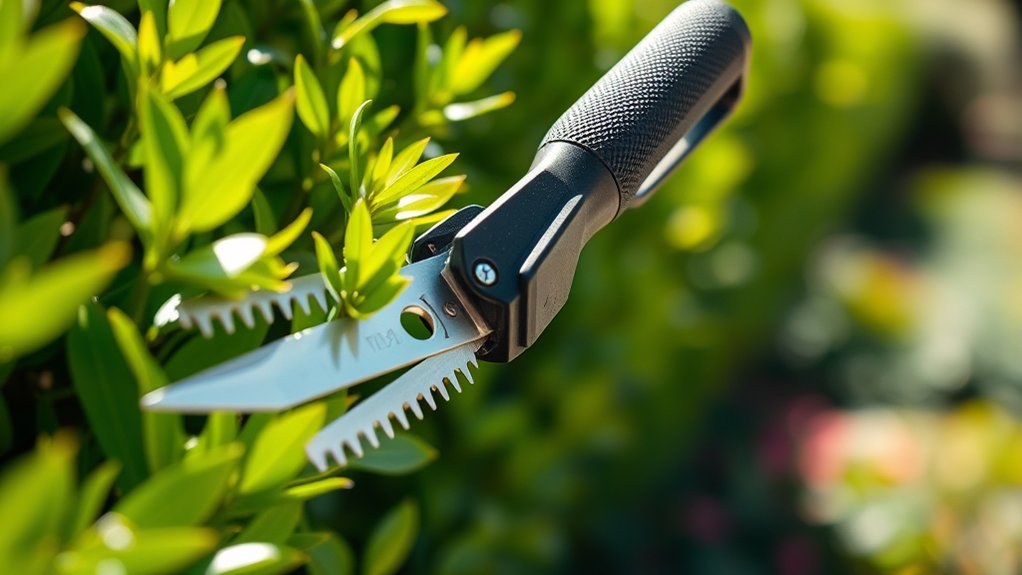
A hedge cutter on a pole is a long-reach garden tool that lets you trim tall or wide hedges from the ground, often without a ladder. Its motor drives reciprocating blades mounted on an extended shaft, while an adjustable head helps you shape tops and sides.
You can choose corded, battery-powered, or petrol models to suit your garden and hedge density. It works best on leafy growth and slender stems, and the sections below explain safe, effective use.
Key Takeaways
- A hedge cutter on a pole is a long-reach garden tool with powered blades mounted on an extended shaft.
- It trims and shapes tall or wide hedges without requiring ladders or excessive stretching.
- Models are available with corded electric, battery-powered, or petrol engines.
- Adjustable shafts and pivoting cutting heads help reach hedge tops, sides, and difficult areas.
- It suits leafy growth and slender stems but is not designed for thick, heavy branches.
What Is a Hedge Cutter on a Pole?
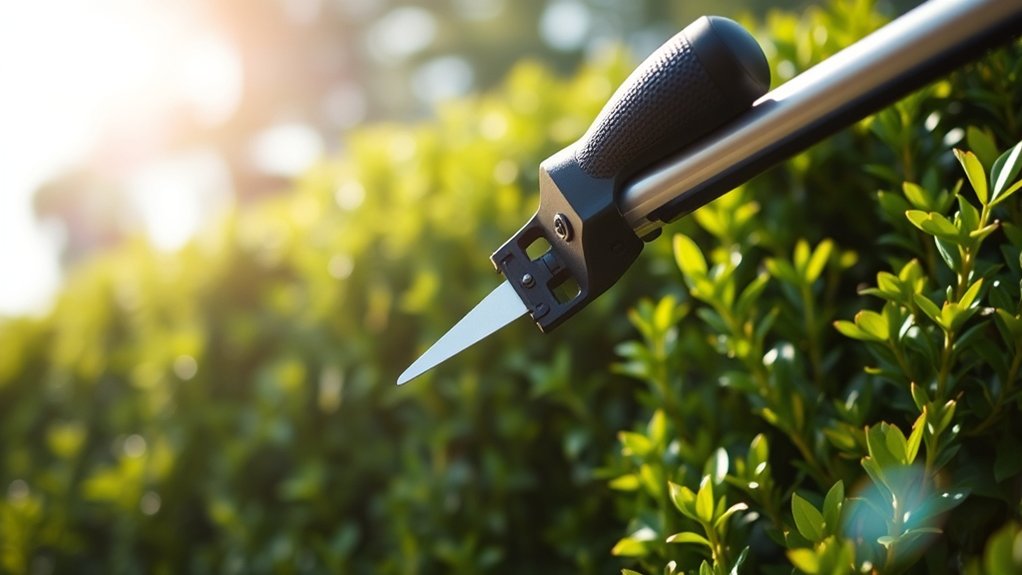
A hedge cutter on a pole is a long-reach garden tool with cutting blades mounted at the end of an extended shaft. You use it to trim tall, wide, or hard-to-reach hedges while keeping your feet on the ground.
Its design combines a cutting head, a long pole, and a handle that helps you guide the tool from below. Depending on the model, you might choose a petrol, corded electric, or battery-powered version.
Some poles adjust in length, allowing you to match the tool to your hedge height and garden layout. By shaping overgrown branches, you can improve Garden aesthetics and maintain clean boundaries around paths, lawns, and property lines.
However, you should consider wildlife habitat before cutting, since hedges can shelter birds, insects, and small mammals. Check for nests and avoid trimming during active breeding periods whenever possible.
Safety gear, stable footing, and careful planning will help you use this tool responsibly.
How Does a Pole Hedge Cutter Work?
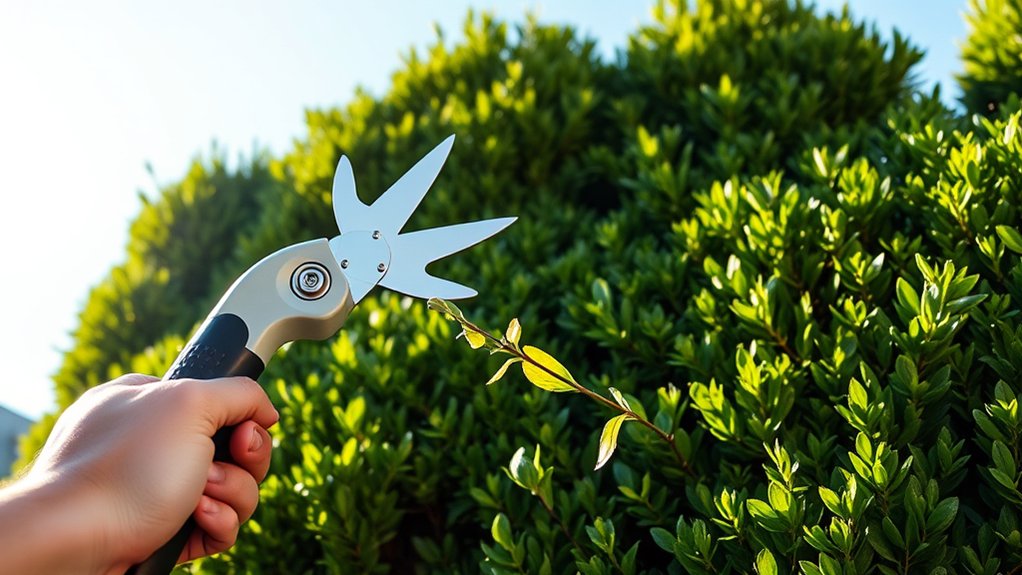
When you switch on a pole hedge cutter, its motor drives reciprocating blades that move rapidly past fixed teeth, slicing branches caught between them. Power travels from the battery or mains supply to the motor, which converts electrical energy into the blades’ back-and-forth motion.
A gearbox transfers and controls this movement, while the blade guard helps protect you from accidental contact and flying debris.
You guide the cutting head along the hedge, using the pole to reach elevated growth without a ladder. Many models let you adjust the head angle, helping you create level tops, neat sides, or shaped sections.
Keep both hands on the tool, maintain a firm stance, and move steadily rather than forcing the blades. Release the trigger when you need to reposition or clear debris.
For effective Garden landscaping, combine the machine with sound Hedge trimming techniques, including measured passes and regular maintenance.
Clean the blades, check fasteners, and lubricate moving parts after use.
Which Hedges Can a Pole Cutter Trim?
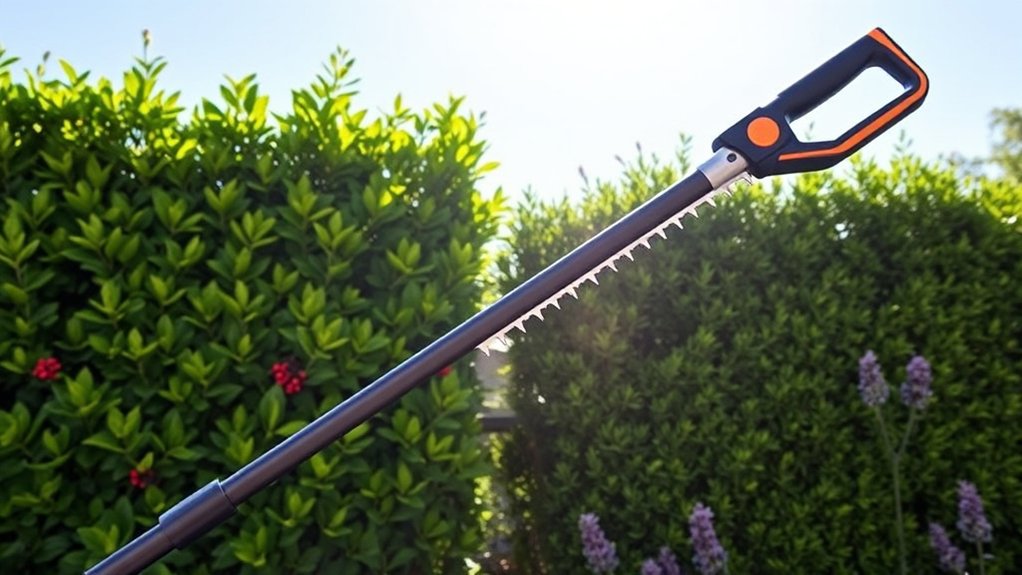
A pole cutter can easily handle softwood hedges such as privet and laurel. It can also trim dense evergreen hedges, as long as the blades are sharp and powerful enough. For tall or overgrown hedges, the extended reach lets you cut higher growth without needing a ladder.
Softwood Hedge Varieties
Softwood hedges such as privet, laurel, leylandii, and conifers are generally suitable for trimming with a pole cutter, provided their branches remain within the tool’s cutting capacity. You can use this equipment to shape young growth, control height, and maintain neat sides without climbing a ladder.
Choose pruning techniques that match each plant’s growth habit: trim privet and laurel regularly, while leylandii and conifers need measured cuts to preserve their natural form. Check the blade’s reach and tooth spacing before starting, and avoid forcing it through thick stems.
For hedge plant health, cut during suitable growing conditions, remove only modest amounts at once, and keep blades sharp and clean. You’ll achieve an even finish while reducing stress, but you should stop if branches become too woody or difficult to cut safely.
Dense Evergreen Hedges
Dense evergreen hedges, including established leylandii, conifers, laurel, and privet, can usually be trimmed with a pole cutter if their stems fit within the blade’s capacity.
You’ll get the best results when you:
- Check the blade gap and cutting length.
- Remove only light, fresh growth.
- Keep the cutter steady and controlled.
- Work evenly across the hedge face.
- Inspect for birds before cutting.
A pole cutter helps you shape these year-round screens while standing safely on the ground. Use it for routine Garden design maintenance, not heavy branch removal.
Trim during suitable weather, and avoid disturbing an active wildlife habitat, particularly during nesting periods. Start with a small test section to confirm the tool handles the foliage cleanly.
Keep the blade sharp, wear eye protection, and follow the manufacturer’s limits. Regular, modest trimming maintains a neat profile without stressing the hedge or exposing brown interior growth.
Tall Overgrown Hedges
For tall, overgrown hedges, a pole cutter can handle reachable leafy growth and slender stems, but it isn’t designed to cut thick, woody branches or reshape neglected hedges in one pass. Work gradually from the sides, keeping the blade parallel to the hedge, then lower high growth carefully.
Use suitable pruning techniques: remove dead wood with loppers, and avoid cutting deeper than the green outer layer. Check your footing, wear eye protection, and never overreach.
Before trimming, inspect Wildlife habitats for nests and postpone work when birds are actively nesting.
| Hedge condition | Pole cutter suitability | Best approach |
|---|---|---|
| Leafy, reachable growth | Good | Trim gradually |
| Slender stems | Good | Use steady passes |
| Thick woody branches | Limited | Use loppers |
| Neglected, uneven growth | Partial | Reshape over sessions |
You’ll get safer, cleaner results by treating severe overgrowth as a staged renovation, not a quick haircut.
What Are the Benefits and Limitations?
A hedge cutter on a pole lets you trim tall or wide hedges from the ground, improving reach while reducing the need for ladders. You can complete hedge trimming more safely, maintain straighter surfaces, and reach awkward upper growth without stretching as far.
Key benefits include:
Improved reach, safer trimming, faster cutting, and better control over tall or wide hedges.
- Better reach with a pole extension
- Less climbing and fewer ladder movements
- Faster cutting across broad, tall hedges
- Improved control over upper branches
- Reduced strain from repeated repositioning
However, you’ll face limitations. The extended shaft can feel heavy, especially during long sessions, and its length may reduce precision around corners or narrow spaces.
Cutting thick, woody branches can also overwork the motor and blades, depending on the tool’s capacity. You’ll need to manage the cutter carefully because falling debris can still present a hazard.
Battery models may require recharging during larger jobs, while corded versions restrict movement. Check the tool’s balance, cutting capacity, and maximum reach before buying, and wear eye and hearing protection whenever you operate it.
Which Types of Pole Hedge Cutters Are Available?
Pole hedge cutters come in corded electric, battery-powered, and petrol models, with each type suited to different garden sizes and working conditions. You can also choose between short and extended shafts, fixed or adjustable cutting heads, and single- or double-sided blades.
These designs help you shape formal borders, manage tall screens, or protect a Wildlife habitat during careful maintenance. Match the tool’s reach and blade length to your Garden design, hedge density, and access around paths or fences.
| Type | Best suited to | Key feature |
|---|---|---|
| Corded electric | Small gardens | Continuous operation |
| Battery-powered | Medium gardens | Cable-free handling |
Petrol models suit extensive hedges and demanding professional work, while lightweight versions make occasional trimming easier. An adjustable head lets you cut level tops and angled sides without stretching.
You’ll also find telescopic models for high branches and compact tools for narrow spaces. Check the manufacturer’s recommended branch diameter before choosing, then consider balance and grip comfort.
The right type should let you work accurately while keeping surrounding plants, nesting areas, and garden features undisturbed.
Which Power Source Is Best?
Choosing the best power source depends on your garden, cutting needs, and how much convenience you want.
Battery-powered models give you cordless freedom, while corded electric cutters provide consistent power. Petrol models deliver strong performance for more demanding work. Before deciding, compare each option’s runtime, maintenance needs, noise level, and mobility.
Battery-Powered Hedge Cutters
Battery-powered hedge cutters offer the best balance of freedom, low maintenance, and quiet operation for most homeowners. You can move around your garden without fuel fumes, pull-starting, or tangled leads.
Their lightweight design helps you shape tall hedges while reducing fatigue, and modern batteries provide enough runtime for typical residential work.
- Choose a voltage suited to your hedge size.
- Keep a spare battery ready for longer sessions.
- Select a rotating handle for comfortable trimming.
- Check blade length before buying.
- Store batteries indoors, away from heat and moisture.
You’ll also make less noise around neighbors, pets, and wildlife habitats. That matters when your Garden design includes nesting areas or quiet corners.
Battery models cost more initially, but charging them costs little and maintenance stays simple. For most homeowners, they’re the most practical all-round choice.
Consider battery compatibility if you already own compatible garden tools.
Electric Corded Models
Electric corded hedge cutters suit you best when you have a nearby outlet and want consistent power without recharging batteries. You’ll get steady cutting performance for long sessions, making these models practical for large gardens.
However, the cable limits your reach, so plan your route before trimming and use a weather-rated extension lead.
| Feature | What it means |
|---|---|
| Continuous power | No battery charging pauses |
| Lightweight design | Easier overhead handling |
| Cable reach | Requires outlet planning |
For useful Gardening tips, begin near the outlet and keep the cable behind you, away from the blade.
Don’t work in wet conditions, and inspect the cord for damage first. Tool safety also means wearing eye protection, sturdy shoes, and gloves.
Unplug the cutter before clearing jammed branches, adjusting equipment, or storing it. Choose a model with a strain-relief hook to reduce accidental disconnection.
Petrol-Powered Options
When corded power limits your reach or access to outlets, petrol-powered hedge cutters give you the freedom to work across larger gardens without cables or charging pauses.
You’ll get strong cutting performance for thick, mature growth and remote areas. However, petrol models weigh more, create exhaust fumes, and require fuel, oil, and regular maintenance.
Their noise may also disturb neighbours and wildlife habitat, so check local restrictions and avoid trimming during nesting seasons.
Before choosing one, consider:
- Reach: Extendable poles simplify tall boundary work.
- Power: Petrol engines handle dense branches confidently.
- Weight: Take breaks to reduce arm and shoulder strain.
- Maintenance: Clean filters and sharpen blades regularly.
- Planning: Match cutting capacity to your garden design.
Choose petrol when mobility and sustained power matter most.
If quiet operation, lower emissions, and easy starting appeal more, compare cordless alternatives before buying.
How Much Reach Does a Pole Hedge Cutter Have?
A pole hedge cutter typically gives you 6 to 12 feet of reach, depending on the shaft length and your height. That range lets you trim many tall hedges while keeping both feet safely on the ground. Your actual working height depends on your arm length, posture, and the tool’s balance, so measure the hedge before you begin.
A shorter pole may suit low or medium hedges and gives you better control in narrow spaces. A longer shaft can reach the top of taller screens, but it may feel heavier and harder to guide. Keep in mind that the cutting head’s angle also affects your practical reach, especially when shaping the hedge’s top or far side.
Consider your Garden design and the hedge’s purpose before cutting deeply. If it provides wildlife habitat, preserve suitable nesting areas and avoid disturbing active nests. Reach helps you work efficiently, but careful positioning protects the hedge’s shape and surrounding plants. Check local wildlife guidance before trimming during breeding season.
Which Features Should You Look For?
Look for a pole hedge cutter with adjustable reach, a pivoting blade head, and comfortable, well-placed controls. These features help you shape tall, wide, or uneven hedges without constantly repositioning the tool. Choose a model that matches your garden design and encourages neat, controlled results.
Choose an adjustable pole hedge cutter with a pivoting head and comfortable controls for precise, effortless shaping of tall or uneven hedges.
- Blade length: A longer blade covers more growth, while a shorter one gives you finer control around corners.
- Tooth spacing: Wider gaps handle thicker branches; narrow spacing suits soft, frequent trimming.
- Power source: Battery models offer quieter operation and freedom from cords, while corded tools provide steady power.
- Balance and weight: A well-balanced cutter reduces arm strain during extended trimming sessions.
- Adjustment and storage: Look for simple angle controls, a blade guard, and compact folding or disassembly options.
Also consider noise levels if your garden supports a wildlife habitat. A quieter cutter creates less disturbance.
Check the warranty, replacement-blade availability, and battery compatibility before buying, so your equipment remains useful for years. Choose a durable housing and weather-resistant materials for dependable outdoor performance.
How Can You Use a Pole Hedge Cutter Safely?
Before switching on your pole hedge cutter, inspect the area and plan your work carefully. Check for people, pets, windows, fences, and overhead or hidden electrical cables.
Keep children and bystanders well away, and never cut near traffic without proper protection. Wear safety glasses, hearing protection, sturdy gloves, non-slip footwear, and a hard hat when working beneath tall branches.
Read the operating instructions, confirm that guards and controls work correctly, and use the cutter only in suitable weather. Hold it firmly with both hands, keep the cutting head away from your body, and maintain stable footing.
Don’t overreach or use a ladder; reposition yourself instead. Work slowly, keep the blade visible, and stop immediately if anything enters your work area.
Consider your Garden design before cutting, and check hedges for nesting birds or other Wildlife habitat. Avoid disturbing active nests, and follow local wildlife regulations.
Switch off and disconnect power before clearing jams or changing positions.
How Do You Maintain a Pole Hedge Cutter?
To maintain your pole hedge cutter, clean it after each use to remove debris and sap. Sharpen the blades regularly to keep them cutting efficiently, and check the oil level before each operation. These simple steps will help keep your tool reliable and extend its service life.
Clean After Use
After each job, switch off and unplug the pole hedge cutter, then brush away leaves, twigs, and sap from the blades, guard, and shaft. Wipe the tool with a dry cloth, keeping moisture away from the motor, battery, and electrical connections.
For stubborn residue, use a lightly damp cloth, then dry every surface thoroughly. Clean equipment supports efficient garden landscaping and reduces the spread of plant diseases between hedges.
It also helps protect Wildlife habitat by preventing contaminated debris from reaching nearby plants.
- Remove packed clippings around the blade guard.
- Wipe the pole and handle grips clean.
- Check vents for blocked dust or foliage.
- Dry the cutter before storing it.
- Keep it in a cool, secure, dry place.
Don’t spray water directly onto the cutter or use harsh solvents. Follow the manufacturer’s cleaning instructions, and inspect for damage before your next job.
Sharpen Blades Regularly
Once the cutter is clean and dry, inspect the blades for dull edges, nicks, or uneven wear. A sharp blade slices cleanly, reduces strain on the motor, and helps you achieve neater results.
Secure the cutter before sharpening, then follow the manufacturer’s angle and file recommendations. Wear gloves and eye protection, and keep your fingers away from the cutting teeth.
Use a suitable file or sharpening stone, working each tooth evenly rather than removing excessive metal. Replace blades that are cracked, badly bent, or heavily worn; sharpening won’t restore their safety.
Afterward, wipe away metal filings and check that the blade moves smoothly. Include regular sharpening in your Hedge trimming techniques, and keep dedicated pruning tools available for detailed shaping.
Never sharpen a powered cutter while it’s connected to its power source.
Check Oil Levels
Check the oil level before each use, especially if your pole hedge cutter has a petrol engine or a separate gearbox reservoir. Park it on level ground, switch it off, and let hot parts cool before checking.
Remove the dipstick or inspection plug, wipe it clean, then reinsert it without tightening if the manual says so. Add the manufacturer’s recommended oil if the level is low; don’t overfill, because excess oil can damage seals or cause smoke.
- Use the correct oil grade.
- Inspect for leaks around seals.
- Clean dirt from filler caps.
- Replace damaged plugs promptly.
- Record servicing dates.
Regular checks keep the drive system smooth, extend tool life, and help you trim accurately for neat Garden design.
Careful maintenance also reduces noise and disruption, protecting your Wildlife habitat while you work. Always follow the manufacturer’s instructions.
Frequently Asked Questions
Can a Pole Hedge Cutter Be Used for Cutting Branches?
Yes, you can use a pole hedge cutter for small, thin branches, especially on hedges and shrubs. Check your tool’s maximum cutting capacity first, because thick or hard wood can damage its blades or motor.
Follow safety precautions: wear eye protection, keep both hands on the tool, and avoid overhead cutting near power lines. Apply maintenance tips by cleaning blades, tightening parts, and sharpening them regularly.
For large branches, use a pruning saw instead.
How Much Does a Pole Hedge Cutter Typically Cost?
You’ll typically pay $80–$250 for a pole hedge cutter, while premium battery or gas models can exceed $400. For perspective, a $150 tool costs about $12.50 per month when spread across a year of seasonal use.
Your final price depends on reach, power source, blade length, and brand. During a tool comparison, consider batteries and warranties, not just the sticker price. Choosing wisely can simplify garden maintenance and reduce hired-trimming costs.
Are Replacement Blades Available for Pole Hedge Cutters?
Yes, you can usually find replacement blades for pole hedge cutters through the manufacturer, authorized dealers, or online retailers. Check your exact model number first, because blade compatibility varies by brand, shaft design, length, and mounting system.
Don’t assume a universal blade will fit. Before replacing one, disconnect the battery or unplug the tool, wear gloves and eye protection, secure the pole, and follow the manual’s safety precautions carefully during installation and testing.
Can Beginners Operate a Pole Hedge Cutter Effectively?
Yes, you can operate a pole hedge cutter effectively as a beginner if you start slowly and follow the manual. Wear protective glasses, gloves, hearing protection, sturdy footwear, and keep bystanders away.
Important safety precautions include checking the cutting area, maintaining firm footing, and never forcing the blade. Practice on small sections first.
Follow basic maintenance tips: clean the blades, inspect cables, tighten fittings, and charge or refuel the tool properly after use.
Where Can You Buy a Pole Hedge Cutter?
You can buy a pole hedge cutter from garden centers, home-improvement stores, specialist tool retailers, and reputable online marketplaces. Compare cutting length, reach, power source, weight, warranty, and customer reviews before choosing.
Don’t overlook garden safety: select protective equipment and follow operating instructions. Check whether replacement blades and batteries remain available.
Good tool maintenance matters, so choose a seller that offers servicing, spare parts, and clear maintenance guidance. You’ll make a safer, longer-lasting purchase.
Conclusion
A pole hedge cutter puts tidy boundaries within your reach, turning overgrown branches into clean lines without a ladder. As you choose the right model, use its reach wisely, protect yourself, and maintain each blade and joint.
Treat the tool like a careful compass: it can guide your garden’s shape, but you must control its direction. With patience and safe technique, you’ll keep hedges healthy, orderly, and growing as a reflection of your care. A pole hedge cutter can make regular hedge maintenance safer and more manageable.