Top 3 Must-Have Machine Tool Accessories
Struggling to get accurate, repeatable results from your machine tools? You’re not alone—many machinists find that small setup issues can lead to poor finishes, excess tool wear, and wasted time. The right accessories can make a noticeable difference.
Top 3 Must-Have Machine Tool Accessories
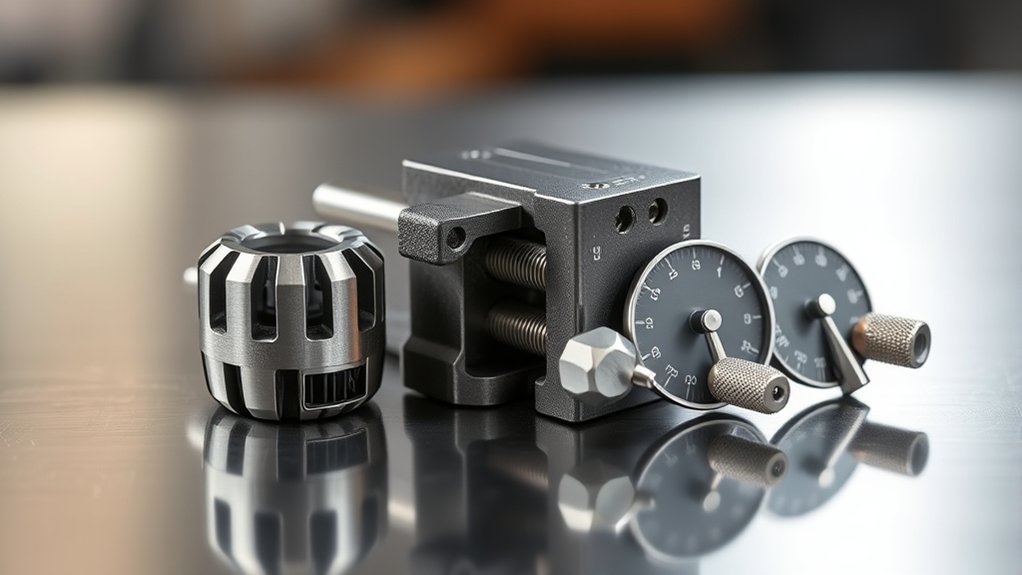
The top three must-have machine tool accessories are a rigid machine vise, a precise dial indicator, and properly maintained cutting fluid.
Choose a vise with suitable capacity, jaws, rigidity, and low-profile clearance to hold work securely.
Use a dial indicator with a rigid mount to align vises and verify setup accuracy.
Select compatible coolant and maintain its concentration and cleanliness to reduce heat, extend tool life, and improve finishes.
Keep exploring for practical selection and maintenance tips.
Key Takeaways
- A rigid, properly sized machine vise securely holds workpieces and improves accuracy during machining.
- Hardened or serrated jaws provide a reliable grip, while low-profile designs maximize tool clearance.
- Dial indicators enable precise vise, workpiece, and setup alignment before cutting begins.
- Properly maintained cutting fluids reduce heat, extend tool life, and improve surface finish.
- Clean installation surfaces, calibrated indicators, and maintained coolant systems support repeatable, efficient machining.
Choose the Right Machine Vise for Secure Workholding
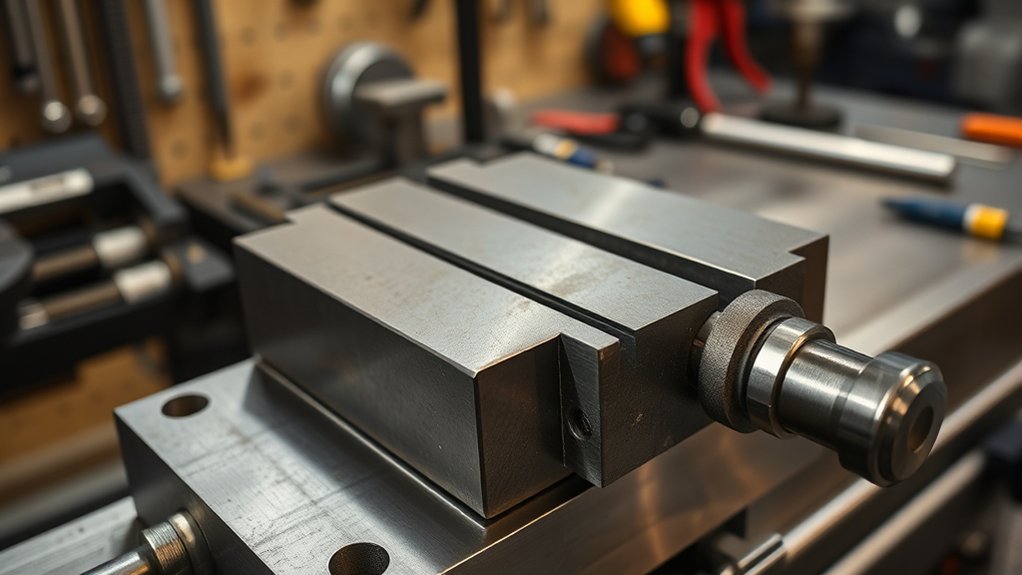
Choosing the right machine vise starts with matching its size, jaw capacity, and clamping force to your workpiece and machining needs. Select hardened jaws when you regularly cut tough materials, and choose smooth or serrated faces according to surface protection and grip requirements. A low-profile vise preserves tool clearance, while a modular model lets you adjust configurations for varied jobs.
Check the vise body’s rigidity before buying. A stiff design resists deflection, helping you maintain consistent dimensions during heavy cuts. Set the workpiece firmly against the fixed jaw and use parallels to support it evenly. Apply enough clamping force to prevent movement, but don’t overtighten and distort thin stock.
Clean chips from the table, keyways, and contact surfaces before installation. Confirm vise alignment with the machine’s travel and secure every mounting bolt. For repeat work, add stop systems or interchangeable jaws to speed loading while keeping each part seated consistently. Inspect jaws and threads regularly, replacing worn components before accuracy or safety suffers.
Choose Dial Indicators for Precise Setup
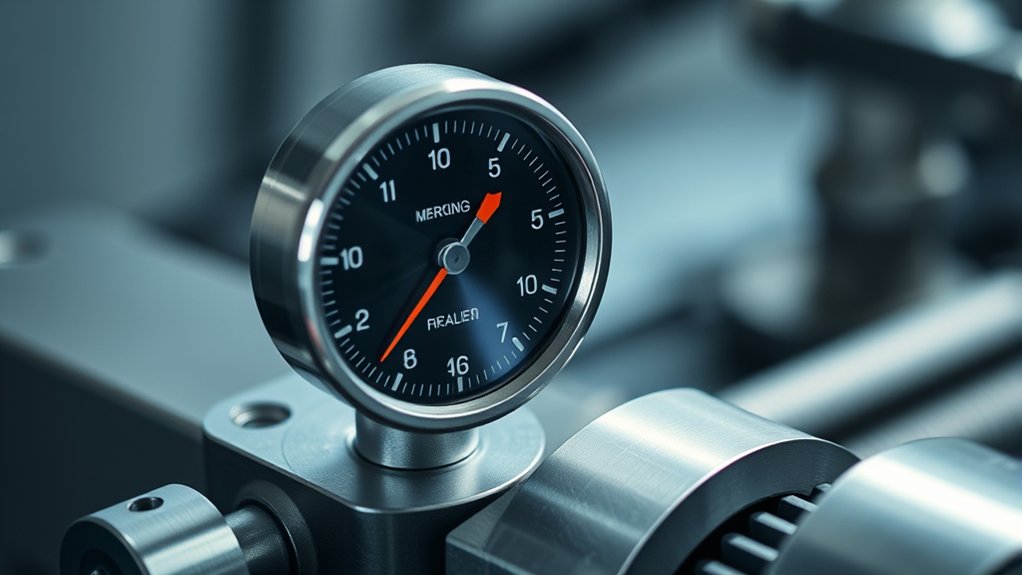
After securing the workpiece with the right vise, use a dial indicator to verify alignment and setup accuracy. This sensitive accessory helps you detect tiny deviations before machining, so you’ll avoid angled cuts, uneven surfaces, and wasted material. Choose a model that matches your required resolution, travel range, and mounting method.
Verify alignment with a dial indicator to catch tiny deviations, ensuring accurate machining and preventing angled cuts or wasted material.
- Select a readable dial with clear graduations.
- Confirm the indicator’s range suits your setup.
- Use a rigid magnetic base to prevent movement.
- Position the contact tip squarely against the reference surface.
- Zero the dial before checking alignment.
Sweep the indicator across the workpiece or vise jaw, watching for needle movement. Adjust the setup until readings remain within your tolerance.
A jeweled movement can improve durability, while a shock-resistant design protects the mechanism during routine handling. Check calibration accuracy regularly with a known reference, and clean the contact point before each measurement.
Consistent technique improves measurement consistency, helping you establish reliable setups across repeated jobs. Store the indicator in its case when you’re finished to protect its precision.
Select Cutting Fluids for Longer Tool Life

The right cutting fluid reduces heat and friction, helping your tool last longer while improving surface quality. Choose a fluid based on your material, cutting speed, and machine requirements.
Check coolant compatibility with tool coatings, seals, workpiece alloys, and existing sump fluid before mixing products. You’ll prevent corrosion, staining, and unexpected reactions.
Use these fluid application techniques to place coolant precisely at the cutting zone. Adjust flow and concentration according to the manufacturer’s guidance, and keep the sump clean to limit bacteria, odors, and abrasive debris.
Refractometers help you verify concentration, while regular filtration protects pumps and tooling.
| Fluid type | Best use |
|---|---|
| Soluble oil | General machining |
| Synthetic | High-speed cutting |
| Semi-synthetic | Balanced performance |
Replace contaminated fluid promptly, and monitor temperature during demanding operations. The correct choice and consistent maintenance reduce edge wear, improve chip evacuation, and help your accessories deliver accurate, repeatable results.
You’ll also extend tool life while reducing downtime and fluid costs.
Frequently Asked Questions
How Do I Choose the Right Collet System for My Machine Tool?
Choose a collet system by matching your machine’s spindle taper, drawbar, speed, and tooling requirements. Verify collet compatibility with your spindle manufacturer’s specifications, including thread, diameter range, and operating limits.
Consider the materials and operations you’ll perform: ER collets offer versatility, while high-precision systems suit demanding milling or turning. Check runout ratings, gripping force, balance, and availability.
Prioritize precision alignment, reliable retention, and easy maintenance for consistent, safe results.
What Safety Equipment Is Essential When Operating Machine Tools?
You need essential safety equipment before operating machine tools. Wear personal protective equipment, including safety glasses or a face shield, hearing protection, steel-toe footwear, and snug, nonflammable clothing.
Use cut-resistant gloves only when the machine’s manufacturer permits them. Rotating parts can catch loose gloves.
Keep guards, chip shields, and proper lighting in place. Know the emergency shutdown location, test its accessibility, and secure long hair, jewelry, and sleeves before starting.
How Often Should Machine Tool Accessories Undergo Maintenance and Inspection?
Inspect machine tool accessories before every use, then follow manufacturer-recommended maintenance schedules for thorough servicing. For example, if you notice a cracked collet during a pre-shift check, stop using it immediately and replace it before damage occurs.
Perform formal inspection procedures weekly for frequently used accessories, monthly for moderate-use items, and after any impact, overload, or unusual vibration. Record findings, lubricate moving parts, verify alignment, and replace worn components promptly to maintain safety and accuracy.
Which Tool Holders Provide the Best Rigidity and Vibration Control?
You’ll get the best rigidity from shrink-fit and hydraulic tool holders, while milling chucks offer strong gripping for demanding cuts. Choose shrink-fit holders for maximum concentricity and minimal runout; select hydraulic holders when you need excellent vibration control and quick changes.
Evaluate Tool holder compatibility with your spindle, collet system, and cutting tools. Apply Vibration damping techniques, including balanced assemblies, short tool projection, and proper tightening, to improve surface finish, accuracy, and tool life.
How Can I Organize and Store Machine Tool Accessories Efficiently?
You can turn your workshop into a well-mapped toolbox instead of a maze of misplaced parts. Choose storage solutions such as modular cabinets, shadow boards, drawer organizers, and labeled bins sized for each accessory.
Group holders, collets, cutters, measuring tools, and workholding devices by function and frequency of use. Add clear labeling systems with text and color codes, then keep an inventory list.
Return every item immediately after use.
Conclusion
Choosing the right machine tool accessories can make every setup safer, faster, and more accurate. A dependable vise secures your workpiece, a dial indicator helps you align it precisely, and cutting fluid protects tools while improving finishes.
Together, these essentials reduce errors and extend equipment life. Consider this: machining coolant can increase tool life by as much as 300% in some applications.
Invest in quality machine tool accessories, and you’ll build a more efficient, reliable shop.