Car Engine Overheating Repair: The Best Guide to Fixing an Overheated Engine
Introduction
For Engine Overheating Repair Few sights are more alarming to a driver than watching the temperature gauge climb into the red while steam pours out from under the hood. Car engine overheating repair is one of the most urgent and misunderstood areas of Vehicle maintenance, and how you respond in the moment — along with how you address the underlying cause afterward — can mean the difference between a routine fix and a catastrophic engine failure. This guide covers everything you need to know about overheated engine repair, from understanding the many possible causes to comparing repair approaches, learning practical tips, and avoiding the common mistakes that turn a manageable problem into an expensive one.
Why Car Engine Overheating Repair Matters
Your engine operates within a fairly narrow optimal temperature range, and your cooling system exists specifically to keep it there despite the tremendous heat generated by combustion. When that system fails and the engine overheats, the consequences can escalate quickly. A warped cylinder head, a blown head gasket, or even a cracked engine block are all realistic outcomes of ignoring or mishandling an overheating event. What might have started as a fifty-dollar repair — a bad thermostat or a loose hose clamp — can turn into a multi-thousand-dollar engine rebuild if the vehicle continues to be driven while overheating.
Beyond the financial stakes, engine overheating repair matters because it directly affects your safety on the road. A vehicle that suddenly loses power, stalls, or requires emergency roadside stopping due to overheating puts you and other drivers at risk, particularly on highways or in heavy traffic. Understanding the causes and taking prompt, appropriate action is essential for every driver, not just those who consider themselves mechanically inclined.
Different Types of Engine Overheating Causes
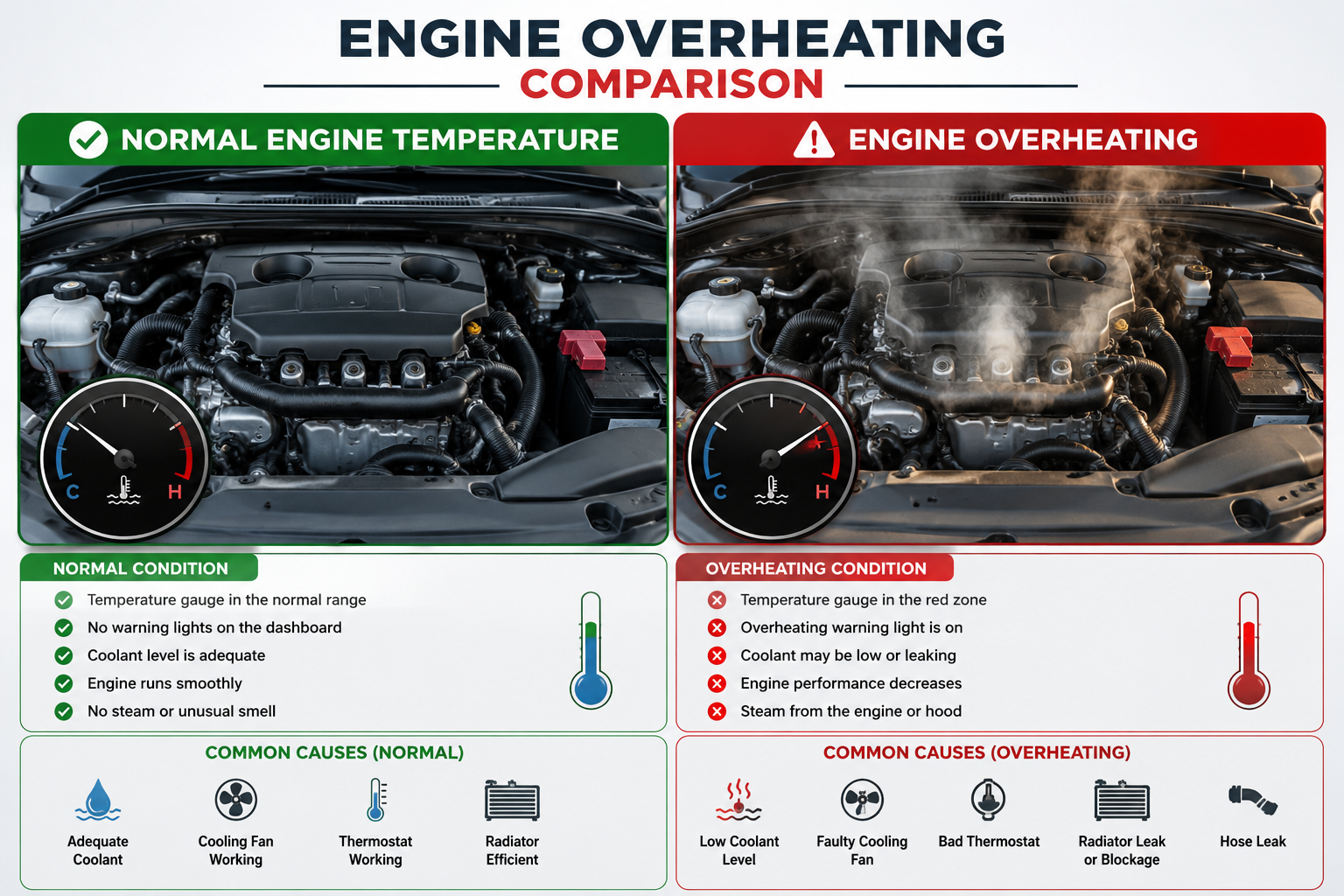
Overheated engine repair starts with correctly identifying the root cause. Here are the most common culprits behind engine overheating.
- Low Coolant Level: Often due to a slow leak, low coolant is one of the most frequent and simplest-to-address causes of overheating.
- Coolant Leaks: Leaks can originate from hoses, the radiator, the water pump, or the head gasket, each requiring a different repair approach.
- Failed Thermostat: A thermostat stuck in the closed position blocks coolant flow to the radiator, causing rapid overheating even with adequate coolant levels.
- Failing Water Pump: The water pump circulates coolant throughout the engine and radiator; a worn impeller or failed bearing can drastically reduce circulation.
- Clogged Radiator: Sediment, rust, or debris buildup inside the radiator can restrict coolant flow, reducing the system’s ability to dissipate heat.
- Damaged Radiator Fan: A malfunctioning electric fan or a broken fan clutch on belt-driven systems can prevent adequate airflow across the radiator, especially at low speeds or idle.
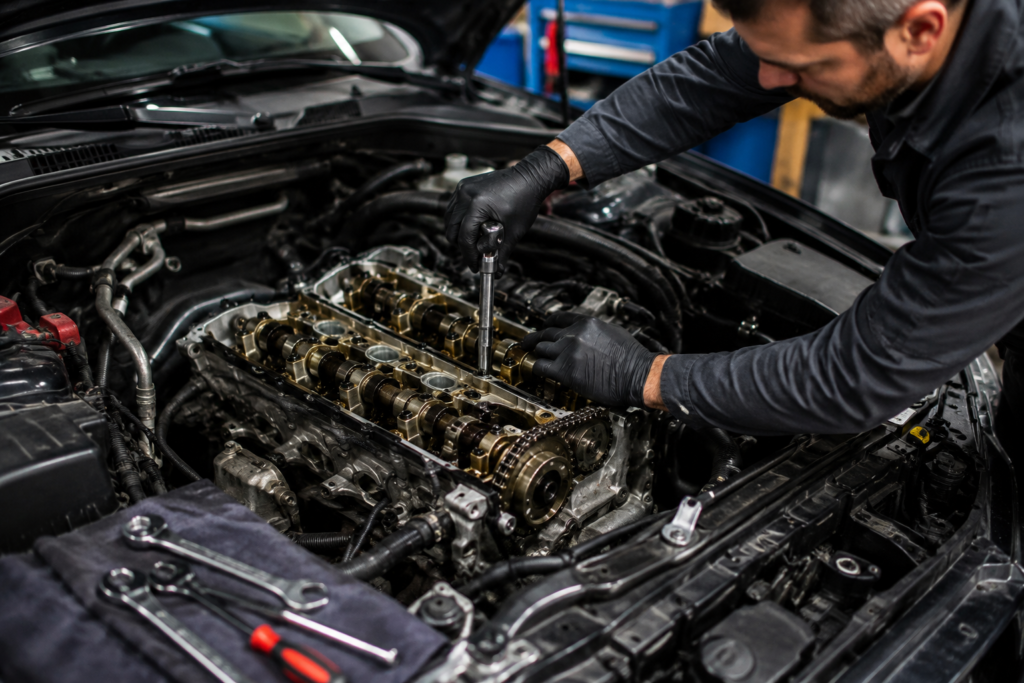
- Blown Head Gasket: A failed head gasket can allow coolant to leak into the combustion chamber or oil system, both reducing cooling efficiency and potentially causing further internal damage.
- Broken or Slipping Serpentine Belt: Since the water pump is often belt-driven, a broken or slipping belt can directly cause a sudden loss of coolant circulation.
- Air Pockets in the Cooling System: Trapped air bubbles, often introduced after a coolant service, can prevent proper circulation and create localized hot spots.
- Radiator Cap Failure: A faulty radiator cap can fail to maintain proper system pressure, lowering the boiling point of coolant and increasing the likelihood of overheating.
- Cooling Fan Relay or Sensor Failure: Electrical issues affecting the fan control system can prevent the fan from activating when needed, particularly during stop-and-go traffic.
- Heater Core Blockage: Since the heater core is part of the cooling system loop, a clogged heater core can occasionally contribute to broader cooling inefficiency.
Engine Overheating Repair Comparison
Different causes of overheating call for different repair approaches, each varying in cost, complexity, and urgency.
Coolant Top-Off or Flush: A simple, low-cost repair suitable for minor coolant loss or degraded, old coolant. This is often the first step technicians take before diagnosing more complex issues.
Hose or Clamp Replacement: Addressing a leaking or damaged hose is typically an affordable, straightforward repair, often resolving overheating caused by slow coolant loss.
Thermostat Replacement: A moderately priced repair that resolves overheating caused by a stuck-closed thermostat, generally one of the more common and cost-effective fixes.
Water Pump Replacement: A more involved repair, often requiring removal of the serpentine belt and, on some engines, timing components, making labor costs a significant part of the total expense.
Radiator Replacement or Flush: Flushing a mildly clogged radiator is relatively affordable, while full replacement of a severely clogged or damaged radiator is a larger expense.
Head Gasket Replacement: Among the most labor-intensive and costly repairs on this list, often requiring significant engine disassembly to access and replace the gasket properly.
Fan or Fan Relay Replacement: Cost varies depending on whether the issue is a simple relay or sensor versus a full fan motor or clutch assembly replacement.
Overheated Engine Repair Styles Explained
Overheated engine repair generally falls into a few broad categories depending on severity and approach.
Preventive Repair: Addressing minor issues — like a slightly low coolant level or an aging hose — before they cause an actual overheating event. This category emphasizes proactive maintenance over reactive repair.
Reactive Component Repair: Addressing a specific failed component, such as a thermostat or water pump, after an overheating incident has already occurred, typically identified through diagnostic inspection following the event.
Major Internal Repair: Addressing more serious internal damage caused by sustained overheating, such as a blown head gasket or warped cylinder head, often requiring significant labor and, in severe cases, a partial engine rebuild.
Full Engine Replacement: In cases of catastrophic damage — such as a cracked block or extensive internal warping — replacing the engine entirely may be more practical and cost-effective than attempting a full internal repair.
Pros & Cons of Each Repair Type
Preventive Repair
Pros: Generally low-cost, prevents more serious damage, and can often be done as part of routine maintenance.
Cons: Requires proactive attention and regular inspection, which some drivers overlook until a problem has already developed.
Reactive Component Repair
Pros: Directly addresses the specific failed part, often resolving the issue completely at a moderate cost.
Cons: If the overheating event caused any secondary damage before the component was replaced, that damage may not be immediately apparent and could surface later.
Major Internal Repair
Pros: Can save an otherwise sound engine from requiring full replacement, extending the vehicle’s usable life.
Cons: Labor-intensive and expensive, and not always successful if damage is more extensive than initially assessed.
Full Engine Replacement
Pros: Provides a clean, reliable solution when internal damage is too extensive for cost-effective repair.
Cons: The most expensive option by a significant margin, and may not make financial sense for older vehicles with lower overall value.
Overheated Engine Repair Tips
If your engine begins to overheat while driving, pull over safely as soon as possible and turn off the engine to allow it to cool. Never open the radiator cap while the engine is hot, since pressurized, scalding coolant can cause serious burns. Once cooled, check coolant levels in the overflow reservoir rather than the radiator itself for a safer initial assessment. If coolant is low, use the correct type specified for your vehicle when topping off, since mixing incompatible coolant types can cause chemical reactions that damage the system.
If you notice a strong sweet smell or visible coolant puddles beneath the vehicle, this often indicates a leak that needs professional diagnosis before continuing to drive. Avoid continuing to drive if the temperature gauge remains in the red zone, since doing so significantly increases the risk of severe, costly internal engine damage. If overheating happens repeatedly, even after topping off coolant, have the thermostat, water pump, and radiator inspected by a professional rather than continuing to simply add coolant as a temporary fix.
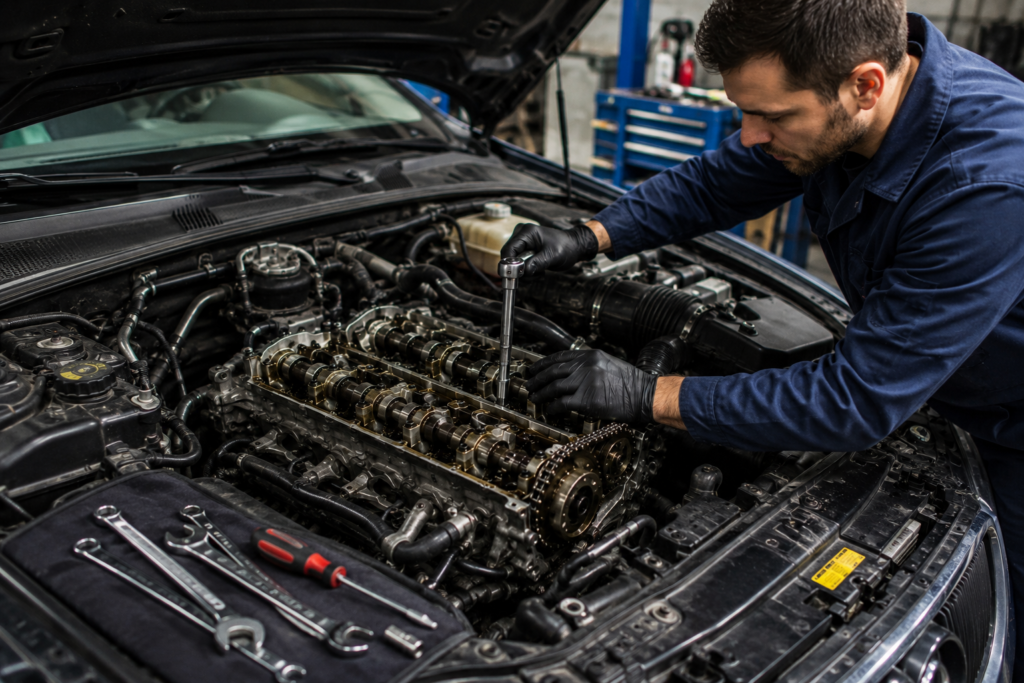
Cleaning & Maintenance
Regular cooling system maintenance is one of the most effective ways to prevent the need for engine overheating repair in the first place. Have your coolant flushed and replaced according to your manufacturer’s recommended schedule, typically every 30,000 to 60,000 miles, since old coolant loses its protective and heat-dissipating properties over time. Periodically inspect hoses and belts for cracking, fraying, or soft spots, replacing them proactively before they fail.
Keep the radiator’s exterior fins clean and free of debris, since accumulated dirt and bugs can reduce its ability to dissipate heat effectively. Check your radiator cap’s seal periodically, since a worn cap can fail to maintain proper system pressure. If your vehicle uses a serpentine belt to drive the water pump, inspect it regularly for wear, since a failing belt can cause sudden, unexpected loss of coolant circulation.
Common Mistakes to Avoid
Avoid continuing to drive once your temperature gauge shows overheating, since this is one of the most common ways a minor issue turns into a major, expensive repair. Don’t open a hot radiator cap, as this poses a serious burn risk from pressurized, scalding coolant. Avoid using plain water as a long-term coolant substitute, since it lacks the corrosion protection and boiling point elevation that proper coolant mixtures provide.
Don’t assume a single coolant top-off has fully resolved the issue if the underlying cause — such as a leak or failing component — hasn’t been identified and addressed. Avoid mixing different coolant types or colors without confirming compatibility, since some formulations can react poorly when combined. Finally, don’t delay diagnosis after a first overheating incident, even if the vehicle seems to be running normally afterward, since underlying damage isn’t always immediately obvious.
FAQs
1. What should I do immediately if my car starts overheating? Turn off the air conditioning, turn on the heater to help draw heat away from the engine, and pull over safely to let the engine cool.
2. Is it safe to drive a short distance with an overheating engine? No, continuing to drive while overheating significantly increases the risk of serious, costly internal engine damage.
3. How long should I wait before checking coolant after overheating? Wait at least 30 minutes to an hour for the engine to cool sufficiently before checking coolant levels safely.
4. Can low oil cause engine overheating? Yes, insufficient oil can increase friction and heat within the engine, contributing to overheating alongside cooling system issues.
5. Why does my car overheat only in traffic but not on the highway? This often points to a failing cooling fan or fan relay, since airflow at highway speeds can mask a fan-related issue that becomes apparent at low speeds.
6. How much does engine overheating repair typically cost? Costs vary widely, from under $100 for simple hose or coolant fixes to several thousand dollars for head gasket or major internal repairs.
7. Can I use water instead of coolant in an emergency? Water can be used as a temporary emergency measure, but it should be replaced with proper coolant as soon as possible.
8. What does white smoke from the exhaust mean during overheating? This can indicate coolant entering the combustion chamber, often due to a blown head gasket, and warrants prompt professional diagnosis.
9. How often should coolant be flushed to prevent overheating? Most manufacturers recommend a coolant flush every 30,000 to 60,000 miles, though this varies by vehicle and coolant type.
10. Can a bad thermostat cause overheating even with full coolant? Yes, a thermostat stuck in the closed position blocks coolant circulation to the radiator regardless of coolant level.
11. Is it normal for the temperature gauge to fluctuate slightly in heavy traffic? Minor fluctuations can be normal, but the gauge should not approach the red zone; if it does, further inspection is warranted.
12. What’s the difference between a coolant leak and a head gasket failure? A coolant leak is often external and visible, while a head gasket failure typically causes internal coolant loss, often accompanied by white exhaust smoke or oil contamination.
13. Can I repair a blown head gasket myself? This repair is complex, often requiring significant engine disassembly, and is generally recommended to be handled by a professional mechanic.
14. How do I know if my car’s overheating issue is fixed for good? Monitor the temperature gauge closely over the following days and check for any recurring coolant loss or warning signs before considering the repair fully successful.
15. Does overheating always mean I need a new engine? No, many overheating causes are relatively minor and fully repairable; a full engine replacement is typically only necessary in cases of severe, sustained damage.
Conclusion
Car engine overheating repair doesn’t have to be intimidating once you understand the range of possible causes and repair approaches. Whether you’re dealing with a simple coolant top-off, a failing thermostat, or a more serious internal issue, the key to successful overheated engine repair lies in prompt, accurate diagnosis and avoiding the temptation to keep driving through a warning sign that should never be ignored.
By staying proactive with cooling system maintenance and responding quickly and correctly when overheating occurs, you can protect your engine, your safety, and your wallet from the far more serious consequences of a neglected overheating issue.