Top 3 Industrial Drills for Heavy-Duty Use
Finding the right tool for demanding jobs can be frustrating—especially when your drill struggles with tough materials, overheats, or wears out too quickly. You’re not alone; many professionals face this challenge when choosing among industrial drills for heavy-duty use.
For heavy-duty work, you’ll want three industrial drill types: a high-torque model with a low-speed gearbox, metal chuck, and side handle for demanding bits; a precision-focused drill with variable-speed control, responsive trigger, and reliable clutch for accurate starts; and a durable all-day drill with brushless motor, thermal protection, reinforced housing, and balanced ergonomics.
Prioritize rated torque, duty cycle, battery capacity, bit compatibility, serviceability, and warranty support. The following breakdown shows which option best matches your workload.
Key Takeaways
- Compare drills by torque, low-speed gearing, and motor power for demanding materials and oversized bits.
- Prioritize durable metal chucks, reinforced housings, and sealed components for reliable heavy-duty performance.
- Choose brushless cordless models with high-capacity batteries, thermal protection, and efficient power delivery.
- Look for side handles, balanced ergonomics, responsive triggers, and adjustable clutches to improve control and reduce fatigue.
- Evaluate duty cycle, bit compatibility, maintenance access, warranty coverage, and service support before purchasing.
Best Industrial Drill for High-Torque Work
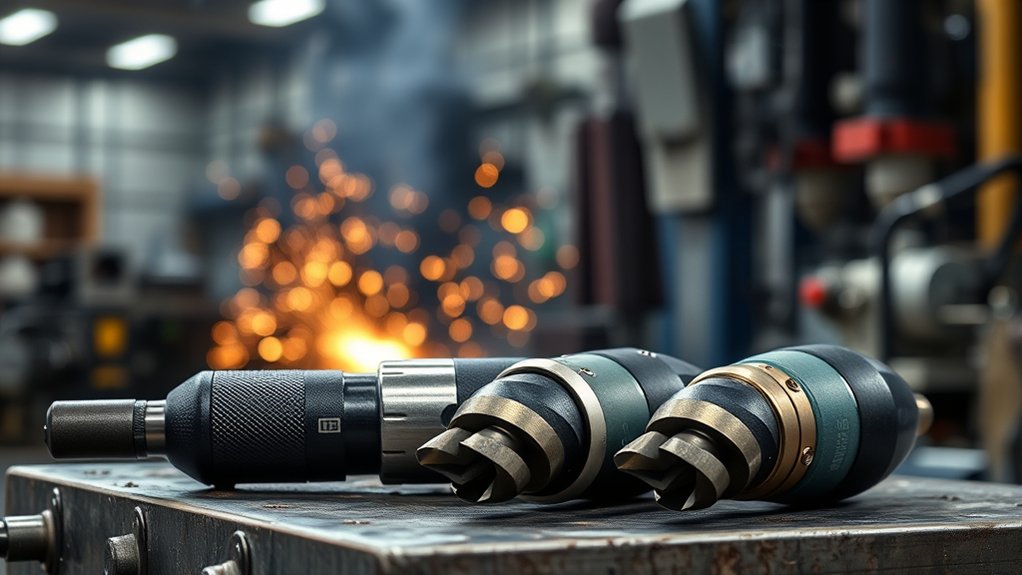
When you need maximum torque for drilling through steel, cast iron, or dense hardwood, choose an industrial drill with a high-power motor, a low-speed gearbox, and a durable chuck.
A powerful drill delivers steady force without stalling, while a two-speed transmission lets you match output to demanding materials.
Look for a metal chuck that grips large bits securely and resists wear under repeated use. Side handles and adjustable torque settings help you control force and reduce fatigue during extended jobs.
An ergonomic design improves balance, so you can apply pressure accurately without straining your wrists.
Cordless convenience gives you freedom to work around machinery, job sites, and remote installations without managing a cable.
Choose a model with high-capacity batteries, brushless efficiency, and thermal protection to maintain performance under load.
Finally, verify its rated torque, duty cycle, and compatibility with hole saws, augers, and oversized bits before purchase.
You’ll gain dependable power for demanding daily work.
Best Industrial Drill for Precise Control
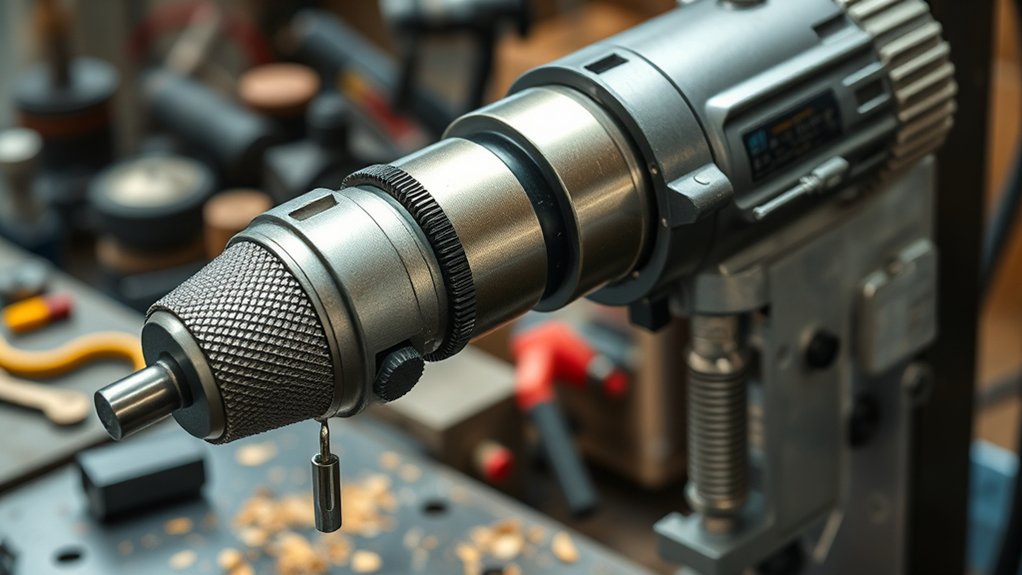
High torque handles demanding materials, but precise control matters when you need clean starts, accurate depth, and consistent results. Choose an industrial drill with an ergonomic grip that keeps your wrist aligned and reduces strain during detailed work.
A balanced housing helps you guide the tool steadily, especially when you’re drilling near edges or working with smaller fasteners. Look for adjustable speed settings rather than relying on a single high-output mode.
Lower speeds help you begin holes without wandering, while higher settings suit larger bits and tougher materials. A responsive variable-speed trigger gives you finer control than preset steps, letting you match power to each task.
A dependable clutch can also limit overdriving and protect delicate surfaces. Before buying, test the trigger, handle placement, and forward-reverse switch with gloves on.
The best precise-control drill feels predictable in your hand, follows your line accurately, and lets you finish cleanly without unnecessary corrections. Check chuck stability and bit changes, too, for consistent alignment throughout every project.
Most Durable Industrial Drill for All-Day Use
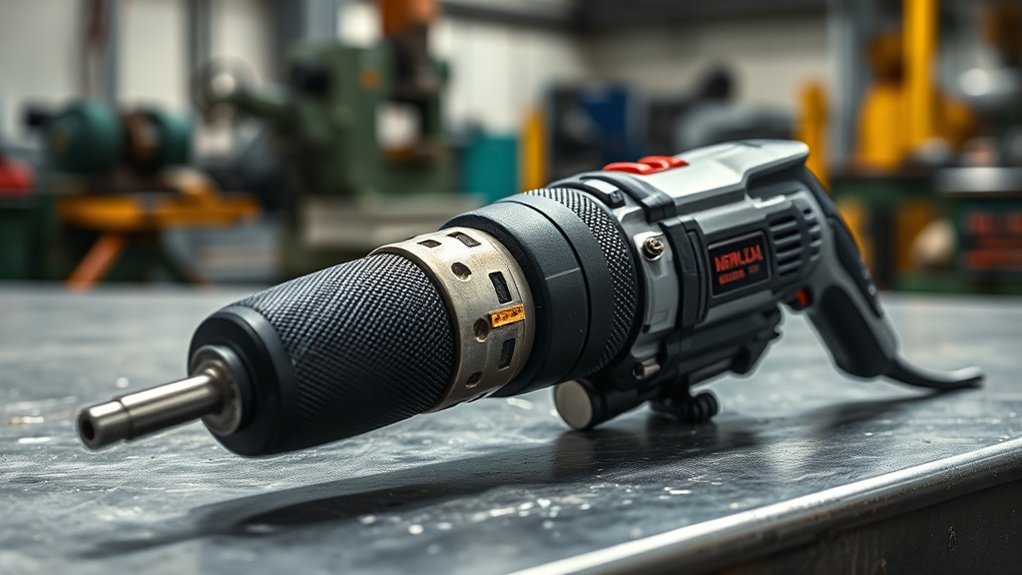
Built for long shifts, the most durable industrial drill combines a heat-resistant motor, reinforced housing, and sealed components that withstand dust, vibration, and repeated use. You can rely on it for drilling through steel, concrete, and dense composites without frequent cooling breaks.
Its ergonomic grip reduces hand fatigue, while a lightweight design improves control during overhead work. Choose a model with variable speed, a responsive trigger, and a durable chuck so you can match power to each material.
- Check motor protection: Thermal overload safeguards help prevent damage during demanding cycles.
- Inspect the housing: Metal gearing and impact-resistant materials support long-term reliability.
- Evaluate maintenance: Brushless motors and accessible service points reduce downtime.
- Confirm balance: Even weight distribution keeps you steadier throughout extended use.
With proper bits, regular cleaning, and timely lubrication, your drill will maintain consistent performance. Select a trusted industrial brand, verify its warranty, and prioritize service support before committing to daily production work.
Frequently Asked Questions
What Safety Gear Should Operators Wear When Using Industrial Drills?
You should wear Personal protective equipment whenever you operate an industrial drill. Use safety glasses or a face shield to protect your eyes from flying debris, hearing protection against excessive noise, and sturdy, slip-resistant boots with toe protection.
Wear fitted clothing, avoid jewelry, and secure long hair. Use task-appropriate gloves only when they won’t catch.
Complete Safety training, inspect your gear, and follow your site’s procedures before starting work.
How Often Should Industrial Drills Receive Professional Maintenance?
Schedule professional maintenance at least annually, or every 500 operating hours, whichever comes first. Heavy-use drills may need service every three to six months; nearly 40% of equipment failures trace back to inadequate maintenance.
Follow your manufacturer’s maintenance schedules, and increase service frequency in dusty, wet, or high-load environments.
Have qualified technicians inspect bearings, wiring, chucks, and safety controls. They should also perform lubrication procedures, replace worn parts, and document every service visit carefully.
What Power Sources Are Available for Industrial Drilling Applications?
You can power industrial drills through electricity, batteries, compressed air, hydraulics, or fuel-driven engines. Corded electric models deliver consistent output where outlets exist, while cordless units improve mobility.
Compare battery efficiency, charging time, and duty cycle before choosing a cordless model. Pneumatic drills suit explosive or wet environments when you have an air compressor.
Hydraulic power provides exceptional torque for demanding work, while diesel or gasoline systems support remote sites without grid access or reliable charging.
How Can Businesses Calculate the Total Cost of Drill Ownership?
You can calculate total drill ownership with a quill-and-ledger-style cost analysis: add the purchase price, financing, installation, training, consumables, energy, maintenance, repairs, downtime, and eventual disposal costs. Subtract rebates, resale value, and tax benefits.
Then divide the total by expected service years or operating hours. Track actual invoices and usage regularly, because ownership expenses often exceed the initial price.
Comparing competing models this way reveals each option’s true lifecycle cost.
Are Replacement Parts and Accessories Readily Available for Industrial Drills?
Yes, you’ll generally find replacement components and accessories readily available for established industrial drill brands. Manufacturers and authorized distributors typically stock spare parts such as motors, gears, chucks, switches, batteries, and seals.
Before purchasing, verify accessory compatibility with your drill’s model, chuck size, power system, and specifications. You should also check lead times, warranty coverage, and local service support.
Choosing widely supported brands can reduce downtime and simplify future maintenance and upgrades.
Conclusion
Whether you’re boring through steel, guiding delicate holes, or working from dawn to dusk, the right industrial drill gives you confidence when the job gets tough. Choose high torque for demanding materials, precise control for accuracy, or proven durability for nonstop performance.
Like a trusted tool from a master builder’s workshop, your drill should feel dependable in your hands. Pick the model that matches your workload, and you’ll keep every project moving forward with the right industrial drill.