How to Clean My Car Engine in 3 Simple Steps
Cleaning your car engine can feel like a daunting task, and you’re definitely not alone if you find it overwhelming. Many people struggle with knowing where to start or worry about damaging sensitive components. But with the right approach and tools, keeping your engine spotless and running smoothly is totally doable.
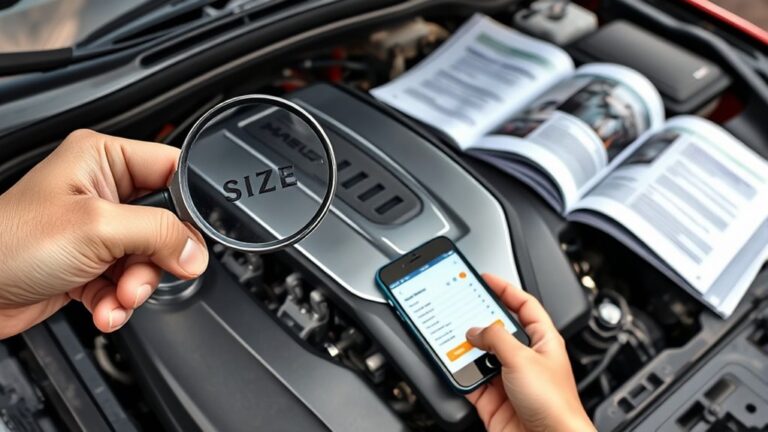
Start by ensuring your engine is cool, disconnect the battery’s negative terminal, and clear your workspace for safety.
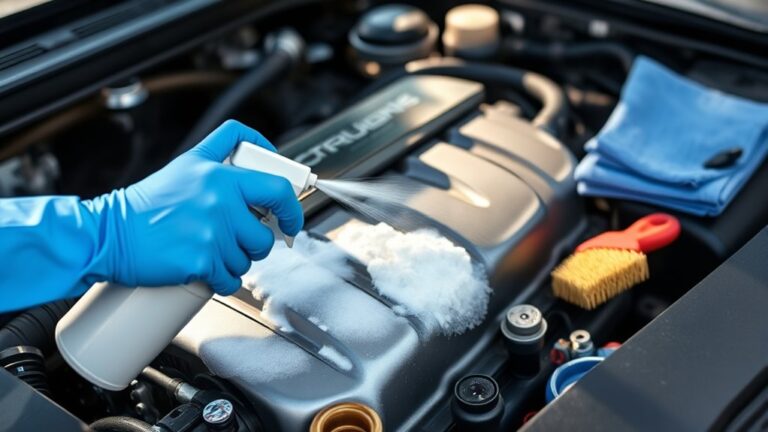
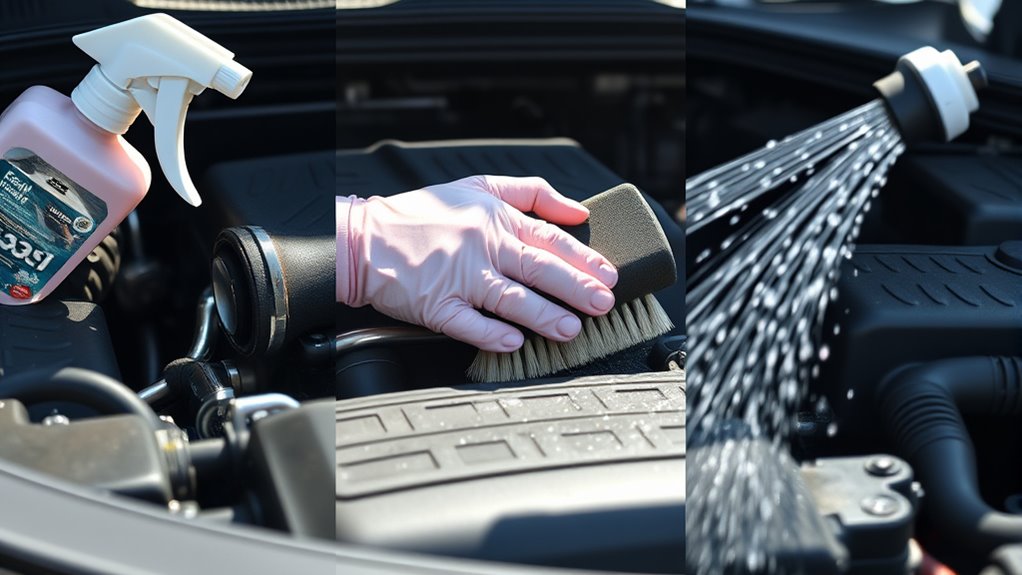
Next, spray a quality degreaser on greasy spots, let it sit for 5-10 minutes, then gently scrub and rinse carefully with low-pressure water, avoiding electrical parts.
Finally, dry thoroughly with microfiber towels or compressed air, and apply a silicone-based protectant to shield hoses and plastics.
Follow these basics, and you’ll be ready for cleaner, better-maintained engine care.
Key Takeaways
- Ensure the engine is cool and disconnect the battery’s negative terminal before cleaning to avoid damage and electrical shorts.
- Spray a quality degreaser on greasy areas and let it sit for 5-10 minutes to break down grime effectively.
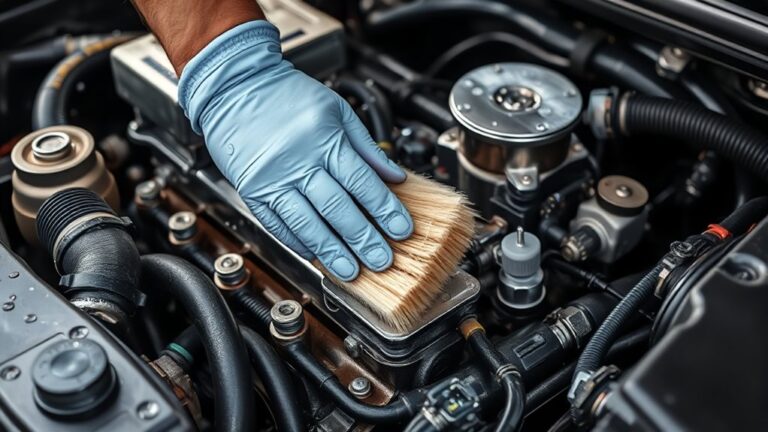
- Gently scrub with a soft brush and rinse the engine cautiously using low-pressure water, avoiding electrical parts.
- Dry the engine thoroughly with microfiber towels or compressed air, focusing on electrical components to prevent moisture buildup.
- Apply a silicone-based protectant to hoses and plastics to repel dirt and maintain engine cleanliness longer.
Get Your Engine Ready: Safety and Setup Tips
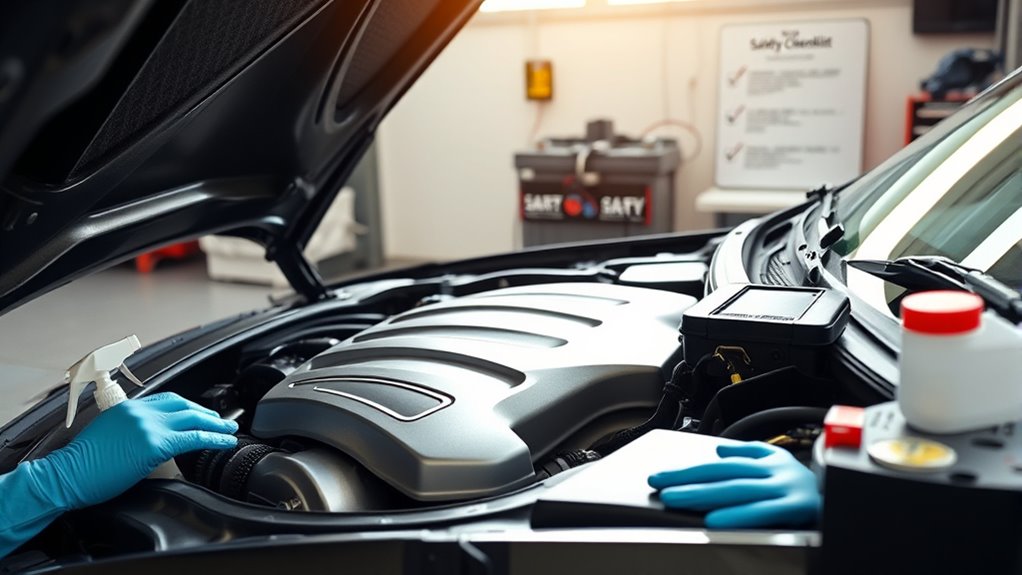
Before you begin cleaning, make sure your engine is cool to prevent burns and damage. Start by conducting a thorough engine inspection to identify any leaks, cracked hoses, or loose connections. Catching these issues early helps you avoid further damage during cleaning.
Always ensure your engine is cool and inspect for leaks or damage before cleaning to prevent further issues.
Next, focus on battery maintenance: disconnect the negative terminal to prevent electrical shorts or sparks. Cover the battery terminals and exposed wiring with plastic bags or waterproof tape to protect them from water and cleaning agents.
Ensure your workspace is well-ventilated and you have the right tools ready, such as brushes, microfiber cloths, and appropriate cleaning products. You should also remove any debris or leaves from the engine bay to prevent clogging or fire hazards.
Taking these safety and setup measures means you’re ready to clean your engine effectively without risking injury or damage.
How to Wash and Degrease Your Car Engine
Once your engine is prepped and protected, you can start washing and degreasing to remove built-up grime and oil. Begin by choosing a quality degreaser designed for engine cleaning. Spray it generously over greasy areas, focusing on stubborn spots. Let it sit for 5-10 minutes to break down grime effectively.
Next, use a soft brush or sponge to scrub the surfaces gently, ensuring you reach tight spaces without damaging components.
After scrubbing, rinse the engine with low-pressure water, avoiding electrical parts and air intakes. This rinse helps wash away loosened dirt and degreaser residue. If needed, repeat the degreasing techniques on heavily soiled spots.
Dry Your Engine Thoroughly and Protect It
How do you guarantee your engine stays clean and free from moisture after washing? Start by letting the engine cool down to a safe temperature to avoid damage or burns. Wearing protective gear like gloves and goggles, use a clean microfiber towel or compressed air to dry every nook and cranny thoroughly.
Pay special attention to electrical components and connectors, because trapped moisture can cause short circuits or corrosion. Avoid starting your engine immediately; instead, allow it to air dry for at least 30 minutes in a well-ventilated area.
To protect your engine further, apply a silicone-based protectant designed for engines to repel water and grime. This also helps keep hoses and plastic parts flexible and prevents cracking. Taking these steps ensures your engine stays dry, safe, and ready for peak performance after cleaning.
Frequently Asked Questions
How Often Should I Clean My Car Engine?
You should clean your car engine about once a year or every 20,000 miles, whichever comes first. Regular cleaning helps spot leaks in engine oil and keeps battery maintenance easier, preventing corrosion buildup.
If you drive in dusty or muddy conditions, you might want to clean it more often. Just make sure to protect sensitive parts like the battery and electrical connections during cleaning to avoid any damage or starting issues.
Can Engine Cleaning Improve My Car’s Performance?
Yes, cleaning engine grime can improve your car’s performance. When you remove built-up dirt and grease, your engine runs cooler and more efficiently. This helps prevent overheating and potential damage.
Plus, a cleaner engine can boost fuel efficiency since it operates more smoothly without extra buildup causing strain. So, taking the time to clean your engine not only keeps it looking good but also helps your car perform better and save fuel.
What Tools Do I Need Besides Cleaning Products?
You’ll need a few essential tools besides cleaning products for engine degreasing. Grab a soft brush and a toothbrush to scrub tight spots, a plastic scraper for stubborn grime, and a spray bottle for rinsing.
Don’t forget protective gloves and safety glasses. After cleaning, focus on tool maintenance by thoroughly drying and storing them properly to keep them in great shape for your next engine cleaning session.
Is It Safe to Clean an Engine in Winter?
You shouldn’t clean your engine in winter if it’s freezing outside. For example, Sarah tried washing her engine on a cold day, and water froze quickly, causing damage.
Winter safety is essential because low engine temperature can cause water to freeze in sensitive parts. This risks cracks or electrical issues.
Instead, wait for a warmer day or clean in a heated garage to protect your engine and avoid costly repairs.
Can I Use Household Cleaners on My Engine?
You shouldn’t use household cleaners on your engine because they often lack proper engine degreasing power and might not be chemically compatible with engine materials. Using the wrong cleaner can damage hoses, seals, or electrical components.
Instead, choose a degreaser specifically designed for engines to guarantee chemical compatibility and effective cleaning. This way, you protect your engine while removing grime safely and efficiently.
Conclusion
Now that you’ve given your engine a thorough cleaning, it’s time to enjoy the smooth ride ahead. Just like a heart needs care to keep beating strong, your engine thrives when you treat it right.
By following these simple steps, you’re not just cleaning—you’re breathing new life into your car. Remember, a clean engine isn’t just about looks; it’s about longevity and performance that keeps you moving forward.
Taking the time to clean your car engine properly ensures it runs efficiently and lasts longer. So keep up with regular maintenance and enjoy the benefits of a clean engine every time you hit the road.