How to Clean a Car Engine in 5 Easy Steps
If you’ve ever tried to Clean a Car Engine, you know it can feel overwhelming and messy. You’re not alone—many people struggle with finding the right way to get their engine spotless without causing damage. Whether you want your engine to look great or run more efficiently, having a simple, reliable process is key.
To clean your car engine in five easy steps, first make sure it’s completely cool and disconnect the battery. Cover sensitive parts like the alternator with plastic to protect them.
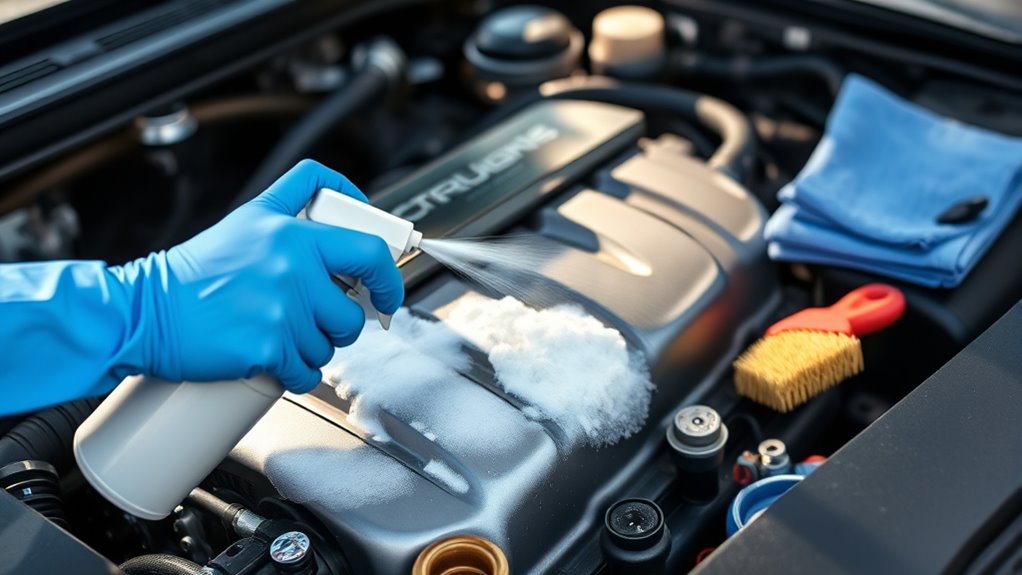
Next, choose a biodegradable engine degreaser and spray it evenly, avoiding electrical areas. Let it sit, then gently rinse and scrub away grime.
Finally, dry thoroughly using microfiber towels and compressed air, then apply a protective spray. Keep following these tips to maintain a spotless, efficient engine.
Clean a Car Engine Key Takeaways
- Ensure the engine is completely cool and disconnect the battery before starting to avoid burns and electrical issues.
- Cover sensitive components like the alternator and wiring with plastic bags to protect them from water and cleaning agents.
- Apply a biodegradable engine degreaser evenly, let it sit for 10 minutes, then scrub gently with a soft brush.
- Rinse the engine carefully using low-pressure water and avoid soaking electrical parts.
- Dry thoroughly with microfiber towels and compressed air, then apply a protective spray to prevent rust and corrosion.
How to Safely Prepare Your Car Engine for Cleaning
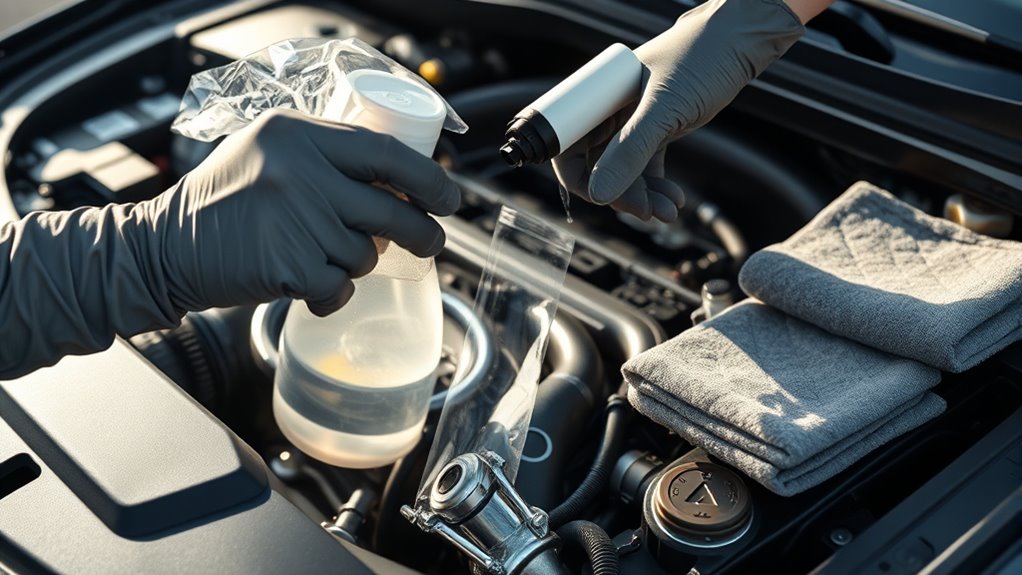
Before you begin cleaning your car engine, make sure it’s completely cool to avoid burns or damage. Engine safety should be your top priority throughout the process.
Ensure your car engine is fully cool before cleaning to prevent burns and maintain safety.
Start by disconnecting the battery to prevent any electrical mishaps. Cover sensitive components like the alternator, air intake, and exposed wiring with plastic bags or foil to shield them from water and cleaning chemicals.
When you handle cleaning agents, take chemical precautions seriously. Wear gloves and eye protection to avoid irritation from harsh detergents or degreasers. Use only products labeled safe for automotive engines, and never mix chemicals, as this can create toxic fumes.
Work in a well-ventilated area to reduce inhalation risks.
Pick the Best Cleaning Supplies for Your Car Engine
When you choose cleaning supplies for your car engine, focus on products designed specifically for automotive use to guarantee effectiveness without causing damage. Engine degreasers are essential because they break down tough grease and grime efficiently.
Make sure to pick a degreaser that’s biodegradable and safe for all engine parts. Don’t forget protective gloves; they shield your hands from harsh chemicals and keep you safe during the cleaning process.
Here’s a quick guide to help you pick the right supplies:
| Cleaning Supply | Purpose |
|---|---|
| Engine Degreaser | Removes grease and oil buildup |
| Protective Gloves | Protects skin from chemicals |
| Soft Brushes | Scrubs dirt without damaging parts |
Wash Your Car Engine Step-by-Step
Now that you have the right cleaning supplies ready, you can start washing your car engine carefully. First, confirm the engine temperature is cool to avoid burns and prevent damaging hot components.
Cover sensitive parts like the alternator and exposed electrical connections with plastic bags to protect them from water. Next, spray a degreaser evenly over the engine bay, avoiding direct contact with sensors.
Let it sit for about 10 minutes to break down grime but don’t let it dry out. Use a soft brush to gently scrub stubborn dirt without damaging delicate parts.
When rinsing, use a low-pressure hose or a spray bottle to avoid forcing water into connectors. Always prioritize chemical safety by wearing gloves and goggles, and work in a well-ventilated area to avoid inhaling fumes.
Dry and Protect Your Engine After Cleaning
Although your engine is clean, it’s essential to dry it thoroughly to prevent moisture-related issues. Use a clean microfiber towel to wipe down accessible areas, removing any remaining water droplets. For hard-to-reach spots, a compressed air blower works wonders, ensuring no moisture lingers in crevices. Proper drying supports engine preservation by reducing the risk of rust and corrosion.
Once dry, apply a protective spray designed for engines. This helps shield metal parts from moisture and dirt, enhancing corrosion prevention. Avoid over-saturating electrical connections; instead, lightly mist these areas to maintain protection without risking damage.
Taking these steps not only keeps your engine looking great but also extends its life by preventing deterioration caused by water exposure. By drying and protecting your engine carefully, you safeguard your vehicle’s performance and value, making engine maintenance a straightforward, effective process.
Simple Tips to Keep Your Engine Clean After Washing
To keep your engine looking fresh after washing, you’ll want to adopt a few simple habits that prevent dirt and grime from building up again. Start by regularly inspecting your engine bay and spot-cleaning any stubborn areas using a mild engine degreasing spray. This keeps grime from hardening and makes future cleanings easier.
Instead of harsh chemicals, try eco-friendly chemical alternatives that effectively break down grease without damaging engine components or the environment. After each drive, wipe down accessible surfaces with a microfiber cloth to remove dust and prevent buildup.
Also, avoid parking under trees or dusty areas where dirt can accumulate quickly. Finally, schedule periodic deep cleanings but maintain your engine’s cleanliness with these simple steps in between. By staying consistent, you’ll keep your engine running cooler and looking great, making your car maintenance simpler and more efficient.
Frequently Asked Questions
Can Engine Cleaning Improve Fuel Efficiency?
Yes, engine cleaning can improve fuel efficiency by enhancing engine performance. When you clean your engine, you remove dirt and grime that can cause it to run less smoothly.
This means your engine won’t have to work as hard, leading to better fuel savings over time. Keeping your engine clean helps it operate efficiently, so you’ll notice improved fuel economy and smoother driving without unnecessary fuel consumption.
How Often Should I Deep Clean My Car Engine?
You’ll want to give your engine a gentle spa day about once a year. Regular engine degreasing keeps grime at bay, helping your car run smoother and last longer.
Don’t forget battery maintenance during this time. Clean terminals guarantee strong starts and reliable power.
If you drive in harsh conditions or notice excessive dirt buildup, consider deep cleaning more often. Treat your engine well, and it’ll return the favor with better performance and longevity.
Are Professional Engine Cleaning Services Worth It?
Yes, professional engine cleaning services are often worth it because they provide thorough results and use specialized tools. This maximizes engine cleaning benefits like improved performance and longevity. If you don’t have the time or experience, professionals handle tough grime safely.
However, if you enjoy DIY and have basic knowledge, you can save money. Weighing DIY vs professional depends on your skills, budget, and how deep a clean your engine needs.
Can Engine Cleaning Remove Rust or Corrosion?
Imagine your engine surface as a forgotten treasure chest slowly being claimed by rust. While engine cleaning can remove dirt and grime, it won’t fully handle rust removal or deep corrosion.
You’ll need specialized treatments or rust converters to tackle that stubborn decay. So, don’t expect a simple wash to fix rust issues. Instead, combine cleaning with targeted rust removal methods to truly protect and restore your engine’s health.
Is It Safe to Clean an Engine With a Pressure Washer?
It’s generally not safe to clean an engine with a high pressure washer because the intense force can cause engine damage by forcing water into electrical components, sensors, or delicate seals. Instead, you should use gentle methods like a hand-held spray or specialized engine cleaners.
If you must use a pressure washer, keep the pressure low, avoid sensitive areas, and cover electrical parts to minimize the risk of damage.
Conclusion
Now that you’ve cleaned your engine, imagine it gleaming like a freshly polished gem tucked under your hood. Just like a clear morning reveals every detail, your engine’s shine reflects your care and attention.
By prepping right, choosing the best supplies, washing thoroughly, and protecting afterward, you’re giving your car a fresh start. Keep these simple tips in mind, and your engine will stay as spotless as a mirror, ready for the road ahead.
Remember, regular car engine cleaning not only boosts appearance but also helps your vehicle run smoothly longer.