5 Tips to Keep Mice Out of Your Car Engine
Dealing with mice nesting in your car engine is frustrating, and if you’ve faced this problem, you’re definitely not alone. Many people struggle with these pesky rodents causing damage and costly repairs. Keeping mice out of your car engine is a top concern, especially if you want to avoid unexpected headaches and protect your vehicle.
To keep mice out of your car engine, start by sealing all entry points with weather-resistant materials like silicone and steel wool to block tiny gaps. Use natural repellents such as peppermint oil or lavender sachets to deter rodents without harsh chemicals.
Keep your garage and car area clean, removing food sources and clutter that attract mice. Regularly inspect your engine for signs like gnaw marks or droppings to catch problems early.
Following these tips helps protect your car and saves you costly repairs—there’s more effective advice to find.
Key Takeaways
- Seal all engine bay entry points using silicone sealant, steel wool, and rubber gaskets to block mice access. This creates a sturdy barrier so they can’t sneak in.
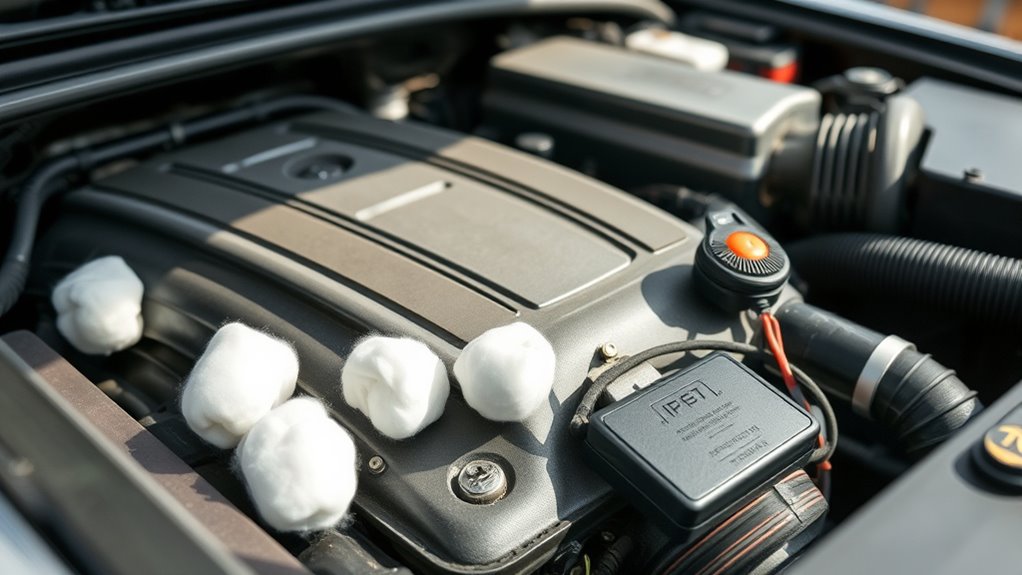
- Place natural repellents like peppermint oil-soaked cotton balls or dried lavender sachets near the engine. These smells help keep mice away without harsh chemicals.
- Keep the car area clean by removing debris, sealing trash bins, and avoiding food storage near the vehicle. A tidy spot means fewer attractions for rodents.
- Regularly inspect the engine for gnaw marks, droppings, nests, and unusual odors to detect early rodent activity. Catching signs early helps prevent bigger problems.
- Use ultrasonic rodent repellents or commercial natural deterrent sprays to discourage mice from nesting in the engine. These tools add another layer of protection.
Why Mice Nest in Car Engines and the Damage They Cause

Because car engines provide warmth and shelter, mice often choose them as nesting spots. When you park your car, especially during colder months, the engine compartment offers a cozy, protected environment where mice nesting feels safe.
Car engines offer warmth and shelter, making them ideal nesting spots for mice during colder months.
Unfortunately, this cozy hideout can lead to significant engine damage. Mice tend to chew on wires, hoses, and insulation, which can disrupt electrical systems and fluid lines. If you ignore signs of mice nesting, you might face costly repairs or even dangerous driving situations caused by malfunctioning parts.
Furthermore, nests made from shredded materials can block air and fluid flow, reducing engine efficiency. You might not notice the problem until warning lights appear or strange noises start.
Being aware of why mice target your engine and the type of damage they cause is essential. Recognizing these risks encourages you to act early, preventing mice nesting from turning into expensive engine damage.
How to Seal Entry Points and Keep Mice Out
While mice are skilled at squeezing through tiny gaps, you can keep them out by sealing every possible entry point around your engine compartment. Start by inspecting the engine bay for holes, cracks, or worn-out seals.
Use weather-resistant materials like silicone sealant, steel wool, or rubber gaskets to seal gaps. Don’t forget to check wiring harnesses and ventilation openings. Mice often exploit these areas to gain entry.
Here’s a quick guide to seal gaps and prevent entry:
| Area to Inspect | Recommended Sealant | Purpose |
|---|---|---|
| Engine bay edges | Silicone sealant | Block small cracks |
| Wiring harness points | Steel wool + tape | Stop wire chewing |
| Ventilation openings | Fine mesh screens | Prevent nesting access |
| Cable entry points | Rubber gaskets | Seal flexible areas |
Try Natural Repellents to Keep Rodents Away
If you want to keep mice away without harsh chemicals, natural repellents offer a safe and effective solution. You can use various methods that deter rodents without harming them or your vehicle.
For example, pet deterrents like peppermint oil spray or predator urine mimic scents that mice find threatening. Ultrasonic devices emit sounds at frequencies rodents dislike, helping keep them out of your engine bay.
Consider these natural repellents to protect your car:
- Peppermint oil-soaked cotton balls placed near entry points
- Sachets of dried lavender or eucalyptus in the engine compartment
- Ultrasonic devices designed specifically for rodent control
- Commercial pet deterrent sprays with natural ingredients
Keep Your Car Area Clean to Avoid Attracting Mice to Your Engine
Keeping your car area clean plays an essential role in preventing mice from making their way into your engine. Mice are attracted to cluttered, dirty spaces where food crumbs, trash, or even lingering car odor can signal a safe, inviting environment.
By regularly removing debris, sweeping the garage floor, and keeping trash bins sealed, you eliminate the factors that draw rodents close to your vehicle.
Additionally, avoid storing pet food or birdseed near your car, as these can increase the risk of attracting pests. Regularly wiping down surfaces to reduce car odor and food residue strengthens your pest prevention efforts.
A clean, organized parking area sends a clear message that your car isn’t a cozy nesting spot. Staying proactive with cleanliness not only protects your engine but also keeps your entire car environment healthier and rodent-free.
Inspect Your Engine Regularly for Signs of Mice
A clean car area helps reduce the chances of mice nesting near your vehicle, but it’s just as vital to check your engine itself for any signs of rodent activity. Regularly inspecting your engine compartment is a key step in effective rodent prevention. You want to catch any issues early before mice cause damage to wiring or insulation.
When inspecting your engine compartment, look out for:
- Gnaw marks on wires and hoses
- Small droppings or nesting materials like shredded fabric
- Unusual smells, such as ammonia or urine
- Signs of disturbed insulation or debris accumulation
Checking these signs frequently helps you identify a rodent problem before it worsens. Make it a habit to open your hood and visually examine the engine compartment at least once a week, especially during colder months when mice seek warm spots. This proactive approach is essential to keeping your car safe from costly rodent damage.
Frequently Asked Questions
Can Mice Damage My Car’s Electrical System?
Yes, mice can definitely damage your car’s electrical system by chewing on wires in the engine compartment. Their chewing damage can cause shorts, blown fuses, or even prevent your car from starting.
You might not notice the problem until it’s serious, so it’s important to check your engine compartment regularly. Protecting your vehicle from mice helps avoid costly repairs and keeps your electrical system functioning properly.
Are Ultrasonic Devices Effective Against Mice in Engines?
Imagine sitting in your car as a high-pitched, barely audible sound hums beneath the hood. Ultrasonic deterrents work by creating engine noise disruption that’s unpleasant to mice, encouraging them to keep away.
While these devices can help reduce mouse visits, they’re not foolproof since some rodents may get used to the sound. You’ll want to combine ultrasonic deterrents with other methods for the best protection against engine-invading mice.
How Long Does It Take for Mice to Infest a Car Engine?
Mice can start infesting your car engine within just a few days if they find vehicle insulation in the engine compartment appealing for nesting. They’re attracted to the warmth and soft materials, so don’t wait to check for signs.
If your car sits unused for several days or more, mice might have already moved in. Act quickly to inspect and clean the engine compartment to prevent damage to wiring and insulation.
Can Professional Pest Control Help With Engine Mice Problems?
Yes, professional pest control can help with engine mice problems by providing effective solutions beyond DIY deterrents. They’ll assess your car and recommend treatments that safeguard your engine insulation from damage.
While you might try repellents or traps, experts use stronger methods to keep mice away for good. Hiring pros guarantees a thorough approach, saving you time and preventing costly repairs caused by nesting or chewing inside your engine.
Are There Specific Times of Year When Mice Are More Active in Cars?
Just like how animals in Aesop’s fables prepare for changing seasons, you’ll notice mice show seasonal activity in your car, especially during fall and winter. The weather influence drives them to seek warmth and shelter, making your engine bay a cozy hideout.
When the temperature drops, they’re more active in cars, so staying vigilant during colder months helps you prevent unwanted rodent guests from making themselves at home.
Conclusion
Don’t let mice turn your engine into their cozy hideaway. By sealing entry points and sprinkling natural repellents, you can build an invisible fortress around your car.
Keep your space spotless and inspect under the hood like a detective on a mission. With these simple steps, you’ll keep those tiny invaders at bay, protecting your engine from their gnawing jaws.
Following these tips will ensure your car purrs smoothly like a well-tuned melody. Remember, keeping mice out of your car engine is the key to avoiding costly damage and maintaining your vehicle’s performance.