Top 5 Oscillating Multi Tool Accessories Every DIYer Needs
Choosing the right oscillating multi tool accessories can be frustrating, especially when one project requires cutting, sanding, scraping, and grout removal. You’re not alone—many DIYers struggle to know which attachment will deliver clean results without damaging the material.
In this roundup, we’ll cover the top five oscillating multi-tool accessories every DIYer needs. You’ll learn how to choose the right option for each job and use it safely and effectively.
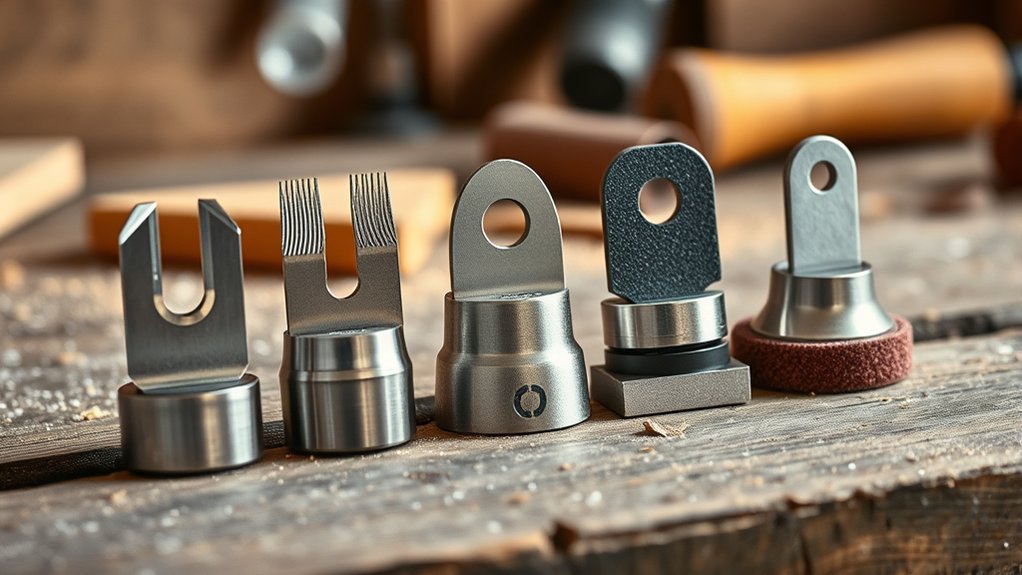
The top five oscillating multi-tool accessories you’ll want are cutting blades, detail sanding pads, scraper blades, grout blades, and carbide masonry accessories. Choose bi-metal or high-carbon blades with suitable teeth for wood, plastic, or trim.
Use triangular sanding pads for tight corners, scrapers for paint and adhesive, and grout blades matched to joint width. Carbide rasps and blades handle masonry, while eye protection and light pressure improve safety.
Keep going for practical tips on choosing and using each accessory.
Key Takeaways
- Oscillating saw blades cut wood and plastic efficiently; match tooth spacing, blade width, material, and shank compatibility.
- Triangular detail sanding pads smooth tight corners and recessed areas; choose suitable grits and replace worn sheets.
- Scraper blades remove paint and adhesive; use rigid blades for buildup and flexible blades for delicate surfaces.
- Grout blades remove tile grout precisely when matched to joint width; make shallow passes and protect surrounding surfaces.
- Carbide rasps and grit blades handle masonry removal; wear protective equipment, control dust, and replace damaged accessories.
Choose Oscillating Blades for Wood and Plastic
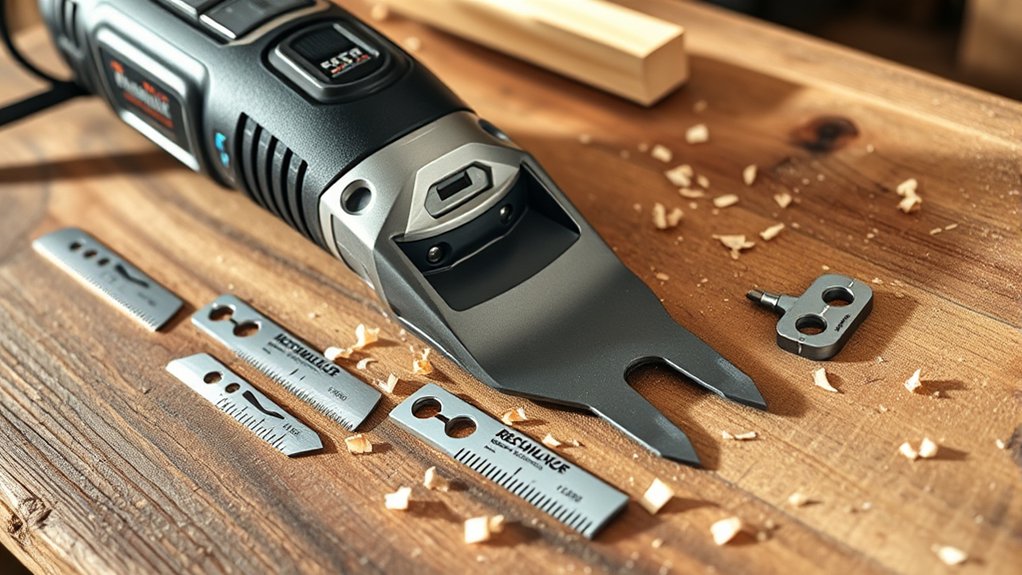
When cutting wood or plastic, choose a bi-metal or high-carbon steel oscillating blade matched to the material. For clean results, select tooth spacing according to your task. Coarser teeth remove wood quickly during plunge cuts, while finer teeth limit splintering and improve control on trim, plywood, and laminate.
Use a blade labeled for plastic when cutting PVC or acrylic, because its geometry helps prevent melting and chipping. Match the blade width to your project. A narrow blade gives you better access around corners and produces more controlled cuts, while a wider blade stays steadier across long sections.
Choose plastic-rated blades for PVC or acrylic, and match blade width to your project for cleaner, steadier, more controlled cuts.
Check the shank pattern before buying, since compatibility varies among oscillating multi-tools. Blade durability depends on material, heat, and pressure. Let the accessory cut at its intended speed, and don’t force it through resistant stock.
Replace dull teeth promptly. A sharp blade improves cutting precision, reduces vibration, and protects your tool’s motor. Keep spare blades available so you can switch accessories as materials change.
Sand Tight Corners With Detail Sanding Pads
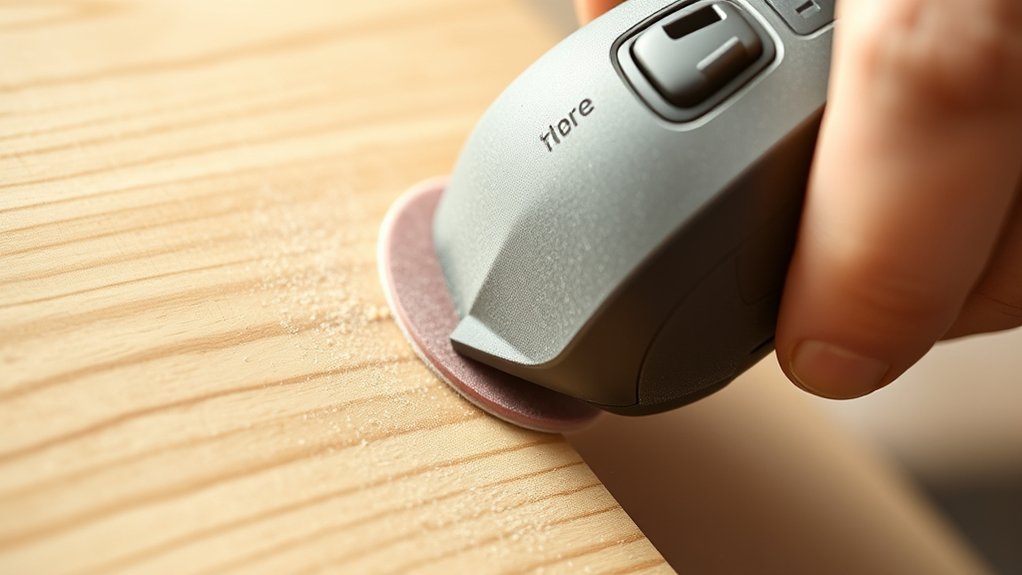
After cutting, use detail sanding pads to smooth tight corners, edges, and recessed areas that larger sanders can’t reach. Their triangular shape fits neatly into narrow spaces, helping you refine joints, trim, and small repairs without damaging nearby surfaces. Choose the grit according to your project: start coarse to remove rough fibers, then switch to fine for a clean, paint-ready finish.
For controlled results, keep the tool moving lightly and let the abrasive do the work. Don’t press hard, or you’ll wear the pad quickly and create uneven spots. A dust-extraction attachment or brief vacuuming keeps your view clear while you work.
- Smooth inside corners on cabinets and boxes
- Refine profiles after precision trimming
- Finish intricate detailing around trim
- Prepare edges before staining or painting
Replace worn hook-and-loop sheets promptly, since clogged abrasives sand poorly. With the right pad and a steady hand, you’ll achieve professional-looking results in spaces that usually demand tedious hand sanding. Keep several grits available for efficient transitions between shaping and finishing tasks.
Scrape Paint and Adhesive With Scraper Blades
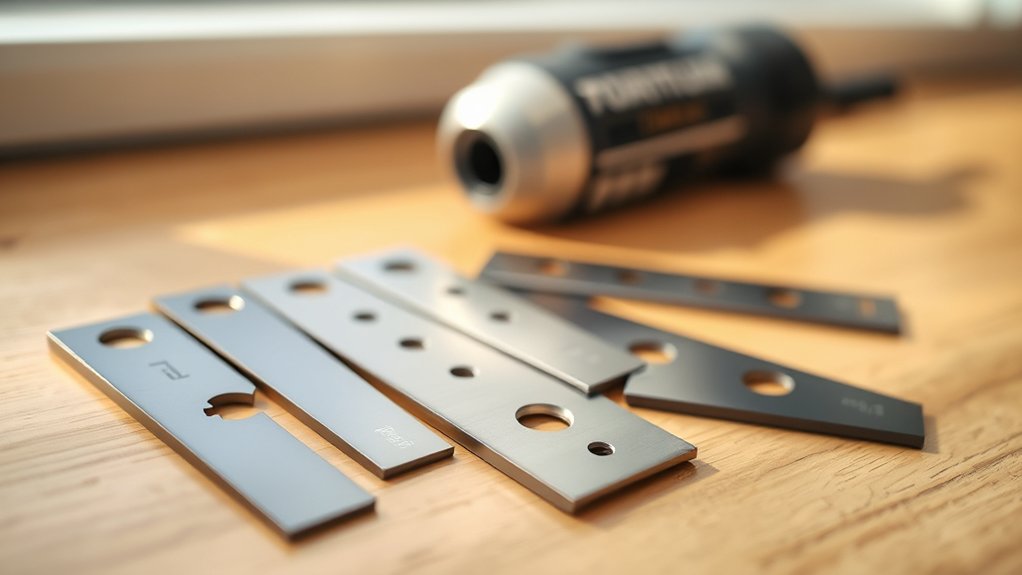
Scraper blades lift dried paint, caulk, labels, and adhesive from flat surfaces with quick, controlled strokes. Fit a rigid blade for stubborn buildup or a flexible blade for delicate surfaces, then hold your oscillating tool at a low angle.
Let the accessory do the work; excessive pressure can gouge wood, drywall, or plastic. For effective Painting preparation, remove loose material before sanding or applying primer.
Start at an edge, keep the blade moving, and make several light passes instead of forcing one deep cut. You’ll get cleaner results and better control around trim, corners, and fixtures.
Use these Adhesive removal techniques on flooring, countertops, or glass, but test an inconspicuous spot first. Wear eye protection and gloves, and watch for hidden nails or screws that could damage the blade.
After scraping, wipe away residue with a suitable cleaner, following the surface manufacturer’s instructions. Choose a blade width that matches the area so you can work efficiently without scratching adjacent finishes.
Remove Old Grout With Grout Blades
With a grout blade installed, you can remove cracked or stained grout from tile joints without disturbing the surrounding tile. Guide the oscillating tool steadily along the joint, applying light pressure and letting the blade do the cutting.
Keep the blade centered to reduce chips, and stop often to check your progress. For effective grout cleaning, vacuum dust as you work and wipe the joints with a damp sponge afterward.
Wear eye protection and a dust mask, especially when dry grout crumbles.
- Match the blade width to the joint.
- Start at an exposed corner or damaged spot.
- Protect nearby surfaces with painter’s tape.
- Use a shallow pass before cutting deeper.
A grout blade also helps with targeted tile removal when hardened grout locks a damaged tile in place. Clear the joints around that tile first, then lift it carefully with a putty knife.
Don’t force the tool or twist its blade. Either action can damage tile edges. Replace worn blades promptly so your cuts remain controlled and clean.
Grind Masonry With Carbide Accessories
When grout removal exposes stubborn mortar, thin-set, or rough masonry, a carbide rasp or carbide-grit blade can grind it down and smooth the surface. You can use these oscillating-tool accessories to level adhesive, clean mortar joints, or shape small masonry edges where larger grinders won’t fit. Choose a rasp for controlled material removal and a carbide-grit blade for broader, flatter areas.
Prioritize masonry safety before you start. Wear safety glasses, hearing protection, gloves, and a properly fitted dust mask or respirator. Secure the tile or workpiece, inspect the accessory for damage, and keep bystanders away from flying grit.
Don’t force the tool. Let the teeth work while you maintain steady, light pressure. Short passes help prevent overheating and unwanted gouges.
Carbide durability makes these accessories useful for demanding cleanup, but they still wear. Replace a dull or cracked attachment promptly, and follow the manufacturer’s speed and usage recommendations.
Vacuum dust as you work to keep your line visible and your workspace cleaner.
Frequently Asked Questions
How Do I Choose the Right Oscillating Multi Tool for My Projects?
Choose an oscillating multi tool by matching its power, speed control, and comfort to your projects. For heavy cutting or renovation, select a higher-powered model with variable-speed settings.
For detailed work, prioritize low vibration, a comfortable grip, and easy accessory changes. Check blade versatility so you can handle wood, metal, grout, and sanding.
Also consider accessory durability, battery life, corded power, warranty coverage, and compatibility with widely available blades and attachments.
Are Oscillating Multi Tool Accessories Compatible Across Different Brands?
You can often use oscillating multi-tool accessories across brands, but compatibility depends on the interface, not the logo. “Measure twice, cut once”: check your tool’s mounting system before buying.
Brand compatibility has improved because many manufacturers follow accessory standards, including universal open-back interfaces. However, proprietary connections may limit your choices.
Verify the package description, compare mounting shapes, and use an adapter when approved. Don’t force a blade that doesn’t seat securely.
What Safety Gear Should I Wear When Using Oscillating Accessories?
Wear Protective gloves and Eye protection whenever you use oscillating accessories. Choose snug, cut-resistant gloves that improve your grip without restricting movement, and wear sealed safety glasses or a face shield to block flying chips and dust.
Add hearing protection during extended cutting or sanding, especially indoors. Use a dust mask or respirator when materials create fine particles, and wear sturdy, closed-toe footwear. Keep loose clothing and jewelry away from the tool.
How Do I Maintain and Store Oscillating Multi Tool Accessories?
Treat your accessories like a well-tuned toolkit: clean, dry, and ready for the next task. For Blade maintenance, brush away debris after each use, wipe metal surfaces, and lightly oil them to prevent rust.
Inspect teeth, edges, and attachment points, replacing anything cracked, warped, or dull. Choose Storage solutions that keep blades separated in a labeled case or organizer.
Store everything somewhere cool, dry, and away from moisture, children, and corrosive chemicals.
Can Oscillating Multi Tools Cut Metal, Tile, or Drywall Effectively?
Yes, you can cut metal, tile, and drywall effectively with an oscillating multi-tool when you choose the right blade and work patiently.
For Metal cutting, use a bi-metal blade for thin screws, nails, pipes, or sheet metal. Apply light pressure to prevent overheating.
For Tile removal, choose a carbide-grit blade and score grout or adhesive carefully.
Drywall cuts cleanly with a fine-toothed blade, though larger openings require a specialized saw.
Conclusion
With the right oscillating multi tool accessories, tough jobs become surprisingly simple. A wood blade cuts cleanly where a saw feels clumsy, while a detail pad smooths corners that sandpaper can’t reach.
Scraper blades lift stubborn paint, grout blades clear joints, and carbide accessories grind masonry that once seemed immovable. Instead of wrestling with every repair, you’ll move from rough to refined with confidence.
Choose the right accessory, switch it on, and turn frustrating projects into satisfying finishes with these essential oscillating multi tool accessories.