Find Out What Engine My Car Has in 7 Simple Steps
Trying to figure out what engine your car has can feel overwhelming. You’re not alone—many people struggle with identifying the right engine details, which is crucial for maintenance, repairs, or upgrades.
Knowing exactly what engine is under your hood can save you time, money, and a lot of guesswork.
To find out what engine your car has, start by identifying your vehicle’s make, model, and year. Check your owner’s manual for engine details and locate the engine code on the engine block or door jamb.
Look under the hood for labels or stamps showing specs. Use online tools or enter your VIN for exact engine info.
Finally, confirm your engine type with the dealer. Following these steps will help you understand your engine better and guide your next decisions.
Key Takeaways
- Locate the engine code on the engine block, door jamb, or firewall. Using a flashlight can help you see it more clearly.
- Check your owner’s manual or vehicle registration for engine specifications and codes. These documents usually have the info you need.
- Use your car’s VIN with trusted online tools to identify the exact engine model and details. It’s a quick way to get precise info.
- Look under the hood for labels or stamps that show engine type, displacement, and horsepower. These markings can provide useful clues.
- Cross-reference the engine codes you find with manuals or online databases. This helps ensure you identify the engine accurately.
Identify Your Car’s Make, Model, and Year
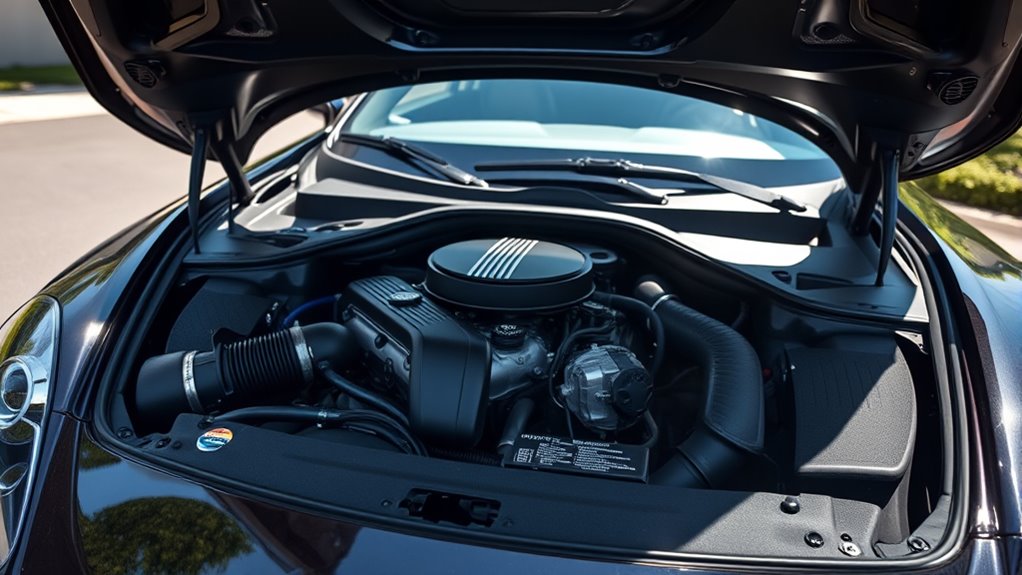
How do you determine the engine in your car? Start by identifying your car’s make, model, and year. This information is essential because engine specifications vary widely even within the same make.
Knowing the exact model and year helps you find the right engine type, which directly impacts your engine oil choice and fuel efficiency. For example, newer models might have engines that require synthetic engine oil for better performance and longer intervals between changes.
Also, fuel efficiency ratings often differ by engine type, so understanding your car’s specifics helps you predict fuel costs accurately. You can usually find the make, model, and year on your car’s registration, insurance documents, or the driver’s side door jamb.
Once you nail down these details, it becomes easier to match the right engine oil and optimize fuel efficiency. This step sets the foundation for identifying your car’s engine without guesswork.
Check Your Owner’s Manual for Engine Details
You’ll want to find the section in your owner’s manual that lists the engine specifications. This part usually includes key details like engine size, type, and power output. Don’t worry if some terms seem technical—you can learn what they mean as you go along.
Locate Manual Section
Where can you find reliable information about your car’s engine? Your owner’s manual is the best place to start. It’s designed to provide clear details specific to your vehicle, including engine type and features.
To locate the right section, check the table of contents or the index for terms like “engine,” “specifications,” or even “manual transmission.” If your car has a manual transmission, the manual will often explain how the engine interacts with the gear shift. This can help you understand your car better.
Don’t overlook sections about maintenance, as they sometimes include engine details. Keep your manual handy or access a digital version if available. This way, you’ll quickly find accurate engine information without guesswork.
Identify Engine Specifications
Once you’ve found the engine section in your owner’s manual, delve into the specifications to understand your car’s powertrain better. This section provides vital details that help you maintain your vehicle effectively. You’ll find information crucial for routine upkeep and performance checks.
Look for these key details:
- Engine type and displacement
- Recommended engine oil grade and change intervals
- Spark plug type and replacement schedule
- Horsepower and torque ratings
- Fuel system specifications
Knowing these specs helps you choose the right parts and fluids, ensuring your engine runs smoothly. The manual’s guidance on engine oil and spark plugs keeps maintenance straightforward, preventing costly repairs. Use these details as a reference every time you service your car or need to replace components.
Understand Technical Terminology
Although technical terms in your owner’s manual might seem confusing at first, understanding them is essential to grasp your engine’s details accurately. When you check the manual, you’ll encounter technical jargon related to engine terminology, such as displacement, horsepower, torque, and cylinder configuration.
Don’t let these terms intimidate you; they provide key information about how your engine performs and operates. Take time to familiarize yourself with these words, as they help you identify your engine’s size, power output, and type.
Find Your Engine Code on the Vehicle
To identify your engine code, you’ll need to locate the stamped or printed code directly on your vehicle’s engine or chassis. This code helps you understand your engine’s specifics, which affect engine performance and fuel efficiency. Knowing this code is crucial for maintenance, repairs, or upgrades.
Look for these common spots to find the code:
- On the engine block near the cylinder head
- Inside the driver’s side door jamb
- On the firewall between the engine and passenger compartments
- Near the front of the engine, close to the radiator
- On a metal plate attached to the chassis
Each code is unique to your engine type, providing details about displacement, configuration, and manufacturing date. Once you find it, you can cross-reference it with your vehicle manual or online resources to get exact specifications that impact how your engine runs and how much fuel it consumes.
Look Under the Hood for Engine Labels and Stamps
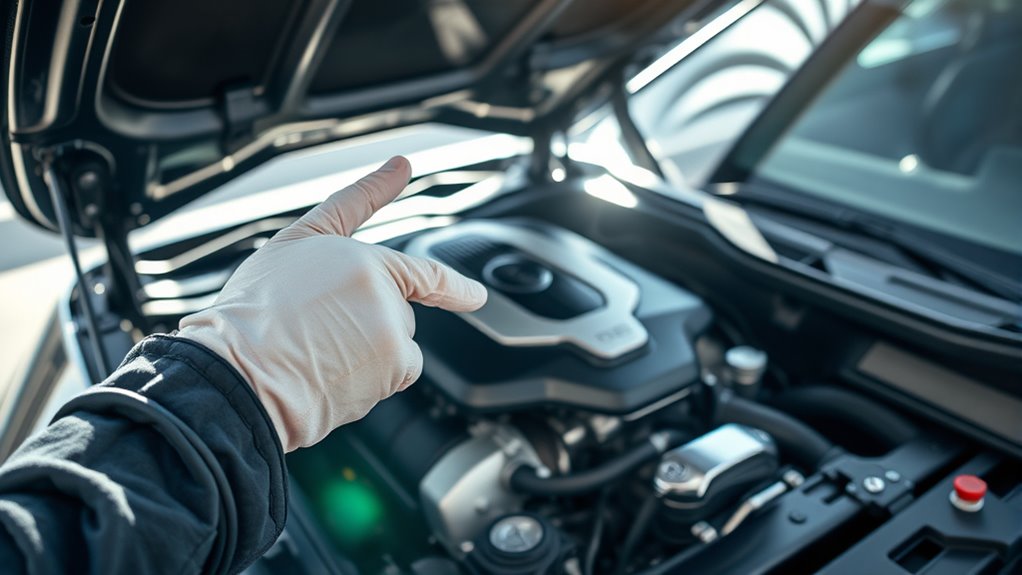
When you pop the hood, you’ll find several labels and stamps that reveal important engine information. Engine labeling is usually placed on the valve cover, radiator support, or near the firewall. These labels often include the engine type, displacement, and sometimes even the horsepower.
You should look carefully for a metal stamp or a sticker that contains a series of numbers and letters. That’s key for stamp identification. This code provides details about the engine model and manufacturing date.
To identify your engine accurately, check for these stamped numbers on the engine block itself, often near the front or side. These stamps are typically engraved or embossed and can be a bit tricky to spot, so use a flashlight if needed.
Use Online Tools to Decode Your Engine Type
Several online tools can help you decode your engine type quickly and accurately. By entering your car’s make, model, and year, these platforms reveal detailed engine info. This helps you understand engine performance and fuel efficiency better. You’ll save time and avoid guesswork by relying on trusted databases designed for this purpose.
Here’s what these tools typically provide:
- Exact engine model and displacement
- Horsepower and torque ratings
- Fuel type and consumption estimates
- Emission standards compliance
- Maintenance and upgrade suggestions
Using these online resources, you can easily compare engine specs to find the best fit for your driving needs. This clarity helps you make informed decisions about repairs, upgrades, or fuel choices. It directly impacts your vehicle’s performance and economy. Just make sure you use reputable websites to get accurate, up-to-date information tailored to your car.
Check Your Engine Specs Using Your Vehicle Identification Number (VIN)
Although decoding your engine type online is helpful, you can get even more precise details by checking your Vehicle Identification Number (VIN). Your VIN is a unique 17-character code that holds specific information about your car, including the exact engine model installed at the factory.
By entering your VIN into a trusted decoder or your manufacturer’s online portal, you’ll uncover details that impact engine performance and fuel efficiency.
Entering your VIN in a trusted decoder reveals key details influencing engine performance and fuel efficiency.
Knowing your engine specs through the VIN helps you understand how your car should perform and what kind of maintenance it needs. It also guarantees you choose the right parts and fluids to keep your engine running smoothly.
Since different trims or production runs might have subtle engine variations, the VIN gives you the exact specs, avoiding guesswork. So, grab your VIN from your dashboard or driver’s side door frame, and use it to get a detailed snapshot of your engine’s capabilities and design.
Confirm Your Engine Type With the Manufacturer or Dealer
If you want the most accurate engine details, contacting the manufacturer or your dealer is the best move. They have direct access to your vehicle’s records and can confirm your engine type without guesswork. This step guarantees you get precise information, which is vital for maintenance, repairs, or upgrades.
When you reach out, keep these tips in mind:
- Provide your VIN for quick, exact identification
- Ask about your engine warranty coverage to avoid surprises
- Inquire if dealer services are needed for specific engine types
- Request any recalls or service bulletins related to your engine
- Confirm compatibility with replacement parts or upgrades
Dealer services often include expert advice on your specific engine, saving you time and preventing costly mistakes. Trusting the manufacturer or dealer means you’re relying on authoritative sources, giving you confidence in your engine knowledge and future care decisions.
Frequently Asked Questions
How Often Should I Service My Car’s Engine?
You should service your car’s engine every 5,000 to 7,500 miles, depending on your vehicle and driving habits. Sticking to regular engine maintenance helps keep everything running smoothly and prevents costly repairs.
Pay close attention to oil change intervals, as fresh oil protects your engine from wear and tear. Check your owner’s manual for specific recommendations, and don’t skip scheduled maintenance. It’s key to extending your engine’s life and performance.
What Are Common Signs of Engine Trouble?
Imagine you’re driving and suddenly the engine warning light pops on. Don’t ignore it! Common signs of engine trouble include rough idling, strange noises, and reduced power.
If you notice these, refer to your maintenance checklist immediately. For example, a friend ignored a knocking sound, leading to costly repairs.
Catching issues early by paying attention to these signs can save you time and money, keeping your car running smoothly.
Can I Upgrade My Car’s Engine Myself?
You can upgrade your car’s engine yourself if you have mechanical skills and the right tools. Engine tuning and aftermarket upgrades like performance air filters or exhaust systems are manageable DIY projects.
However, complex swaps or internal engine modifications might require professional help. Always research compatibility and follow safety guidelines.
If you’re confident, start small with tuning and simple upgrades to improve performance before tackling bigger engine changes.
How Does Engine Size Affect Fuel Efficiency?
You might love the power of a big engine but hate the frequent stops at the gas station. Engine displacement directly impacts fuel consumption; larger engines burn more fuel because they need more air and fuel to operate.
If you want better mileage, a smaller engine often means less fuel consumption. So, while a bigger engine can give you more performance, it usually costs you more at the pump.
What Is the Difference Between Diesel and Petrol Engines?
Diesel engines burn fuel more efficiently than petrol ones, so you’ll usually get better fuel efficiency with diesel. They also produce more torque, which helps with heavy loads.
However, diesel engines emit more nitrogen oxides and particulates, so they have stricter emission standards to meet. Petrol engines run cleaner with lower emissions but tend to consume more fuel.
Choosing between them depends on your driving needs and environmental priorities.
Conclusion
Now that you’ve uncovered your engine’s identity, it’s like you’ve lifted the hood on a secret treasure chest. With these simple steps, you hold the key to understanding what powers your ride.
Whether you’re checking the manual, decoding your VIN, or consulting your dealer, you’re no longer in the dark. Knowing your engine is the first step to smarter maintenance and a smoother drive.
Your car’s heart beats clearer because of you. Finding out what engine your car has makes all the difference in keeping it running strong.