If Your Car Engine Is Blown 10 Best Signs to Tell
Dealing with a Car Engine Is Blown that’s on the verge of failing can be stressful, and if you’re worried about a blown engine, you’re not alone. Many drivers struggle with identifying the warning signs early enough to avoid costly repairs or breakdowns.
Knowing what to look for can save you time, money, and a lot of frustration on the road.
You’ll know your car engine might be blown if you hear persistent knocking or loud popping noises, notice thick blue, white, or black exhaust smoke, or feel sudden power loss and hesitation while driving.
Watch for frequent stalling, overheating warnings, and oil leaks or burning smells.
Warning lights like check engine or oil pressure signals are red flags too.
A sudden drop in fuel efficiency or poor acceleration also matters.
Keep an eye out to understand what’s really going on under the hood.
If Your Car Engine Is Blown Key Takeaways
- Frequent stalling, hesitation, or sudden loss of power indicates severe internal engine damage.
- Unusual knocking sounds or thick blue, white, or black exhaust smoke signal engine component failure.
- Repeated overheating and visible oil leaks cause engine warping and lubrication loss, risking total engine failure.
- Warning lights like Check Engine, Oil Pressure, or Temperature alerts require immediate attention to prevent damage.
- Sudden drop in fuel efficiency or poor mileage suggests internal engine issues needing diagnostic compression tests.
What a Blown Engine Means for Your Car
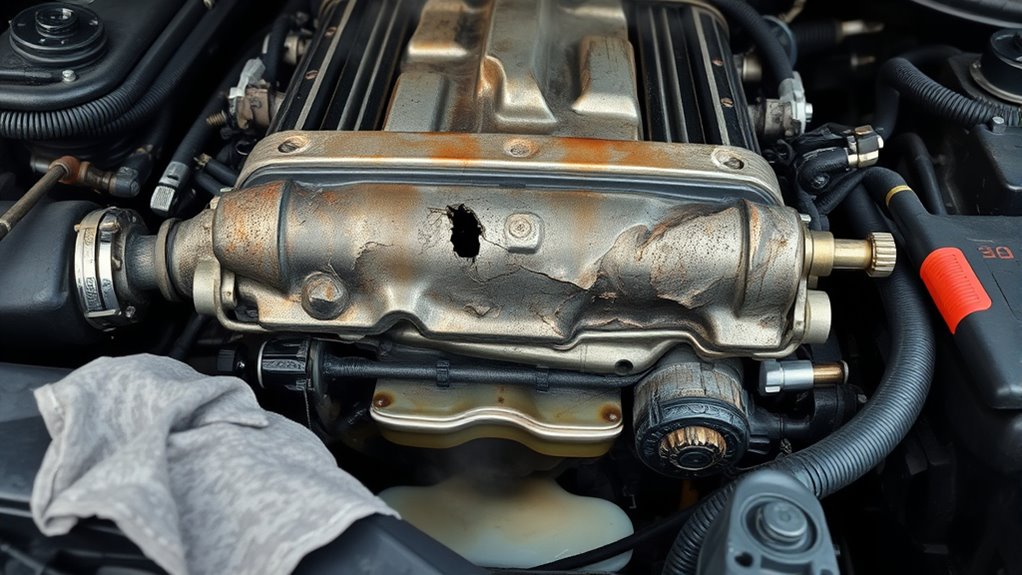
Although a blown engine can sound like a total disaster, it actually means your car’s engine has suffered severe internal damage that prevents it from running properly. When this happens, the engine components like pistons or valves may be cracked or broken, making repairs costly or sometimes impossible. You’ll notice your vehicle won’t start or will stall frequently.
Regular engine maintenance plays a vital role in preventing this nightmare. By sticking to routine oil changes, coolant checks, and timely repairs, you reduce the risk of severe damage. Vehicle diagnostics can help you spot early warning signs before things get worse.
Using diagnostic tools or visiting a mechanic for engine scans can reveal issues like overheating, low oil pressure, or misfires. If you ignore those early signs, you risk ending up with a blown engine and a hefty repair bill.
Unusual Engine Noises Signaling Serious Trouble
If you start hearing knocking or tapping sounds coming from your engine, don’t just brush them off. These noises often point to serious internal damage. And if you catch loud popping noises, that’s another big warning sign your engine might be in trouble.
It’s really important to pay attention to these unusual sounds because catching problems early can save you from bigger, more expensive repairs down the road. So, keep an ear out and don’t wait too long to get your engine checked.
Knocking And Tapping
One of the most alarming signs your engine may be blown is when you hear persistent knocking or tapping noises. These sounds often mean internal components are struggling, possibly due to engine oil degradation.
When oil breaks down, it loses its ability to lubricate, causing metal parts to grind and knock. Ignoring these noises can lead to severe damage.
Also, don’t overlook battery corrosion, which can affect your car’s electrical system and cause erratic engine behavior, sometimes producing unusual tapping sounds.
If you notice these noises, check the oil quality and battery terminals immediately. Addressing engine oil degradation and battery corrosion early helps prevent costly repairs and keeps your engine running smoothly.
Don’t wait. Persistent knocking or tapping is a clear warning your engine needs attention.
Loud Popping Sounds
When your engine starts making loud popping sounds, you should act quickly because these noises often indicate serious internal problems. Popping sounds can result from backfiring, misfires, or damaged components like valves or pistons. Ignoring these noises risks your engine of complete failure.
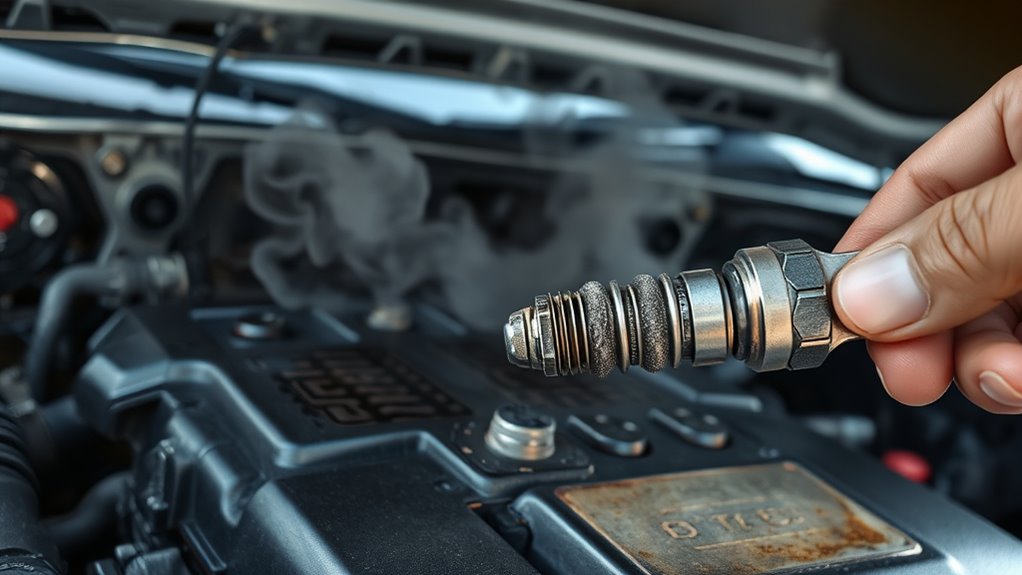
Regular engine maintenance helps prevent conditions that cause popping, such as clogged fuel injectors or faulty spark plugs. If you hear these unusual noises, don’t delay. Use car diagnostics to identify the root cause.
A professional diagnostic scan can pinpoint issues before they escalate, saving you costly repairs. Addressing loud popping sounds early ensures your engine stays reliable and extends your vehicle’s life. Always trust these warning signs and prioritize prompt inspection.
Excessive Exhaust Smoke as a Red Flag
If you see thick smoke coming out of your exhaust, that’s a warning you definitely don’t want to overlook. The color of the smoke—whether it’s blue, white, or black—can actually tell you a lot about what might be going on under the hood. For example, blue smoke often means your engine is burning oil, while white smoke could be a sign of coolant leaking. Black smoke usually points to too much fuel being burned. Paying attention to these different smoke colors can help you spot serious problems early, before they turn into bigger, more expensive repairs.
Color Variations Explained
Excessive exhaust smoke can reveal a lot about your engine’s health, especially regarding color variations. Different colors signal specific issues, so recognizing them can save you from costly repairs. Here’s what you should watch for:
1. Blue smoke
This often means engine oil degradation is occurring, causing oil to burn inside the cylinders. It’s a sign your engine is struggling and needs immediate attention.
2. White smoke
This suggests coolant system malfunctions, indicating coolant is leaking into the combustion chamber. If ignored, it can lead to severe engine damage.
3. Black smoke
Usually points to a rich fuel mixture, which wastes fuel and stresses the engine.
Spotting these colors early helps you act fast before your engine completely blows.
Causes of Excess Smoke
Though you might not always notice it immediately, seeing a sudden increase in smoke from your exhaust should raise a red flag about your engine’s condition. Excessive exhaust smoke often signals serious issues like engine oil contamination or radiator coolant leaks.
When engine oil contaminates the combustion chamber, it burns alongside fuel, producing thick blue or gray smoke. Likewise, radiator coolant leaks into the engine can create white smoke, indicating a blown head gasket or cracked engine block.
Ignoring these signs can lead to further engine damage and costly repairs. If you spot unusual smoke, don’t delay. Inspect for oil contamination or coolant leaks and get your engine checked promptly to avoid a complete engine failure.
How Overheating Indicates a Blown Engine
When your engine overheats repeatedly, it’s a strong warning that serious damage may have occurred. Overheating stresses engine components, often leading to a blown engine if ignored. You need to act fast. Delaying engine repair can turn a minor fix into a costly nightmare.
Repeated engine overheating signals serious damage—act quickly to avoid costly repairs or a blown engine.
Here’s why overheating is a red flag:
- Warped Cylinder Heads: Excess heat can warp critical parts, causing leaks and poor compression.
- Blown Head Gasket: Overheating often cracks the gasket, resulting in coolant leaks and engine failure.
- Cracked Engine Block: Extreme temperatures can cause cracks, making repairs nearly impossible.
When you notice overheating, get car diagnostics done immediately. A professional diagnostic can pinpoint the damage and help you decide whether repairs are feasible or replacement is necessary. Don’t ignore these signs. Overheating isn’t just a hassle; it’s a direct path to a blown engine.
Losing Power While Driving: What It Means
If your car suddenly loses acceleration or has trouble going uphill, that’s a clear warning sign. You might notice your engine just can’t keep up like it used to, especially when it’s working harder. These kinds of symptoms often mean there’s serious engine trouble brewing, and it’s definitely not something you want to ignore.
Sudden Acceleration Drops
Sudden drops in acceleration can catch you off guard and signal serious engine trouble. If your car hesitates or loses power abruptly, it’s a red flag you shouldn’t ignore.
This issue may stem from engine oil degradation, which compromises lubrication and causes internal damage. Battery corrosion can also affect your car’s electrical system, leading to inconsistent performance and acceleration problems.
Watch for these signs:
- Your car struggles to gain speed despite pressing the accelerator.
- You experience unexpected jerks or stalls during acceleration.
- Warning lights flash on your dashboard, indicating engine or battery issues.
Ignoring sudden acceleration drops risks complete engine failure. Act fast to get your car checked and avoid costly repairs.
Struggling On Inclines
Experiencing drops in acceleration often signals deeper engine issues, especially when you notice your car struggling on inclines. When going uphill, your engine needs extra power, and if it can’t deliver, it’s a red flag.
Engine oil degradation could be a culprit, as old or contaminated oil fails to lubricate critical components properly, causing increased friction and reduced efficiency. Furthermore, transmission slipping might make it seem like your engine is weak because the power isn’t transferring smoothly to the wheels.
If you feel your car hesitating or slowing down on slopes, don’t ignore it. Addressing these symptoms early can prevent a blown engine and costly repairs. Keep an eye on oil quality and transmission health to maintain your engine’s performance.
Oil Leaks and Low Oil Levels Indicating Engine Problems
When you notice oil leaks or consistently low oil levels, your engine might be signaling serious trouble. Ignoring these signs can lead to devastating consequences, including oil contamination and engine overheating. Here’s what you should watch for:
- Visible Oil Puddles: Spotting oil under your car isn’t just messy. It means your engine is losing essential lubrication, which increases wear and tear.
- Burning Oil Smell or Smoke: This can indicate oil is leaking onto hot engine parts. That causes overheating and potential damage.
- Warning Lights or Performance Drops: Low oil levels can trigger dashboard alerts and cause your engine to run rough or lose power.
If you catch these signs early, you might prevent catastrophic engine failure. Don’t wait. Check your oil regularly and address leaks immediately to protect your engine’s health and your safety on the road.
Frequent Stalling as a Sign of Engine Failure
If your car frequently stalls while driving or idling, it’s a clear warning that your engine might be failing. One common cause is engine oil degradation, which reduces lubrication and causes internal components to seize or malfunction. This leads to sudden stalling.
When oil breaks down, it can’t protect your engine effectively. This increases wear and tear that disrupts smooth operation.
Furthermore, battery voltage fluctuations can affect your car’s electrical system, causing inconsistent fuel delivery or ignition timing that triggers stalling. These voltage drops might indicate wiring issues or a failing alternator, both of which strain the engine’s performance.
If you notice your car cutting out unexpectedly, don’t ignore it. Frequent stalling typically signals deeper engine problems that could lead to a blown engine if left unaddressed.
Addressing these symptoms early by checking oil quality and electrical health can save you from costly repairs and keep your car running reliably.
Engine Warning Lights Showing Blown Engine Issues
Although engine warning lights might seem like a minor annoyance, they play an essential role in alerting you to serious issues, including a blown engine. Ignoring these signals can lead to costly repairs or even complete engine failure.
Engine warning lights are crucial alerts—ignoring them risks costly repairs or total engine failure.
When your car’s system detects engine oil degradation or radiator overheating, it triggers warning lights to get your attention.
Watch out for these warning signs:
- Check Engine Light: This common indicator often signals engine oil deterioration that can damage crucial components if ignored.
- Temperature Warning Light: Radiator overheating triggers this light, warning you that your engine is at risk of severe damage.
- Oil Pressure Light: Low oil pressure caused by degradation or leaks can starve your engine of lubrication, leading to serious failure.
If you see any of these lights, don’t hesitate. Address the problem immediately to avoid a blown engine and maintain your vehicle’s health.
Poor Fuel Efficiency Pointing to Engine Trouble
Three key signs of a blown engine include a sudden drop in your car’s fuel efficiency. If you notice your vehicle is guzzling gas more than usual, it’s a red flag that something’s wrong under the hood. Poor fuel efficiency often points to issues within the fuel system, such as clogged injectors or a failing fuel pump, which disrupts the proper delivery of fuel to the engine.
Additionally, incorrect ignition timing can cause your engine to burn fuel inefficiently, further lowering mileage. When the spark plugs fire too early or late, combustion suffers, wasting fuel and reducing power. If you’ve ruled out simple fixes like tire pressure or driving habits, it’s wise to suspect engine trouble.
Ignoring these signs can lead to more severe damage. So, if your fuel gauge drops faster despite no change in driving, have a mechanic inspect your fuel system and ignition timing promptly to avoid costly repairs.
Checking Compression to Confirm a Blown Engine
When your engine shows signs of trouble, checking compression provides a clear indicator of its health. This test measures the pressure each cylinder generates, revealing if your engine is truly blown or just facing minor issues. If you’ve invested in engine rebuilds or aftermarket modifications, compression testing becomes even more critical to confirm everything functions well.
Here’s why you should check compression promptly:
- Identify cylinder damage: Low or uneven compression points to worn piston rings, valves, or head gaskets, confirming serious engine damage.
- Avoid costly surprises: Catching compression problems early can save you from expensive repairs or full engine rebuilds.
- Verify aftermarket mods: Ensure that any performance parts aren’t causing leaks or pressure loss that harm engine function.
Frequently Asked Questions
How Much Does It Cost to Repair a Blown Engine?
Repairing a blown engine can cost you anywhere from $3,000 to over $7,000, depending on the damage. If engine oil leaks or the cooling system fails, it can cause severe harm, driving up repair costs.
You’ll want a mechanic to check both the oil and cooling system closely. Sometimes, replacing the entire engine might be cheaper than fixing extensive damage caused by these issues.
Can a Blown Engine Be Rebuilt Instead of Replaced?
You can definitely give your engine a second chance through an engine rebuild instead of a full replacement. This approach often softens the blow to your wallet, offering a cost comparison that usually favors rebuilding.
While it takes skill and time, rebuilding restores many key parts, making your engine feel refreshed without the sticker shock of a brand-new swap. So, if you’re budget-conscious, consider rebuilding before replacing.
How Long Can I Drive With a Blown Engine?
You shouldn’t drive long with a blown engine because it can cause severe damage. Once you notice engine warning signs like knocking noises or smoke, stop immediately.
Continuing to drive risks making repairs more expensive or impossible. Your best bet is to investigate repair options quickly, either rebuilding or replacing the engine. Ignoring the problem won’t help, and driving on a blown engine could leave you stranded or cause further costly damage.
What Causes an Engine to Blow in the First Place?
Your engine blows mainly because of engine overheating or oil starvation. When your engine overheats, metal parts expand and warp, causing severe damage.
Oil starvation means your engine isn’t getting enough lubrication, which leads to excessive friction and wear on essential components. Ignoring warning signs or delaying maintenance can worsen these issues.
Are There Preventive Measures to Avoid Blowing an Engine?
Think of your engine like a marathon runner. You’ve got to keep it hydrated and rested. To avoid engine overheating and oil leaks, regularly check coolant levels and oil condition.
Don’t ignore warning lights or strange noises, and change your oil on schedule. Keeping your engine cool and well-lubricated prevents wear and tear, so you won’t risk blowing it. Staying proactive saves you from costly repairs down the road.
Conclusion
If you notice any of these signs, don’t ignore them. You could be driving a ticking time bomb. A blown engine isn’t just a minor hiccup; it can turn your car into a costly nightmare overnight.
By paying close attention to unusual noises, smoke, overheating, or warning lights, you can catch problems early and save yourself from a world of trouble. Trust your instincts and get your engine checked before it’s too late.
Recognizing the symptoms early is key to avoiding expensive repairs. Don’t wait—address these warning signs to protect your vehicle from a blown engine.