7 Easy Steps to Change Engine Oil in Your Car
If you’ve ever tried Change Engine Oil, you know it can feel overwhelming. You’re not alone—many people struggle with knowing the right tools, steps, and safety precautions. But mastering this simple maintenance task can save you time and money, and keep your car running smoothly.
To change your car’s engine oil, first gather tools like a wrench, oil filter wrench, fresh oil, and a new filter. Safely park, engage the brake, and use jack stands if lifting your car.
Drain the old oil by loosening the drain plug over a pan, then replace the oil filter with a thin layer of oil on its gasket. Add the right oil amount, check levels, and look for leaks.
Properly dispose of used oil to protect the environment. Keep going to master every step smoothly.
Change Engine Oil in Your Car Key Takeaways
- Gather all necessary tools, new oil, and filter, and park your car on a flat, stable surface with the parking brake engaged.
- Carefully loosen the oil drain plug to drain old oil completely into a container, then properly recycle used oil.
- Remove the old oil filter and install a new one by hand, applying oil to the gasket and tightening without overtightening.
- Refill the engine with the correct type and amount of oil. Check levels with the dipstick to ensure a proper fill.
- Inspect for leaks around the filter and drain plug. Tighten if needed, and responsibly dispose of used oil and materials.
Gather Essential Tools and Materials for Your Engine Oil Change
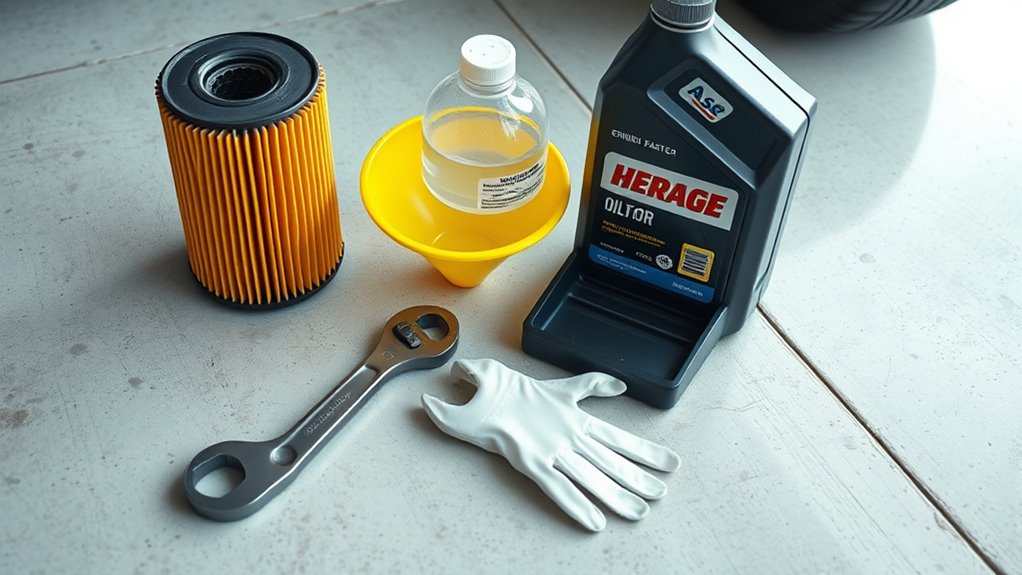
Before you begin changing your engine oil, make sure you gather all the essential tools and materials. Having the right oil change tools ready saves time and prevents frustration. You’ll need a wrench or socket set to remove the drain plug, an oil filter wrench for the filter, a drain pan to catch old oil, and clean rags for any spills. Don’t forget fresh engine oil that matches your car’s specifications and a new oil filter.
Understanding oil measurement techniques is vital, too. Use the dipstick to check the current oil level before draining, and after refilling, measure carefully to avoid overfilling. Pour the oil slowly, checking the dipstick frequently to guarantee the right amount. Proper oil measurement techniques keep your engine running smoothly and prevent damage. By gathering these tools and mastering basic measurement skills, you’re well-prepared for a successful oil change.
Position and Secure Your Car Safely Before Changing Engine Oil
Once you’ve gathered your tools, make sure you position your car on a flat, stable surface to prevent any movement while you work. Avoid slopes or uneven ground, as these can increase risks and compromise vehicle safety. Engage the parking brake firmly and place wheel chocks behind the tires to add extra stability. These parking precautions are vital to keep your car from rolling or shifting unexpectedly.
Before you start, double-check that the vehicle is in “Park” (or in gear if it’s a manual transmission) to further secure it. Avoid working under the car without proper support. If you need to raise it, use sturdy jack stands instead of relying solely on a jack. Taking these steps guarantees a safe workspace, reduces the chance of accidents, and lets you focus on changing your engine oil with confidence. Prioritizing vehicle safety now prevents problems later.
Locate and Drain the Old Engine Oil Properly
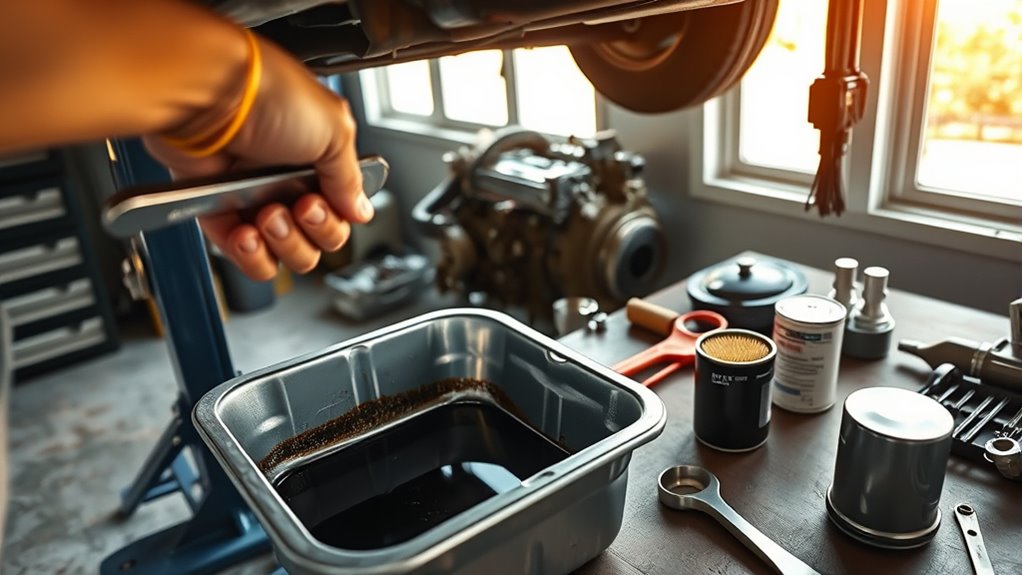
Now, go ahead and find the engine’s drain plug underneath your car—it’s typically at the lowest point of the oil pan. You’ll want to place a container right underneath it to catch the old oil as it drains out.
Make sure you’re wearing gloves and have some rags nearby. This way, you can avoid any spills and keep everything nice and clean.
Finding The Drain Plug
Although it might seem tricky at first, locating the drain plug is straightforward when you know where to look. The drain plug is usually found at the bottom of the oil pan, which holds the engine oil.
To find it, slide under your car and look for a large metal pan with a bolt at its lowest point. That’s the drain plug. Identifying it correctly guarantees you drain the old oil without spills or damage.
| Component | Description |
|---|---|
| Oil Pan | Holds the engine oil |
| Drain Plug | Bolt at the bottom of the oil pan |
| Location Tip | Look for the lowest point under car |
Safely Collecting Old Oil
After you’ve identified the drain plug, prepare a container to catch the old oil safely. Place it directly under the plug to avoid spills. Loosen the plug carefully, allowing the oil to drain completely. Be patient, rushing may cause splashes or leaks.
Once drained, securely replace the drain plug. Remember, used engine oil is hazardous waste, so comply with environmental regulations when handling it. Never pour old oil on the ground or down drains.
Instead, transfer the collected oil into a sealed container and take it to a recycling center or auto shop that accepts used oil. Following proper recycling procedures helps protect the environment and ensures responsible disposal.
Replace the Engine Oil Filter Correctly
You’ll want to pick the right oil filter designed for your car’s make and model to guarantee a proper fit. Before installing the new filter, go ahead and apply a thin layer of oil to the gasket—that helps create a tight seal. Then, screw the filter on by hand until it feels snug. Just be careful not to overtighten it or use any tools that might cause damage.
Choosing The Right Filter
How do you know which oil filter fits your car best? Start by checking oil filter compatibility with your vehicle’s make and model. Not all filters are equal; filter material differences affect performance and longevity. Choose a filter designed to handle your engine’s demands for maximum protection.
Here’s a simple comparison to guide your choice:
| Filter Type | Material | Best For |
|---|---|---|
| Conventional | Cellulose fibers | Older engines |
| Synthetic | Microglass fibers | High-performance cars |
| High-mileage | Enhanced cellulose | Engines with >75K miles |
| Premium synthetic | Advanced microglass | Extended oil changes |
| Recycled | Mixed fibers | Budget-conscious |
Pick the right filter to guarantee your engine stays clean and runs smoothly.
Proper Filter Installation
Where should you start when installing your new oil filter? Begin by applying a thin layer of fresh oil to the filter sealing gasket. This helps create a proper seal and makes future removal easier.
Next, screw the filter onto the mounting base by hand until the gasket contacts the surface. Avoid cross-threading by ensuring it’s aligned correctly.
After the gasket touches, tighten the filter according to the manufacturer’s specified installation torque, usually about three-quarters to one full turn by hand. Don’t over-tighten, as excessive torque can damage the gasket or filter housing, causing leaks.
Proper filter installation ensures a secure fit and prevents oil leaks, maintaining your engine’s health and performance. Following these steps will help you replace the engine oil filter correctly every time.
Add the Right Amount and Grade of New Engine Oil
Before pouring in new oil, make sure you know the exact amount and grade your car’s engine requires. Check your owner’s manual for the recommended oil viscosity and engine specifications.
Using the right oil viscosity ensures your engine runs smoothly, protects against wear, and performs efficiently. Pouring too much or too little oil can cause engine problems, so measure carefully.
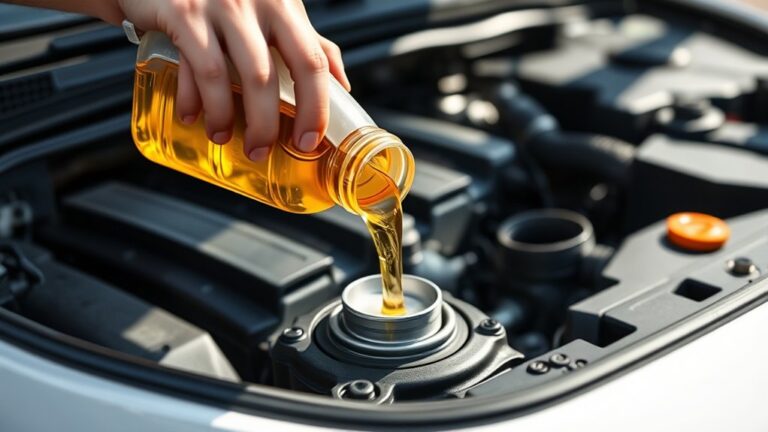
Use a clean funnel to avoid spills and add the oil slowly, giving it time to settle in the engine. Stick to the grade specified by the manufacturer. Mixing grades or using the wrong viscosity can reduce engine performance and potentially cause damage.
If you’re unsure, consult a professional or your vehicle’s manual to confirm. Remember, adding the proper amount and grade of oil is essential for maintaining your engine’s health and longevity, so take your time to get it right.
Check for Leaks and Confirm Oil Levels After Filling
Once you’ve added the new oil, you’ll want to check for leaks and confirm the oil level to guarantee everything is sealed and filled correctly. Start by inspecting around the oil filter and drain plug for any signs of drips. This leak detection step ensures no oil is escaping.
Next, use the dipstick for oil level verification: pull it out, wipe it clean, reinsert fully, then pull it out again to check the oil marks. The level should fall between the minimum and maximum indicators.
| What You Do | Why It Matters | How It Feels |
|---|---|---|
| Inspect for leaks | Prevents engine damage | Confident and secure |
| Wipe and check dipstick | Ensures proper oil level | Reassured and in control |
| Tighten loose parts | Stops oil loss | Peace of mind |
| Confirm correct level | Maintains engine health | Ready to hit the road |
This careful final check protects your engine and gives you peace of mind.
Dispose of Used Engine Oil and Materials Responsibly
How should you handle the used engine oil and materials after a change? It’s crucial to dispose of them responsibly to minimize environmental impact. Never pour used oil down drains, on the ground, or in the trash. Used engine oil contains harmful contaminants that can pollute water sources and soil.
Follow local recycling procedures by taking the used oil and materials like filters and rags to designated collection centers or auto shops that accept them. Many communities offer free recycling programs for used oil, so check your area’s resources. Store the used oil in a clean, sealed container to avoid spills during transport.
Proper disposal not only protects the environment but also supports the recycling of oil into new products, conserving resources. Being responsible with waste after an oil change ensures you’re helping keep your community safe and clean.
Frequently Asked Questions
How Often Should I Change My Car’s Engine Oil?
You should change your car’s engine oil every 3,000 to 5,000 miles, but it really depends on your vehicle’s oil change schedule. Check your owner’s manual for specific intervals, and don’t ignore maintenance reminders from your car’s system.
If you drive in harsh conditions, you might need more frequent changes. Staying on top of your oil change schedule helps keep your engine running smoothly and prevents costly repairs down the road.
Can I Use Synthetic Oil Instead of Conventional Oil?
You can absolutely use synthetic oil instead of conventional oil, and it often comes with synthetic benefits like better engine protection and longer intervals between changes.
Remarkably, synthetic oil’s advanced formulation handles extreme temperatures better, while conventional differences include a more natural base and shorter lifespan. Just make sure your car’s manual approves synthetic oil to avoid any warranty issues.
Switching could boost your engine’s performance and longevity.
What Happens if I Overfill the Engine Oil?
If you overfill the engine oil, you risk serious engine damage. Oil overfill causes excessive pressure inside the engine, which can lead to leaks, damaged seals, and foaming oil that reduces lubrication.
This poor lubrication increases wear and may cause costly engine repairs. You should always check the oil level carefully and drain the excess if you accidentally add too much to keep your engine running smoothly and avoid damage.
How Do I Know if My Oil Filter Needs Changing?
You’ll know if your oil filter needs changing by performing a regular oil filter inspection. Look for signs like dirty oil, reduced engine performance, or unusual noises.
Check if your oil filter is compatible with your car’s make and model, as incompatible filters may cause issues. If it’s clogged or damaged, replace it promptly to keep your engine running smoothly and prevent potential damage.
Don’t ignore these signs!
Can Changing Oil Improve My Car’s Fuel Efficiency?
Absolutely, changing your oil can boost your car’s fuel economy. Imagine your engine throwing a party with fresh, clean oil instead of sludge crashing it.
Regular oil changes keep everything running smoothly, reducing friction and letting your engine sip fuel more efficiently. Don’t fall for miracle oil additives promising to turn your car into a hybrid overnight. Stick to quality oil and timely changes to genuinely improve fuel economy and keep your ride happy.
Conclusion
Changing your engine oil might seem like a routine task, but it’s also a great way to connect with your car’s health. As you tighten that last bolt or pour in fresh oil, you’re not just maintaining your vehicle—you’re investing in its longevity and your safety.
It’s funny how a simple action can protect your engine and give you peace of mind, all in one go. Keep up the good work changing your engine oil!