How to Check Car Air Conditioning in 7 Easy Steps
Many drivers know the frustration of a car A/C that just won’t blow cold air, especially during those scorching summer days. If you’ve ever felt uncomfortable on the road because your air conditioning isn’t working right, you’re not alone. Many people struggle with diagnosing and fixing car A/C issues, but the good news is that checking your system can be easier than you think.
To check your car’s A/C in 7 easy steps, first turn it on to the coldest setting with the highest fan and feel for cool, strong airflow. Make sure your car is warmed up and tire pressure is correct.
Set controls properly, check vent temperatures using a thermometer, and inspect the cabin air filter for dirt.
Listen for unusual sounds and watch for refrigerant leaks or pressure issues.
Keep going to find out how to spot and fix common problems.
Key Takeaways
- Turn on A/C, set to highest fan and coldest temperature, and feel for consistent cold airflow from the vents.
- Warm up the vehicle by driving a few minutes to ensure accurate A/C performance testing.
- Check A/C controls: confirm A/C button is on, temperature set to cold, fan at medium, and recirculation mode enabled.
- Measure vent air temperature with a thermometer after running A/C for 5 minutes; expect 35-45°F below outside temperature.
- Inspect and replace the cabin air filter if dirty, and listen for unusual noises like squealing or hissing during operation.
Quickly Check If Your Car’s A/C Is Cooling Properly

Before you plunge into complicated diagnostics, you can quickly check if your car’s A/C is cooling properly by simply turning it on and feeling the air coming from the vents. If the air feels cool and consistent, your A/C system is likely functioning well. However, if the airflow is weak or warm, it’s a sign that you may need to *contemplate* A/C maintenance or deeper system diagnostics.
Start by setting the fan to the highest setting and adjusting the temperature to the coldest. Pay attention to any unusual smells or noises, as these could also indicate underlying issues. A quick check like this helps you decide whether you need professional service or can handle minor fixes yourself.
Get Your Car Ready to Test the A/C
Although it might seem straightforward, getting your car ready to test the A/C properly guarantees you get accurate results. Before you turn on the system, make sure your vehicle is in ideal condition. Neglecting basic checks can lead to misleading deductions about your A/C’s performance.
Preparing your car before testing the A/C ensures accurate performance insights and prevents false conclusions.
Here’s what you need to do:
- Check Engine Maintenance: Ensure your engine is running smoothly. A well-maintained engine supports the compressor, which powers your A/C system.
- Inspect Tire Pressure: Proper tire pressure helps your vehicle operate efficiently, reducing strain on the engine and air conditioning system.
- Warm Up Your Car: Drive for a few minutes to bring the engine up to normal operating temperature. This ensures the A/C system functions under typical conditions.
Check Your Car’s A/C Controls and Settings
Once you start your car, check the A/C controls and settings to make sure everything is properly configured. Begin by setting the temperature to the coldest setting and turn the fan to a medium speed. Make sure the A/C button is pressed, indicated by a lit dashboard indicator. This confirms the compressor is engaged, a vital part of A/C maintenance.
Also, check if the air recirculation mode is on; this helps cool the cabin faster by recycling the interior air instead of pulling in warm outside air.
Keep an eye on dashboard indicators for any warning lights related to the climate control system. If any lights flash or stay on, it might signal a system malfunction needing professional attention. Properly adjusting your A/C controls guarantees the system operates efficiently and helps you spot potential issues early, saving time and money on repairs.
Measure the Air Temperature From the Vents
After confirming your A/C controls are set correctly and the compressor is engaged, the next step is to measure the air temperature coming from the vents. This will help you determine if your system is cooling effectively. Focus on vent placement first, as temperature can vary depending on which vents you check.
Here’s how to accurately measure vent temperature:
- Use a reliable thermometer designed for air measurement, and hold it about an inch inside the vent opening.
- Check multiple vents, especially those closest to the driver and passenger, since vent placement affects how cold the air feels.
- Record the temperature readings after letting the A/C run for about 5 minutes to stabilize the airflow and cooling performance.
Typically, vent temperature should be around 35-45°F (1.5-7°C) below the outside temperature. If it’s not, your system might need maintenance or repairs.
Inspect the Cabin Air Filter to Improve A/C Airflow
Why does your car’s A/C blow weaker or less cold air even when the system seems fine? One common cause is a clogged cabin filter. The cabin filter traps dust, pollen, and debris, but over time, it can become so dirty that it causes airflow blockage.
This reduces the amount of cool air coming through the vents, making your A/C seem less effective.
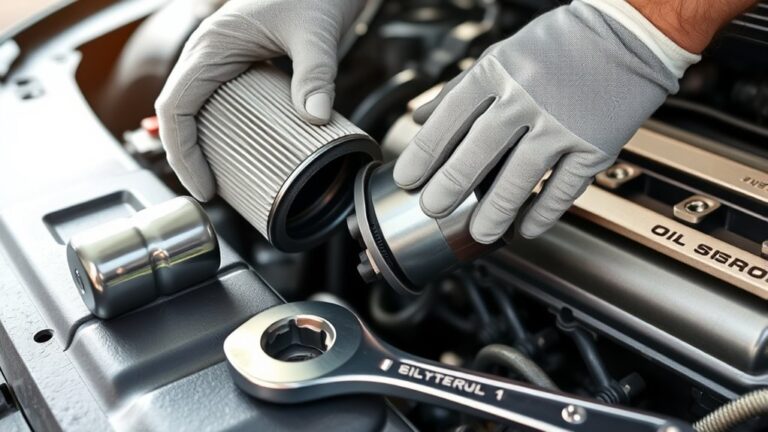
To inspect your cabin filter, locate its compartment (often behind the glove box), remove the filter, and check for dirt buildup. If it looks dirty or clogged, replace it to restore proper airflow and improve cooling.
| Cabin Filter Status | Airflow Impact | Effect on A/C |
|---|---|---|
| Clean | Unrestricted airflow | Strong, cold air |
| Slightly dirty | Minor airflow blockage | Slightly weaker air |
| Clogged | Severe airflow blockage | Weak, warm air |
Regularly checking your cabin filter keeps your A/C system running efficiently.
Listen for Strange Sounds in Your Car’s A/C System
You’ll want to listen closely for any unusual sounds when you turn on your car’s A/C. Strange noises like squealing, rattling, or hissing can point to specific issues within the system. And catching these sounds early means you can fix problems before they get worse.
Identifying Unusual Noises
When your car’s A/C system starts making strange noises, it’s a clear sign that something might be wrong. You need to identify these unusual sounds quickly to prevent further damage. Listen carefully for:
- Audible vibrations. These often mean loose or worn parts inside the system.
- Compressor noises. Grinding or squealing sounds from the compressor usually indicate mechanical trouble.
- Clicking or rattling. These can suggest debris or a failing fan motor.
Causes of A/C Sounds
Although strange noises from your car’s A/C system can be alarming, understanding their causes helps you address issues before they worsen. One common culprit is the A/C compressor, which may produce grinding or squealing sounds if its internal components wear out or if the belt is loose.
Another source of noise could be debris caught in the blower fan or damaged fan blades. Rattling or hissing noises often indicate refrigerant leaks or low refrigerant levels. When you hear any unusual sounds, perform a thorough noise diagnosis by turning off the engine, visually inspecting components, and listening carefully while the A/C runs.
Catching these signs early lets you fix problems efficiently, ensuring your system runs smoothly and prolonging its lifespan.
Spot Refrigerant Leaks and Run a Basic Pressure Test
Before running a basic pressure test, start by carefully inspecting your car’s air conditioning system for refrigerant leaks. Low refrigerant levels often indicate a leak, which compromises cooling efficiency.
Begin with a thorough inspection for leaks before performing a pressure test to ensure optimal A/C performance.
Here’s how to spot leaks and test pressure:
- Visual Inspection: Check hoses, connections, and the compressor for oily residue or damaged components, as these signs often point to leaks.
- Use Leak Detection Tools: Apply a UV dye or electronic leak detector to identify escaping refrigerant. These tools make leak detection more precise and efficient.
- Run a Pressure Test: Connect a manifold gauge set to the service ports, then start the engine and turn the A/C on. Compare the pressure readings to your car’s specifications to assess system integrity.
Frequently Asked Questions
How Often Should I Recharge My Car’s A/C Refrigerant?
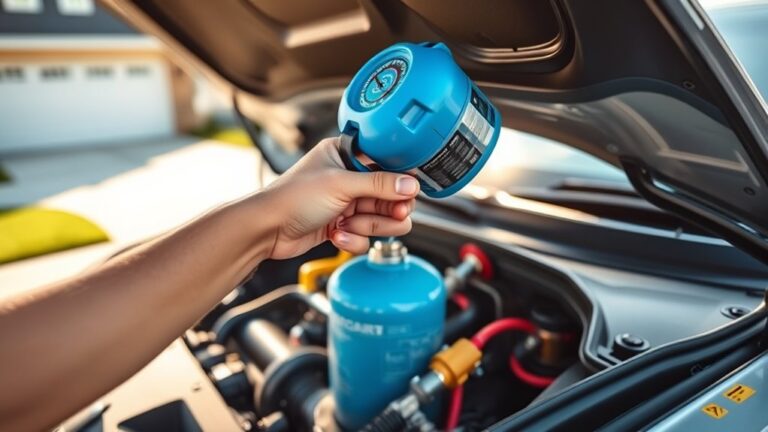
You should recharge your car’s A/C refrigerant only when necessary, typically every 2-3 years or if you notice reduced cooling. Different refrigerant types, like R-134a or R-1234yf, require specific handling.
If your system leak is detected, recharge won’t fix the problem; you need to repair the leak first. Regular inspections help you avoid frequent recharges and keep your A/C running efficiently without damaging the environment.
Can a Faulty A/C Compressor Cause Engine Problems?
You know what they say, “A chain is only as strong as its weakest link.” A faulty A/C compressor can definitely affect your engine performance.
When the compressor seizes or struggles, it puts extra strain on the engine, sometimes causing it to stall or run rough. Plus, it can increase fuel consumption. So, if your A/C compressor acts up, don’t ignore it. You’ll keep your engine running smoothly by fixing it promptly.
What Are the Signs of a Clogged A/C Condenser?
You’ll notice reduced cooling efficiency when there’s a condenser blockage. Your A/C might blow warm air or take longer to cool the cabin.
You could also spot physical debris or dirt clogging the condenser fins. Another sign is an unusually high pressure in the A/C system or the compressor cycling on and off frequently.
If you see these signs, it’s time to clean or replace the condenser to restore proper cooling.
Is It Safe to Use Homemade A/C Cleaning Products?
It’s usually not safe to rely on DIY cleaning products for your car’s A/C because chemical safety is essential. Homemade solutions might damage delicate components or leave residues that clog the system.
You’re better off using products specifically designed for automotive A/C systems or consulting a professional. If you decide to try DIY cleaning, make sure you research ingredients carefully and avoid harsh chemicals that could harm your condenser or evaporator.
How Does Car A/C Affect Fuel Efficiency?
Using your car’s cooling system is like turning on a tiny hurricane inside your engine bay. It does impact fuel economy. When you run the A/C, your engine works harder to power the compressor, which can lower your fuel efficiency by up to 20%.
Conclusion
Checking your car’s A/C is as simple as a breeze on a summer day when you follow these easy steps. By prepping your car, testing the controls, measuring vent temperatures, inspecting the air filter, listening for odd sounds, and spotting leaks, you’ll know exactly how well your system is working.
Keep your A/C in top shape so every drive stays cool and comfortable, just like an invigorating gust of wind on a hot afternoon. Regularly checking your car air conditioning helps ensure you never have to suffer through a warm ride again.