5 Easy Steps to Clean Car Air Conditioning System
Clean Car Air Conditioning System: Dealing with a car air conditioning system that smells musty or just doesn’t blow cold air like it used to? You’re not alone. Many people struggle to keep their car’s AC fresh and efficient without spending a fortune on repairs or replacements. Whether you want to improve air quality or simply enjoy a cooler ride, cleaning your car air conditioning system can make a big difference.
To clean your car’s air conditioning system, first gather supplies like gloves, a vacuum, and AC cleaner, and ventilate your car by opening the doors. Next, clean or replace the cabin air filter by checking for dirt and airflow. Then, remove dust from all AC vents using a soft brush or compressed air. Spray a specialized cleaner inside to kill odors and bacteria. Finally, run the AC on high with fresh air intake to dry and freshen your interior.
Keep going to uncover helpful tips and tricks.
Clean Car Air Conditioning System Key Takeaways
- Gather cleaning supplies, open car doors for ventilation, and remove dust from vents using a brush or compressed air.
- Locate, inspect, and clean or replace the cabin air filter every 12,000 to 15,000 miles for optimal airflow.
- Gently clean all AC vent slats with a soft brush or microfiber cloth. Use compressed air for hidden debris.
- Spray a specialized car AC cleaner into air intake vents to eliminate odors and bacteria, then let it sit for 10 to 15 minutes.
- Run the AC on high fan speed with fresh air intake for 10 to 15 minutes. Slightly crack a window to dry and freshen the system.
Gather Supplies and Prepare Your Car’s Air Conditioning
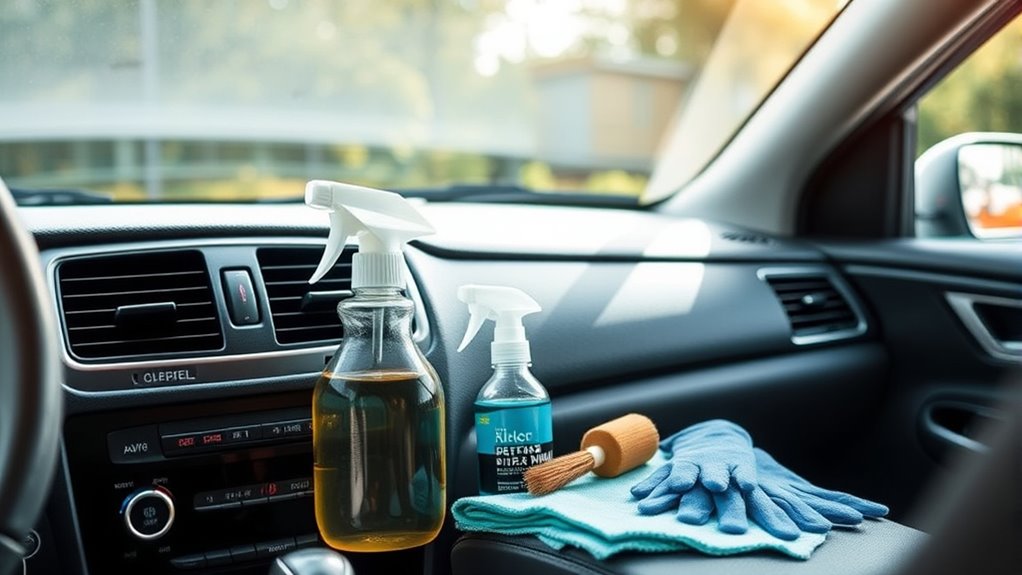
Before you begin cleaning your car’s air conditioning system, gather all necessary supplies to make the process smooth and efficient. You’ll need gloves, a vacuum with a brush attachment, a soft cloth, and a specialized air conditioning cleaner or disinfectant spray. Having these ready saves time and keeps the job organized.
Next, prepare your car by turning off the engine and opening all doors for ventilation. Familiarize yourself with basic vent cleaning techniques. Use a brush or compressed air to gently remove dust and debris from the vents without damaging the delicate fins. This step complements regular air filter maintenance, which keeps the airflow clean and improves system efficiency.
Clean or Replace the Cabin Air Filter
Once you’ve cleared dust and debris from the vents, it’s time to focus on the cabin air filter. This filter plays a vital role in keeping the air inside your car fresh and clean. Start by locating the filter, usually behind the glove compartment or under the dashboard.
Remove it carefully and inspect it for dirt, dust, and debris buildup. Conduct a thorough airflow inspection by holding the filter up to a light source. If you can’t see much light passing through, it’s time to replace it.
For moderate dirt, you can clean the filter by gently tapping it or using compressed air to blow out the particles. Regular filter maintenance guarantees better air quality and efficient AC performance. Remember, a clogged filter restricts airflow, forcing your system to work harder and reducing its lifespan.
Replace the cabin air filter every 12,000 to 15,000 miles or more often if you drive in dusty conditions. This simple step keeps your AC system running smoothly.
Remove Dust and Debris From AC Vents
Start by inspecting all the AC vents inside your car, as they often collect dust, dirt, and small debris that can reduce airflow and affect air quality. Use a soft brush or a microfiber cloth to gently clean the vent slats, loosening trapped particles.
For deeper cleaning, a can of compressed air helps blow out hidden debris, promoting airflow optimization. Make sure to reach every vent, including those less visible, to maintain consistent ventilation throughout your vehicle.
Removing this buildup is essential for ventilation maintenance, ensuring your AC system runs efficiently and delivers clean air. Avoid using excessive water or harsh chemicals that could damage the vents or electrical components.
Regularly removing dust and debris from AC vents not only improves air circulation but also improves your comfort while driving. Taking these simple steps keeps your car’s air conditioning system working at its best and helps prevent unpleasant odors caused by clogged vents.
Spray Your AC to Eliminate Odors and Bacteria
Although cleaning the vents removes surface dust, you’ll need to spray your AC system to effectively eliminate odors and kill bacteria lurking deeper inside. Start by purchasing a specialized car AC cleaner designed for odor elimination and bacteria removal.
Shake the can well, then insert the spray nozzle into the air intake vents or directly into the cabin air filter compartment. Spray evenly to reach all internal components, including evaporator coils where bacteria tend to thrive.
Let the product sit for the recommended time, usually about 10–15 minutes, so it can break down buildup and neutralize unpleasant smells. This step guarantees thorough odor elimination and bacteria removal, improving air quality inside your car.
Avoid overusing the spray, as excessive moisture might cause mold growth. Following this step regularly helps maintain a fresh-smelling and hygienic AC system, protecting your health and enhancing your driving comfort.
Run Your Car’s AC to Dry and Freshen the Interior
How often do you let your car’s AC run after cleaning it? Running your AC for a few minutes post-cleaning is crucial to dry out any remaining moisture and improve air quality inside your vehicle.
This step enhances ventilation techniques, ensuring fresh, clean air circulates through the system.
Here’s how to run your car’s AC effectively:
- Turn on your car and set the AC to the highest fan speed.
- Switch the AC mode to fresh air intake, not recirculation.
- Run the system for about 10-15 minutes to evaporate moisture.
- Crack a window slightly to improve airflow and prevent stuffiness.
- Monitor the interior for any lingering dampness or odors.
Following these steps helps prevent mold and bacteria growth, keeping your car smelling fresh. Regularly running your AC this way protects your health by maintaining optimal air quality and ventilation techniques inside your vehicle.
Frequently Asked Questions
How Often Should I Professionally Service My Car’s AC System?
You should professionally service your car’s AC system at least once a year to keep it running smoothly and prevent interior odor. Regular servicing helps catch issues early and guarantees the cabin air filters are clean, which improves air quality inside your car.
If you notice a musty smell or reduced airflow, don’t wait. Get it checked sooner. Keeping up with maintenance keeps your ride comfortable and fresh.
What Causes the AC Compressor to Fail?
Compressor failure usually happens because of refrigerant leaks, which cause low refrigerant levels and make the compressor overheat. If you don’t fix leaks promptly, debris and moisture can enter the system, damaging the compressor’s internal parts.
Also, running the AC with low refrigerant stresses the compressor, leading to premature failure. Regularly checking for leaks and maintaining proper refrigerant levels can help you avoid costly compressor failure and keep your AC working efficiently.
Can a Dirty Condenser Affect AC Performance?
Yes, a dirty condenser can definitely affect your AC performance. When dirt and debris build up, they cause airflow obstruction, preventing the condenser from dissipating heat efficiently.
This makes your AC work harder, reducing cooling effectiveness and potentially damaging components. Regular condenser maintenance is key to keeping your system running smoothly.
How Do Refrigerants in Car AC Systems Work?
Think of refrigerants as tiny messengers running in a closed loop, like a relay race, the refrigerant cycle. They absorb heat inside your car and release it outside, keeping things cool.
As the refrigerant changes from liquid to gas and back, it moves heat away, boosting your car’s cooling efficiency. You’ll notice your AC working smoothly when this cycle runs uninterrupted, ensuring a comfy ride no matter the weather.
Are There Health Risks From Mold in Car AC Units?
Yes, you can face health risks from mold in car AC units, especially if you’re sensitive to allergens or have respiratory issues. Mold can reduce air quality, causing sneezing, coughing, or even more severe reactions.
To protect yourself, focus on mold prevention by regularly cleaning and drying your system. Keeping your car’s air conditioning mold-free guarantees you breathe cleaner air and avoid potential health problems while driving.
Conclusion
By following these five simple steps, you’ll swiftly secure a spotless, scent-free system. Cleaning your car’s AC not only keeps it cool and comfortable but also cuts down on costly concerns.
So, gather your gear, get going, and give your air conditioning a fresh, flawless feel. With a little care and consistent cleaning, you’ll conquer contaminants and create a cool, cozy cabin you’ll consistently crave.
Keep cruising comfortably and confidently by maintaining your car air conditioning system regularly!