How to Tell What Engine My Car Has in 10 Simple Steps
Trying to figure out what engine your car has can feel like a real headache. You’re not alone—many people struggle with identifying engine details, especially if they didn’t get that info when they bought the car.
Whether you’re buying parts, planning upgrades, or just curious, knowing your engine specs is super important.
To tell what engine your car has in 10 simple steps, first find your VIN on the dashboard or door frame and use an online VIN decoder for engine details.
Check under the hood for labels or stickers showing engine size and specs.
Look in your owner’s manual or vehicle registration for engine info.
Count cylinders visually or use a diagnostic app for real-time data.
Confirm with a mechanic if needed.
Keep going to uncover all the key tips and tools for precise identification.
Key Takeaways
- Locate your vehicle’s 17-character VIN on the dashboard or door frame and use an online VIN decoder to identify engine details.
- Check under the hood for engine labels, emission stickers, or vacuum diagrams indicating engine size and specifications.
- Find the engine code stamped on the engine block or metal plate and use manuals or online resources to decode it.
- Use OBD-II scanning apps connected to your car’s diagnostic port for real-time engine data and specifications.
- Consult the owner’s manual or a professional mechanic to confirm engine type, configuration, and maintenance requirements.
How to Find Your Car’s VIN Number for Engine Info
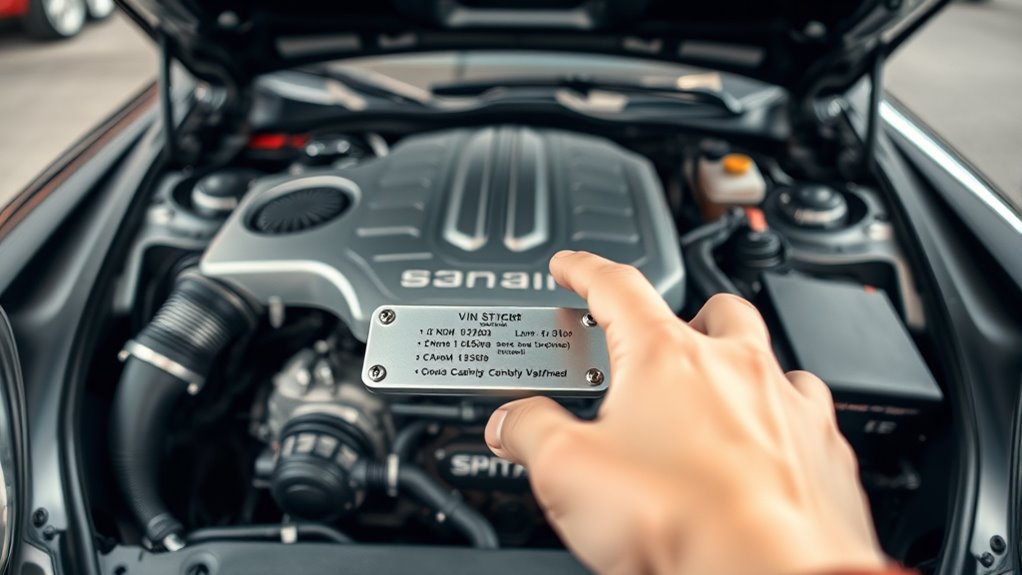
Before you can identify your car’s engine, you need to locate its Vehicle Identification Number (VIN). You’ll usually find the VIN on the dashboard near the windshield on the driver’s side or inside the driver’s door frame.
It’s a 17-character code that holds essential information about your car, including the engine type. Knowing your VIN is vital because it helps you track engine maintenance and optimize fuel efficiency.
Once you have the VIN, you can accurately determine your engine’s specifications, ensuring you use the correct parts and fluids. This knowledge prevents costly mistakes and keeps your engine running efficiently.
Checking the VIN regularly also helps you stay on top of recalls or service bulletins related to your engine. By starting with the VIN, you set yourself up to maintain your car better and improve fuel efficiency, extending your vehicle’s life and performance.
Use a VIN Decoder to Identify Your Engine
When you have your VIN ready, you can easily identify your engine by using an online VIN decoder. Just enter the 17-character VIN into a trusted decoder website or app, and it will reveal detailed information about your vehicle’s engine type, size, and specifications. This tool saves you time and guarantees accuracy, eliminating guesswork.
Knowing your exact engine model through the VIN decoder helps you follow proper engine maintenance schedules. You’ll understand which parts and fluids fit best, ensuring your car runs smoothly. Plus, identifying your engine accurately can help you optimize fuel efficiency by selecting the right fuel type and tuning options.
Using a VIN decoder is a straightforward, reliable way to get precise engine details without visiting a mechanic. It empowers you to take better care of your vehicle, avoid costly mistakes, and improve performance. So next time you want to know what engine your car has, start with a VIN decoder. It’s quick and effective.
Use the Owner’s Manual to Identify Your Engine
Check your owner’s manual and go straight to the engine information section. There, you’ll find engine codes and details that explain what’s under the hood. It’s a simple way to cross-reference specs and confirm your engine type.
Locate Engine Information Section
Wondering where to find detailed information about your car’s engine? Start by locating the engine information section in your owner’s manual. This section usually provides essential details like engine type, displacement, and specifications.
Knowing this helps with proper engine maintenance, ensuring you follow the right service schedules and use compatible parts. It’s also vital if you’re considering performance upgrades, as the manual guides you on what modifications suit your engine best.
Typically, the information sits near chapters covering vehicle specifications or technical data. If you can’t find it immediately, check the table of contents or index for “engine specifications” or “engine information.” By pinpointing this section, you’ll gain accurate insights to take better care of your engine and make informed upgrade choices.
Understand Engine Code Details
Once you locate the engine information section in your owner’s manual, you’ll notice it often includes an engine code. This code is a unique identifier that reveals specific engine specifications such as displacement, configuration, and sometimes the production year.
By understanding this code, you can accurately identify your engine type without guesswork. Knowing these details helps you follow the correct engine maintenance schedule, ensuring you use the right oil type, filters, and service intervals.
Your owner’s manual may also explain how to decode the engine code or provide a reference chart. Taking the time to learn this information lets you maintain your engine properly, avoid costly mistakes, and keep your car running smoothly with the exact care it needs.
Cross-Reference Specifications Easily
Although engine codes provide valuable information, you’ll often need to cross-reference these details with your owner’s manual to confirm exact specifications. Your manual offers clear guidance on your engine’s design, performance capabilities, and recommended maintenance schedules.
By matching the engine code with the manual’s details, you can ensure you understand the correct engine type, horsepower, and torque ratings. This step is crucial for maintaining peak engine performance and avoiding costly mistakes.
Furthermore, the manual outlines specific maintenance intervals tailored to your engine, helping you keep everything running smoothly. Don’t skip this step. Using the owner’s manual as your go-to reference makes identifying your engine straightforward and helps you stay on top of essential upkeep.
Check Under the Hood for Engine Labels and Stickers
When you open your car’s hood, you’ll often find labels and stickers that provide key details about the engine. These markings help with engine maintenance and troubleshooting, giving you quick access to essential info without special tools. Here’s what to look for:
- Emission Control Label This sticker usually lists the engine displacement, type, and sometimes horsepower. It’s vital for understanding your engine’s specs and ensuring compliance with emissions standards.
- Vacuum Hose Routing Diagram This label shows how vacuum lines connect, which can help you troubleshoot engine performance issues.
- Engine Oil Information Some stickers specify the recommended oil type and capacity, guiding you in proper engine maintenance.
Find Engine Codes on Your Vehicle
You can find your engine code on a metal plate or stamped right onto the engine block. Knowing where to look makes it easier to decode the engine identification number quickly. Once you spot it, you can use the code to discover important details about your engine.
Locating Engine Code Plates
Since engine code plates hold essential information about your car’s engine, locating them is the first step in identifying what engine your vehicle has. These plates help you understand specifics like the type of engine oil to use and how to maintain maximum fuel efficiency. Here’s where to look:
- Engine Block: Check the side or front of the engine block. The plate or stamp is often etched or bolted here.
- Firewall: Look on the firewall inside the engine bay. Manufacturers sometimes place the code plate here for easy access.
- Under the Hood: Inspect the underside of the hood or near the radiator support. Some vehicles place code plates in these visible spots.
Finding the plate quickly guides you to accurate engine details, ensuring proper maintenance and fuel economy.
Decoding Engine Identification Numbers
Although finding the engine code plates is essential, decoding the engine identification numbers is what reveals the exact specifications of your engine. These codes provide details like engine type, displacement, manufacturing date, and sometimes even performance features.
You’ll usually find the code stamped on the engine block or on a metal plate attached nearby. Once you locate it, use your vehicle’s manual or online databases to decode the numbers.
Understanding these codes helps you stay on top of engine maintenance by ensuring you use the right parts and fluids. It also guides you during performance upgrades, so you select compatible components that match your engine’s design.
Decoding these numbers empowers you to maintain and improve your engine effectively.
Decode Engine Numbers to Identify Your Engine
How can you identify your car’s engine without opening the hood? Decoding the engine number is your best bet. This unique code reveals essential details about your engine type, helping you with engine maintenance or planning performance upgrades.
Identify your car’s engine effortlessly by decoding the engine number for key maintenance and upgrade insights.
Here’s how to decode engine numbers effectively:
- Locate the engine number. It’s usually stamped on the engine block, often near the cylinder head or transmission. Check your owner’s manual if needed.
- Understand the format. Engine numbers combine letters and digits representing the engine family, displacement, and production year.
- Cross-reference the code. Use manufacturer guides or service manuals to translate the code into specific engine specs.
Use Online Tools to Identify Your Engine
You can quickly identify your engine by using online tools like VIN lookup websites and mobile apps that scan engine codes. These handy resources let you enter your vehicle identification number or engine details to get accurate information.
Plus, using these tools saves you time and makes sure you get the right engine specs for your car. It’s a simple way to avoid any guesswork.
Best Websites for Identification
When you need to identify your car’s engine quickly, several websites offer powerful tools to help. These sites not only simplify engine identification but also provide info useful for engine maintenance and performance upgrades.
Here are three top websites to check out:
- Engine-Codes.com Enter your engine code or VIN to get detailed specs and common issues.
- Edmunds.com Offers vehicle specifications, including engine types, ideal for planning upgrades.
- AutoZone.com Provides engine diagrams and part info, great for maintenance and performance tweaks.
Using these sites, you can easily determine your engine type and find relevant data to keep your car running smoothly or boost its performance.
How To Use VIN Lookup
Although decoding your engine details might seem complex, using a VIN lookup tool makes it straightforward. First, locate your car’s 17-character VIN, usually found on the dashboard near the windshield or inside the driver’s door frame.
Enter this VIN into a reliable online lookup tool. Within seconds, you’ll get detailed information about your engine type, size, and specifications. This info is essential for proper engine maintenance and effective car troubleshooting.
Knowing your exact engine model helps you choose the right parts and fluids, preventing costly errors. Plus, it simplifies communicating issues with mechanics. Using a VIN lookup saves time, avoids guesswork, and guarantees you handle your vehicle’s engine correctly.
It’s a simple step every car owner should take to stay informed and maintain peak performance.
Apps That Scan Engines
Since engine identification can sometimes be tricky, apps that scan your car’s engine offer a fast and convenient alternative to manual lookup. These tools connect to your car’s OBD-II port and instantly provide detailed engine info. They help you track fuel efficiency and stay on top of engine maintenance.
Here are three popular apps you can try:
- Torque Pro offers real-time engine data, including fuel efficiency stats, letting you monitor performance closely.
- OBDLink provides accurate engine diagnostics and maintenance alerts, helping you catch issues early.
- Car Scanner ELM OBD2 displays detailed engine specs and tracks fuel consumption trends for smarter driving.
Using these apps makes it easier to identify your engine and optimize its performance without guesswork.
Find Engine Info on Your Car’s Registration or Title
If you want a quick way to identify your car’s engine, check the registration or title documents. These papers often list key engine details, like the engine displacement or code, which directly relate to your vehicle’s fuel system and compatibility with specific engine oil types.
By examining these documents, you can avoid guesswork and confirm you use the right products and maintenance procedures. For instance, knowing your engine size helps determine the correct engine oil viscosity, essential for proper lubrication and performance.
Examining your documents ensures you choose the right products and maintenance for optimal engine performance.
The fuel system type, whether gasoline or diesel, is sometimes noted as well, guiding you on suitable fuel options and engine care. Keep your registration or title handy, as they’re reliable sources when you need precise engine info quickly.
This method saves time and helps you maintain your engine efficiently without opening the hood or relying solely on memory.
Visual Clues Under the Hood to Identify Your Engine Type
When you pop the hood, you can often spot visual clues that reveal your engine type without needing special tools. A quick visual inspection of the engine compartment can tell you a lot about what powers your car. Here are three key things to look for:
- Engine Size Labels or Stickers: Many engines have a label or sticker on the valve cover or air intake with displacement info, like “2.0L” or “V6.” This is a straightforward hint.
- Number of Cylinders Visible: Count the spark plug wires or visible cylinder heads. Four wires usually mean a four-cylinder engine, while eight indicate a V8.
- Distinctive Engine Shape and Components: Inline engines have a straight layout, while V-type engines have two banks of cylinders forming a “V.” Also, diesel engines often have a larger, heavier appearance with different fuel injection components.
These visual cues in the engine compartment make it easier to identify your engine type on your own.
Confirm Your Engine by Consulting a Mechanic or Dealer
Although visual clues can give you a good idea of your engine type, consulting a mechanic or dealer will provide definitive confirmation. Mechanics have the expertise and tools to accurately identify your engine model, guaranteeing you get precise information for engine maintenance.
Dealers can also access your vehicle’s records and VIN details to confirm the exact engine specs. This accuracy matters when you’re trying to optimize fuel efficiency or schedule the right services.
If you rely solely on visual identification, you might miss subtle differences that affect performance and maintenance requirements. By talking to a professional, you avoid guesswork and assure your car runs smoothly.
Plus, they can offer advice on how to maintain your engine for better fuel efficiency over time. So, don’t hesitate to reach out to a trusted mechanic or your dealership. They’re your best resource for confirming your engine and keeping your car in top shape.
Frequently Asked Questions
How Does Engine Size Affect My Car’s Fuel Efficiency?
Engine capacity directly affects your car’s fuel consumption. The larger the engine capacity, the more fuel your engine needs to produce power, which usually means higher fuel consumption.
Smaller engines generally use less fuel, making them more fuel-efficient, especially in city driving. However, if you drive aggressively or carry heavy loads, even a small engine can consume more fuel.
What Are Common Signs of Engine Problems?
Did you know that 70% of engine failures start with unnoticed warning signs? If you hear unusual engine noise like knocking or ticking, it’s a red flag.
Also, keep an eye out for oil leaks under your car, as they can cause serious damage if ignored. You might also notice reduced performance or smoke from the exhaust.
Catching these early helps you avoid costly repairs and keeps your car running smoothly.
How Often Should I Service My Car’s Engine?
You should service your car’s engine every 5,000 to 7,500 miles, depending on your vehicle and driving habits. Regularly changing the engine oil keeps everything running smoothly and prevents damage.
Don’t forget to check and replace spark plugs around every 30,000 miles to maintain efficient combustion and engine performance. Sticking to this schedule helps you avoid costly repairs and keeps your car running reliably.
Can I Upgrade My Car’s Engine Myself?
Taking on an engine swap yourself is like diving into a complex puzzle, exciting but challenging. You can do a DIY upgrade if you have solid mechanical skills, the right tools, and patience.
But remember, it’s not just swapping parts; you’ll handle wiring, mounts, and tuning. If you’re confident and prepared, go for it. Otherwise, seeking professional help guarantees your car runs smoothly without surprises down the road.
What’s the Difference Between Diesel and Gasoline Engines?
Diesel and gasoline engines differ mainly in their engine types and fuel characteristics. Diesel engines use compression to ignite fuel, making them more efficient and better for heavy-duty work.
Gasoline engines use spark plugs to ignite the fuel-air mix, offering smoother and quieter performance. You’ll find diesel fuel is denser and has more energy per gallon, while gasoline is lighter and evaporates faster.
Knowing these helps you choose the right engine for your needs.
Conclusion
Now that you’ve examined these simple steps, you’ll see it’s easier than you thought to identify your car’s engine. Don’t just guess or rely on hearsay. Use the VIN, manuals, and labels to confirm the facts.
When in doubt, turning to a mechanic or dealer clears up any confusion. Trust the process, and soon you’ll know your engine inside and out. This proves the theory wrong that it’s too complicated to figure out your engine on your own.