How to Swap a Car Engine in 3 Simple Steps
Swapping a car engine can feel overwhelming, and you’re definitely not alone if you find the process intimidating. Many people struggle with where to start or worry about missing a crucial step.
Whether you’re looking to upgrade performance or replace a faulty engine, understanding the basics can make the job much smoother.
First, set up a clean workspace with all necessary tools ready and protect the area from spills.
Next, disconnect the battery, drain fluids, unplug wiring and hoses, unbolt mounts, and carefully lift out the old engine using a hoist.
Finally, position the new engine, align and secure mounts, reconnect all components, refill fluids, and do thorough checks before starting it up.
Keep following these steps to master a smooth and safe engine swap.
Key Takeaways
- Prepare a clean workspace, gather tools, and position an engine hoist for safe handling.
- Disconnect the battery, drain fluids, label wiring, unbolt mounts, and carefully remove the old engine.
- Verify new engine compatibility, align and secure mounts, then reconnect wiring, hoses, and fuel lines.
- Double-check all connections, torque the mounts, reinstall the exhaust, fill fluids, and ensure every system is connected.
- Inspect all fasteners, clear the workspace, start the engine, and take a test drive to confirm the swap was successful.
Set Up Your Workspace and Gather Essential Tools
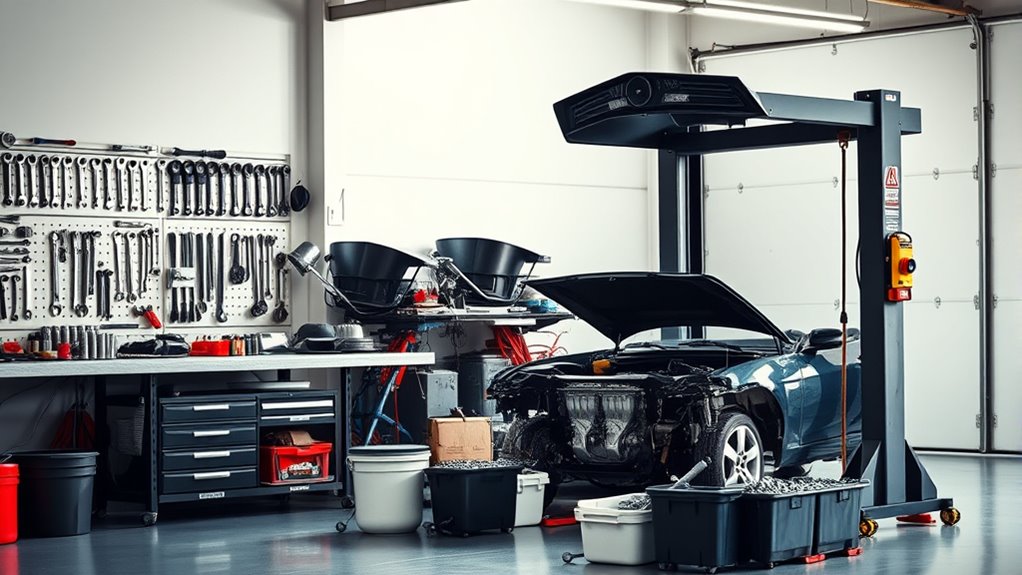
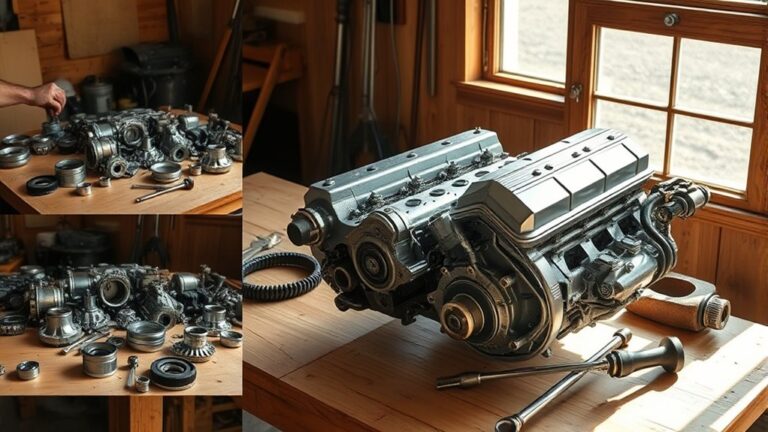
Before you begin swapping your car engine, make sure you set up a clean, organized workspace where you have plenty of room to move around. Clear out any clutter and lay down protective mats or cardboard to catch spills. You’ll need an engine hoist ready for lifting the engine safely once it’s disconnected. Position it so you can maneuver the engine out without obstruction.
Next, prepare for fluid drainage by placing containers under the car to catch coolant, oil, and other fluids as you disconnect hoses and lines. This step prevents spills and keeps your workspace tidy.
Gather essential tools like wrenches, sockets, screwdrivers, and pliers, along with specialized gear such as engine stands and torque wrenches. Having everything within reach saves time and reduces frustration.
Safely Remove the Old Engine Step-by-Step
Once you’ve prepped your workspace and gathered your tools, start by disconnecting the battery to prevent any electrical hazards. Next, drain all fluids, including engine oil, coolant, and transmission fluid, to avoid spills and damage.
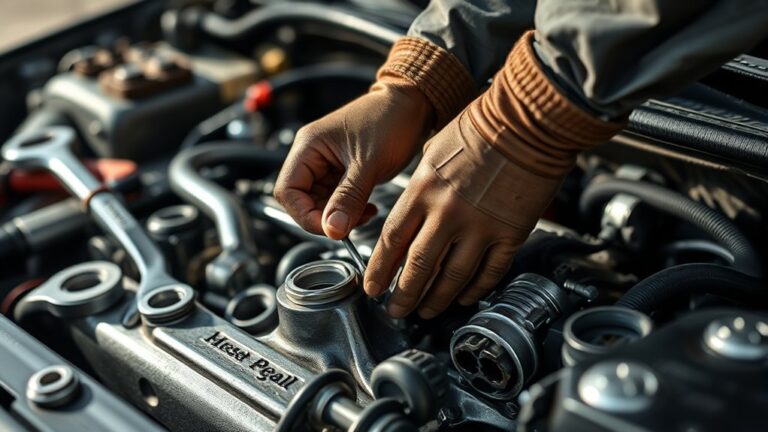
Carefully label and disconnect wiring harnesses and hoses. Then unbolt the engine mounting bolts that secure the engine to the frame. Use an engine hoist to support the engine’s weight.
Slowly lift the engine clear of the car, making sure no components are still connected.
| Step | Tool Needed | Key Action |
|---|---|---|
| Disconnect battery | Wrench | Prevent electrical hazards |
| Drain fluids | Drain pan | Avoid spills |
| Disconnect wiring | Labeling tape | Keep track of connections |
| Remove engine mounts | Socket set | Free engine from frame |
| Lift engine out | Engine hoist | Safely remove engine |
Follow these steps precisely to safely remove your old engine without complications.
Install the New Engine and Finalize the Engine Swap
Although installing the new engine can seem intimidating, you’ll find the process straightforward if you follow each step carefully. First, double-check engine compatibility to confirm the new engine fits your car’s specifications and connections. Misaligned components can cause issues later, so verify all mounts, wiring, and hoses match perfectly.
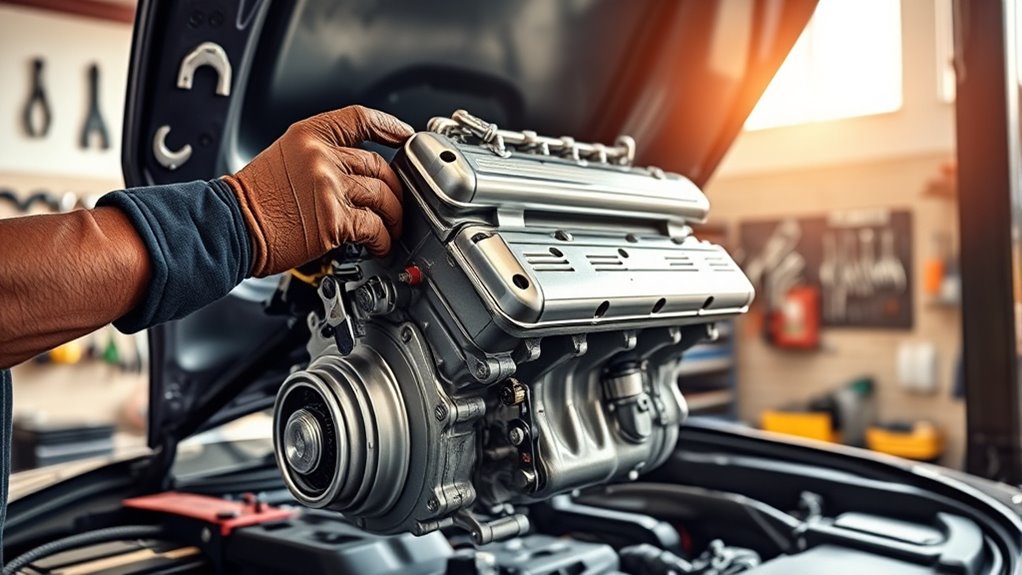
Next, position the new engine using an engine hoist, aligning it precisely with the engine mounts. Secure the engine mounts firmly to the chassis, tightening bolts to the manufacturer’s torque specifications. Proper engine mounting is critical to avoid vibrations and maintain stability.
Once the engine is mounted, reconnect all electrical connections, fuel lines, and cooling system components. Reinstall the exhaust system and verify all sensors are connected. Finally, fill fluids like oil and coolant before attempting to start the engine. By carefully following these steps, you’ll complete the engine swap efficiently and safely, ensuring your car runs smoothly with its new heart.
Frequently Asked Questions
What Type of Engine Is Best for My Car Model?
You should choose an engine that guarantees compatibility with your car model to avoid issues down the road. Look for engines designed for your vehicle’s make and year or ones that fit with minimal modifications.
If you want performance upgrades, consider engines known for better power and efficiency but still compatible with your car’s transmission and electronics. Always check your car’s specifications and consult experts to pick the best fit.
How Do I Know if My Car Needs an Engine Swap?
You’ll know your car needs an engine swap if it has persistent issues like overheating, knocking sounds, or frequent breakdowns that repairs can’t fix. Also, if your current engine lacks compatibility with performance upgrades or fuel efficiency goals, a swap might help.
Keep in mind, engine compatibility matters a lot. Choosing the wrong one can lead to swap difficulties and costly modifications. Always assess these factors before deciding on an engine swap.
Can I Swap an Engine Myself Without Prior Experience?
You can attempt an engine swap yourself without prior experience, but it’s challenging. You’ll need the right DIY tools and must follow strict safety precautions to avoid injury or damage.
It’s vital to study detailed guides, watch tutorials, and possibly get help from someone experienced. If you’re not confident, consider professional help to guarantee the job’s done safely and correctly.
Patience and preparation are key.
What Are the Legal Requirements for Engine Swaps?
You might think swapping an engine is just a mechanical task, but legal requirements are essential. You must comply with emissions regulations to guarantee your car remains street-legal. Failing this can lead to fines or failed inspections.
Also, check insurance implications. Your policy may change or require updating after an engine swap. Always notify your insurer to avoid coverage issues. Ignoring these rules could cost you more than just money.
How Much Does a Typical Engine Swap Cost?
You can expect a typical engine swap to cost anywhere from $3,000 to $7,000, depending on engine compatibility and labor rates. Cost estimation varies because some engines fit your car better, reducing modification needs, while others can increase expenses.
Don’t forget to account for additional parts, tuning, and possible upgrades. Getting a detailed cost estimate upfront helps you avoid surprises and guarantees your swap fits both your budget and vehicle.
Conclusion
Now that you’ve swapped your engine, you’ve breathed new life into your car’s beating heart. Like a skilled surgeon, you’ve carefully removed the old and implanted the new, turning a complex task into a smooth dance.
Remember, patience and precision were your trusty tools, just like in this guide. Your car’s ready to roar down the road with renewed power, all because you took the wheel and made magic happen.
Swapping a car engine isn’t just a job; it’s a transformation that brings your vehicle back to life.