Repair a Car Engine in 5 Simple Steps
If you’ve ever faced a stubborn car engine that just won’t run right, you’re not alone. Many people struggle with figuring out what’s wrong under the hood and feel overwhelmed by the repairs. The good news is, you don’t have to be a mechanic to get your engine back in shape.
You can repair your car engine in five simple steps by first spotting common problems like low oil, coolant leaks, worn spark plugs, faulty batteries, or clogged air filters.
Next, prepare essential tools such as wrenches and safety gear.
Then, diagnose issues by checking oil levels and engine sounds.
Fix problems by changing oil, cleaning battery terminals, replacing spark plugs, and swapping filters.
Finally, test and tune your engine for smooth performance.
Keep following these steps, and you’ll gain deeper insights into engine care.
Key Takeaways
- Regularly check and change engine oil to prevent overheating and internal damage.
- Inspect and replace worn spark plugs to maintain engine performance.
- Clean battery terminals and ensure tight connections for reliable starting.
- Replace clogged air filters to improve airflow and engine efficiency.
- Use diagnostic tools and test drive to confirm smooth engine operation.
Spot the 5 Most Common Engine Problems
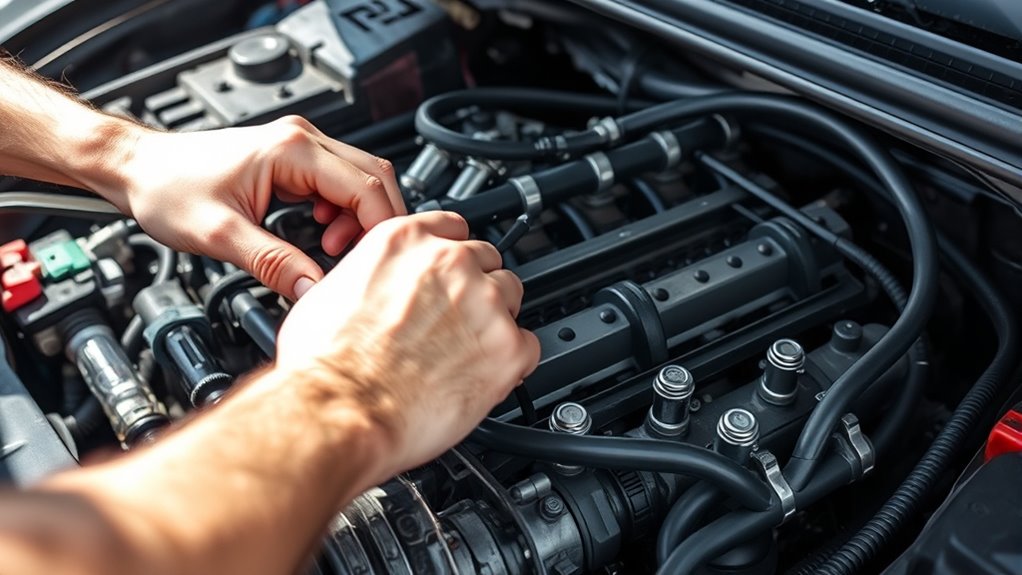
Before you plunge into repairing your engine, you need to identify the most common problems it might have. One major issue is low or dirty engine oil, which can cause overheating and damage internal components. Make certain to check your oil level and quality regularly.
Another frequent problem is coolant leakage, which can lead to engine overheating and severe damage if not addressed promptly. Look for puddles or stains under your car and monitor the coolant reservoir.
Other common issues include worn spark plugs, which reduce engine performance, a faulty battery that affects starting, and clogged air filters that limit airflow. By spotting these problems early, you prevent costly repairs and keep your engine running smoothly.
Pay attention to warning signs like unusual noises, smoke, or dashboard alerts. Knowing these five common problems helps you focus your repair efforts effectively and ensures your engine’s longevity.
Prepare Essential Tools for Engine Repair
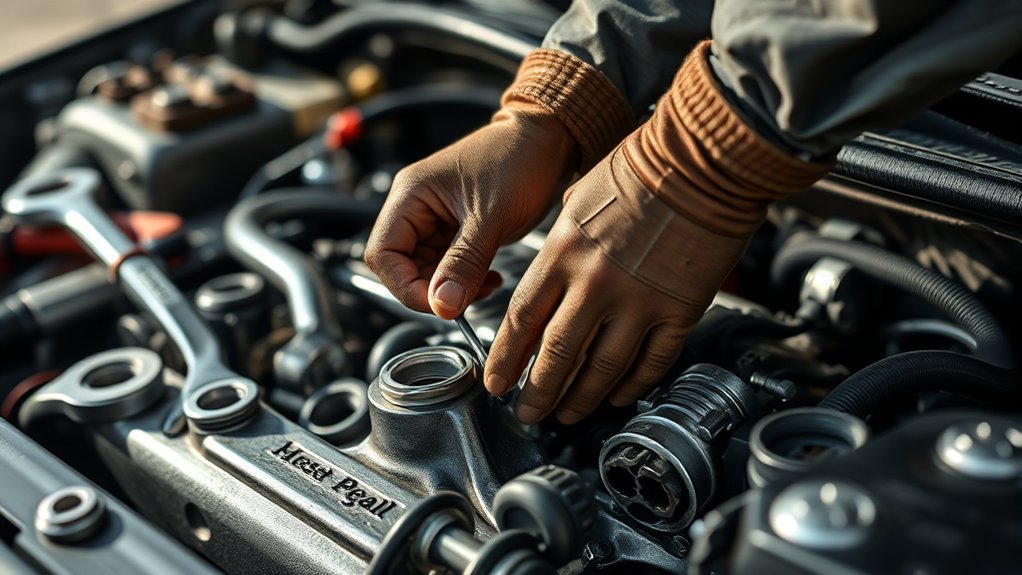
Once you’ve identified the common engine problems, gathering the right tools will make your repair process smoother and more efficient. Having everything ready means you won’t waste time searching for what you need mid-repair. Essential tools help you handle tasks like changing spark plugs or topping off engine oil with ease.
Preparing the right tools before starting makes engine repairs faster and hassle-free.
Make certain you have these tools on hand:
- Socket wrench set for removing bolts and spark plugs
- Screwdrivers (flathead and Phillips) for various fasteners
- Oil filter wrench for quick engine oil changes
- Torque wrench to tighten components to manufacturer specs
With these tools, you’ll be ready to tackle most repairs without frustration. Don’t forget to wear gloves and safety glasses to protect yourself. Setting up your workspace with these essentials ensures a smooth, straightforward engine repair experience.
Diagnose Your Engine Step-by-Step
Although engine issues can seem overwhelming, diagnosing your car step-by-step helps you pinpoint the exact problem quickly. Start by checking your engine oil level and quality. Dirty or low oil can cause poor fuel efficiency and engine damage.
Next, listen for unusual noises or vibrations that might indicate mechanical problems. Observe your car’s performance. Hesitation or loss of power can signal fuel system issues.
Use the table below to guide your diagnosis:
| Symptom | Possible Cause |
|---|---|
| Engine oil dark or low | Oil change needed |
| Poor fuel efficiency | Clogged air filter/fuel system |
| Engine noise or knocking | Worn engine components |
| Rough idling | Spark plug or injector issues |
| Overheating | Cooling system failure |
Fix Your Engine With Simple Repairs
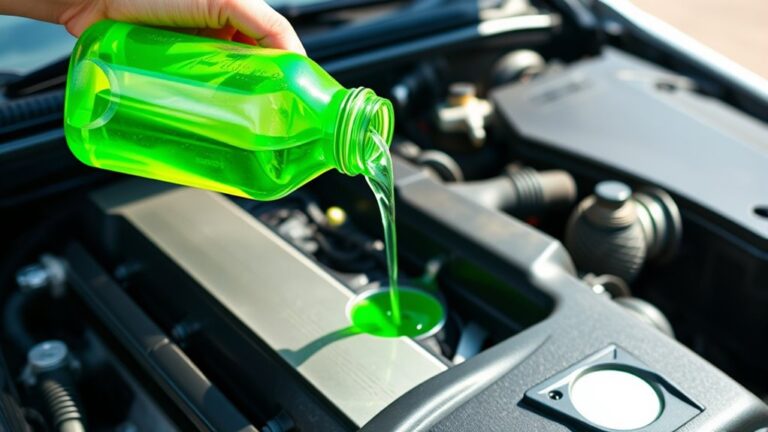
When you’ve identified the issue with your engine, you can tackle simple repairs yourself to save time and money. Start with basic maintenance tasks that improve performance and prevent bigger problems. Check your engine oil level and quality. Dirty or low oil can cause severe damage. Change it if needed, using the right type for your car.
Identifying engine issues early lets you perform simple maintenance to save time, money, and prevent major damage.
Next, focus on battery maintenance. Clean corrosion off terminals and ensure tight connections to avoid starting issues.
Here are four simple repairs you can do:
- Replace worn-out spark plugs to boost ignition.
- Tighten loose belts to prevent slipping and noise.
- Swap out clogged air filters for better airflow.
- Top off or replace engine oil regularly.
These straightforward steps keep your engine running smoothly and extend its life without costly visits to a mechanic. Stay proactive, and you’ll enjoy reliable performance with minimal hassle.
Test and Tune Your Engine for Smooth Running
How do you know if your engine is running smoothly? Start by listening for unusual noises and feeling for any vibrations while the engine is idling and accelerating. Use a diagnostic tool to check for error codes that might indicate issues affecting performance.
Next, tune your engine by adjusting the timing, spark plugs, and fuel mixture to optimize combustion. Proper tuning improves fuel efficiency and ensures better emission control, which helps your car run cleaner and saves you money on gas.
Don’t forget to inspect and replace air filters and fuel filters as needed. They play a big role in engine performance. After tuning, take your car for a test drive to confirm it accelerates smoothly without hesitation or stalling.
If you notice any problems, recheck your adjustments. Regular testing and tuning keep your engine running efficiently, extending its life and reducing harmful emissions.
Frequently Asked Questions
How Often Should I Service My Car Engine?
You should service your car engine every 5,000 to 7,500 miles, but always check your owner’s manual for specifics. Regularly changing the engine oil keeps your engine running smoothly and prevents wear.
Don’t forget to inspect and maintain the cooling system too, as it prevents overheating and engine damage. Staying on top of these services helps you avoid costly repairs and keeps your car performing at its best.
Can I Repair a Car Engine Without Prior Experience?
You can repair a car engine without prior experience, but keep in mind that 80% of DIY mechanics start with beginner tips to avoid costly mistakes.
You’ll need patience, a good repair manual, and basic tools to get going. Start small, watch tutorials, and don’t hesitate to ask for help.
Taking it step-by-step helps you build confidence and skills, making the process manageable even if you’re new to car repairs.
What Is the Average Cost of Professional Engine Repair?
The average cost of professional engine repair typically ranges from $2,500 to $4,000, depending on the extent of damage and engine rebuilding needed. When you do a cost comparison, rebuilding an engine usually costs less than a full replacement but still requires skilled labor.
Keep in mind, prices vary by location and vehicle type, so getting multiple quotes helps you find the best deal without sacrificing quality.
How Do I Know When to Replace My Engine?
You’ll know it’s time to replace your engine when engine diagnostics reveal severe issues like low compression, metal shavings in oil, or persistent knocking sounds. Replacement signs include excessive smoke, frequent overheating, and a dramatic drop in performance.
If your mechanic points out these problems during diagnostics, it’s usually more cost-effective to replace the engine rather than keep repairing it. Trust these signs to make the right call.
Are There Any Safety Precautions to Take During Repairs?
Think of safety precautions as your car’s seatbelt. They protect you when things go sideways. You should always wear protective gear like gloves and goggles to shield yourself from sharp parts and chemicals.
Be extra cautious about fire hazards. Keep flammable materials away and have a fire extinguisher nearby. Working in a well-ventilated area helps, too.
You don’t want to risk injury, so don’t skip these essential safety steps during repairs.
Conclusion
Now that you know the five simple steps to repair your car engine, don’t doubt your ability to tackle this challenge. It’s easy to believe engine repair is only for experts, but you’ve got what it takes.
By spotting problems, preparing tools, diagnosing carefully, making repairs, and testing thoroughly, you can breathe new life into your engine. Trust yourself, you’re more capable than you think, and your car will thank you for it by running smoothly after the repair.
Remember, repairing your car engine is within your reach, and with confidence, you’ll get the job done right.