7 Essential Tips for Engineered Hardwood Floor Care
If you have engineered hardwood floors, you know how tricky it can be to keep them looking their best. You’re not alone—many people struggle with maintaining that perfect shine without causing damage. Whether it’s dealing with spills, scratches, or humidity issues, caring for engineered hardwood floors requires the right approach and products.
To care for your engineered hardwood floors, use gentle, pH-neutral cleaners designed for them and avoid harsh chemicals or wax-based polishes. Clean with soft tools and never soak the floor. Wipe spills quickly to prevent damage.
Protect floors by using rugs, furniture pads, and keeping pet nails trimmed. Control indoor humidity between 35-55% to prevent warping, and consider refinishing when you notice wear.
Taking these steps keeps your floors beautiful for years, and you can uncover even more ways to maintain them properly.
Key Takeaways
- Use pH-neutral, non-toxic cleaners designed specifically for engineered hardwood. This helps avoid damage and keeps the finish vibrant.
- Clean floors regularly with soft microfiber cloths or damp mops. Be sure to avoid excess water and wipe spills promptly.
- Protect floors by using furniture pads and placing rugs in high-traffic areas. Also, avoid dragging heavy items or wearing high heels on them.
- Control indoor humidity between 35% and 55%. Using moisture barriers can prevent warping and keep your floors stable.
- Inspect floors periodically for scratches, wear, or warping. When needed, get them refinished professionally to extend their life.
Choose the Best Products for Engineered Hardwood Floors
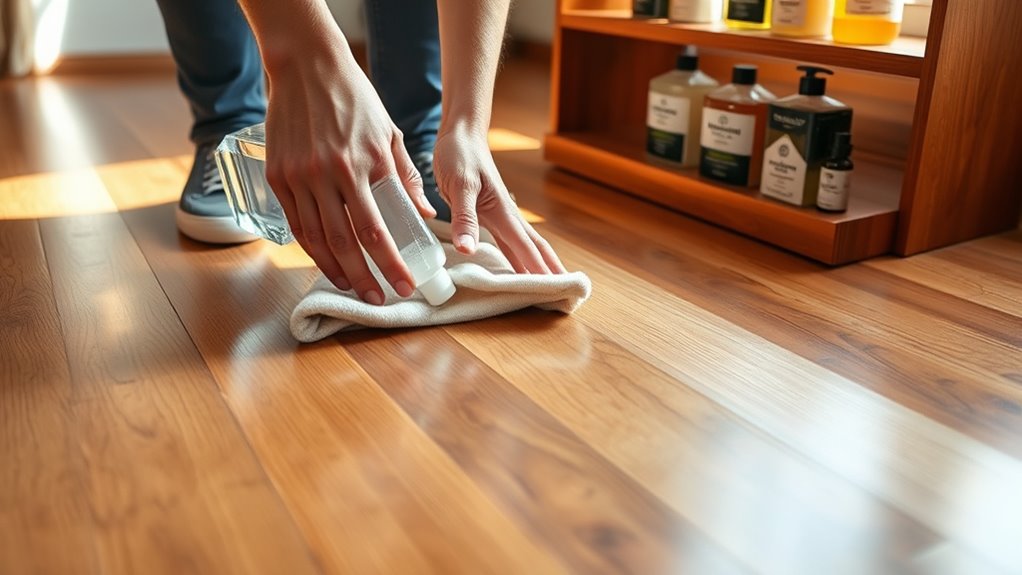
When you choose the right products for your engineered hardwood floors, you protect their finish and extend their lifespan. You want to pick cleaners and polishes specifically designed for engineered wood to avoid damaging the wood grain or dulling the gloss finish.
Harsh chemicals and abrasive cleaners can strip away the protective layer, leaving your floors vulnerable to scratches and wear. Instead, opt for pH-neutral, non-toxic products that gently clean without soaking the wood.
Using a product that *boosts* the gloss finish will keep your floors looking vibrant and fresh. Avoid wax-based polishes, as they can build up and create a cloudy film over time.
Also, steer clear of oil-based treatments that might darken or discolor the wood grain. By selecting the right products, you’ll preserve both the beauty and durability of your engineered hardwood floors, ensuring they remain a stunning feature in your home for years to come.
Clean Engineered Hardwood Floors Safely
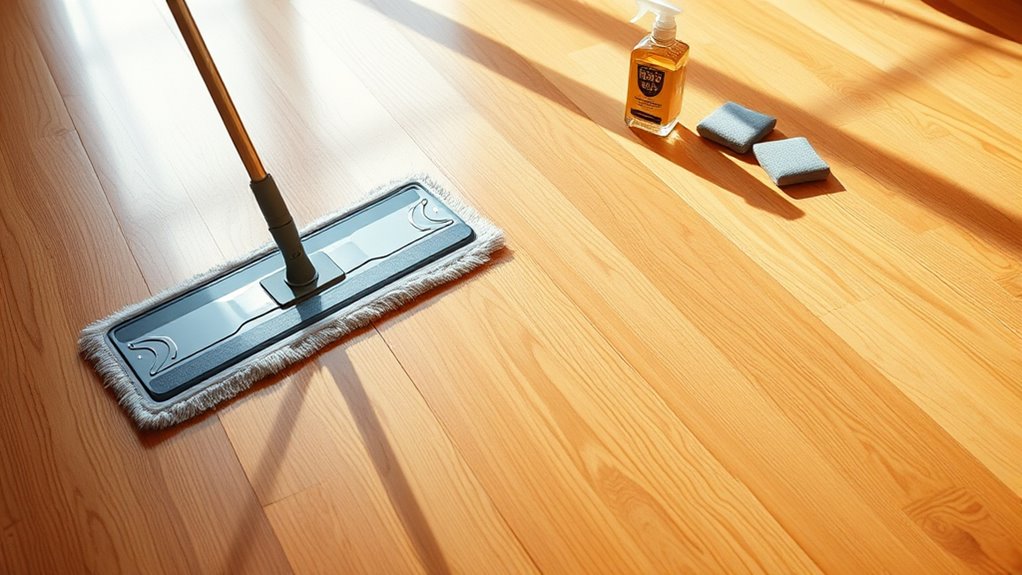
When you’re cleaning your engineered hardwood floors, it’s best to stick with gentle solutions that won’t harm the finish. You definitely want to avoid using too much water because excess moisture can lead to warping. Also, make sure to always use soft cleaning tools—they help protect the surface from getting scratched.
Use Gentle Cleaning Solutions
Because engineered hardwood floors have a delicate finish, you should always choose gentle cleaning solutions to protect their surface. Harsh chemicals can strip the finish or cause discoloration, so opt for gentle cleaning products designed specifically for hardwood.
Eco friendly solutions are excellent choices since they clean effectively without damaging your floors or the environment. Avoid abrasive cleaners and stick to mild soaps or specially formulated hardwood cleaners. Here’s a quick guide:
| Cleaner Type | Ingredients | Best Use |
|---|---|---|
| Mild Soap Solution | Water, mild soap | Regular light cleaning |
| Vinegar Dilution | Water, vinegar (1:10) | Stain removal (spot clean) |
| Hardwood Cleaner | Plant-based agents | Deep cleaning |
| Eco Friendly Spray | Natural extracts | Daily maintenance |
Using these gentle cleaning options keeps your floors beautiful and durable.
Avoid Excess Water Damage
Although engineered hardwood floors are more resistant to moisture than solid hardwood, you still need to avoid excess water to prevent warping and damage. Water absorption can cause the layers to swell, leading to buckling or gaps between planks.
When cleaning, never flood your floor with water or let liquids sit on the surface. Instead, use a damp mop or cloth, wrung out thoroughly to minimize moisture exposure. Promptly wipe up spills to reduce the chance of mold growth, which thrives in damp environments and can damage both your floor and indoor air quality.
Choose Soft Cleaning Tools
Selecting the right cleaning tools matters a lot for preserving your engineered hardwood floors. You should always opt for tools with soft bristle brushes to gently remove dirt without scratching the surface. Hard or stiff bristles can damage the finish and wear down the protective layer over time.
A microfiber cloth is another essential tool. It effectively traps dust and grime without causing abrasion. When wiping spills or spots, use a damp microfiber cloth rather than rough rags or paper towels.
These soft cleaning tools help maintain your floor’s shine and prevent premature wear. By choosing the right equipment, you’re protecting your investment and keeping your engineered hardwood floors looking beautiful for years to come.
Prevent Scratches and Dents on Engineered Hardwood Floors
To keep your engineered hardwood floors looking pristine, you need to take proactive steps to prevent scratches and dents. Start by carefully considering your furniture placement. Avoid dragging heavy furniture across the floor, as this can cause deep scratches.
Instead, lift and move pieces gently or use sliders designed for hardwood floors. Applying protective pads to the bottom of furniture legs is essential. They act as a barrier between the floor and furniture, reducing the risk of dents and scratches when moving or adjusting positions.
Regularly check these pads and replace them if they wear down. Furthermore, keep pet nails trimmed and avoid walking on the floors with high heels, as these can also damage the wood surface.
Manage Moisture to Protect Engineered Hardwood Floors
To keep your engineered hardwood floors looking great, it’s important to manage moisture carefully. You want to keep indoor humidity under control, so the floors don’t swell or shrink.
Plus, be sure to wipe up any spills right away—moisture sitting on the surface can cause damage. And if you’re installing floors in areas prone to moisture, using moisture barriers can really help protect them.
Taking these simple steps will help prevent warping and keep your floors looking beautiful for years to come.
Control Indoor Humidity Levels
How do you keep your engineered hardwood floors looking flawless year-round? Controlling indoor humidity levels is key. Too much moisture can cause your floors to warp, while too little can make them crack.
Aim to maintain humidity between 35% and 55% to guarantee your floors stay stable. Using a humidifier or dehumidifier helps balance moisture, improving air quality and preventing mold growth.
Regularly monitoring with a hygrometer lets you adjust conditions quickly. Proper humidity control not only protects your floors but also boosts your home’s overall comfort.
Promptly Wipe Up Spills
Whenever spills happen, you should wipe them up immediately to prevent moisture from seeping into the engineered hardwood. Quick action is key to spill prevention and effective stain removal, helping maintain your floor’s beauty.
Don’t let liquids sit. They can cause warping, discoloration, or stubborn stains. Keep a soft cloth or mop nearby for fast cleanup, and avoid harsh chemicals that might damage the finish.
Remember, even a small spill can lead to big problems if ignored.
- Protect your investment by acting fast and preventing lasting damage.
- Enjoy peace of mind knowing your floors stay clean and vibrant.
- Avoid costly repairs with simple, quick spill management steps.
Your engineered hardwood floor will thank you for the care you give it every day.
Use Moisture Barriers
Although engineered hardwood floors are more resistant to moisture than solid wood, you still need to use moisture barriers to protect them from humidity and dampness. Moisture barriers act as an essential layer between your flooring and any underlying concrete or subfloor, preventing water from seeping in and causing damage.
By installing these barriers during your floor’s installation or in areas prone to moisture, you boost your floor’s water resistance considerably. This simple step helps avoid warping, swelling, and mold growth, extending your floor’s lifespan.
Use Rugs and Mats to Protect Your Floors
Since engineered hardwood floors can be vulnerable to scratches and dirt, using rugs and mats is a simple way to safeguard them. You can place decorative rugs and floor mats in high-traffic areas, entryways, and spots where spills are likely. These not only shield your floors but also add warmth and style to your space.
Choose rugs and mats with non-slip backing to prevent accidents and protect your floor’s finish. Regularly shake out or vacuum these coverings to avoid dirt buildup that could scratch your floors. Remember, a thoughtfully placed rug or mat can keep your floors looking new longer while making your home feel inviting.
Feel pride every time you walk on a spotless, scratch-free surface. Enjoy cozy, stylish spaces elevated by your choice of decorative rugs. Relax knowing your investment in beautiful floors is well protected with floor mats.
Refinish Engineered Hardwood Floors When Needed
Using rugs and mats helps shield your engineered hardwood floors from daily wear, but over time, they may still show signs of fading or scratches. When that happens, it’s time to consider refinishing your floors.
Refinishing techniques can restore the original beauty of your hardwood by removing surface damage and revitalizing the finish. Keep in mind, engineered hardwood floors have a thinner top veneer compared to solid hardwood, so hardwood floor sanding must be done carefully to avoid sanding through the veneer layer.
You can either hire a professional or, if you’re confident, rent the right equipment and follow manufacturer guidelines closely. Regularly refinishing your floors not only improves their appearance but also extends their lifespan, letting you enjoy your investment longer.
Don’t wait until damage worsens. Address it promptly with proper refinishing techniques to keep your engineered hardwood floors looking their best.
Inspect and Repair Engineered Hardwood Floors Regularly
To keep your engineered hardwood floors in top condition, you should inspect and repair them regularly. Checking for signs of damage or wear helps prevent minor issues from turning into costly repairs.
Regular inspections and timely repairs keep engineered hardwood floors looking great and prevent expensive damage.
Pay special attention to floor expansion gaps, as these allow your floors to adjust naturally to humidity changes without buckling. Ensuring your subfloor stability is also essential because an unstable subfloor can cause creaks, cracks, or uneven surfaces.
Make it a habit to:
- Look for gaps or warping caused by improper floor expansion.
- Monitor squeaks or movement that signal subfloor instability.
- Address scratches, dents, or moisture damage promptly.
Frequently Asked Questions
How Long Does Engineered Hardwood Flooring Typically Last?
Engineered hardwood flooring typically lasts 20 to 30 years, but with proper maintenance routines, you can extend its life even further. You’ll want to follow gentle cleaning methods, like using a damp mop and avoiding harsh chemicals, to keep the surface looking fresh.
Regularly removing dirt and debris prevents scratches, and addressing spills quickly helps maintain durability. Stick to these habits, and your floors will stay beautiful and functional for decades.
Can Engineered Hardwood Floors Be Installed Over Radiant Heating?
You can definitely install engineered hardwood floors over radiant heating. Imagine warm waves gently rising through your floorboards, creating cozy comfort beneath your feet.
Engineered hardwood’s layered construction offers great floor compatibility with radiant heating systems, allowing heat to pass through without damaging the wood. Just make sure to follow manufacturer guidelines for temperature limits and acclimation.
This way, your floor stays beautiful while your home stays warm and inviting all year round.
Are Engineered Hardwood Floors Environmentally Friendly?
Yes, engineered hardwood floors can be environmentally friendly, especially when made with sustainable sourcing. You’ll want to look for products that use wood from responsibly managed forests. This helps reduce deforestation.
Also, choose floors finished with eco friendly finishes, as they emit fewer harmful chemicals. By selecting these options, you’re supporting a healthier planet while enjoying the beauty and durability of engineered hardwood in your home.
What Is the Cost Difference Between Engineered and Solid Hardwood?
When it comes to cost comparison, engineered hardwood floors often cost less upfront than solid hardwood. Think of it as getting more bang for your buck. You’ll pay around $3 to $10 per square foot for engineered versus $5 to $15 for solid.
Despite the lower price, engineered wood offers impressive material durability thanks to its layered construction. It’s a smart choice if you want quality without breaking the bank.
Can Pets Damage Engineered Hardwood Floors More Than Other Types?
Yes, pet scratches can damage engineered hardwood floors, but they’re usually more resistant compared to solid hardwood. However, pet accidents pose a bigger risk because moisture can seep into the layers and cause warping or swelling.
You’ll want to clean up any messes quickly and use rugs or mats in high-traffic pet areas to protect your floors. Regular maintenance helps keep scratches and accidents from causing long-term damage.
Conclusion
Taking good care of your engineered hardwood floors can extend their life by up to 20 years. By choosing the right products, cleaning safely, preventing scratches, managing moisture, using rugs, refinishing when needed, and inspecting regularly, you’ll keep your floors looking beautiful for years.
With just a little effort, you’ll protect your investment and enjoy the warmth and elegance that engineered hardwood brings to your home every day. Proper maintenance is key to preserving the beauty and durability of engineered hardwood floors.