5 Steps to Find Out the Engine in My Car
If you’ve ever wanted to know exactly what engine is in your car, you’re not alone. Many people struggle with identifying engine types, especially when buying used cars or doing maintenance. It can feel confusing and overwhelming, but don’t worry—there are straightforward ways to uncover this information.
To find out the engine in your car, first check the vehicle ID plate or sticker, usually on the driver’s door jamb or under the hood. Next, use your VIN online to decode detailed engine info. Then, inspect labels or stamps under the hood for engine codes.
Don’t forget to consult your manual or the manufacturer’s website for specs. Finally, spot engine type by familiar visual cues like spark plug layout. Keep going, and you’ll uncover even more helpful details.
Key Takeaways
- Locate the vehicle ID plate or sticker on the driver’s door jamb or under the hood for engine details and codes.
- Use the car’s VIN on trusted online decoders to quickly identify the engine model, horsepower, and specifications.
- Check under the hood for engine labels, metal plates, or stamped codes near the engine block or valve cover.
- Refer to the vehicle manual or manufacturer’s website for accurate engine size, horsepower, torque, and maintenance info.
- Identify the engine type visually by the spark plug arrangement and oil cap position to tell if it’s inline, V-type, or boxer.
Locate Your Engine Information on the Vehicle ID Plate or Sticker
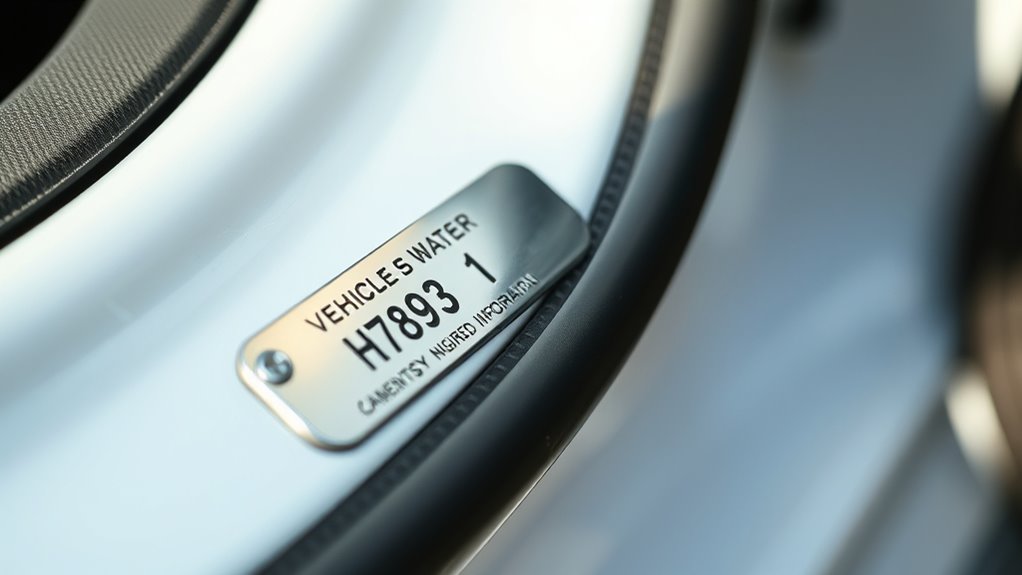
To find your engine information, start by locating the vehicle ID plate or sticker. This plate is usually found on the driver’s side door jamb, under the hood, or near the firewall. It contains key details like the engine code, displacement, and sometimes the engine serial number. Knowing this info helps you with engine maintenance and engine troubleshooting by ensuring you use the right parts and follow the correct procedures.
When you identify the exact engine type from the plate, you can accurately track maintenance schedules or diagnose issues specific to your engine model. This saves you time and prevents costly mistakes. If you’re unsure about any codes, consult your vehicle’s manual or a trusted mechanic.
Keeping your engine information handy ensures you’re prepared for any engine maintenance or engine troubleshooting tasks, helping your car run smoothly and reliably.
Use Your Car’s VIN to Decode Engine Type Online
Once you’ve checked the vehicle ID plate, the next step is to use your car’s VIN (Vehicle Identification Number) to decode the engine type online. The VIN is a unique code that holds detailed information about your vehicle, including the engine specifications. By entering your VIN on trusted websites, you can quickly uncover the exact engine model, horsepower, and other crucial details.
Use your car’s VIN online to quickly reveal precise engine details like model and horsepower.
This method offers several benefits:
- Saves time compared to manual checks
- Provides accurate engine data for better engine maintenance
- Helps you understand troubleshooting tips specific to your engine
- Gives peace of mind when buying parts or scheduling repairs
Using your VIN to decode engine info online is an easy way to guarantee you’re working with the right details. This knowledge helps you stay ahead with appropriate engine maintenance and apply targeted troubleshooting tips, keeping your car running smoothly and efficiently.
Look for Engine Labels and Stamps Under the Hood
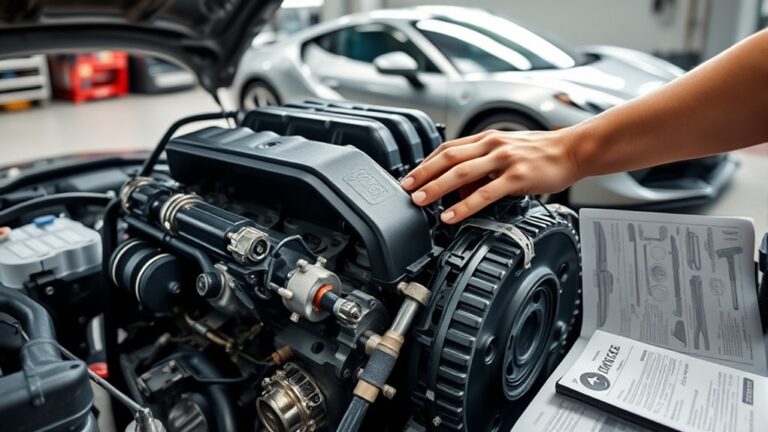
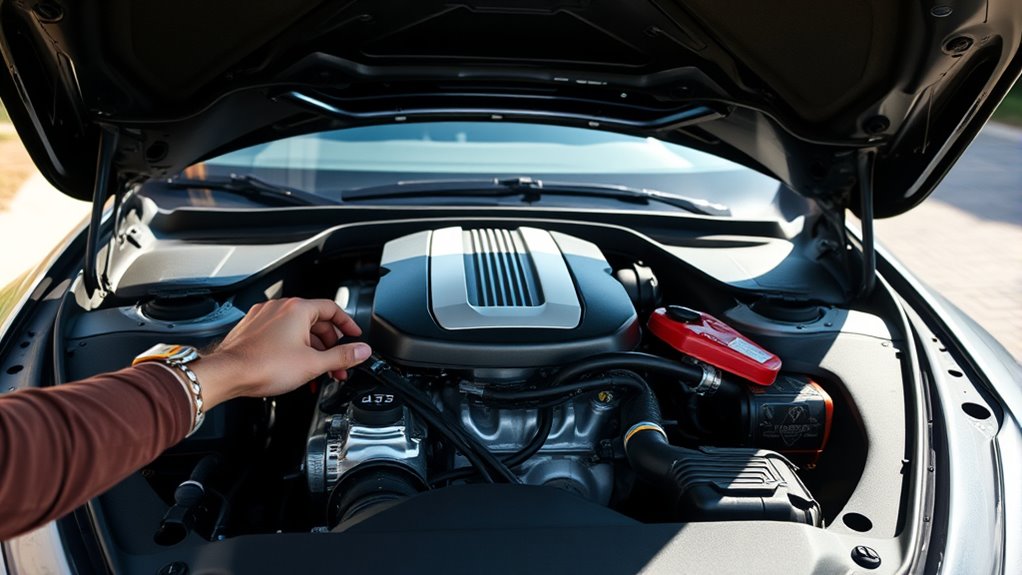
Although it might seem tricky at first, you can quickly identify your engine by checking the labels and stamps under the hood. Open your car’s hood and look around the engine bay for any metal plates, stickers, or stamped codes. These labels often contain valuable information like the engine model or serial number.
Pay close attention near the engine block, around the valve cover, or near the spark plugs, as manufacturers often place identification marks there. You might also find a label on the underside of the hood specifying recommended engine oil types, which can indirectly confirm your engine variant.
Some stamps are etched directly onto the metal near the spark plugs or on the engine block, providing clear engine codes. By noting these labels and stamps, you can gather precise details about your engine without guesswork.
Just make sure the area is clean enough to read the numbers clearly, and use a flashlight if needed to see smaller stamps.
Find Engine Specs in Your Manual or Manufacturer’s Website
When you want reliable details about your engine, your car’s manual and the manufacturer’s website offer the most accurate specifications. These sources give you clear information that helps with engine maintenance and understanding your car’s fuel efficiency. You’ll find essential data such as engine size, horsepower, torque, and recommended service intervals.
Checking these specs can make you feel confident about your vehicle’s performance and upkeep. Here’s what you can expect to uncover:
- Precise engine model and type
- Ideal fuel type for better efficiency
- Scheduled maintenance guidelines to prolong engine life
- Manufacturer’s tips to improve fuel efficiency and reduce emissions
Spot Common Engine Types by Visual Cues
If you want to quickly identify your engine type without digging through documents, you can often spot it by key visual features under the hood. Look for the arrangement of spark plugs, engine oil cap position, and overall layout. These clues help you differentiate engine types like inline, V-type, or boxer engines.
Here’s a quick visual guide:
| Engine Type | Spark Plug Layout | Engine Oil Cap Location |
|---|---|---|
| Inline | Single row, evenly spaced | Side or top center |
| V-Type | Two rows, angled | Top center |
| Boxer | Opposite sides, flat layout | Side or top |
| Rotary | No visible spark plugs | Side or rear |
| Electric | No spark plugs or oil cap | None |
Frequently Asked Questions
How Often Should I Service My Car’s Engine?
You should service your car’s engine every 5,000 to 7,500 miles, depending on your vehicle and driving habits. Regularly changing the engine oil keeps it running smoothly, while inspecting and replacing spark plugs ensures efficient combustion.
Don’t wait too long, or you risk engine damage and reduced performance. Check your owner’s manual for specific intervals, but staying on top of oil changes and spark plug maintenance will keep your engine healthy and reliable.
What Are Signs of Engine Trouble?
Your engine’s warning signs are like a scream in the night. If you notice engine overheating or unusual noises, don’t ignore them because they’re red flags.
Steam rising from under the hood or a burning smell means your engine’s struggling. Clanking, knocking, or grinding sounds signal trouble inside.
If your car hesitates or stalls, it’s begging for help. Catch these signs early to avoid costly repairs and keep your ride smooth and safe.
Can I Upgrade My Car’s Engine Myself?
You can upgrade your car’s engine yourself, but it depends on your skills and tools. Simple engine tuning and minor DIY repairs are doable if you’re comfortable with mechanics.
However, major upgrades often require specialized knowledge, equipment, and safety precautions. If you’re new to this, start with basic tuning and learn gradually. For complex engine swaps or performance modifications, it’s best to consult a professional to avoid costly mistakes.
How Does Engine Size Affect Fuel Efficiency?
Think of your engine displacement as the size of a bucket catching rain. Larger buckets collect more water but weigh you down. Likewise, bigger engine displacement means your engine consumes more fuel, increasing fuel consumption.
When you drive, a larger engine uses more fuel to move your car, reducing efficiency. So, if you want better fuel economy, smaller engine displacement usually helps, letting you go farther with less fuel.
What Is the Lifespan of a Typical Car Engine?
You can expect a typical car engine to last around 150,000 to 200,000 miles if you maintain it well. Avoid engine overheating by keeping an eye on coolant levels and fixing leaks promptly.
When your engine shows signs of wear, an engine rebuild can extend its life considerably. Regular oil changes and timely repairs will help you get the most out of your engine’s lifespan without costly breakdowns.
Conclusion
Now that you know these 5 simple steps, finding your car’s engine info is easier than ever. Did you know that over 70% of car owners never check their engine type, missing out on better maintenance?
By using your VIN or spotting labels under the hood, you’ll stay informed and keep your car running smoothly. So, go ahead, put this knowledge to work and get to know your engine like a pro!
Remember, knowing how to find your car’s engine info is key to smarter care and longer vehicle life.