5 Tips to Keep Rats Out of Your Car Engine
If you’ve ever found yourself dealing with unexpected car troubles caused by rodents, you’re not alone. Many people struggle with keeping rats out of their car engine, which can lead to costly damage and frustration.
The good news is, there are practical steps and products that can help you protect your vehicle and save you from headaches down the road.
To keep rats out of your car engine, park in well-lit areas away from dumpsters or tall grass, and remove any food scraps nearby. Regularly inspect your engine bay for nests or chewed wires, and seal gaps with wire mesh to block entry points.
Use natural repellents like peppermint oil or install ultrasonic devices to deter rodents. Combining these habits can save you costly repairs.
If you want more ways to protect your car, there are additional effective strategies to investigate.
Key Takeaways
- Park in well-lit areas away from dumpsters, tall grass, or woodpiles to reduce rat attraction.
- Use peppermint oil or predator scents in the engine bay to naturally repel rodents.
- Install dense engine insulation and regularly inspect for damage or chewing signs.
- Seal gaps and use wire mesh around vulnerable engine compartments to block rat entry.
- Frequently clean the engine area, removing food debris and potential nesting materials.
Reasons Rats Target Car Engines
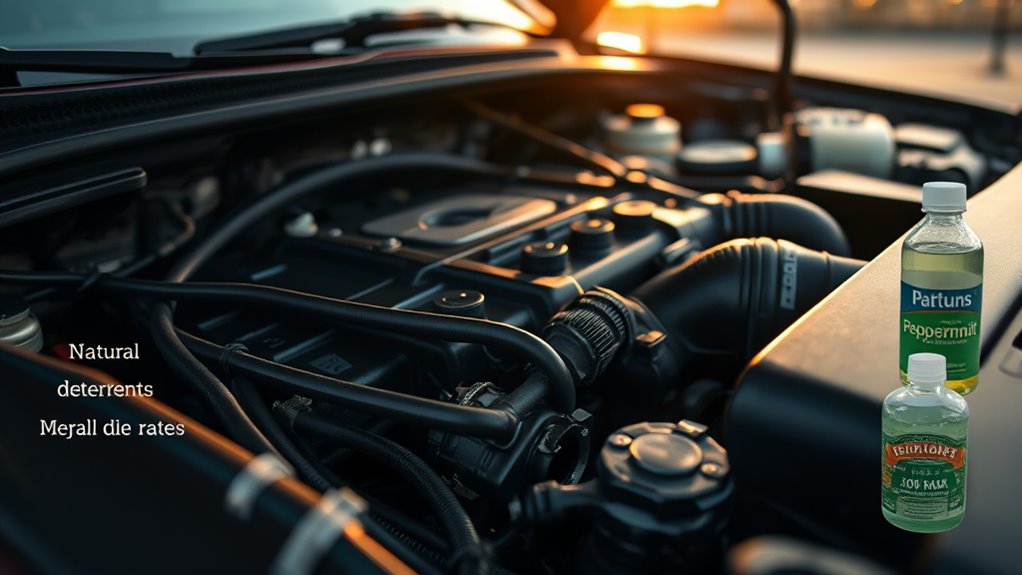
Because car engines provide warmth and shelter, rats often choose them as hiding spots, especially during colder months. You’ll find this behavior tied closely to rodent behavior patterns. They seek cozy, secure places to nest.
Your car engine, with its warmth and protective casing, offers the perfect environment. Plus, the engine smells can attract them. Oils, grease, and other residues emit scents that rats find intriguing or comforting.
You might not realize it, but these engine smells act like signals, drawing rodents in. Once inside, they can cause damage by chewing wires or nesting in tight spots.
Understanding this rodent behavior helps you see why your car engine becomes a target. It’s not just about shelter; it’s about the combination of warmth, security, and tempting smells that make your car a prime choice for rats looking for a refuge. Recognizing these reasons is your first step to prevention.
Keep Rats Away From Your Parking Spot
If you want to keep rats from making your car engine their home, start by managing the area where you park. Good parking security is essential. Choose well-lit spots close to your home or where there’s regular foot traffic, as rats prefer dark, quiet places. Avoid parking near dumpsters, tall grass, or woodpiles, which attract rodents.
Keep the area clean by removing food scraps and debris that might lure them in. You can also improve engine insulation to deter rats. While insulation primarily protects your engine, it can make your car less inviting by reducing access points and hiding spots for rodents.
Regularly inspect your parking spot for signs of rat activity and take action immediately to keep your space secure. By controlling the environment around your car, you’ll make it much harder for rats to settle near your engine.
Effective Engine Protection Tips
While managing your parking area is essential, you’ll also want to take direct steps to protect your engine from rats. One effective method is using car scent strategies designed to mask or repel rodent-attracting odors. Applying these scents around the engine compartment can make your vehicle less inviting to rats searching for nesting spots.
Moreover, consider installing engine compartment insulation. This not only reduces noise but creates a physical barrier that discourages rats from chewing wires or nesting inside. Insulation materials designed for this purpose are often dense and resistant to gnawing, increasing your engine’s protection.
Regularly inspect the insulation to ensure it remains intact and effective. Combining car scent strategies with proper engine compartment insulation forms a strong defense against rodents. By taking these direct measures, you greatly reduce the chances of rats causing costly damage to your car’s engine components.
Stay proactive, and your engine will stay rat-free.
Best Natural and Commercial Rat Repellents for Cars
Taking direct steps like using engine compartment insulation and scent strategies can markedly lower the risk of rats nesting in your car. You can rely on both natural and commercial repellents to keep rodents away. DIY remedies inspired by historical pest control, such as peppermint oil or mothballs, offer a safe, affordable option.
Commercial repellents often use ultrasonic waves or predator scents for improved effectiveness.
Here’s a quick comparison:
| Repellent Type | Key Features |
|---|---|
| Peppermint Oil (DIY) | Natural scent, easy to apply |
| Ultrasonic Devices | Non-toxic, emits high-frequency sound |
| Predator Scents | Mimics natural threats, deters rats |
Easy Maintenance Habits to Stop Rat Damage
Although rat repellents can help, maintaining your car regularly plays an essential role in preventing rodent damage. Start by inspecting your engine bay frequently for any signs of nests or chewing. Listen carefully for unusual engine noise, which might indicate wires or hoses being gnawed.
Regular engine inspections can reveal early signs of rodent damage, helping prevent costly repairs.
Keeping your engine clean removes food debris and nesting materials that attract rodents.
Incorporate simple rodent proofing methods like sealing gaps and using wire mesh around vulnerable areas. Always park in well-lit, open spaces, as darkness invites rats. Regularly check your car’s undercarriage and wheel wells, where rats often hide.
Replace damaged insulation or wiring promptly to avoid costly repairs.
Frequently Asked Questions
Can Rats Cause Electrical Fires in Car Engines?
Yes, rats can cause electrical fires in car engines. When rodents chew on wires, they create rodent damage that exposes electrical components. This damage can lead to short circuits, sparks, and eventually electrical fires.
You should regularly check your engine for signs of chewing or nesting to prevent costly repairs. Taking action quickly helps you avoid the dangers and expenses linked to rodent damage and potential electrical fires in your vehicle.
How Quickly Can Rats Damage Car Wiring?
Rats can damage your car wiring surprisingly fast, sometimes within just a day or two after gaining access. Once they find rodent entry points, like gaps around the engine bay, they start chewing on wires to build nests or sharpen teeth.
This quick chewing can lead to significant engine damage, including shorts or complete electrical failure. So, spotting and sealing these entry points early is essential to protect your car’s wiring and avoid costly repairs.
Are Certain Car Models More Prone to Rat Infestations?
Certain car models are like open invitations to rats, with higher car model susceptibility due to their engine compartment design. If your vehicle has lots of cozy nooks and easy access points, it’s more likely to become a rat’s playground.
You’ll find that compact engine bays or older models with less protective shielding often attract these critters. So, understanding your car’s design helps you stay one step ahead in keeping rats away.
Do Ultrasonic Rat Repellents Harm Pets?
Ultrasonic sound devices generally don’t harm pets, but you should be cautious if you have small animals like hamsters or gerbils, as their hearing is more sensitive. You’ll want to guarantee pet safety by placing the device away from where your pets spend most of their time.
Dogs and cats usually aren’t bothered by ultrasonic sound, but always monitor your pets for any unusual behavior when using these repellents.
Can Rat Infestations Affect Car Insurance Coverage?
Yes, rat infestations can affect your car insurance coverage. Many insurance policies have coverage exclusions for damage caused by rodents, so if you file claims for rat-related damage, your insurer might deny them.
It’s important you review your policy carefully to understand what’s covered. Taking preventive measures can help you avoid costly repairs and denied claims, keeping your car safe and your insurance valid.
Conclusion
You want your car engine to purr like a content cat, not scratch and scurry like a rat’s playground. By keeping your parking spot clean and using natural repellents, you create a fortress where rodents hesitate to tread.
Regular maintenance isn’t just a chore; it’s your shield against gnawed wires and chewed hoses. With these simple steps, you’ll turn your once vulnerable engine bay into a rat-free zone.
Keep these tips in mind to effectively keep rats out of your car engine and enjoy a quiet, trouble-free ride.