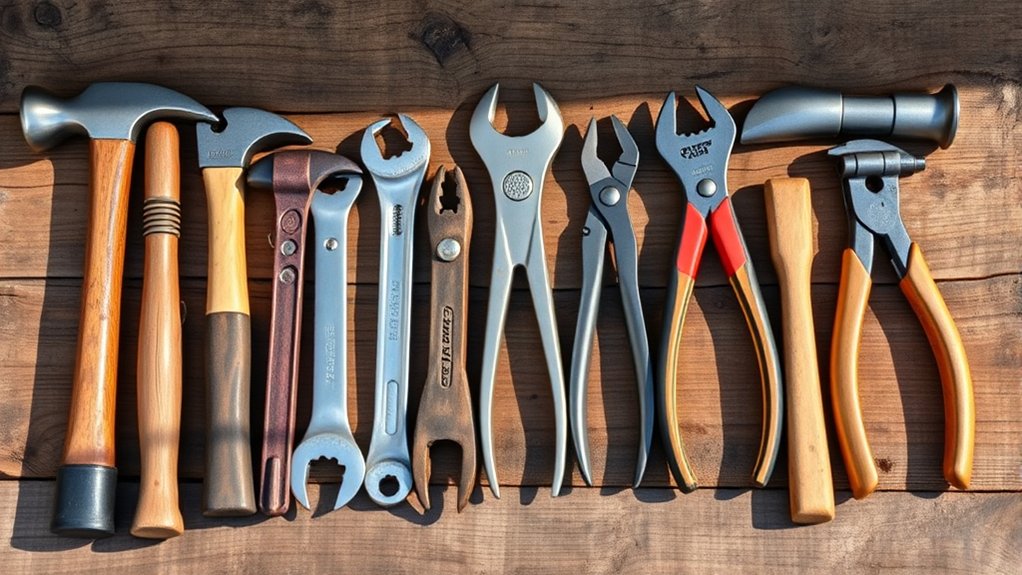
Top 10 Heavy Duty Hand Tools for Tough Jobs
Tough jobs can quickly become frustrating when your tools slip, bend, or fail under pressure. You’re not alone—many people struggle to find dependable equipment for demanding repairs, construction, automotive work, demolition, and plumbing.
This guide to the top 10 heavy-duty hand tools for tough jobs highlights reliable options designed to handle serious force. Look for forged steel, hardened jaws, secure grips, and impact-rated designs for safer, more efficient work.
The top 10 heavy-duty hand tools for tough jobs include hammers, adjustable wrenches, pliers, socket sets, screwdrivers, impact shafts, utility knives, pry bars, pipe wrenches, and tape measures.
Choose each tool for the material, workspace, and force required, then clean, inspect, lubricate, and store them properly.
You’ll find practical guidance on choosing every tool below.
Key Takeaways
- Choose forged wrenches and adjustable wrenches for securely loosening stubborn fasteners without slipping or damaging edges.
- Use heavy-duty hammers with strong steel heads and reinforced handles for controlled driving, demolition, and repair work.
- Select pipe wrenches, socket sets, and impact-rated accessories according to fitting size, access, and required torque.
- Rely on high-leverage pliers, impact-ready screwdrivers, utility knives, and pry bars for gripping, cutting, fastening, and removal.
- Prioritize ergonomic designs, corrosion-resistant construction, proper sizing, and regular cleaning, inspection, lubrication, and storage.
Best Heavy-Duty Hand Tools for Tough Jobs
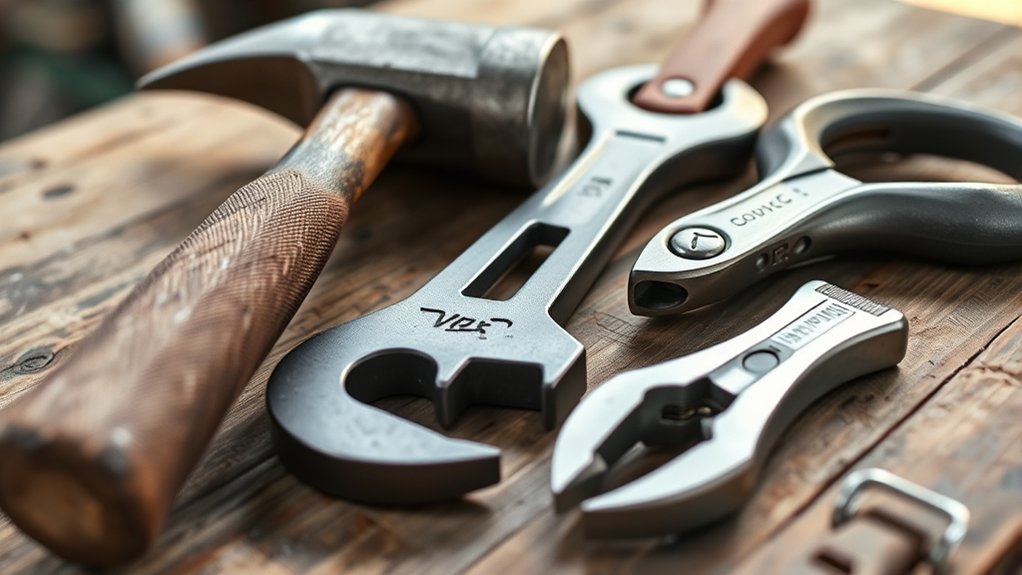
When tough jobs demand dependable performance, choose heavy-duty hand tools built for strength, control, and long-term use. You’ll find the best options by matching each tool to the work, material, and force required.
Select forged wrenches for stubborn fasteners, high-leverage pliers for gripping and cutting, and durable screwdrivers for demanding assembly tasks. A ratchet and socket set helps you work efficiently in tight spaces, while utility knives handle repeated cutting without premature wear.
For shaping or separating materials, choose sturdy chisels and pry bars designed to resist bending. Keep a quality tape measure and level nearby to maintain accuracy from start to finish.
Look for hardened steel, secure joints, corrosion-resistant finishes, and handles that stay comfortable under pressure. An ergonomic grip reduces hand fatigue during extended use, while a lightweight design improves control without sacrificing durability.
Store your tools in an organized case, inspect them regularly, and replace damaged pieces promptly. With the right selection, you’ll work faster, safer, and more confidently.
Heavy-Duty Hammers for Striking and Demolition
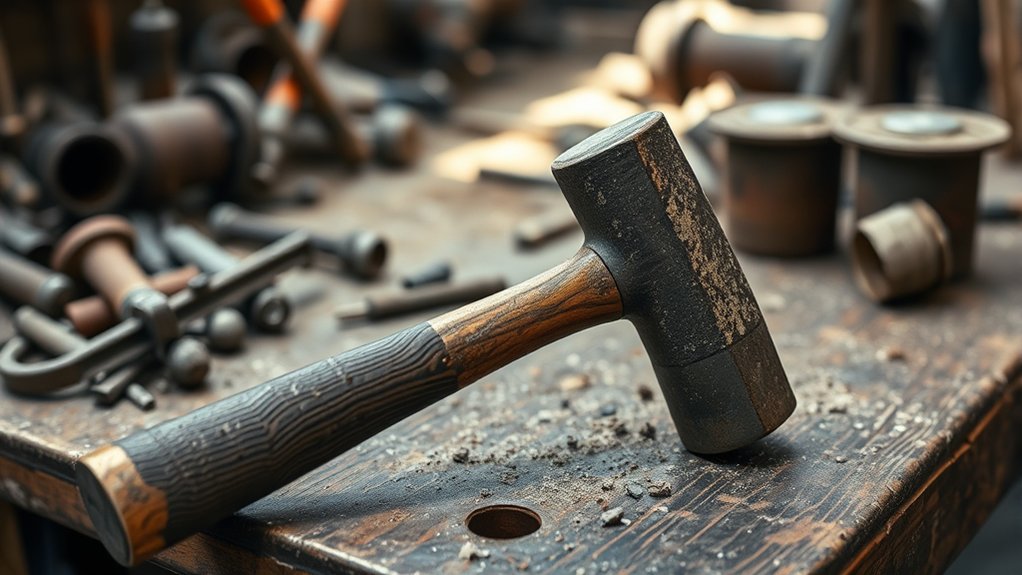
Heavy-duty hammers deliver the controlled force you need for driving fasteners, breaking materials, and handling demolition work. Choose a model that matches your task, whether you’re framing, setting posts, removing tile, or splitting masonry. A heavier head creates greater impact, while a lighter hammer gives you better control during extended use.
Look for strong steel heads, secure handle connections, and durable striking faces. Material durability matters when you’re hitting hard surfaces repeatedly, so inspect the face for chips, cracks, or excessive wear before each job. Fiberglass or steel-reinforced handles can withstand demanding work, while shock-absorbing grips help reduce vibration.
Prioritize ergonomic design to keep your wrist, hand, and shoulder comfortable. Hold the hammer near the end of the handle to maximize leverage, maintain a stable stance, and let the tool’s weight generate momentum. Wear safety glasses, gloves, hearing protection, and sturdy footwear. Keep bystanders clear, and never strike a hardened surface with a damaged hammer.
Adjustable Wrenches for Repairs and Tight Spaces
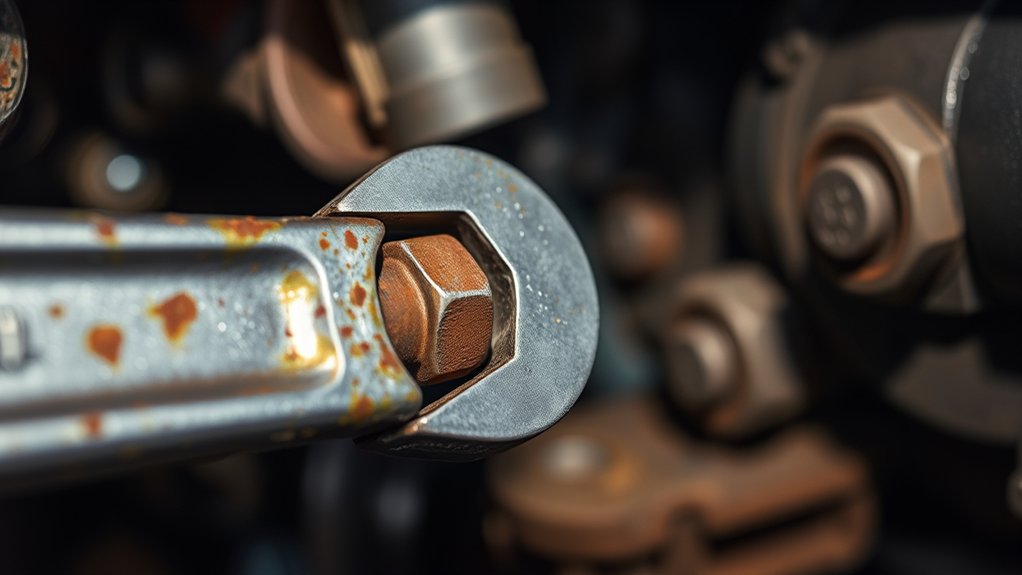
Adjust the wrench’s jaws to fit various fastener sizes with ease. Its slim profile makes it easier to reach bolts in tight spaces, and its durable construction stands up to demanding repairs.
Versatile Jaw Adjustments
Adjustable wrenches give you flexible jaw openings for handling various nut and bolt sizes without switching tools. Turn the worm gear to set the opening precisely, then position the movable jaw against the fastener.
A properly fitted jaw grip helps you apply torque efficiently while reducing slipping and damage to corners. Before pulling, check that the jaws sit squarely on the fastener and maintain firm contact.
Quality models use smooth adjustment threads, allowing you to fine-tune the fit quickly and consistently. Look for hardened jaws and a sturdy frame when you need dependable performance under heavy loads.
You’ll also benefit from a comfortable handle that supports controlled pressure during repeated repairs. Keep the adjustment mechanism clean and lightly lubricated so it operates smoothly and preserves reliable jaw stability over time.
Tight Space Access
When space is limited, a compact adjustable wrench lets you reach fasteners that standard tools may not. Its slim profile fits between pipes, panels, and closely spaced components, helping you handle repairs without removing surrounding parts.
You can adjust the jaw with one hand, then position the wrench at a practical angle for better control. Look for an ergonomic design with a contoured handle, which reduces hand strain when access forces you to work awkwardly.
Tools made with lightweight materials are easier to maneuver in cramped areas and won’t tire your wrist as quickly. A narrow head also helps you turn nuts where bulky jaws cannot.
Choose a size that matches your workspace, and keep your movements deliberate to avoid scraping nearby surfaces or losing your grip.
Durable Repair Performance
Built for repeated repairs, a durable adjustable wrench should hold its jaw alignment and resist wear through frequent use. Choose forged steel construction, smooth adjustment threads, and precise jaws so you can grip fasteners securely without slipping.
An ergonomic handle design reduces hand fatigue when you’re working in cramped spaces or tackling stubborn hardware. Look for corrosion resistance if you’ll use the wrench around moisture, chemicals, or outdoor equipment.
| Feature | Repair benefit |
|---|---|
| Forged steel | Handles heavy torque |
| Corrosion resistance | Extends service life |
Before each job, clean debris from the jaws and confirm the adjustment wheel moves freely. Set the jaw firmly against the fastener, keeping the wrench square to prevent rounding.
You’ll get better control by pulling toward your body rather than pushing. Afterward, wipe the tool dry and store it in a protected toolbox.
Heavy-Duty Pliers for Gripping and Cutting
When you need extra force, heavy-duty pliers provide the leverage you need to grip, hold, twist, and pull with confidence. Their hardened cutting edges slice through tough wire and fasteners while reducing hand effort. Choose the right design for comfortable handling, a secure grip, and reliable results.
High-Leverage Grip
High-leverage pliers give you extra gripping and cutting power without requiring excessive hand force, making them ideal for stubborn fasteners, thick wire, and demanding repair work. Their extended handles create a mechanical advantage, while contoured jaws improve grip strength and control.
You’ll work more confidently in cramped spaces because the handles stay balanced and responsive.
| Task | Pliers’ Feel |
|---|---|
| Loosen a seized nut | Firm, controlled torque |
| Hold smooth tubing | Steady jaw contact |
| Twist heavy wire | Secure, centered grip |
| Reach tight spaces | Balanced handle control |
Choose models with nonslip grips, reinforced joints, and smooth pivot action. Keep the jaws aligned with the material, and squeeze gradually rather than jerking.
That technique reduces slipping, protects your hands, and helps you maintain accuracy during demanding repairs. Check the tool’s size before committing to oversized jobs.
Hardened Cutting Edges
Strong gripping power becomes even more useful when the jaws include hardened cutting edges. When you pull, twist, or slice tough wire, these pliers help you work confidently without switching tools. Look for clean alignment, a firm pivot, and corrosion-resistant steel to support long-term blade durability.
- Cut nails, fencing wire, and heavy cable with controlled pressure.
- Grip bolts securely while the serrated jaws resist slipping.
- Choose induction-hardened edges for reliable performance under stress.
- Inspect the blades regularly, then schedule edge sharpening when cuts become rough.
You’ll appreciate handles with textured, non-slip grips, especially during demanding jobs. Don’t force the tool beyond its rated capacity; excessive leverage can chip the edges or damage the joint.
Wipe away debris after use and apply a light coat of oil to protect the cutting surfaces. A quality pair should feel balanced, open smoothly, and maintain crisp cuts through repeated projects.
Socket Sets for Automotive Repairs
Whether you’re replacing a battery or tackling suspension work, a reliable socket set helps you remove and install automotive fasteners efficiently. Choose impact-rated sockets for stubborn, high-torque connections, and select shallow or deep designs according to access. A complete set supports automotive diagnostics, routine maintenance, and engine rebuilding without constant tool changes.
| Feature | Benefit |
|---|---|
| Metric sizes | Fits most modern vehicles |
| SAE sizes | Covers older American models |
| Six-point sockets | Grip fasteners securely |
| Deep sockets | Reach recessed nuts |
| Impact rating | Handles torque safely |
Pair your sockets with a ratchet offering a comfortable grip and fine tooth count for cramped engine bays. Extensions, universal joints, and adapters expand reach, but use them carefully to avoid twisting or rounding fasteners.
Keep sockets organized in a labeled case so you can find the correct size quickly. Before applying force, seat the socket fully and inspect both the tool and fastener for damage.
A durable chrome-vanadium set suits general repairs, while impact tools handle heavier suspension and drivetrain jobs. Clean and dry each piece after use to prevent corrosion and preserve smooth operation.
Screwdrivers for Stubborn Fasteners
When stubborn fasteners won’t budge, reach for a high-torque screwdriver designed to deliver extra turning power. Impact-ready shafts can withstand the force of an impact driver, helping you loosen seized screws. Choose a comfortable, secure grip for better control and safer, more efficient work.
High-Torque Screwdriver Designs
High-torque screwdrivers give you extra advantage and control when ordinary drivers can’t loosen a stubborn fastener. Choose a design that lets you apply force steadily without losing your grip or damaging the screw head.
An ergonomic design cushions your palm, while a broad, textured handle helps you maintain control through demanding turns. Look for material durability in the shaft, handle, and tip so the tool withstands repeated use on tough jobs.
Consider these useful features:
- A hex-shaped bolster accepts a wrench for added turning power.
- A reinforced tip improves contact with worn screw heads.
- A balanced handle reduces wrist strain during extended work.
- A clear size marking speeds up tool selection.
Match the driver tip precisely to each fastener, then press firmly as you turn. You’ll work more safely and efficiently.
Impact-Ready Screwdriver Shafts
If a high-torque screwdriver can’t free the fastener, an impact-ready shaft lets you apply additional force with a hammer or manual impact driver. Choose a driver with a reinforced, strike-capable butt and a shaft that runs through the handle, transferring impact energy directly to the tip.
Look for hardened chrome-molybdenum or similar steel, which resists twisting, bending, and mushrooming under repeated blows. Shaft material durability matters when you routinely tackle rusted, painted, or over-tightened screws.
Match the tip profile precisely to the fastener to reduce cam-out and protect the recess. Although ergonomic handle designs can improve comfort during ordinary turning, prioritize impact compatibility, tip hardness, and a clearly marked shaft before striking.
Never use a standard screwdriver as a chisel; select a tool specifically rated for impact use.
Grip For Maximum Control
- Wrap your fingers fully around the handle.
- Keep your wrist straight while turning.
- Press firmly to keep the tip seated.
- Apply steady torque instead of sudden jerks.
A secure connection between the handle and shaft also matters. Reinforced construction prevents loosening, while visible wear indicators show when replacement makes sense.
With the right grip, you’ll turn stubborn fasteners confidently and safely.
Utility Knives for Cutting Tough Materials
When ordinary blades struggle with carpet, roofing felt, plastic sheeting, or thick packaging, a heavy-duty utility knife gives you the advantage and blade strength to cut cleanly. Choose a model with reinforced construction and replaceable blades, so you can maintain sharp performance through demanding work.
Blade durability matters when you’re making repeated cuts, especially through layered or abrasive materials. Look for a locking mechanism that holds the blade securely and lets you adjust its exposure for controlled, accurate slicing.
An Ergonomic design improves comfort, reducing hand fatigue during long projects. Textured grips also help you keep steady control, even when your hands are dusty or gloved.
For added convenience, select a knife with tool-free blade changes and built-in storage for spares. Always retract the blade when you’re finished, and cut away from your body on a stable surface.
The right utility knife helps you work faster without sacrificing precision or safety.
Pry Bars for Leverage and Removal
- Seat the beveled tip fully beneath the edge.
- Push or pull smoothly instead of jerking.
- Add a sturdy block as a fulcrum when appropriate.
- Keep your face and body outside the tool’s swing path.
Your material selection matters. Forged alloy steel handles demanding demolition, while a broad, flattened end spreads pressure across boards or panels.
Use a nail-pulling slot for embedded fasteners, and select a trim bar when you need finer control.
Wear gloves and eye protection, stabilize the workpiece, and never extend a pry bar with a pipe.
If resistance exceeds the tool’s capacity, change your angle or choose a larger rated bar rather than forcing it.
Pipe Wrenches and Tape Measures for Plumbing
Pipe wrenches grip threaded pipe securely for tightening or loosening fittings, while tape measures help you verify lengths, clearances, and fitting locations. Choose a wrench with strong, clean jaws that bite without slipping. Position it close to the fitting, keep your grip steady, and pull the handle smoothly rather than forcing sudden movement. Use a second wrench to hold a connected pipe and prevent stress on joints.
Before cutting or assembling lines, measure twice to confirm run lengths, offsets, and required clearance. A sturdy tape measure with a readable blade and reliable lock makes layout faster on busy jobsites.
For pipe threading, check that threads start straight and remain clean so fittings seat properly. Wrap compatible sealing tapes around male threads in the correct direction, leaving the first thread clear, then tighten fittings firmly without over-torquing.
Wipe away debris, inspect every connection, and test the completed plumbing system for leaks before closing walls or returning equipment to service.
How to Choose the Right Heavy-Duty Tools?
How do you choose heavy-duty tools that will perform reliably under demanding conditions? Start by matching each tool to your workload, materials, and workspace.
A well-chosen tool should handle repeated force without bending, slipping, or wearing prematurely.
- Check construction: Choose forged steel, hardened jaws, corrosion-resistant finishes, and secure connections for demanding jobs.
- Confirm capacity: Verify load ratings, cutting limits, handle reach, and compatibility with the fasteners or materials you’ll use.
- Prioritize comfort: Look for ergonomic design, balanced weight, nonslip grips, and controls that reduce hand strain during long tasks.
- Consider upkeep: Select tools with replaceable parts and simple tool maintenance requirements.
Inspect them regularly for cracks, looseness, rust, or dull edges.
You’ll also want tools that fit your storage system and come with dependable warranties. Test the grip and movement before buying whenever possible.
Spending slightly more on proven quality can prevent downtime, damaged materials, and injuries. Keep your tools clean, dry, properly lubricated, and stored securely so they’re ready when tough work begins.
Frequently Asked Questions
How Should Heavy-Duty Hand Tools Be Cleaned and Maintained?
Clean heavy-duty hand tools after every job by brushing away debris, wiping surfaces dry, and removing rust with a wire brush or approved cleaner. Dry them thoroughly to prevent corrosion, then apply light Tool lubrication to hinges, threads, and moving joints.
Inspect handles, fasteners, cords, and guards for damage, replacing worn parts promptly. Practice Blade sharpening regularly, following manufacturer angles.
Store tools in a dry, organized area away from moisture and extreme temperatures.
What Safety Gear Is Essential When Using Heavy-Duty Hand Tools?
You’ll need Protective gloves and Eye protection whenever you use heavy-duty hand tools. Choose gloves that fit snugly and match the task, such as cut-resistant or impact-rated styles.
Wear safety glasses with side shields, or a face shield when debris, sparks, or chemicals could reach you. Add hearing protection around loud equipment, sturdy work boots, and task-appropriate clothing.
Inspect your gear before use, replace damaged items, and secure loose hair or clothing.
How Can You Identify Counterfeit or Poorly Manufactured Hand Tools?
You can spot counterfeit or poorly made hand tools by checking branding, markings, packaging, and seller reputation. For effective counterfeit identification, compare logos, model numbers, serial codes, and product details with the manufacturer’s website.
Examine handles, joints, finishes, and moving parts for rough edges, loose fits, weak materials, or spelling errors. Strong manufacturing quality includes consistent construction, clear markings, warranty information, and credible certifications.
Don’t use tools that feel unsafe or unusually cheap.
What Warranties Do Reputable Heavy-Duty Tool Brands Typically Offer?
You get confidence on one side and costly uncertainty on the other: reputable brands typically offer limited lifetime warranties covering defects in materials and workmanship, while budget sellers may provide little or no protection.
Review warranty policies for exclusions, proof-of-purchase requirements, repair procedures, and misuse limitations. Brand reputation often signals how reliably companies honor claims.
Some professional lines also provide extended coverage or hassle-free replacement, but normal wear usually isn’t covered.
How Should Heavy-Duty Hand Tools Be Stored to Prevent Rust and Damage?
Store heavy-duty hand tools in a clean, dry, climate-controlled area to prevent rust and damage. For effective Tool storage, wipe each tool after use, remove dirt, and apply a light coat of protective oil to bare metal.
Keep tools off concrete and away from moisture using drawers, racks, or pegboards. Add silica-gel packs in enclosed cabinets, and avoid overcrowding, which can cause scratches, dents, and corrosion through trapped humidity and friction.
Conclusion
With the right heavy-duty hand tools, you’ll tackle demanding repairs, construction, and maintenance with greater control and confidence. Choose forged steel, comfortable grips, reliable mechanisms, and sizes suited to each task. Don’t forget protective gear.
Notably, hand tools cause roughly 8% of reported workplace injuries, often through slips or misuse. Inspect them before every job and use them correctly.
Invest in quality heavy-duty hand tools now, and you’ll save time, prevent damage, and work safer for years.