Top 5 Mechanics Tools Every Garage Needs
If you’re tired of searching for the right tool every time a repair comes up, you’re not alone. Many garage DIYers struggle to build a reliable setup, so these top 5 mechanics tools every garage needs can help you work more confidently and safely.
Every garage needs five essential mechanic’s tools: a versatile metric and SAE socket set, durable pliers and screwdrivers, safe lifting equipment, a torque wrench, and an OBD2 scanner.
Use sockets for common and recessed fasteners, while pliers and screwdrivers handle small repairs. A rated jack with jack stands provides safer lifting support.
Tighten bolts accurately with a torque wrench, then diagnose warning lights using an OBD2 scanner. Keep exploring to learn how to choose and use each tool safely.
Key Takeaways
- A versatile metric and SAE socket set handles most vehicle fasteners, including recessed nuts and unusual sizes.
- Pliers and screwdrivers provide essential support for gripping, cutting, loosening, and repairing small components.
- A rated floor jack, jack stands, and wheel chocks enable safe vehicle lifting and stable undercar access.
- A torque wrench ensures fasteners are tightened accurately according to manufacturer specifications.
- An OBD2 scanner reads trouble codes and live data to help diagnose engine and electrical problems.
Start With a Versatile Mechanic’s Socket Set
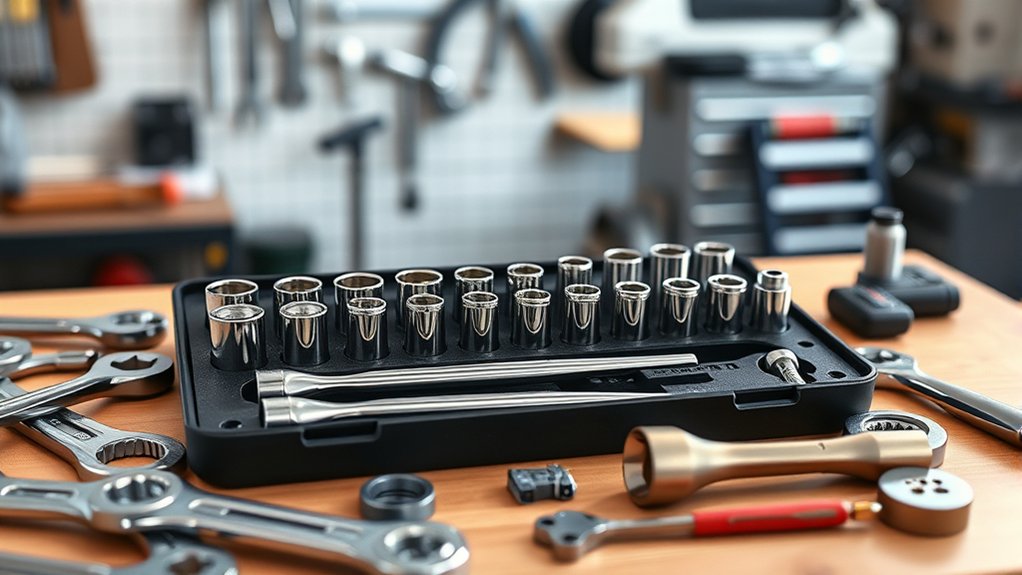
A versatile mechanic’s socket set is the foundation of any well-equipped garage. You’ll use it for routine maintenance, assembly, and countless unexpected repairs.
Choose a set with both metric and SAE sockets so you can handle domestic, imported, and older vehicles without gaps.
A complete socket set includes metric and SAE sizes, ensuring you’re prepared for domestic, imported, and older vehicles.
Look for shallow and deep sockets. Shallow designs fit tight spaces, while deep sockets reach recessed nuts on studs and bolts.
A ratchet with a comfortable grip, multiple drive sizes, and a fine-tooth mechanism gives you better access and control.
Include extensions, universal joints, and adapters to reach awkward fasteners without forcing the tool.
Specialty socket sizes can solve problems that standard kits can’t, especially when you encounter unusual fasteners or manufacturer-specific components.
Keep everything organized with a sturdy case or magnetic socket holders, so you can identify missing pieces quickly.
Select impact-rated sockets if you’ll use powered tools, and inspect each piece regularly for cracks, rounding, or excessive wear.
Add Pliers and Screwdrivers for Small Repairs

Once your socket set covers larger fasteners, add pliers and screwdrivers for smaller repairs and tight spaces. Choose several plier styles so you can grip, bend, cut, and reach components confidently.
Slip-joint pliers handle general tasks, while needle-nose pliers reach narrow gaps and locking pliers hold stubborn parts securely. Include diagonal cutters for trimming wires, hose clamps, and zip ties.
Specialty pliers, such as snap-ring or hose-clamp models, can prevent damage during jobs that require a precise grip.
Build a screwdriver selection around flat-head and Phillips tips in multiple sizes. Add Torx and hex drivers for modern vehicles, which often use these fasteners in interiors and engine compartments.
Precision screwdrivers help you service electronics, small sensors, and delicate hardware without stripping tiny heads. Magnetic tips can keep screws from disappearing into cramped areas.
Inspect handles for comfortable, oil-resistant grips, and replace worn tips promptly. Keeping these tools organized lets you handle quick repairs efficiently and protects surrounding components from accidental scratches.
Lift and Support Your Vehicle Safely

Lift your vehicle only on level, stable ground, using a floor jack rated for its weight and the manufacturer’s approved lifting points. Before lifting, read the vehicle and jack manuals, set the parking brake, and chock the wheels that remain on the ground.
Lift only on level, stable ground using approved lifting points, a properly rated jack, the parking brake, and wheel chocks.
Never rely on the jack alone. Place jack stands beneath approved support points, then lower the vehicle gently onto them. Give the car a firm shake before working underneath, and keep your body clear during every adjustment.
- Inspect equipment: Check the jack, stands, and handles for cracks, bent parts, leaks, or damaged pins.
- Create space: Remove loose tools, keep bystanders away, and ensure you can lower the vehicle quickly.
- Lower carefully: Raise the jack slightly, remove the stands only when clear, and descend slowly.
These safety precautions reduce crushing and rollover risks. If you’re unfamiliar with lifting procedures, get proper training before attempting underbody repairs.
Choose stands with a suitable weight rating, and replace questionable equipment immediately.
Tighten Fasteners With a Torque Wrench
Before tightening any fastener, set your torque wrench to the vehicle manufacturer’s specified value and select the correct socket. Confirm the torque specifications in a reliable service manual, since different bolts may require different settings.
Clean threads and contact surfaces when the manual allows, and replace damaged fasteners rather than forcing them tight.
Keep the wrench aligned with the fastener, then pull smoothly until you hear or feel the click. Don’t jerk, extend the handle, or use the wrench as a breaker bar. These habits can produce inaccurate results or damage the tool.
If a bolt requires a specific tightening sequence or multiple stages, follow each step carefully.
Store the wrench at its lowest adjustable setting after use, not below its minimum. Regular calibration techniques and professional testing help preserve accuracy, especially if you use the tool frequently.
A torque wrench gives you controlled clamping force, helping prevent stripped threads, warped components, and loose connections during repairs.
Read Check-Engine Codes With an OBD2 Scanner
When your check-engine light comes on, plug an OBD2 scanner into the vehicle’s diagnostic port, usually beneath the dashboard, and turn on the ignition without starting the engine.
Follow the scanner’s prompts to read stored diagnostic trouble codes and record each code before clearing anything.
Use the results to guide your next steps:
- Research the code in a trusted repair manual, then compare its meaning with your vehicle’s symptoms.
- Inspect related wiring, connectors, hoses, and fluid levels before replacing parts.
- Repair the underlying problem, clear the code, and drive normally to confirm the light stays off.
A code identifies a system that detected an issue; it doesn’t always pinpoint a failed component.
If the light flashes, stop driving and arrange professional service because the engine may suffer damage.
You can also use the scanner to monitor live data, check readiness monitors, and prepare for emission testing.
Choose a model that supports your vehicle’s protocol and update its software regularly for accurate results.
Frequently Asked Questions
What Safety Gear Should I Wear While Working on My Vehicle?
Wear protective gloves and eye protection whenever you work on your vehicle. Choose gloves that resist chemicals, cuts, and heat, and replace them if they tear.
Use safety glasses for routine tasks, or a face shield when grinding, spraying, or handling pressurized parts. Wear sturdy, closed-toe, slip-resistant shoes, plus fitted clothing that won’t snag.
Disconnect the battery before electrical work, support vehicles with jack stands, and keep a fire extinguisher nearby.
How Should I Organize and Store My Mechanics Tools?
Organize your mechanics tools by type and frequency of use. Keep sockets, wrenches, screwdrivers, and pliers in labeled drawers, while storing specialty tools separately.
Use shadow boards or pegboards to keep essentials visible and accessible. Choose durable Tool storage solutions, such as a rolling cabinet, wall-mounted bins, and magnetic trays.
When organizing garage space, group related equipment, return each item after use, and leave clear walkways for safer, faster repairs every time.
Which Brands Make Reliable Tools for Home Mechanics?
You’ll find reliable home-mechanic tools from brands such as Tekton, GearWrench, Craftsman, Husky, Kobalt, and SK Tools. For premium performance, consider Snap-on, Matco, or Mac Tools, though they cost considerably more.
Compare warranty coverage, replacement policies, and customer reviews before buying. Brand reputation matters, but tool durability depends on materials, manufacturing quality, and intended use.
Start with dependable mid-range tools, then upgrade specialized pieces as your skills and needs grow.
How Often Should I Clean and Maintain My Tools?
Your tools are a shield against wear, so clean them after every use, especially after contact with oil, dirt, or moisture. Wipe surfaces, brush away debris, and dry everything before storage.
Follow a maintenance schedule: inspect hand tools monthly, lubricate moving parts as needed, and check power tools before each project.
Include thorough tool cleaning every few months, replacing damaged pieces promptly. Proper care keeps your equipment reliable, safe, and ready.
What Essential Supplies Should Accompany My Basic Tool Collection?
You’ll want safety glasses, work gloves, penetrating oil, thread locker, degreaser, rags, shop towels, and a reliable flashlight. Add replacement blades, fuses, fasteners, zip ties, and electrical tape for quick repairs.
For tool maintenance, keep wire brushes, lubricant, rust remover, and a calibration check tool nearby. Choose storage solutions such as a sturdy toolbox, labeled organizers, magnetic trays, and wall hooks, so you’ll protect equipment and find everything quickly.
Conclusion
With these five essential mechanics tools, you’ll turn garage frustration into confident progress. A versatile socket set handles major jobs, while pliers and screwdrivers solve small surprises.
A jack and sturdy stands lift your vehicle safely, while a torque wrench delivers precision instead of guesswork. Finally, an OBD2 scanner translates mysterious warning lights into useful information.
You don’t need a professional shop’s inventory. These top mechanics tools give you the essentials to work smarter, safer, and more confidently.