How to Clean Inside Your Car Engine in 5 Easy Steps
How to Clean Inside Your Car Engine? Keeping your car engine clean can feel like a daunting task, and if you’ve ever tried it, you’re not alone. Many people struggle with how to clean inside their car engine without causing damage or making a bigger mess.
If you want to maintain your engine’s performance and appearance but don’t know where to start, you’re in the right place.
To clean inside your car engine safely, first let the engine cool and disconnect the battery. Gather engine-safe degreaser, brushes, gloves, and waterproof covers to protect sensitive parts like air filters and electrical connections.
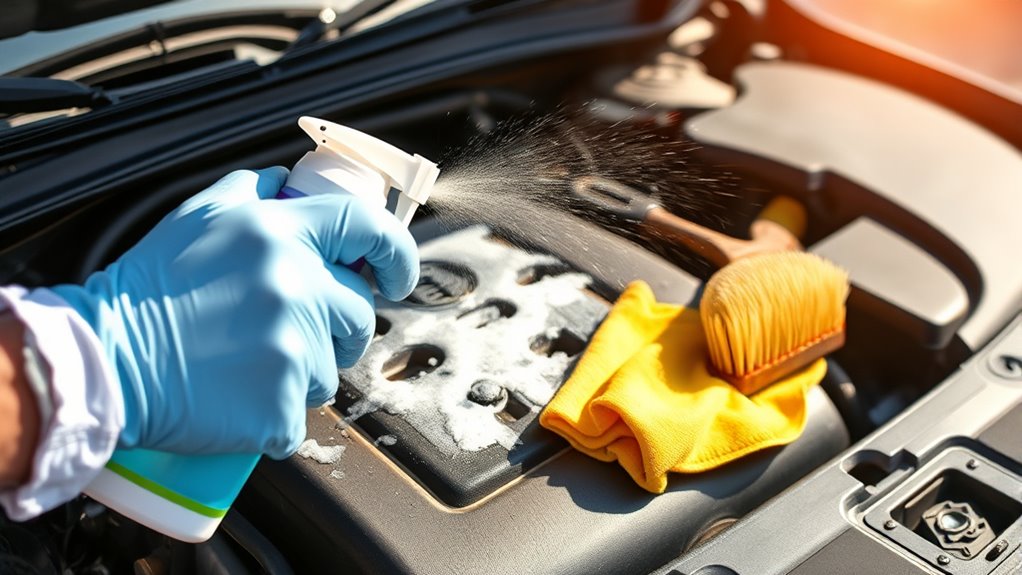
Spray degreaser on greasy areas, wait 10-15 minutes, then rinse gently with low-pressure water. Scrub stubborn grime carefully, dry everything thoroughly, and inspect hoses, belts, and plugs for wear.
Follow these steps, and you’ll keep your engine running smoothly while avoiding damage. There’s more to learn for a thorough clean.
How to Clean Inside Your Car Key Takeaways
- Allow the engine to cool completely before starting to avoid burns and damage.
- Disconnect the battery and cover electrical parts to prevent shorts and water damage.
- Apply engine-safe degreaser to greasy areas and let it sit for 10-15 minutes.
- Gently scrub with soft brushes, then rinse with low-pressure water, making sure to avoid sensitive components.
- Dry thoroughly, inspect for residue or damage, and check hoses, belts, and spark plugs.
How to Prepare Your Car Engine for Safe Cleaning
Before you plunge into cleaning your car engine, you’ll want to make sure it’s cool to avoid burns or damage. Engine cooling is vital because a hot engine can cause cleaning chemicals to evaporate quickly or even cause burns if you touch hot surfaces. Wait at least an hour after turning off your vehicle before starting the cleaning process.
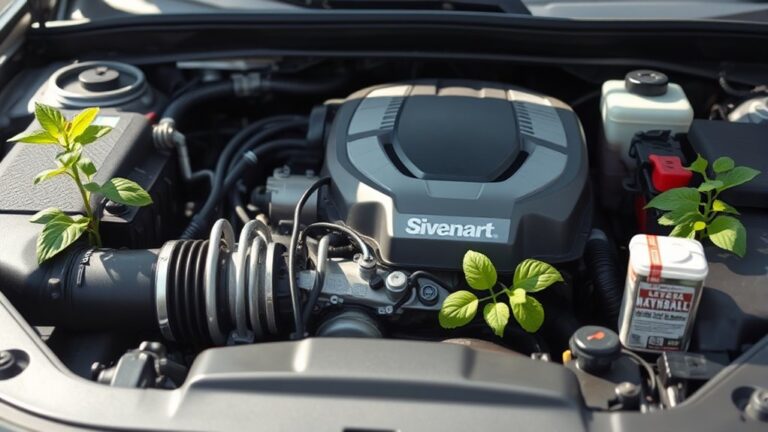
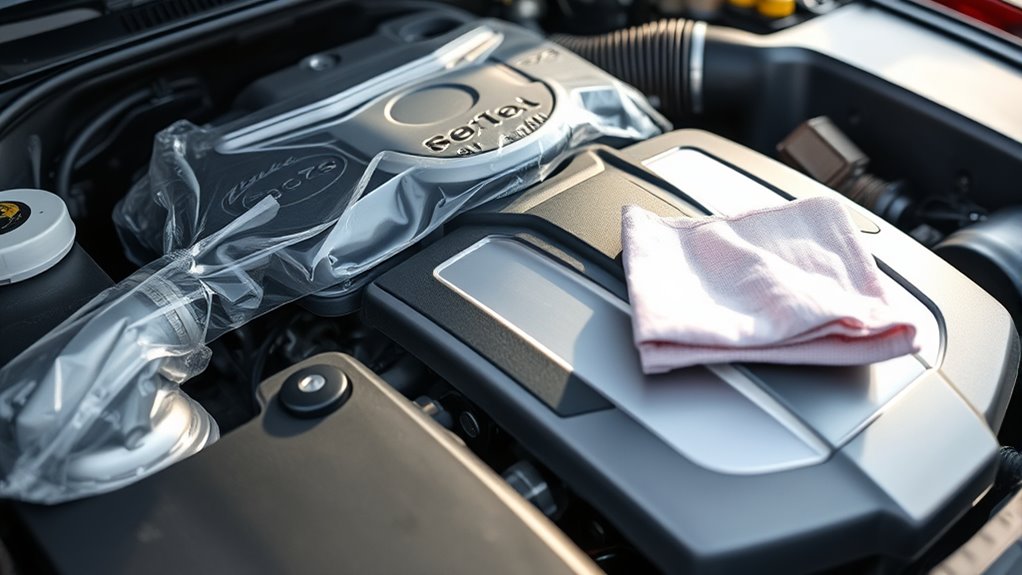
Next, pay close attention to chemical precautions. Use only engine-safe cleaning products and avoid harsh chemicals that can damage sensitive components like rubber hoses or electrical wiring. Cover electrical parts, air intakes, and exposed filters with plastic bags or waterproof covers to prevent water or chemicals from seeping in.
Disconnect your battery to reduce the risk of electrical shorts during cleaning. Taking these preparatory steps guarantees you protect your engine’s delicate parts and maintain safety throughout the cleaning process. Proper preparation sets a solid foundation for effective and safe engine cleaning.
Gather Essential Tools and Supplies for Engine Cleaning
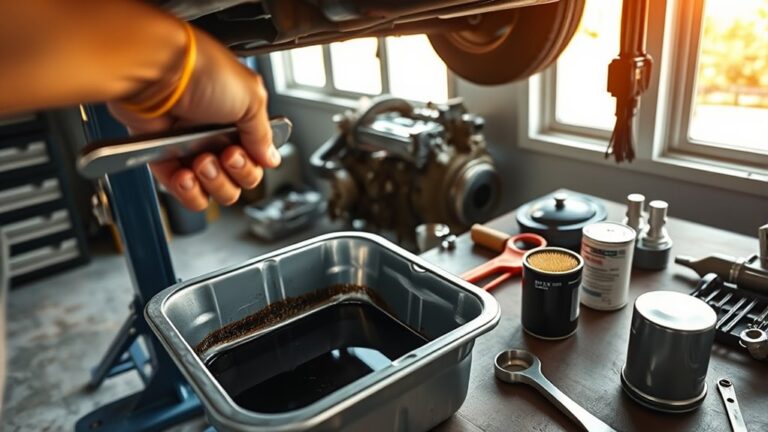
When you’re ready to clean your engine, having the right tools and supplies on hand makes the job smoother and more effective. Proper engine degreasing requires specific items to tackle dirt and grime without damaging parts. Start by gathering these essentials:
- Engine degreaser: Choose a high-quality chemical solution designed specifically for breaking down grease and oil buildup safely.
- Soft brushes and microfiber cloths: These help you apply the degreaser and scrub away grime from tight spots without scratching surfaces.
- Protective gloves and safety goggles: Chemical solutions can be harsh, so protect your skin and eyes while cleaning.
Having these tools ready ensures you can apply the engine degreasing solution thoroughly and efficiently. With the right supplies, you’ll make your cleaning process faster, safer, and more effective. This sets a solid foundation before moving on to deeper cleaning steps.
Keep Sensitive Engine Parts Safe Before Cleaning
Once you have gathered all the necessary tools and supplies, focus on protecting the delicate components of your engine. Start by covering sensitive parts like the air filter and exposed electrical connections with plastic bags or waterproof covers. This prevents water or cleaning solvents from damaging them during the cleaning process.
Avoid spraying engine oil areas directly, as excess moisture can cause contamination or reduce the oil’s effectiveness. If needed, you can remove the air filter temporarily to clean the surrounding area but make sure it’s completely dry before reinstalling.
Moreover, seal any open ports or spark plug holes with clean rags or plugs to stop debris from entering. Taking these precautions ensures you won’t accidentally cause damage or impair your engine’s performance. By safeguarding these vulnerable parts, you set yourself up for a smooth and safe engine cleaning experience without risking costly repairs or malfunctions.
Clean Your Engine Step-by-Step Safely
Although cleaning your engine might seem intimidating, following a clear, step-by-step process will make it manageable and safe. Start by ensuring you understand chemical safety. Wear gloves and goggles to protect yourself from harsh engine degreasing agents.
Cleaning your engine is easy and safe when you follow clear steps and use proper protective gear.
Here’s how to clean your engine safely:
- Prepare the Engine: Cool down your engine and cover sensitive parts like the battery and air intake with plastic bags.
- Apply Engine Degreasing Solution: Spray a quality degreaser evenly on greasy areas. Let it sit for 10 to 15 minutes to break down grime.
- Rinse Carefully: Use a low-pressure hose or spray bottle to rinse off the degreaser without flooding electrical components.
Wrap up Cleaning With Inspection and Maintenance
After rinsing and drying your engine, you should inspect every component closely to guarantee no residue remains and no damage occurred during cleaning. Check hoses, belts, and electrical connections for signs of wear or looseness. Make sure water didn’t pool in sensitive areas.
Next, perform a spark plug inspection to ensure they’re clean and functioning properly, as dirt or moisture can affect ignition. Don’t forget to review your engine oil condition; an engine oil analysis can reveal contaminants or degradation caused by cleaning solvents or water exposure.
If the oil looks cloudy or smells off, change it promptly to protect your engine. Regular maintenance after cleaning keeps your engine running smoothly and extends its life. By combining thorough inspection with proper upkeep, you prevent future issues and maximize the benefits of your cleaning effort.
Taking these final steps ensures your engine stays in excellent condition.
Frequently Asked Questions
Can Engine Cleaning Improve Fuel Efficiency?
Yes, engine detailing can improve your fuel economy by removing dirt, grime, and buildup that may affect engine performance. When you keep your engine clean, it runs more efficiently, reducing strain and improving combustion.
This means your car uses fuel more effectively, helping you save money at the pump. So, investing time in engine detailing isn’t just about looks; it can directly boost how far your fuel takes you.
How Often Should I Clean My Car Engine?
Picture your engine as a heart pumping life into your car. You should clean it every 1-2 years, depending on how dusty or oily it gets.
Regular cleaning helps you spot engine oil leaks early and guarantees battery maintenance stays manageable, preventing corrosion buildup. Don’t wait until grime hides problems.
A clean engine bay keeps everything running smoothly, extending your car’s life and saving you from costly repairs down the road.
Is It Safe to Use a Pressure Washer on My Engine?
Using a pressure washer on your engine isn’t always safe. It can force water into sensitive electrical parts, risking engine safety and causing damage.
If you decide to use a pressure washer, cover exposed components like the alternator and air intake with plastic. Use a low-pressure setting and keep the nozzle at a distance.
Always let your engine cool down before cleaning to avoid thermal shock and potential harm.
Can I Clean My Engine Without Removing Any Parts?
Yes, you can clean your engine without removing parts by using engine degreasing sprays designed for chemical cleaning. Simply spray the degreaser on the dirty areas and let it sit to break down grime. Then rinse carefully with low-pressure water or wipe it down.
Just make sure to cover sensitive electrical components to avoid damage. This method saves time and effort while effectively removing grease and dirt buildup inside your engine bay.
What Are Signs My Engine Needs Professional Cleaning?
If your engine suddenly starts sounding like a rock concert gone wrong or your car’s mood swings between overheating and sluggishness, it’s time to think professional cleaning.
When your engine oil looks like motor sludge and you’ve skipped a coolant flush longer than you admit, your engine’s basically begging for help.
Don’t ignore those warning signs. Pro cleaners can save you from costly repairs and keep your ride running smoothly.
Conclusion
Cleaning your engine is like giving your car a fresh breath of life. By preparing properly, gathering the right tools, protecting sensitive parts, and following each step carefully, you guarantee a safe and effective clean.
Once you finish, inspect and maintain your engine regularly to keep it running smoothly. With a little care, your engine will stay powerful and reliable, ready to take you wherever the road leads.
Remember, regular cleaning inside your car engine is key to maintaining its performance and longevity.