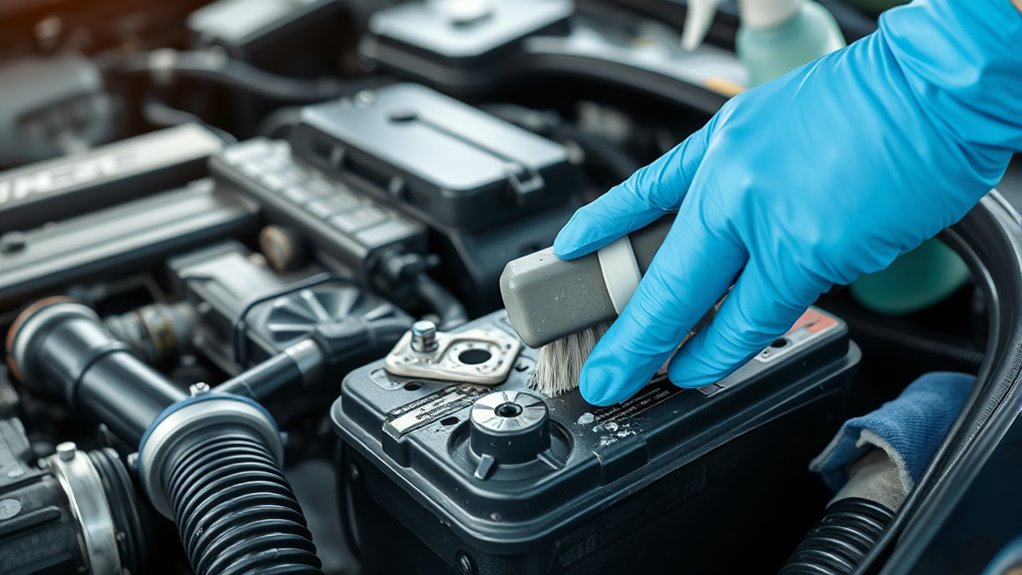
How to Clean the Engine Bay of Your Car in 5 Easy Steps
If you’ve ever tried cleaning your car’s engine bay, you know it can feel overwhelming and tricky to get right. You’re not alone—many people struggle with knowing how to safely and effectively clean this often-neglected area without causing damage. But with the right approach and tools, it’s easier than you might think to refresh your engine bay and keep it looking great.
To clean your car’s engine bay in five easy steps, start by gathering tools like a soft brush, microfiber cloths, degreaser, and safety gear, ensuring the engine is cool and the battery is disconnected.
Next, cover delicate parts with plastic bags to protect them from water. Use engine-safe, biodegradable cleaners to tackle grease. Rinse gently with low-pressure water, then dry thoroughly, especially around electrical components.
Finally, inspect for leaks or damage to keep things running smoothly. Keep going to uncover detailed tips for each step.
Key Takeaways
- Gather necessary tools, ensure the engine is cool, and disconnect the battery before starting the cleaning process.
- Cover delicate parts like the alternator, wiring, and sensors with plastic bags to protect them from water damage.
- Use engine-specific, biodegradable degreasers to safely remove grease without harming components or the environment.
- Rinse gently with low-pressure water, dry thoroughly with microfiber cloths, and use compressed air for tight spots.
- Inspect for corrosion, leaks, or damaged hoses and wires after cleaning, and address any issues promptly to maintain engine health.
Gather Tools and Prepare Your Engine Bay
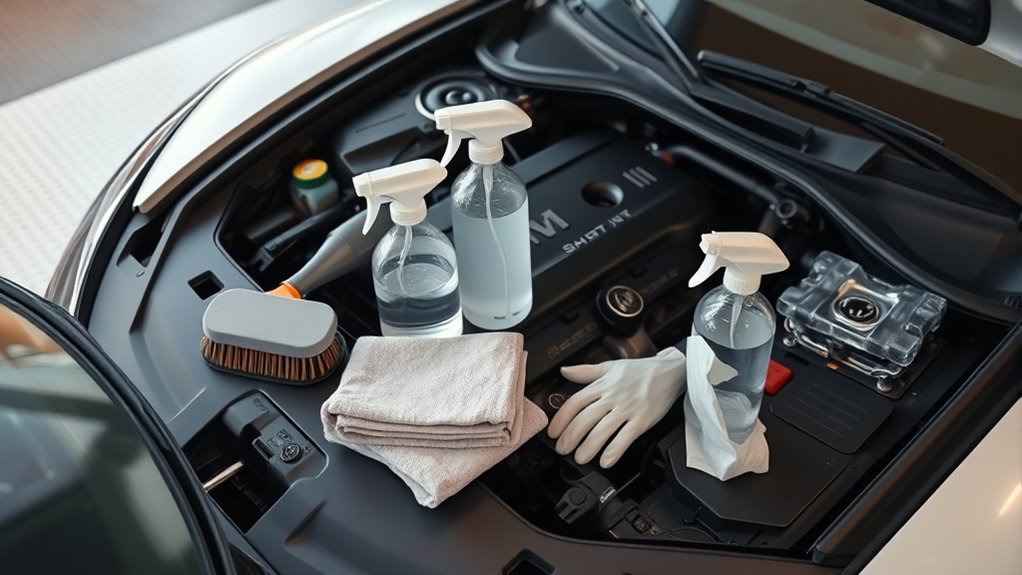
Before you begin cleaning, gather all the necessary tools to make the process smooth and efficient. Start by collecting essentials like a soft brush, microfiber cloths, degreaser, plastic bags, and a hose with a gentle spray nozzle. Keeping your tool organization tight helps you avoid interruptions during the cleaning process. Arrange everything close by so you can work without searching for items.
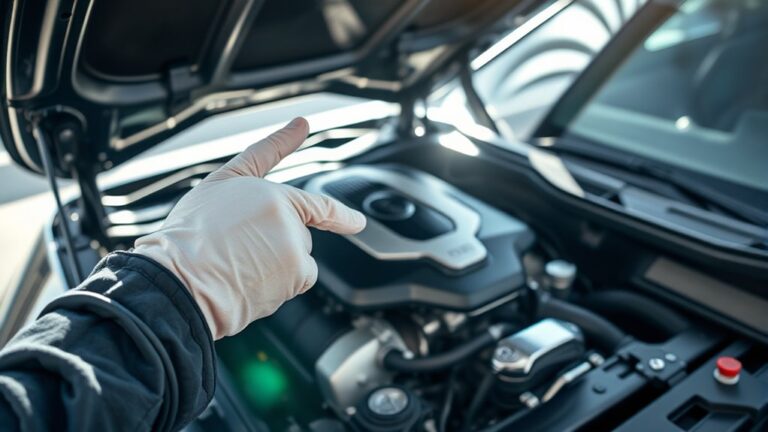
Prioritize engine bay safety by ensuring the engine is cool before touching any components. Wear gloves and safety glasses to protect yourself from chemicals and debris. Disconnect the battery terminals to prevent accidental electrical shorts.
Having your tools ready and organized keeps you focused and reduces risks. By preparing well, you’ll make the task easier and safer, setting yourself up for a thorough and effective engine bay cleaning.
Cover and Protect Delicate Parts Before You Begin
Since water and cleaning products can damage sensitive components, you’ll want to cover parts like the alternator, exposed wiring, and air intake with plastic bags or waterproof materials. These delicate parts are vulnerable to moisture, which can cause electrical shorts or corrosion. Using protective covers guarantees these areas stay dry and safe during your cleaning process. Secure the covers tightly with rubber bands or tape to prevent water from seeping in.
Don’t forget to shield other delicate parts such as sensors, fuse boxes, and battery terminals. Taking the time to properly protect these components can save you from costly repairs later. Make sure each protective cover fits snugly and is durable enough to withstand water sprays.
Choose Safe Cleaning Solutions for Your Engine Bay
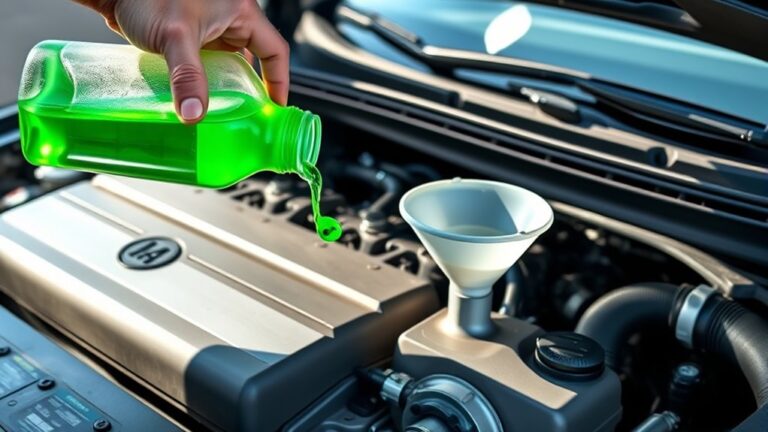
Although you might be tempted to use household cleaners, choosing products specifically designed for engine bays guarantees effective cleaning without harming sensitive components. Household cleaners can trigger harmful chemical reactions that damage wiring or rubber seals.
Plus, engine-specific products minimize environmental hazards by using biodegradable ingredients.
Here’s a quick comparison to help you choose safe cleaning solutions:
| Cleaning Solution | Safety & Effectiveness |
|---|---|
| Engine Degreaser | Targets grease, safe for metals/plastics |
| Biodegradable Cleaners | Eco-friendly, reduces environmental hazards |
| Household Detergents | Risk of chemical reactions, may damage parts |
| Solvent-Based Cleaners | Effective but can corrode or harm rubber |
Rinse and Dry Your Engine Bay Safely
When you rinse your engine bay, you’ll want to use a gentle stream of water to avoid forcing moisture into electrical components or connectors. Avoid high-pressure sprays, which can damage sensitive parts or disrupt engine compartment organization.
Start rinsing from the top, letting water flow downward naturally. This ensures dirt and soap wash away without pooling in crevices.
Begin rinsing at the top so water carries dirt and soap down, preventing buildup in crevices.
After rinsing, dry your engine bay thoroughly using microfiber towels to protect engine bay aesthetics and prevent water spots. You can also use compressed air or a leaf blower to remove moisture from hard-to-reach spots.
Make sure to dry around electrical connectors, fuse boxes, and battery terminals carefully. Doing so keeps your engine compartment organized and reduces the risk of corrosion or electrical issues.
Taking the time to rinse and dry carefully preserves your engine bay’s appearance and helps maintain its overall condition.
Inspect for Issues and Maintain Your Engine Bay After Cleaning
After you’ve thoroughly rinsed and dried your engine bay, take the time to inspect it carefully for any signs of wear, leaks, or damage. Look for engine corrosion, especially around battery terminals and metal parts, as it can cause long-term issues.
Check hoses and belts for cracks or brittleness. Ensuring electrical safety is essential. Verify that wires and connectors are intact and free from moisture.
Maintaining your engine bay after cleaning helps prevent costly repairs and keeps your car running smoothly. Use this quick checklist to guide your inspection:
| Issue | What to Look For |
|---|---|
| Engine Corrosion | White or greenish buildup |
| Leaks | Oil, coolant, or fluid puddles |
| Electrical Safety | Frayed wires or loose connectors |
| Wear & Tear | Cracked hoses or worn belts |
Address any problems promptly to extend your engine’s life and maintain safety.
Frequently Asked Questions
How Often Should I Clean My Engine Bay?
You should clean your engine bay every 6 to 12 months, depending on how often you drive and the conditions you face. Regular engine degreasing helps prevent buildup that can affect performance.
After cleaning, applying protective coatings keeps components safe from dirt and moisture. If you drive in harsh or dirty environments, you might want to clean it more frequently to maintain ideal engine health and appearance.
Can Engine Bay Cleaning Improve My Car’s Performance?
Yes, cleaning your engine bay can improve your car’s performance by preventing dirt buildup that causes overheating or electrical issues. When you clean, choose a mild detergent to avoid damaging sensitive parts.
Always wear protective gear like gloves and goggles to stay safe from chemicals and debris. Keeping your engine bay clean helps maintain proper airflow and guarantees components function efficiently, which can boost your car’s reliability and performance.
Is It Safe to Use a Pressure Washer on My Engine?
You shouldn’t use a pressure washer directly on your engine because it can cause water damage and compromise electrical safety. High-pressure water can force moisture into sensitive components, leading to shorts or corrosion.
Instead, use a gentle spray or a damp cloth to clean. Always cover electrical parts with plastic to protect them. Taking these precautions helps you avoid costly repairs and keeps your engine running smoothly without risking damage.
What Are the Signs of Engine Bay Damage After Cleaning?
You’ll notice engine corrosion if metal parts look rusty or flaky after cleaning. Electrical issues can show up as flickering lights, trouble starting, or blown fuses.
If wires feel brittle or connectors are loose, that’s a red flag. Keep an eye out for damp spots or unusual smells, too. Catching these signs early helps you avoid costly repairs and keeps your engine running smoothly.
Can I Clean the Engine Bay Myself or Should I Hire a Professional?
You can definitely clean the engine bay yourself if you have the right engine cleaning tools and follow DIY maintenance tips carefully. Make sure to cover sensitive parts and use gentle cleaners to avoid damage.
However, if you’re unsure or uncomfortable, hiring a professional is a safer choice. Professionals have expertise and specialized tools to handle tricky areas, ensuring a thorough, damage-free clean without risking your engine’s performance.
Conclusion
You might think cleaning your engine bay is just about making your car look good, but as you protect delicate parts and carefully rinse away grime, you’re actually safeguarding your vehicle’s heart.
By following these simple steps, you’re not only maintaining your engine’s health but also building a habit of care that keeps you connected to your car.
Sometimes, a little cleaning coincides with a lot of love and attention. Remember, regularly cleaning your engine bay is a key part of keeping your car running smoothly.