How to Wash Car Engine Bay in 3 Easy Steps
Keeping your car engine bay clean can feel like a daunting task. You want it to look good and run smoothly, but the thought of tackling all that grease and grime is overwhelming. You’re not alone—many people struggle with how to safely and effectively clean their engine bay without causing damage.
To wash your car engine bay in 3 easy steps, first make sure the engine is completely cool and disconnect the negative battery terminal to avoid shorts.
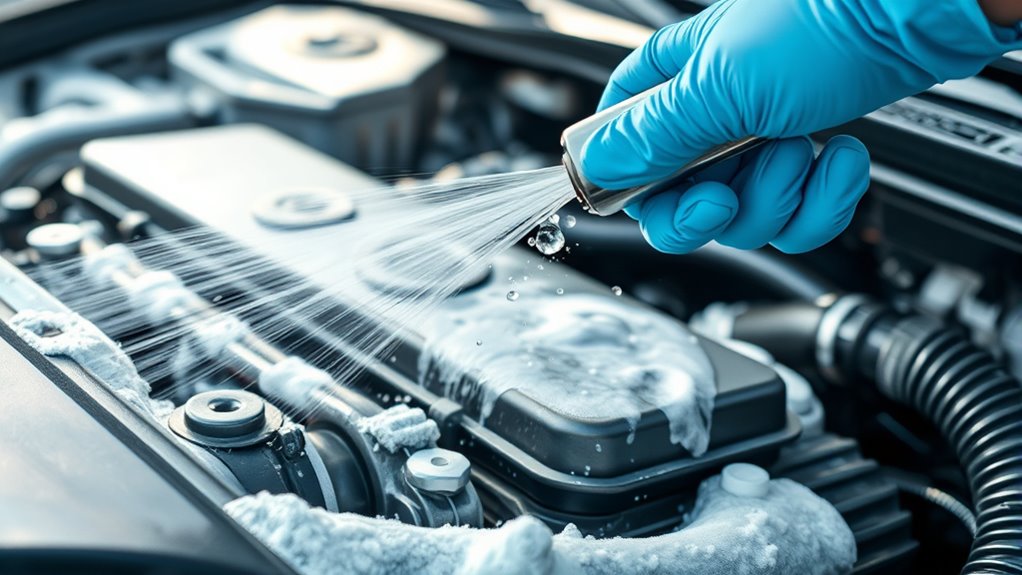
Next, spray degreaser on metal and hoses, scrub gently, and rinse carefully with low-pressure water, steering clear of electrical parts.
Finally, dry thoroughly using microfiber towels and compressed air, then apply protectant to keep components safe.
Following these simple steps will help you keep your engine bay clean and well-maintained. There’s more to investigate for best results.
Key Takeaways
- Ensure the engine is cool before you start, and disconnect the negative battery terminal to avoid any electrical damage.
- Cover battery terminals and sensitive electrical parts with plastic or waterproof tape to keep them protected.
- Apply degreaser generously on metal surfaces and hoses. Let it sit for a bit to loosen grime before you gently scrub.
- Rinse the engine bay carefully with low-pressure water, making sure to avoid spraying directly on electrical components.
- Dry everything thoroughly using microfiber towels and compressed air. Then, apply protectant to hoses and plastic parts to finish up.
Preparing Your Car’s Engine Bay for Cleaning
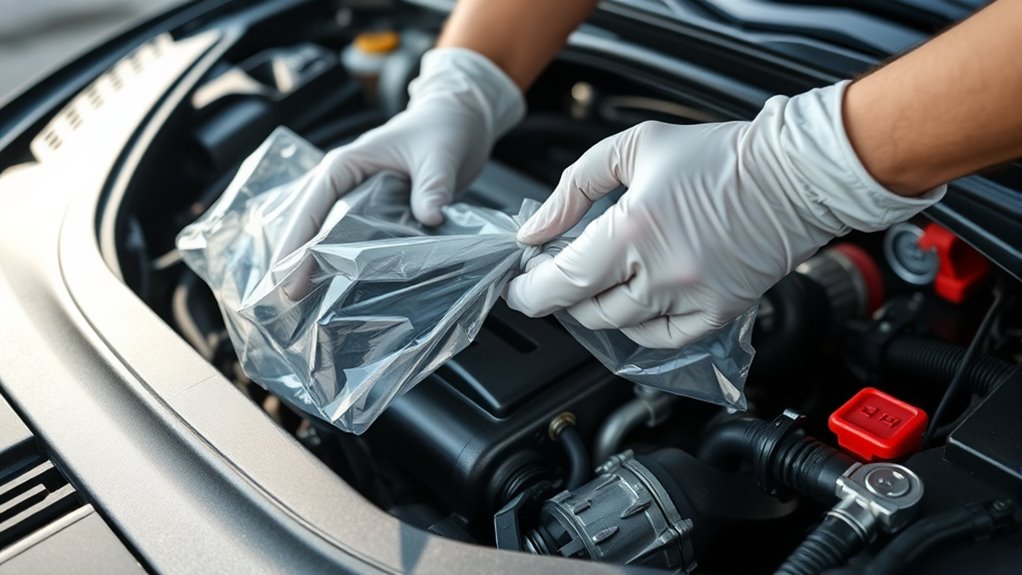
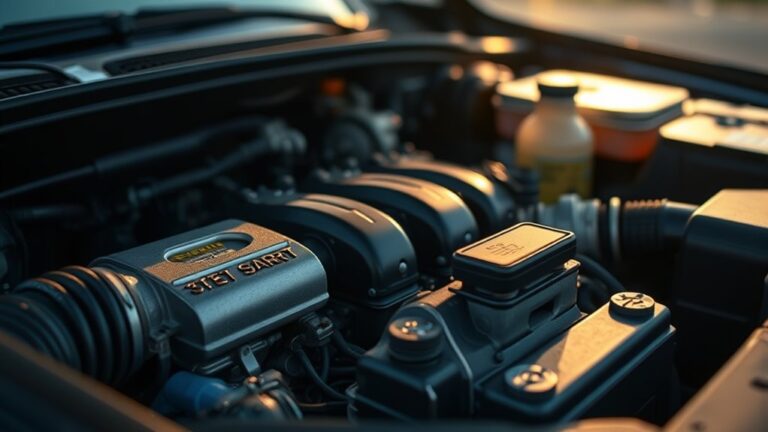
Before you plunge into cleaning your car’s engine bay, you’ll want to make sure the engine is completely cool to avoid burns or damage. Once it’s cool, start by disconnecting the negative battery terminal to prevent any electrical shorts.
Cover the battery terminals with plastic bags or waterproof tape to keep moisture out during cleaning. Next, take a moment to remove any loose debris like leaves or dirt.
Applying an engine degreasing product is your next step. Spray it generously on greasy and oily areas, letting it sit for a few minutes to break down grime. Avoid spraying degreaser directly on electrical components and focus instead on metal surfaces and hoses.
This preparation guarantees that when you move on to washing, the grime loosens, making cleaning more effective. By carefully prepping your engine bay, you protect sensitive parts and set yourself up for a safer, more thorough cleaning.
Washing and Rinsing Your Car’s Engine Bay Safely
Once you’ve prepped the engine bay, you can start washing by gently rinsing away loosened dirt with a low-pressure water spray. Avoid high pressure because it can force water into sensitive electrical parts.
Next, apply an engine degreasing solution to break down grease and grime. Use a soft brush to scrub stubborn areas carefully, helping the degreaser penetrate without damaging components. Let it sit for a few minutes as per the product instructions.
After degreasing, rinse the engine bay thoroughly with low-pressure water to wash away all residues. Be mindful not to soak electrical connectors, and keep water flow controlled. Engine detailing at this stage improves both cleanliness and appearance, ensuring no dirt is left behind.
Drying and Protecting Your Car’s Engine Bay After Washing
After thoroughly rinsing your engine bay, drying it properly helps prevent moisture from causing corrosion or electrical issues. Start by using a clean microfiber towel to gently absorb excess water from all surfaces, focusing on electrical connectors and exposed metal. You can also use compressed air to blow out water from hard-to-reach areas. Avoid using high heat, as it might damage sensitive components.
Next, apply a quality protectant designed for engine bay detailing to rubber hoses, plastic covers, and metal parts. This not only restores shine but also adds a protective layer against dirt and grime buildup. Regular engine compartment maintenance like this extends your engine’s life and keeps it running smoothly.
Finally, allow your engine bay to air dry completely before closing the hood or starting the vehicle. Proper drying and protection are essential steps to guarantee your engine bay stays clean, functional, and free from costly damage.
Frequently Asked Questions
How Often Should I Wash My Car’s Engine Bay?
You should wash your car’s engine bay about once every six months to keep it clean without risking damage. Following engine cleaning tips, always let the engine cool first and cover sensitive parts to avoid water damage.
Safety precautions are essential. Wear gloves and work in a well-ventilated area. If you drive in dusty or muddy conditions often, you might want to clean it more frequently to maintain performance and spot leaks early.
Can Engine Bay Cleaning Improve Car Performance?
Yes, cleaning your engine bay can improve car performance by promoting better engine maintenance. Removing dirt and grime helps prevent overheating and guarantees components function properly.
When you clean, choose the right chemical selection to avoid damaging sensitive parts. Using appropriate cleaners protects wiring and seals, helping your engine run smoothly and efficiently.
Regular engine bay care supports longevity and performance, so don’t skip this essential maintenance step.
What Are the Risks of Not Cleaning the Engine Bay?
If you don’t clean your engine bay, you risk engine corrosion from dirt and grime buildup, which can damage metal parts over time. You might also face electrical malfunctions since debris and moisture can interfere with wiring and connectors.
Ignoring this area can lead to costly repairs and reduced reliability. So, keeping your engine bay clean helps protect essential components and keeps your car running smoothly.
Are There Specific Cleaners Best for Different Engine Types?
You might be surprised to learn that not all cleaning solutions suit every engine type. Gasoline engines often handle degreasers well, but diesel engines need gentler cleaners to avoid damage.
Electric engines? You’ve got to be extra cautious with water-based solutions to protect sensitive components. Selecting the right cleaning solution tailored to your engine type guarantees thorough cleaning without risking harm.
Always check product labels and match them to your engine’s needs.
Can I Use a Pressure Washer on My Engine Bay?
You can use a pressure washer on your engine bay, but you’ve got to be careful. Pressure washer risks include damaging delicate engine bay accessories like wiring, sensors, and connectors.
To avoid problems, keep the pressure low and maintain a safe distance. Cover sensitive parts with plastic bags or wrap them up.
If you’re unsure, a gentle spray from a garden hose might be safer to protect your engine bay accessories from water damage.
Conclusion
Just like a heartbeat keeps your car alive, a clean engine bay fuels its spirit. By prepping carefully, washing gently, and drying thoroughly, you’re giving your engine room to breathe and shine.
Think of this ritual as a spa day for your car’s soul—refreshing, protective, and essential. Keep this care routine, and your engine won’t just run; it’ll roar with pride.
With these simple steps, washing your car engine bay becomes more than maintenance—it’s a way to keep your engine strong and ready for every journey.