What Is a Car Engine and How Does It Work?
If you’ve ever felt overwhelmed trying to understand what makes your car actually move, you’re not alone. Many people struggle to grasp how all those parts under the hood work together. But knowing the basics of your car engine can make a huge difference in how you maintain and enjoy your ride.
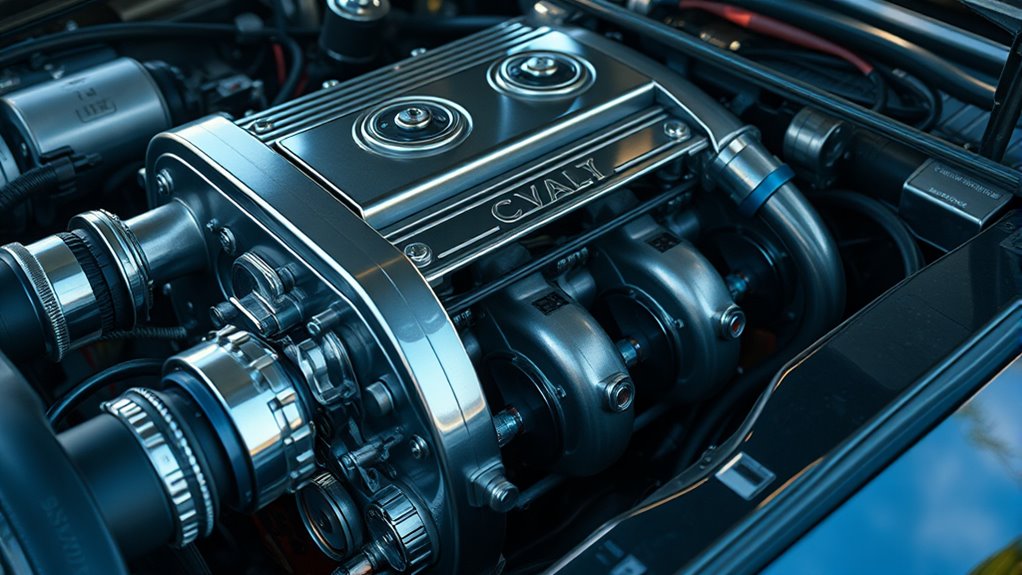
Your car engine turns fuel into motion by burning a precise fuel-air mix inside cylinders. This controlled explosion pushes pistons down, moving the crankshaft and powering your wheels.
Key parts like pistons, valves, and the ignition system work together to keep everything running smoothly. Different engine types affect how your car feels and performs.
If you want to understand how these components impact power, efficiency, and maintenance, you’re in the right place to delve deeper.
Key Takeaways
- A car engine converts chemical energy from fuel into mechanical energy through controlled combustion inside cylinders.
- Pistons move up and down in cylinders, transforming combustion force into linear motion that drives the crankshaft.
- The crankshaft converts pistons’ linear motion into rotational energy to power the vehicle’s wheels.
- Valves and the camshaft regulate fuel intake and exhaust gases, optimizing combustion and engine efficiency.
- Ignition systems precisely time sparks to ignite the fuel-air mixture for smooth, efficient engine operation.
Understanding the Car Engine and Its Importance
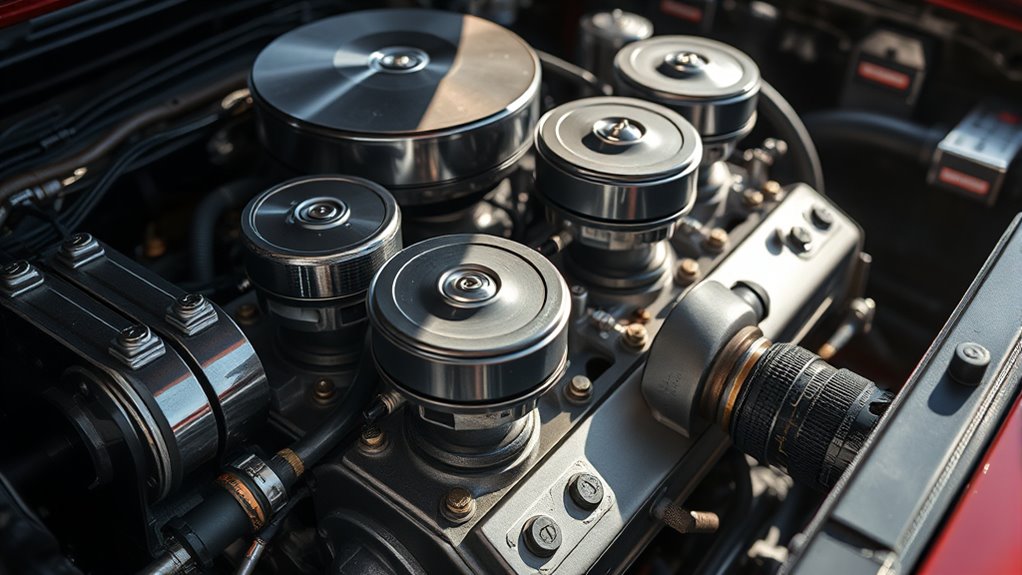
How does a car engine power your vehicle? It’s the heart of your car, converting fuel into the energy needed to move. Understanding the car engine and its significance helps you appreciate how it balances power with responsibility.
You’ll notice engine efficiency plays a vital role. It maximizes the energy drawn from fuel, so you get the best performance without wasting resources. At the same time, emission control systems work hard to reduce harmful gases released into the environment, keeping your car eco-friendly and compliant with regulations.
When you grasp these concepts, you realize that your engine isn’t just about speed or strength; it’s about smart, sustainable operation. By maintaining your engine well, you support both its efficiency and emission control systems, ensuring your car runs smoothly while minimizing its environmental footprint.
This understanding empowers you to care for your vehicle better, making every drive more efficient and responsible.
How a Car Engine Converts Fuel Into Motion
Your car engine turns fuel into motion through a series of controlled explosions inside its cylinders. When you press the accelerator, fuel injection systems spray a precise amount of fuel into each cylinder. This fuel mixes with air and compresses, then ignites, causing a small explosion.
The force pushes the piston down, converting chemical energy into mechanical energy. This up-and-down motion of the pistons spins the crankshaft, which ultimately powers your wheels. Engine efficiency depends on how effectively this process converts fuel into usable power while minimizing waste.
Advanced fuel injection technology plays a key role by delivering fuel more accurately and efficiently than older carburetor systems. This improves combustion and reduces emissions.
Key Components of a Car Engine
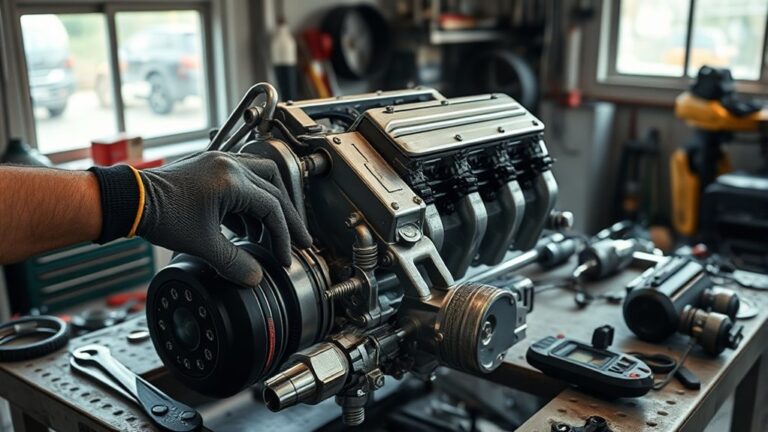
You’ll find that the engine block forms the core structure. It houses the cylinders and pistons that create power. Then, the valves and the camshaft work together to control airflow and fuel intake. When you understand these parts, it’s easier to see how the engine runs smoothly.
Engine Block Structure
Although the engine block might seem like just a solid piece of metal, it plays a crucial role in holding together the car engine’s key components. The engine block, created through a precise engine casting process, forms the core structure where everything fits.
It contains several essential features that keep your engine running smoothly:
- Cylinder bores These are the spaces where pistons move up and down.
- Coolant passages Channels inside the block let coolant flow, preventing your engine from overheating.
- Mounting points These secure other components like the cylinder head and oil pan.
Understanding the engine block structure helps you appreciate how this foundation supports your engine’s performance and durability.
Cylinder and Pistons
The engine block houses the cylinder bores, where the real action happens through the movement of pistons. Each cylinder’s design directly affects engine efficiency and power output, so manufacturers carefully engineer the shape and size to optimize combustion.
As you look closer, you’ll notice pistons fit snugly inside these cylinders, moving up and down to convert fuel energy into mechanical work. Piston materials are vital; they’re typically made from lightweight aluminum alloys to withstand high temperatures and reduce engine weight.
This combination of thoughtful cylinder design and durable piston materials guarantees your engine runs smoothly, efficiently, and reliably. Understanding these components helps you appreciate how your car transforms fuel into motion, one piston stroke at a time.
Valves and Camshaft
Essential to controlling the engine’s breathing, valves regulate the flow of air and fuel into the cylinders. They also allow exhaust gases to exit after combustion. You rely on precise valve timing to guarantee these openings occur at the right moment for efficient engine performance.
The camshaft plays a vital role here; it controls the valve operation by pushing the valves open and letting them close in sync with the pistons.
Here’s what you should know about valves and camshaft:
- The camshaft’s lobes rotate and press on the valves, controlling when they open and close.
- Proper valve timing maximizes power and fuel efficiency.
- Worn camshaft parts can disrupt valve timing, causing rough engine performance.
Understanding this helps you appreciate how your engine “breathes” smoothly.
How Pistons and the Crankshaft Work in a Car Engine
Understanding how pistons and the crankshaft work together is vital to grasping how your car’s engine generates power. The piston design plays an essential role; each piston moves up and down inside the cylinder, converting the energy from combustion into mechanical motion. These pistons are tightly fitted to guarantee maximum efficiency and minimal loss of power.
Meanwhile, the crankshaft mechanics transform the pistons’ linear motion into rotational motion. As the pistons push down, the crankshaft spins, transferring energy to the drivetrain, which ultimately propels your car forward. The crankshaft’s offset design allows it to convert the pistons’ repetitive motion into smooth, continuous rotation.
What Happens Inside the Engine’s Cylinders
As the crankshaft turns, the action inside each cylinder becomes the engine’s heartbeat. Inside the cylinder, a precise sequence unfolds that powers your car and affects everything from engine noise to fuel efficiency. Here’s what happens:
- Intake Stroke The piston moves down, drawing in a fuel-air mixture. This sets the stage for combustion.
- Compression Stroke The piston moves up, compressing this mixture tightly. This helps get the most power and improve fuel efficiency.
- Power Stroke A spark ignites the mixture, causing an explosion that pushes the piston down. This generates the force that turns the crankshaft.
Each cylinder’s rapid cycles create the engine noise you hear. At the same time, their efficiency directly impacts how far you can drive on a tank of gas. Understanding this process helps you appreciate how your engine balances power and economy every second it runs.
How Air and Fuel Affect Engine Performance
While the engine’s cylinders perform their intricate dance, the quality and mixture of air and fuel entering them play a crucial role in determining how well your engine runs. The air intake controls the amount of oxygen available, while the fuel mixture balances gasoline with air to maximize combustion. If this balance is off, you’ll notice reduced power, poor fuel efficiency, or increased emissions.
Here’s how different air and fuel conditions affect engine performance:
| Air Intake Quality | Fuel Mixture Ratio | Effect on Performance | Result |
|---|---|---|---|
| Clean, ample | Ideal (14.7:1) | Efficient combustion | Smooth power, good mileage |
| Restricted | Rich (more fuel) | Incomplete combustion | Power loss, higher emissions |
| Dirty, insufficient | Lean (less fuel) | Overheating, knocking risk | Engine damage, poor efficiency |
| Perfect | Balanced | Peak engine output | Maximum performance |
How Car Engine Ignition Creates Power
Because ignition sparks the combustion process, it’s the key to transforming fuel and air into the mechanical power that moves your car. The ignition system’s main job is to ignite the fuel-air mixture at just the right moment, known as ignition timing, to maximize power and efficiency.
Here’s how it works:
- Spark Plug Function: The spark plug generates a high-voltage spark that ignites the compressed fuel-air mixture inside the combustion chamber.
- Ignition Timing: The engine’s control system precisely controls when the spark occurs, ensuring it happens just before the piston reaches the top of its compression stroke for ideal power.
- Power Generation: The ignition causes combustion, and rapidly expanding gases push the piston down, converting chemical energy into mechanical energy that powers your car.
Common Types of Car Engines and Their Differences
The ignition system plays a vital role in powering your car, but the type of engine under the hood also shapes how that power is generated and delivered. You’ll commonly find inline, V-type, and boxer engines. Inline engines are simple and compact, often providing smoother engine noise and better fuel efficiency.
The ignition system powers your car, while engine types like inline influence noise, efficiency, and performance.
V-type engines pack more cylinders into a smaller space, offering more power but sometimes louder engine noise. Boxer engines, with horizontally opposed cylinders, deliver a lower center of gravity, enhancing handling and reducing vibration.
You’ll also encounter gasoline and diesel engines, each with different combustion methods affecting fuel efficiency and performance. Gasoline engines usually run quieter but may consume more fuel, while diesel engines offer better fuel efficiency but tend to produce more engine noise.
Understanding these types helps you choose an engine that fits your driving style and priorities, whether you value quiet rides, fuel economy, or raw power.
Common Engine Problems and Their Effects
You’ll want to keep an eye out for overheating issues because they can cause serious engine damage if you ignore them. And then there are oil leaks—these are pretty common and can lead to poor lubrication, which means more engine wear. Knowing about these problems really helps you keep your car running smoothly.
Overheating Issues
When your engine starts to overheat, it can quickly lead to serious damage if you don’t address the issue promptly. Your car’s coolant system plays a vital role in regulating engine temperature, so any failure here can cause overheating.
Keep an eye on your temperature gauge. It’s your first warning sign. Here’s what you should do if overheating occurs:
- Stop driving immediately to prevent damage.
- Check the coolant level once the engine cools down.
- Inspect for leaks or damaged hoses in the coolant system.
Ignoring overheating can cause warped cylinder heads, blown head gaskets, or even complete engine failure. Regular maintenance of the coolant system and monitoring the temperature gauge guarantees your engine stays within safe operating limits.
Oil Leaks Impact
How do oil leaks affect your engine’s performance and longevity? When oil leaks occur, they often stem from worn or damaged engine seals. These seals keep oil contained within the engine, lubricating vital components.
If oil leaks, your engine won’t get the lubrication it needs, causing increased friction and wear on parts. This can lead to overheating and even engine failure if not addressed promptly.
Moreover, oil leaks can create slippery surfaces under your car, posing safety hazards. You might also notice a burning smell or smoke, signaling oil dripping onto hot engine parts.
To protect your engine, regularly check for oil leaks and replace faulty engine seals. Catching leaks early helps maintain your engine’s efficiency and extends its life.
How Regular Maintenance Keeps Your Engine Running Smoothly
Although a car engine is designed to endure thousands of miles, regular maintenance plays a crucial role in keeping it running smoothly and efficiently. By staying on top of maintenance, you guarantee your engine maintains ideal fuel efficiency and meets emissions control standards.
Regular maintenance ensures your car engine runs efficiently, maintains fuel economy, and meets emissions standards.
Here are three essential tasks you shouldn’t overlook:
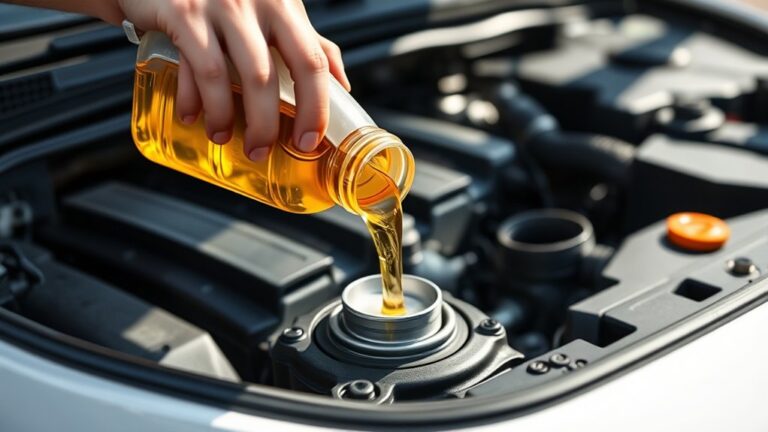
- Change the oil and filter regularly: Fresh oil lubricates engine parts, reducing wear and preventing overheating. This keeps performance steady.
- Replace air filters: Clean air filters improve air flow, boosting fuel efficiency and lowering harmful emissions.
- Check spark plugs and ignition system: Well-functioning spark plugs ensure efficient combustion. This helps your engine run smoothly and reduces fuel waste.
Frequently Asked Questions
How Do Electric Car Engines Differ From Traditional Car Engines?
Electric car engines use electric motors instead of combustion engines, so you don’t deal with fuel or emissions. You’ll notice they’re quieter and have fewer moving parts, making them easier to maintain.
Plus, they use regenerative braking, which recovers energy when you slow down, extending your battery life. Unlike traditional engines that burn gasoline, electric motors deliver instant torque, giving you quick acceleration and a smoother ride overall.
What Role Does Engine Oil Play in Engine Performance?
Imagine you’re driving through a long road trip; without proper engine oil, your car could overheat and seize. Engine oil plays a critical role by maintaining the right oil viscosity, ensuring it flows smoothly through the lubrication system.
This reduces friction between moving parts, preventing wear and tear. If you skip oil changes, your engine’s performance drops, and damage becomes more likely.
How Has Car Engine Technology Evolved Over the Last Century?
Over the last century, engine design has evolved dramatically to boost efficiency and power. You’ll notice that older carbureted systems have been replaced by precise fuel injection, improving fuel delivery and reducing emissions.
Engines have become more compact and lightweight, incorporating advanced materials and computer controls. These changes mean your car runs smoother, uses less fuel, and produces fewer pollutants compared to early engines.
All in all, this makes driving more efficient and environmentally friendly.
Can Engine Modifications Improve Fuel Efficiency?
Yes, engine modifications can improve fuel economy if you choose them wisely. By upgrading components like air filters, exhaust systems, or tuning the engine control unit, you can boost combustion efficiency and reduce fuel consumption.
The modification benefits include better throttle response and optimized fuel delivery, helping you save money on gas. However, not all mods improve fuel economy, so focus on those designed specifically for efficiency rather than just power.
What Safety Features Protect the Engine During a Collision?
Like a knight’s armor guarding its charge, your car uses collision sensors to detect impact and swiftly shut down the engine, preventing further damage. Engine cooling systems also play an essential role by managing heat spikes during crashes, avoiding overheating.
These safety features work together to protect your engine, ensuring it survives the unexpected and keeps you moving safely after a collision. You can trust they’re watching out for your engine’s wellbeing.
Conclusion
Now that you know how a car engine works, you can appreciate the incredible machine under your hood. It’s like a heart powering your ride, turning fuel into unstoppable motion.
By understanding its parts and ignition process, you’ll spot problems before they become disasters. Keep up with regular maintenance, and your engine will run smoother than a dream for miles and miles.
Don’t let neglect turn your powerhouse into a pile of junk! Remember, taking care of your car engine is the key to keeping your vehicle running strong for the long haul.