7 Steps to Work on Car Engines Like a Pro
Working on car engines can feel overwhelming, especially when you’re just starting out or trying to fix a tricky problem. You’re not alone—many people struggle to understand how engines work and where to begin. But with the right guidance, tools, and know-how, you can gain confidence and actually enjoy the process.
First, understand key engine parts like pistons, crankshafts, and valves to grasp how your engine works. Next, gather essential tools such as wrenches, multimeters, and scanners.
Always disconnect the battery safely and wear protective gear before accessing the engine.
Diagnose common issues like misfires or leaks, then perform routine maintenance like oil changes and coolant checks. When needed, make repairs by replacing worn parts and finally fine-tune your engine for smooth performance.
Follow these steps, and you’ll master working on engines with confidence.
Key Takeaways
- Understand engine components like pistons, crankshaft, camshaft, and valves to diagnose and repair effectively.
- Always use proper tools and safety gear. Disconnect the battery by removing the negative terminal first.
- Diagnose issues early by checking for misfires, leaks, warning lights, and unusual noises.
- Perform routine maintenance such as oil changes, coolant checks, and inspecting belts and filters regularly.
- Follow manufacturer guidelines during repairs, use quality parts, and verify engine performance after reassembly.
Understand the Basic Components of a Car Engine
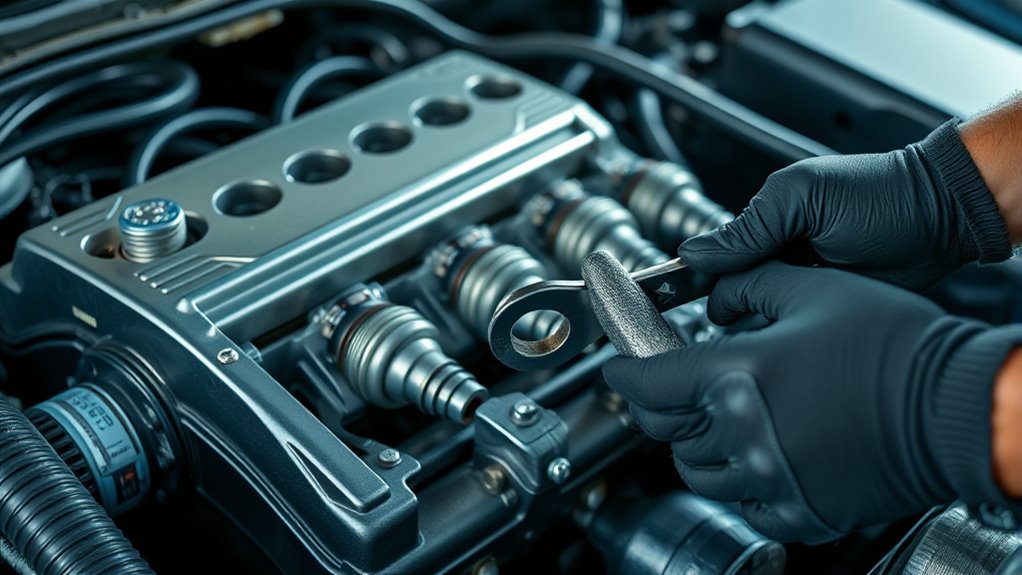
How does a car engine actually work? You’ll first want to understand its basic components to grasp the process. At the heart of the engine are the pistons, which move up and down inside cylinders.
To understand how a car engine works, start by learning about pistons moving inside cylinders.
This piston movement is essential because it converts fuel into mechanical energy. When fuel injection delivers a precise mix of air and fuel into the combustion chamber, it ignites, causing the pistons to move.
This movement then powers the crankshaft, which ultimately drives your car’s wheels. Besides pistons and fuel injection systems, you should also know about the camshaft, valves, and spark plugs. They all coordinate to control when fuel enters and exhaust gases exit.
Once you get familiar with these parts, you’ll have a solid foundation to start working on engines like a pro. Understanding this interaction helps you diagnose problems and perform repairs effectively.
Gather Essential Car Engine Repair Tools
Before you start working on your car engine, make sure you have the right hand tools, diagnostic equipment, and safety gear. These essentials will help you tackle repairs efficiently and protect yourself from injury.
Must-Have Hand Tools
To tackle car engine repairs effectively, you’ll need a solid set of essential hand tools at your disposal. Start with specialized wrench sets. They’re designed to fit various bolt sizes and shapes, making your job easier and preventing damage to fasteners.
Precision screwdrivers are just as important, especially for handling small screws in delicate engine components. Alongside these, include pliers, ratchets, and socket sets to cover most tasks.
Don’t forget a quality hammer and adjustable wrench for versatility. Having these tools within reach guarantees you can work efficiently without scrambling for the right equipment.
Investing in durable, well-made hand tools not only speeds up repairs but also protects your engine parts from accidental damage. With these essentials, you’re set to approach car engine work like a pro.
Diagnostic Equipment Essentials
Having the right hand tools sets the foundation, but diagnosing engine issues accurately requires specialized equipment. To work like a pro, you need reliable diagnostic equipment that interfaces with your car’s computer system.
A quality OBD-II scanner helps you read error codes from engine sensors, pinpointing problems quickly. Multimeters allow you to test electrical circuits, ensuring sensors and wiring function properly.
Don’t overlook tools like fuel pressure gauges and vacuum testers, which provide insights into engine performance. With this equipment, you’ll identify issues faster, avoid guesswork, and make informed repairs.
Investing in essential diagnostic equipment not only saves time but also boosts your confidence in tackling engine problems accurately every time.
Safety Gear Importance
Many professionals swear by wearing proper safety gear whenever they work on car engines, and you should too. Protective clothing shields your skin from burns, cuts, and harmful chemicals, while eye protection guards against debris and unexpected splashes.
Before diving in, make sure you put on gloves, a durable long-sleeve shirt, and safety goggles or glasses. This gear isn’t just a suggestion; it’s essential for preventing injuries that could sideline your progress.
Safely Disconnect and Access the Engine
Before you start working, make sure to disconnect the battery properly to avoid any electrical hazards. It’s a simple step, but it makes a big difference in keeping you safe. Also, always wear protective gear like gloves and safety glasses—these protect you from any unexpected sparks or debris.
Next, clear the engine area so you have easy access and a clean workspace. Having everything organized not only helps you work more efficiently but also reduces the chance of accidents. Taking these precautions will make your job smoother and safer.
Disconnect Battery Properly
Two simple steps will keep you safe when disconnecting your car battery: always remove the negative terminal first and never let the wrench touch both terminals simultaneously. This prevents short circuits and sparks, which is vital for battery safety.
Start by loosening the negative terminal clamp with a wrench, then remove it completely. Next, do the same for the positive terminal.
Before you begin any work on your engine, perform voltage testing with a multimeter to confirm the battery is fully disconnected and there’s no residual power. This step verifies your safety and protects your vehicle’s electrical system.
Properly disconnecting the battery not only safeguards you from shocks but also prevents damage to sensitive engine components. This makes your engine work smoother and safer.
Use Protective Gear
Wearing the right protective gear is essential when you disconnect the battery and access your engine. Always put on safety glasses to shield your eyes from sparks, debris, or harmful fluids.
Protective clothing, like long sleeves and gloves, will guard your skin against burns, cuts, and chemical exposure. Avoid loose clothing or jewelry that could get caught in moving parts.
Make sure your gloves provide a good grip but still allow you to handle tools precisely. By gearing up properly, you reduce the risk of injury and work more confidently.
Don’t skip this step. Your safety comes first, and wearing the right gear makes every engine task safer and smoother. This simple habit keeps you protected throughout your car maintenance process.
Clear Engine Area
Once you’ve secured your protective gear, you’ll need to clear the engine area by safely disconnecting the battery and removing any obstructions. Start by unplugging the negative terminal to prevent electrical hazards.
Next, take out loose items like tools or covers that block your access. This step is essential for effective engine cleaning and debris removal, ensuring nothing interferes with your work.
Use a soft brush or compressed air to clear dirt and leaves from tight spots without damaging components. By maintaining a clean workspace, you’ll spot leaks or worn parts more easily and avoid contaminating engine parts.
Clearing the engine area properly sets the stage for smooth repairs and helps you work like a pro every time.
Diagnose Common Car Engine Problems
How do you pinpoint what’s wrong when your car engine acts up? Start by checking for common issues like engine misfire or oil leaks. An engine misfire often causes rough idling or hesitation during acceleration. Oil leaks can lead to low oil levels and engine damage if left unchecked.
Use this quick reference to spot symptoms and possible causes:
| Symptom | Possible Cause |
|---|---|
| Rough idling | Engine misfire |
| Visible oil spots | Oil leaks |
| Engine warning light | Sensor failure or misfire |
Listen for unusual noises and watch for warning lights on your dashboard. Catching these early signs helps you fix problems before they escalate. Keeping an eye on these common issues ensures your engine runs smoothly and avoids costly repairs.
Perform Routine Engine Maintenance Tasks
Even if your engine seems fine, you should perform routine maintenance to keep it running efficiently and prevent breakdowns. Regular upkeep helps you catch minor issues before they escalate, saving time and money. Start by checking your engine oil frequently; clean oil lubricates parts and prevents wear.
Next, monitor coolant levels to avoid overheating, which can severely damage your engine.
Here are three essential maintenance tasks you should do regularly:
- Change engine oil and oil filter according to your vehicle’s schedule.
- Inspect and top off coolant levels to maintain ideal engine temperature.
- Check belts and hoses for wear or leaks to prevent unexpected failures.
Repair Car Engine Issues Effectively
Although routine maintenance can prevent many problems, you’ll still need to repair engine issues when they arise. Start by diagnosing the problem accurately. Listen for unusual noises, check for leaks, and scan for error codes.
If your engine runs roughly or stalls, your fuel system might be clogged or malfunctioning. Clean or replace fuel filters and inspect fuel injectors to restore proper flow.
When wear is severe, an engine overhaul might be necessary. This involves disassembling key components to replace worn parts like pistons, rings, and bearings. This ensures your engine regains its original performance.
Don’t overlook the cooling system and ignition components during repairs, as these can affect engine health. Use manufacturer guidelines and quality parts during every repair step to guarantee durability.
Test and Fine-Tune Your Engine After Repairs
Why should you test and fine-tune your engine right after repairs? Because engine tuning ensures everything runs smoothly and delivers peak performance. Skipping this step can lead to overlooked issues or subpar performance, wasting your repair efforts.
After repairs, start by running your engine and closely listen for unusual sounds or vibrations. Next, monitor essential parameters like idle speed and fuel mixture. Fine-tune adjustments will help you achieve performance optimization, improving fuel efficiency and power output.
Focus on these key steps for effective testing and tuning:
- Check for leaks or irregular noises during a test drive
- Use diagnostic tools to read engine data and spot anomalies
- Adjust timing, fuel delivery, and idle settings to optimize engine response
Frequently Asked Questions
How Do I Choose the Right Engine Oil for My Car?
You choose the right engine oil by first checking your car’s manual for the recommended oil viscosity, like 5W-30 or 10W-40. Then, decide between synthetic vs conventional oil. Synthetic offers better protection and lasts longer but costs more. Conventional is cheaper but may need more frequent changes.
Consider your driving conditions and budget to pick the best option that keeps your engine running smoothly and efficiently.
What Are the Signs of a Failing Car Battery?
Did you know that nearly 50% of car breakdowns are battery-related? You’ll notice signs like slow engine cranking, dim headlights, or a check engine light.
Battery maintenance is essential. Regularly clean terminals and check fluid levels. Using proper charging techniques, like a smart charger, can extend battery life.
If your car struggles to start or electronics act up, it’s time to test your battery before it leaves you stranded.
How Often Should I Replace My Car’s Timing Belt?
You should replace your timing belt every 60,000 to 100,000 miles, depending on your car’s make and model. Don’t wait for it to break because it can cause serious engine damage.
When you schedule timing belt replacement, also check your engine oil selection. Using the right oil helps keep your engine running smoothly and can extend the life of components connected to the belt.
Always follow your manufacturer’s recommendations to avoid costly repairs.
Can I Upgrade My Engine for Better Performance?
Absolutely, you can upgrade your engine for better performance. Imagine your car roaring to life with improved power and responsiveness. That’s what engine tuning and performance upgrades do.
By adjusting fuel delivery, ignition timing, or adding components like turbochargers, you access hidden potential. Just remember, each tweak requires careful planning to keep reliability intact.
With the right upgrades, you’ll feel every thrilling second behind the wheel like never before.
What Are the Environmental Impacts of Engine Repairs?
When you work on engine repairs, you should consider the environmental impacts like waste and emissions. Proper, eco-friendly disposal of old parts and fluids prevents harmful chemicals from polluting soil and water.
Also, maintaining your engine can lead to emission reduction, improving air quality. By following these practices, you minimize your environmental footprint while keeping the engine running efficiently.
You’ll feel good knowing you’re helping both your car and the planet.
Conclusion
Just like tuning a delicate instrument, working on your car engine lets you harmonize every part to perform seamlessly. By mastering these steps, you’re not just fixing metal and wires—you’re igniting the heart of your vehicle.
With each repair, you fuel your confidence and independence, turning challenges into triumphs. Keep your engine and your spirit running strong, and you’ll always be ready to hit the road with power and pride.
Follow these 7 steps to work on car engines like a pro, and watch your skills—and your ride—transform.