Automobile Brake Repair for Ford Vehicles: The Best Guide
Automobile Brake Repair for Your brakes are, without question, the most important safety system in your vehicle. Whether you drive a Ford F-150 hauling equipment to a job site, a Ford Escape shuttling kids to school, or a Ford Mustang enjoying a weekend drive, dependable brakes are non-negotiable. Automobile brake repair is one of the most common maintenance needs for any driver, and Ford owners are no exception — in fact, understanding how Ford’s braking systems are engineered can help you spot problems early, make smarter repair decisions, and avoid unnecessary expense.
This guide covers everything you need to know about automobile brake repair as it relates to Ford vehicles, from how the system works to warning signs, DIY options, professional repair costs, and maintenance tips to keep your Ford stopping safely for years to come.
Why Automobile Brake Repair Deserves Priority
Unlike some maintenance issues that primarily affect comfort or fuel efficiency, brake problems go straight to the heart of vehicle safety. A worn brake pad or a leaking brake line isn’t just an inconvenience — it’s a risk to you, your passengers, and everyone else on the road. This is especially true for larger, heavier Ford models like the F-150, Super Duty trucks, and Expedition SUVs, where stopping distances are already longer due to vehicle weight, and any degradation in braking performance can have serious consequences.
Automobile brake repair is also an area where minor issues compound quickly. A squeaky brake pad ignored for a few thousand miles can wear down to metal-on-metal contact, damaging your rotors and turning an affordable pad replacement into a much pricier rotor and pad job. Staying attentive to your Ford’s braking system and addressing issues promptly is one of the smartest ways to protect both your safety and your wallet.
How Ford Braking Systems Work
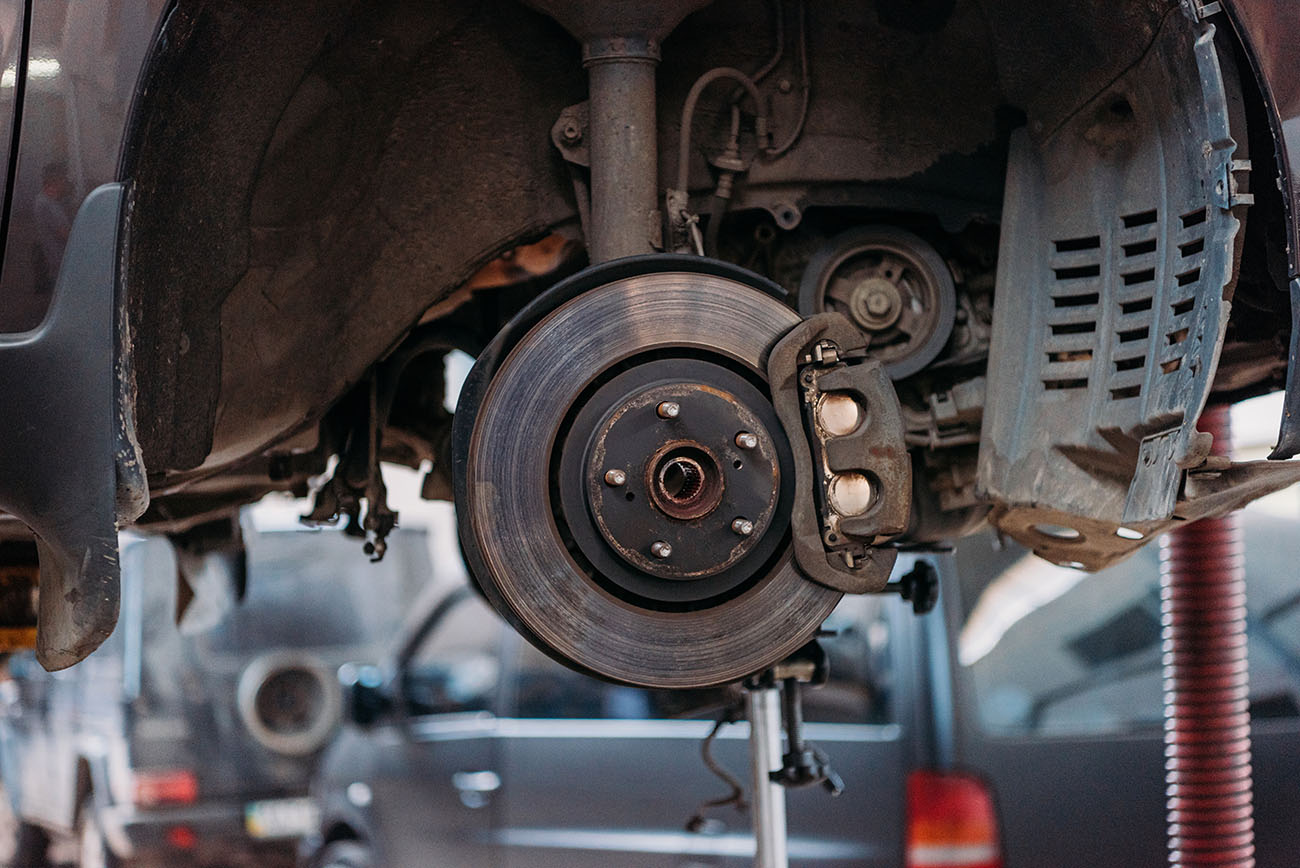
Most modern Ford vehicles use a hydraulic disc brake system on all four wheels, though older or budget-trim models sometimes retain rear drum brakes. Understanding the basic components helps make sense of common problems and repair recommendations.
Core Components
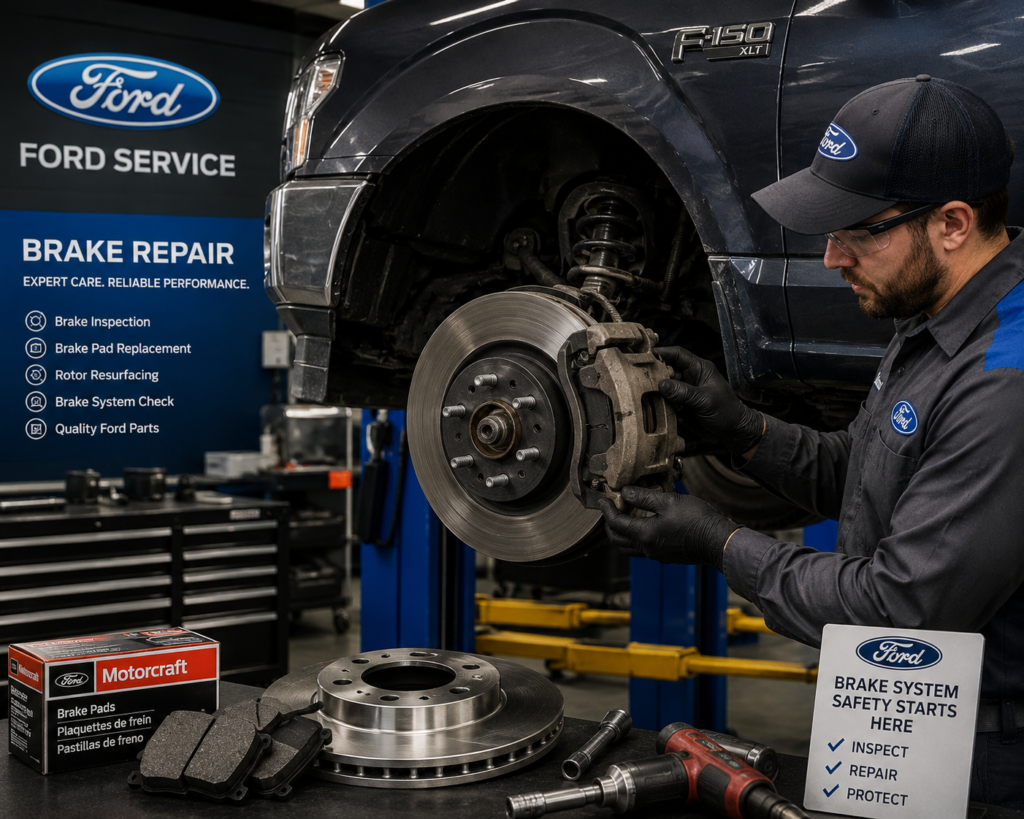
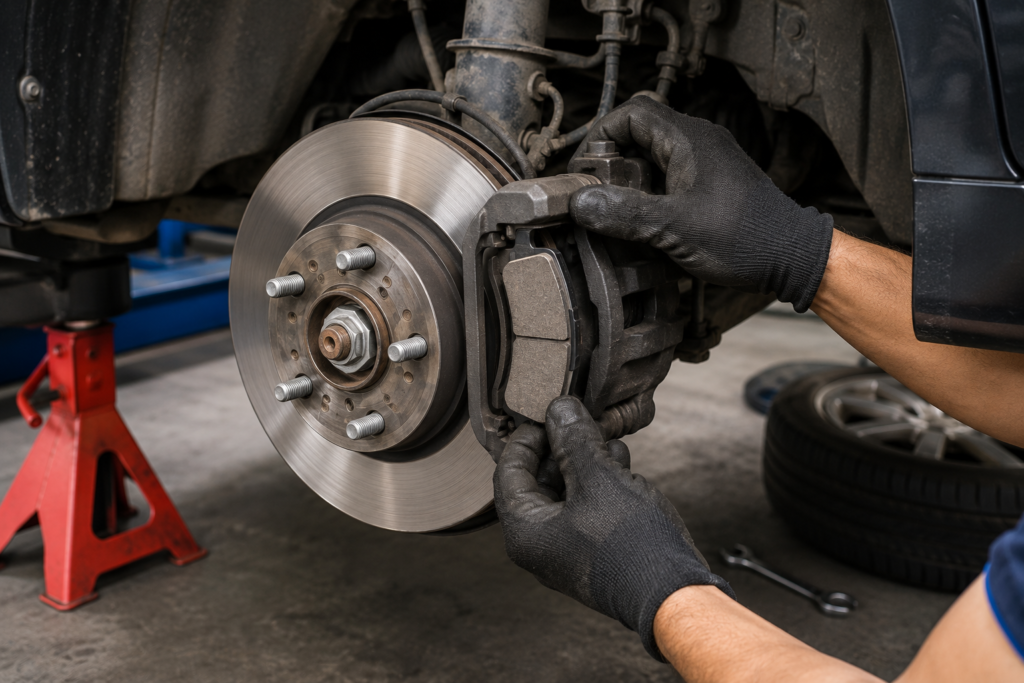
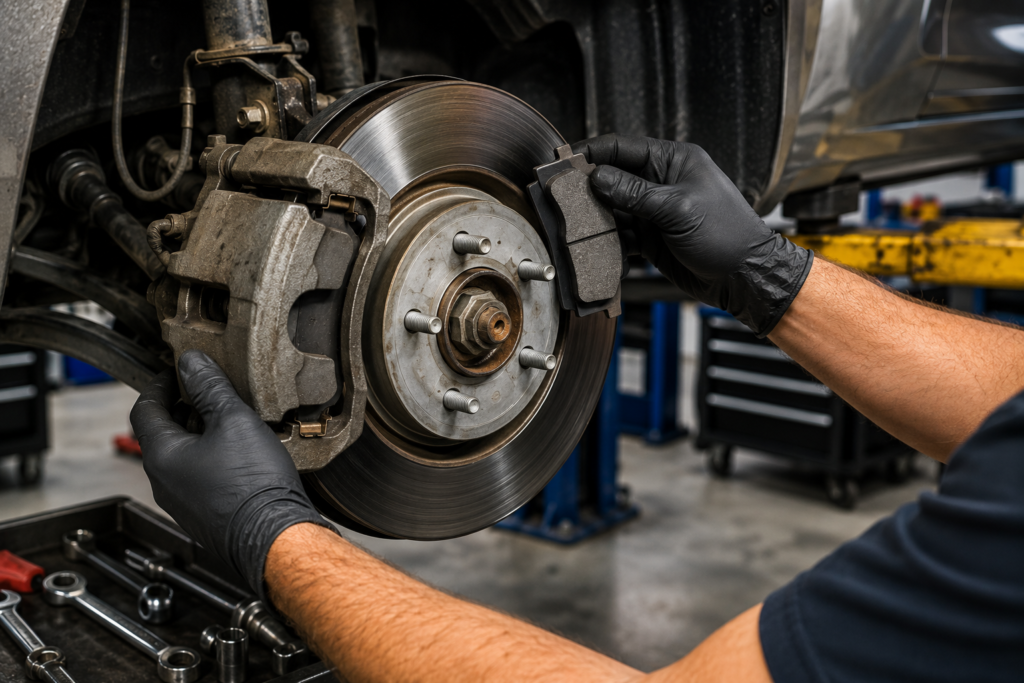
- Brake Pads: These friction materials press against the rotor to slow the wheel. Ford vehicles typically use ceramic, semi-metallic, or organic pads depending on the model and trim level.
- Rotors (Discs): The metal discs that the brake pads clamp onto. Ford trucks and SUVs often use larger, vented rotors to handle additional heat generated by towing and hauling.
- Calipers: These house the pistons that push the brake pads against the rotor when you press the brake pedal.
- Brake Lines and Hoses: These carry hydraulic brake fluid from the master cylinder to each wheel, transmitting the force from your foot on the pedal to the calipers.
- Master Cylinder: Converts the mechanical force of your foot on the pedal into hydraulic pressure that’s distributed throughout the brake system.
- Brake Fluid: The hydraulic fluid that transmits force through the lines. Most Ford vehicles use DOT 3 or DOT 4 brake fluid, and it should be flushed periodically since it absorbs moisture over time.
- ABS (Anti-lock Braking System): Standard on virtually all modern Ford vehicles, this system prevents wheel lockup during hard braking by rapidly modulating brake pressure, helping maintain steering control.
- Parking Brake: Many newer Ford models, including the Explorer and Escape, use an electronic parking brake activated by a switch rather than a traditional lever or pedal.
Understanding this system is essential context for automobile brake repair, since nearly every brake issue traces back to wear, contamination, or failure in one of these components.
Common Signs Your Ford Needs Brake Repair
Recognizing the warning signs of brake trouble early can prevent a routine repair from becoming a safety hazard.
1. Squealing or Squeaking Noises
Most Ford brake pads include a small metal wear indicator that creates a high-pitched squeal when the pad material is getting thin. This is a built-in early warning system, and hearing it means it’s time to schedule automobile brake repair before the pads wear down further.
2. Grinding Noises
A grinding or growling sound usually means the brake pads have worn through completely, and metal is now grinding against metal. This is more serious, often indicating rotor damage, and requires prompt attention to avoid costly repairs.
3. Vibration or Pulsation When Braking
If you feel the steering wheel or brake pedal pulsating when you brake, this often points to warped rotors — a common issue in Ford trucks and SUVs that tow heavy loads or brake frequently in stop-and-go traffic, generating excess heat that can warp the rotor surface.
4. Soft or Spongy Brake Pedal
A pedal that feels soft, sinks toward the floor, or requires extra pressure to engage may indicate air in the brake lines, a brake fluid leak, or a failing master cylinder. This is a serious issue that should be addressed immediately.
5. Vehicle Pulling to One Side
If your Ford pulls to the left or right when braking, this could indicate uneven brake pad wear, a stuck caliper, or a brake fluid leak affecting one side of the vehicle unevenly.
6. Dashboard Warning Lights
Modern Ford vehicles are equipped with brake warning lights and ABS warning lights on the dashboard. If either illuminates, it’s worth having the system scanned for diagnostic trouble codes to pinpoint the exact issue.
7. Burning Smell After Heavy Braking
A sharp, burning smell after driving down a steep grade or braking hard repeatedly can indicate overheated brakes, which is common in heavier Ford models like the F-250 or Expedition when towing. This can be a sign that brake pads are worn too thin or that a caliper is sticking.
Common Brake Issues in Popular Ford Models
While brake systems share the same fundamental principles across the Ford lineup, certain models tend to experience specific issues more frequently.
Ford F-150
As one of the best-selling vehicles in America, the F-150 sees enormous variation in use cases — from daily commuting to heavy towing. Owners frequently report premature rotor warping, especially in trucks used for regular towing, along with faster-than-average brake pad wear in models used for stop-and-go city driving.
Ford Explorer and Escape
These popular SUVs often use electronic parking brakes, which can occasionally develop issues with the actuator motor or control module, requiring specialized diagnostic tools beyond a basic brake inspection.
Ford Mustang
Performance-oriented Mustang trims, especially those with upgraded brake packages, may use higher-performance pads that generate more brake dust and can wear slightly faster under aggressive driving, though they typically offer stronger stopping power.
Ford Super Duty Trucks (F-250, F-350)
These heavy-duty trucks endure significant strain from towing and hauling, making rotor and pad wear more frequent. Owners who tow regularly should consider more frequent brake inspections than the standard maintenance schedule suggests.
DIY Automobile Brake Repair for Ford Owners
Some brake repairs are well within reach for a confident DIYer with the right tools and patience, while others are best left to professionals given the safety stakes involved.
Replacing Brake Pads
This is one of the most common DIY brake repairs. Basic steps include:
- Loosen the lug nuts slightly before jacking up the vehicle, then remove the wheel.
- Remove the caliper bolts and lift the caliper off the rotor, supporting it with a hook or bungee cord so it doesn’t hang by the brake line.
- Remove the old brake pads and inspect the caliper and rotor for damage.
- Compress the caliper piston using a C-clamp or specialized tool to make room for the new, thicker pads.
- Install the new pads and reattach the caliper.
- Repeat on the other side, then reinstall the wheels and torque the lug nuts to the manufacturer’s specification.
- Pump the brake pedal several times before driving to ensure proper pad-to-rotor contact.
Always replace pads in pairs (both front or both rear) to maintain even braking performance.
Checking and Topping Off Brake Fluid
Brake fluid should be checked regularly and topped off if low, using the correct DOT-rated fluid specified in your Ford’s owner’s manual. However, if fluid levels are consistently low, this often indicates a leak that needs professional attention rather than simply being topped off repeatedly.
Inspecting Rotors for Wear
While full rotor resurfacing or replacement typically requires a brake lathe or specialized tools, a basic visual inspection for grooves, cracks, or uneven wear is something any DIYer can do during a pad replacement. If you notice significant wear or warping, it’s a sign to have the rotors resurfaced or replaced by a professional.
When to Call a Professional for Ford Brake Repair
Certain brake repairs carry higher stakes and technical complexity, making professional service the safer choice.
Rotor Resurfacing or Replacement
While some advanced DIYers tackle rotor replacement, resurfacing requires a brake lathe that most home garages don’t have. A professional shop can quickly determine whether your rotors can be resurfaced or need full replacement based on their remaining thickness.
Brake Line and Hose Repair
Any work involving brake lines requires bleeding the system afterward to remove air bubbles, which can compromise braking performance if done incorrectly. This is a job best handled by a professional with the right bleeding equipment.
Master Cylinder Replacement
Replacing a master cylinder involves careful bench-bleeding before installation and precise system bleeding afterward. Given the central role this component plays in your entire braking system, professional installation is strongly recommended.
ABS System Diagnostics and Repair
Modern Ford vehicles rely on computer-controlled ABS systems that require specialized diagnostic scanners to properly troubleshoot. If your ABS warning light is on, a professional technician with Ford-specific or OEM-level diagnostic tools will be far more effective at pinpointing the issue than basic at-home tools.
Electronic Parking Brake Issues
Given the complexity of electronic parking brake systems in newer Ford SUVs and crossovers, issues with the actuator or control module typically require professional diagnostic equipment and dealership-level expertise.
What Does Ford Brake Repair Typically Cost?
Costs for automobile brake repair vary based on your specific Ford model, the parts needed, and regional labor rates. Here’s a general range:
- Brake pad replacement (per axle): $150–$300
- Brake pad and rotor replacement (per axle): $300–$600
- Brake fluid flush: $80–$150
- Caliper replacement (per caliper): $200–$450
- Master cylinder replacement: $400–$800
- Brake line repair: $150–$400 depending on location and extent of damage
- ABS module diagnostics and repair: $200–$600+ depending on the issue
Heavier-duty trucks like the F-250 or F-350 often carry slightly higher parts costs due to larger, more robust braking components designed for towing capacity.
Preventive Maintenance for Ford Brake Systems
Proactive maintenance is the best way to avoid unexpected automobile brake repair expenses and keep your Ford stopping reliably.
Follow Ford’s Recommended Inspection Schedule
Most Ford owner’s manuals recommend brake inspections roughly every 12,000 miles, though this can vary by model and driving conditions. Trucks used for towing should be inspected more frequently.
Flush Brake Fluid Periodically
Brake fluid absorbs moisture over time, which can lower its boiling point and reduce braking performance, particularly under heavy use. Most manufacturers, including Ford, recommend a brake fluid flush every two to three years.
Avoid Aggressive Braking When Possible
Smooth, anticipatory braking reduces heat buildup and wear on pads and rotors, extending the life of your brake components — particularly important for larger Ford trucks and SUVs.
Address Warning Signs Immediately
Squealing, grinding, pulsation, or dashboard warning lights should never be ignored. Prompt attention to early symptoms is the single most effective way to avoid expensive, safety-critical repairs down the road.
Choose Quality Replacement Parts
Whether you go with OEM Ford parts or reputable aftermarket brands, avoid extremely cheap, low-quality pads and rotors, as they often wear faster and can produce more noise and dust, ultimately costing more in the long run.
Choosing a Shop for Ford Brake Repair
If you’re not comfortable tackling brake repairs yourself, choosing the right shop is critical given the safety stakes involved.
- Consider a Ford dealership for complex or electronic issues, especially for ABS or electronic parking brake problems, since dealership technicians have direct access to Ford-specific diagnostic tools and technical service bulletins.
- Look for ASE-certified technicians at independent shops, which indicates a recognized standard of training and expertise.
- Ask whether they use OEM or aftermarket parts, and discuss the tradeoffs in cost versus long-term durability.
- Request a written estimate before work begins, so you understand exactly what’s being repaired and why.
- Check reviews specific to brake work, since some shops specialize more heavily in certain types of repairs than others.
Final Thoughts
Automobile brake repair isn’t an area where cutting corners makes sense, and Ford owners — whether driving a compact Escape or a heavy-duty F-350 — benefit from understanding their vehicle’s specific braking system and staying alert to early warning signs. Squealing, grinding, pulsation, or a soft pedal are your Ford’s way of telling you something needs attention, and responding promptly can mean the difference between a simple pad replacement and a much larger repair bill.
By following a proactive maintenance schedule, choosing quality parts, and knowing when to hand a repair off to a professional, you can keep your Ford’s braking system performing reliably and safely for years of confident driving.