Automobile Air Conditioning Repair: Everything Drivers Need to Know
There’s nothing quite like sliding into your car on a scorching summer day, cranking the vents, and waiting for that first blast of cold air — only to be met with a warm, disappointing breeze. For most drivers, this is the moment automobile air conditioning repair jumps to the top of the to-do list. Yet despite how common A/C problems are, many people don’t fully understand how their car’s cooling system works, what typically goes wrong, or how to tell a quick fix from a major repair. This guide breaks down everything you need to know about automobile air conditioning repair, from diagnosing symptoms to understanding costs, deciding between DIY and professional service, and keeping your system running smoothly year-round.
Why Your Car’s A/C System Deserves Attention
It’s easy to think of air conditioning as a luxury feature, but in reality, it plays a bigger role in your driving experience — and your safety — than most people realize. A properly functioning A/C system helps clear condensation from your windshield during humid weather, filters outside air to reduce allergens and pollutants inside the cabin, and keeps you alert and comfortable on long drives. When the system fails, it’s not just an inconvenience; it can also become a safety issue if fogged windows obstruct your view or if extreme heat affects your concentration behind the wheel.
Automobile air conditioning repair is also one of those maintenance categories where procrastination tends to backfire. A refrigerant leak that seems minor today can lead to compressor failure down the road — a repair that’s significantly more expensive than the original fix would have been. Understanding your system and staying proactive can save you real money over the life of your vehicle.
The Basics: How Automobile Air Conditioning Systems Work
To understand automobile air conditioning repair, it helps to know the fundamental parts of the system and how they work together to produce cold air.
Key Components
- Compressor: The engine-driven heart of the system, the compressor pressurizes refrigerant and pushes it through the A/C loop. It engages and disengages via an electromagnetic clutch.
- Condenser: Mounted at the front of the car near the radiator, the condenser cools the pressurized refrigerant gas, converting it into a liquid as it releases heat.
- Receiver/Drier (or Accumulator): This part removes moisture and contaminants from the refrigerant to protect the rest of the system.
- Expansion Valve or Orifice Tube: This component causes a sudden pressure drop, allowing the refrigerant to expand and cool dramatically before entering the evaporator.
- Evaporator: Tucked behind the dashboard, the evaporator absorbs heat from cabin air, producing the cold air that flows through your vents.
- Blower Motor: This fan circulates air across the evaporator and into the cabin.
- Refrigerant: The chemical fluid — commonly R-134a or the newer, more eco-friendly R-1234yf — that cycles through the system to transfer heat out of your car.
This cycle of compression, condensation, expansion, and evaporation is the foundation of every automotive cooling system, and nearly every automobile air conditioning repair traces back to a malfunction in one of these stages.
Signs You Need Automobile Air Conditioning Repair
Catching problems early can mean the difference between a $50 fix and a $1,000 repair bill. Watch for these common warning signs.
Air Isn’t Cold Enough
This is the most frequently reported issue. It could stem from low refrigerant, a failing compressor, a stuck expansion valve, or an electrical fault preventing the compressor from engaging at all.
Inconsistent Cooling
If your A/C blows cold sometimes and warm other times, this inconsistency often points to a refrigerant leak or a failing pressure switch causing the compressor to cycle irregularly.
Reduced Airflow
Weak airflow — even if the air itself feels cold — usually indicates a clogged cabin air filter, a failing blower motor, or an obstruction somewhere in the ventilation ductwork.
Unusual Sounds
Rattling, squealing, or grinding noises when the A/C is running often signal a failing compressor, worn bearings, or a loose or damaged belt. These noises are worth investigating quickly, since continued operation can cause more extensive internal damage.
Bad Smells
A musty odor when you first turn on the A/C typically means mold or mildew has developed on the evaporator core due to trapped condensation. This is a common and usually inexpensive issue to resolve.
Visible Leaks or Residue
Oily spots around hose fittings or the compressor, along with a sweet chemical smell, are signs of a refrigerant leak — one of the most common triggers for an automobile air conditioning repair appointment.
Frequent Clutch Cycling
If you can hear or feel the compressor clutch engaging and disengaging rapidly, this “short cycling” often points to low refrigerant charge or a faulty low-pressure switch.
DIY Automobile Air Conditioning Repair Options
Plenty of A/C issues can be tackled at home with basic tools, patience, and a bit of research specific to your vehicle.
Recharging Refrigerant
If your system is simply low on refrigerant, a DIY recharge kit from an auto parts store can often solve the problem. These kits typically include a can of refrigerant, a pressure gauge, and a hose that connects to the low-pressure service port under the hood.
Basic steps include:
- Identify the low-pressure port (consult your owner’s manual).
- Connect the gauge and hose per the kit instructions.
- Start the car and set the A/C to maximum cooling.
- Add refrigerant gradually, monitoring the gauge closely.
- Stop once pressure reaches the recommended range for your vehicle.
It’s important not to overcharge the system, as too much refrigerant can cause pressure damage and reduce cooling efficiency rather than improve it. If pressure readings are normal but the air still isn’t cold, the issue likely lies elsewhere in the system.
Replacing the Cabin Air Filter
A clogged filter is one of the easiest problems to fix and one of the most overlooked. Usually located behind the glove compartment, cabin filters should be replaced roughly every 12,000 to 15,000 miles, and doing so takes only a few minutes with no special tools.
Cleaning the Condenser
Since the condenser is positioned at the front of the vehicle, it collects road grime, insects, and debris over time, which can impede its ability to release heat. A gentle rinse with a garden hose (avoiding high-pressure washers that could bend the fins) can restore performance.
Inspecting Belts and Connections
A loose or cracked serpentine belt can prevent the compressor from spinning properly, leading to weak or nonexistent cooling. Visually inspecting the belt for wear, along with checking electrical connectors for corrosion or looseness, is a simple diagnostic step that costs nothing but a few minutes of your time.
Testing Fuses and Relays
Electrical issues are a common but often overlooked cause of A/C trouble. A blown fuse or faulty relay can prevent the compressor clutch from engaging even when the rest of the system is in good condition. Checking your owner’s manual for fuse locations and testing them with a multimeter is a fast, free diagnostic step.
When Professional Automobile Air Conditioning Repair Is Necessary
While DIY fixes can resolve many common issues, certain repairs require specialized equipment, training, and in some cases, legal certification.
Compressor Replacement
As the most expensive and mechanically complex component, compressor replacement requires proper tools to safely evacuate refrigerant, replace the unit, and recharge the system to exact specifications. This is rarely a good candidate for a DIY repair.
Leak Detection and Repair
While do-it-yourself sealant products exist, they often provide only temporary relief and can sometimes clog other parts of the system. Professional shops use UV dye and electronic leak detectors to precisely locate leaks — whether from a cracked line, a failed seal, or a corroded fitting — and provide a lasting repair.
Evaporator Core Replacement
Because the evaporator sits deep within the dashboard, accessing it typically requires partial disassembly of the dash. This labor-intensive job is best left to professionals with experience working on your specific make and model.
Full System Evacuation and Recharge
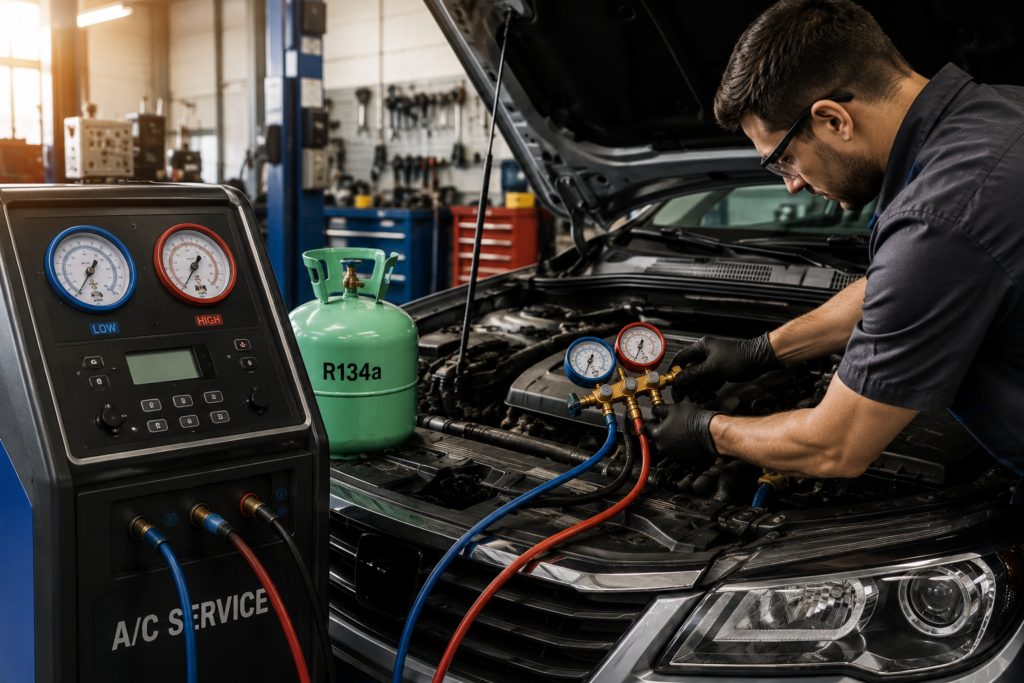
Professional-grade machines can fully evacuate old refrigerant, test for leaks using vacuum decay methods, and recharge the system to precise manufacturer specifications — a level of accuracy that’s difficult to replicate with basic DIY kits.
Electronic and Computer Diagnostics
Modern vehicles increasingly rely on onboard computers and sensors to regulate climate control. Diagnosing issues tied to a faulty sensor, control module, or wiring harness typically requires professional-grade scan tools that go beyond basic at-home diagnostics.
What Does Automobile Air Conditioning Repair Cost?
Repair costs vary based on the specific issue, your vehicle’s make and model, and regional labor rates, but here’s a general idea of what to expect:
- Refrigerant recharge: $100–$250
- Cabin air filter replacement: $20–$50 (or free if DIY)
- Compressor replacement: $500–$1,200
- Evaporator core replacement: $700–$1,500
- Leak detection and repair: $150–$500
- Condenser replacement: $300–$800
- Blower motor replacement: $150–$400
Shopping around and asking whether a shop uses OEM or aftermarket parts can help you balance cost with long-term reliability.
Preventive Maintenance to Reduce Future Repair Costs
The best strategy for minimizing automobile air conditioning repair expenses is consistent preventive care.
Run the A/C Year-Round
Operating your A/C for about 10 minutes weekly, even in cooler months, helps keep internal seals lubricated and prevents them from drying out, which can lead to slow refrigerant leaks.
Maintain Cleanliness
Routinely cleaning the condenser and replacing the cabin air filter on schedule helps maintain optimal airflow and overall system efficiency.
Don’t Ignore Small Symptoms
A slightly weaker airflow or a faint odor might seem trivial, but addressing these early can prevent a small, inexpensive fix from becoming a major repair.
Get Annual Inspections
Many shops offer A/C performance checks as part of routine service, which typically includes checking refrigerant levels, inspecting for leaks, and testing system pressure. Annual inspections can catch small problems before they escalate.
Use Recirculation Mode Strategically
Using recirculated air rather than pulling in hot outside air reduces the workload on your compressor, improving efficiency and reducing long-term wear.
Refrigerant Types and Why They Matter
One area of confusion in automobile air conditioning repair involves the type of refrigerant your vehicle uses. Vehicles built before 1994 typically used R-12, which has been phased out due to environmental concerns. Most vehicles from the mid-1990s through the early 2010s use R-134a, while many newer models have shifted to R-1234yf, designed to have a significantly lower environmental impact.
Using the wrong refrigerant type can cause chemical incompatibilities that damage system components, so it’s essential to check your vehicle’s A/C label (usually found under the hood) before attempting a DIY recharge. Additionally, some regions require certification to legally purchase certain refrigerants, which is another reason some repairs are better suited to licensed professionals.
How to Choose a Shop for Automobile Air Conditioning Repair
If your issue requires professional service, choosing the right shop matters just as much as choosing the right repair.
- Look for certified technicians. ASE certification indicates a technician has met recognized industry standards.
- Ask about warranties. Reputable shops typically back their work with warranties on both parts and labor.
- Request a clear diagnosis before repairs begin. A trustworthy shop will explain the problem and the reasoning behind their recommended fix.
- Compare multiple quotes. Prices can vary significantly, especially for larger repairs like compressor or evaporator replacement.
- Read reviews. Customer feedback can help you gauge a shop’s reliability and quality of work before committing.
Final Thoughts
A well-functioning air conditioning system is about more than comfort — it affects your safety, focus, and overall driving experience. Whether you’re facing warm air, strange noises, unpleasant smells, or a full system breakdown, understanding the fundamentals of automobile air conditioning repair puts you in a stronger position to make smart decisions, whether that means a quick DIY fix or a trip to a trusted repair shop.
By staying alert to early warning signs, performing simple preventive maintenance, and choosing a reputable professional for more complex jobs, you can keep your car’s cooling system running reliably for years — and avoid the discomfort of a long, hot drive with no relief in sight.