Automobile A/C Repair: The Complete Guide to Keeping Your Car Cool
Few things are more uncomfortable than climbing into a hot car on a summer afternoon and discovering that your air conditioning is blowing warm air instead of a refreshing chill. Automobile A/C repair is one of the most common — and most misunderstood — categories of vehicle maintenance. Many drivers wait until their system fails completely before taking action, often turning a simple, affordable fix into a costly repair bill. This guide will walk you through everything you need to know about automobile A/C repair, from how the system works to warning signs of trouble, do-it-yourself fixes, when to call a professional, and how to keep your system running efficiently for years to come.
Why Automobile A/C Repair Matters
Your car’s air conditioning system does more than just keep you comfortable. It also helps defog your windshield in humid or rainy conditions, improves air quality inside the cabin by filtering out pollutants, and even helps maintain a stable environment for sensitive electronics in modern vehicles. When your A/C system isn’t functioning properly, you’re not just sacrificing comfort — you may also be compromising visibility and safety.
Automobile A/C repair is also an area where small issues can snowball into expensive problems if ignored. A minor refrigerant leak, for example, might seem like a trivial inconvenience at first. But over time, that leak can starve the compressor of the lubrication it needs, leading to a complete compressor failure — a repair that can cost hundreds or even over a thousand dollars. Understanding the basics of how your system works and recognizing early warning signs can save you significant money and hassle down the road.
How Automobile Air Conditioning Systems Work
Before diving into common problems and repair strategies, it helps to understand the basic mechanics of an automotive A/C system. Automobile A/C repair technicians rely on this fundamental knowledge to diagnose issues accurately, and understanding it yourself can help you communicate more effectively with a mechanic — or tackle simple repairs on your own.
The Core Components
- Compressor — Often called the heart of the system, the compressor pressurizes refrigerant gas and circulates it through the system. It’s typically belt-driven off the engine and turns on and off via an electromagnetic clutch.
- Condenser — Located at the front of the vehicle, usually right behind the grille, the condenser cools the high-pressure refrigerant gas, turning it into a liquid.
- Receiver/Drier or Accumulator — This component filters out moisture and debris from the refrigerant, protecting the rest of the system from contamination and corrosion.
- Expansion Valve or Orifice Tube — This regulates the flow of refrigerant into the evaporator, causing a pressure drop that allows the refrigerant to expand and cool rapidly.
- Evaporator — Located inside the cabin (usually behind the dashboard), the evaporator absorbs heat from the cabin air as the refrigerant evaporates, producing the cold air you feel through your vents.
- Refrigerant — The chemical compound (commonly R-134a or the newer R-1234yf) that cycles through the system, changing from gas to liquid and back again to transfer heat.
- Blower Motor — This fan pushes air across the evaporator and into the cabin through the vents.
Understanding this cycle — compression, condensation, expansion, and evaporation — is essential to grasping why certain symptoms point to certain problems. Automobile A/C repair almost always comes down to identifying which of these components isn’t functioning as it should.
Common Signs You Need Automobile A/C Repair
Recognizing the early warning signs of A/C trouble can help you address issues before they become major (and expensive) repairs. Here are the most common symptoms that indicate your vehicle needs automobile A/C repair.
1. Warm Air Instead of Cold
This is the most obvious sign and the most common complaint drivers bring to a mechanic. Warm air can result from several issues, including low refrigerant levels, a failing compressor, a blocked expansion valve, or an electrical problem preventing the compressor clutch from engaging.
2. Weak Airflow
If your A/C is cold but the airflow feels weak, the problem may lie with the blower motor, a clogged cabin air filter, or a blockage somewhere in the ductwork. Sometimes leaves, debris, or even small rodents can obstruct the intake vents beneath the windshield.
3. Strange Noises
Squealing, grinding, or clicking sounds when you turn on the A/C often point to a failing compressor, a worn-out serpentine belt, or a damaged clutch. These noises shouldn’t be ignored, as continuing to run a failing compressor can cause metal shavings to circulate through the entire system, contaminating components that would otherwise be salvageable.
4. Unpleasant Odors
A musty or moldy smell when you turn on the A/C usually indicates mold or bacteria growth on the evaporator core, often due to trapped moisture. This is a common and relatively inexpensive issue to resolve, typically requiring an evaporator cleaning or antimicrobial treatment.
5. Refrigerant Leaks
If you notice a sweet, chemical smell or see oily residue around A/C components (particularly around hose connections and the compressor), you may have a refrigerant leak. Refrigerant leaks are one of the most frequent reasons for automobile A/C repair visits, and they’re notoriously tricky to diagnose without professional-grade leak detection equipment such as UV dye kits or electronic sniffers.
6. Cycling On and Off Rapidly
If your compressor clutch is engaging and disengaging rapidly (a phenomenon known as “short cycling”), this often points to low refrigerant, a faulty pressure switch, or an electrical issue. Short cycling not only reduces cooling performance but can also accelerate wear on the compressor.
7. Visible Moisture or Ice Buildup
Ice forming on the compressor, hoses, or even inside the vents is a sign that something is wrong — typically a refrigerant charge issue or a stuck expansion valve. Interestingly, an A/C system that’s too cold can be just as problematic as one that isn’t cold enough, since ice can restrict airflow and further damage components.
DIY Automobile A/C Repair: What You Can Do Yourself
Not every A/C issue requires a trip to the shop. Many drivers successfully complete basic automobile A/C repair tasks at home with the right tools and a bit of patience. Here are some repairs that fall within the reach of a motivated DIYer.
Recharging the Refrigerant
Low refrigerant is one of the most common causes of poor A/C performance, and recharging it is often the easiest fix. Auto parts stores sell DIY recharge kits that include refrigerant, a pressure gauge, and a hose that connects to your vehicle’s low-pressure port. Here is a simplified process:
- Locate your vehicle’s low-pressure service port (check your owner’s manual for the exact location).
- Attach the gauge and hose according to the kit’s instructions.
- Start the engine and turn the A/C to its maximum setting.
- Slowly add refrigerant while watching the gauge to avoid overcharging the system.
- Stop once the gauge reads within the manufacturer’s recommended range.
Caution: Overcharging the system can cause serious damage, so always follow the kit’s instructions carefully and never exceed the recommended pressure levels. If your gauge shows the pressure is already within normal range but the air still isn’t cold, the problem likely lies elsewhere, and adding more refrigerant will not help — and could hurt.
Replacing the Cabin Air Filter
A clogged cabin air filter can dramatically reduce airflow, making it feel like your A/C isn’t working even when it is. This is one of the simplest and cheapest fixes in the automobile A/C repair toolkit. Most cabin filters are located behind the glove box and can be replaced in under 15 minutes with no special tools required.
Cleaning the Condenser
Since the condenser sits at the front of the vehicle, it’s prone to collecting dirt, bugs, and road debris, which can reduce its ability to dissipate heat. Gently rinsing the condenser fins with a hose (never a high-pressure washer, which can bend the delicate fins) can restore proper airflow and improve cooling performance.
Checking and Replacing the Serpentine Belt
If your compressor isn’t engaging, a worn or broken serpentine belt could be to blame. Inspect the belt for cracks, fraying, or glazing. Replacing a serpentine belt is a moderately involved task but is well within the capability of a confident DIYer with basic tools and a repair manual specific to your vehicle.
Addressing Electrical Issues
Sometimes the problem isn’t mechanical at all — it’s electrical. A blown fuse, a faulty relay, or a bad pressure switch can prevent the compressor clutch from engaging even when refrigerant levels are fine. Checking your owner’s manual for the fuse box diagram and testing relevant fuses with a multimeter is a quick, no-cost diagnostic step before assuming you need a bigger repair.
When to Call a Professional for Automobile A/C Repair
While many issues can be handled at home, some automobile A/C repair jobs are best left to trained technicians. Here’s when it makes sense to seek professional help.
Compressor Replacement
The compressor is the most expensive component in the A/C system, and replacing it requires specialized tools to evacuate the system, handle refrigerant safely (which is regulated by environmental laws in most regions), and properly recharge the system afterward. Attempting a DIY compressor swap without the right equipment can lead to further damage or an improperly sealed system.
Refrigerant Leak Repair
While DIY leak-sealant products exist, they’re often a temporary band-aid rather than a permanent fix, and they can sometimes clog other components in the system. Professional technicians use UV dye and electronic leak detectors to pinpoint the exact source of a leak, whether it’s a pinhole in a line, a failed O-ring, or a cracked component, and can make a lasting repair.
Evaporator Core Replacement
Because the evaporator is buried deep within the dashboard, replacing it is a labor-intensive job that often requires partially disassembling the dashboard. This is rarely a DIY-friendly repair and is best handled by a professional shop with experience in your specific vehicle make and model.
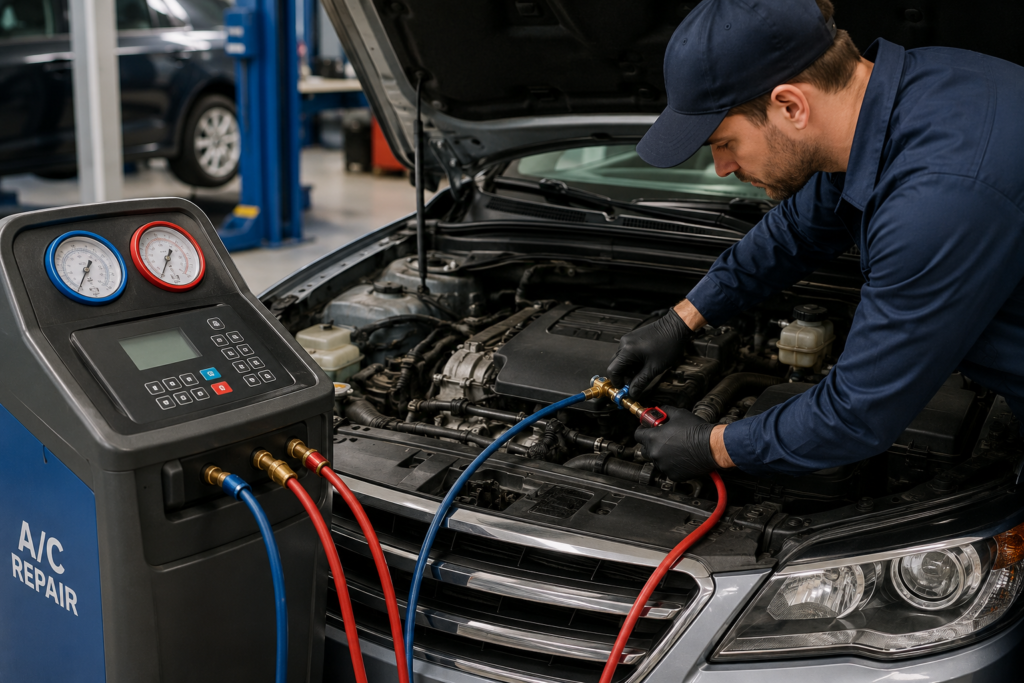
System Evacuation and Recharge with Diagnostic Equipment
Professional shops use machines that can fully evacuate old refrigerant, pull a vacuum to check for leaks, and precisely recharge the system to the exact specifications required by your vehicle’s manufacturer. This level of precision is difficult to achieve with basic DIY kits and is often necessary for a lasting repair.
Electrical and Computer-Related Diagnostics
Modern vehicles rely heavily on onboard computers to manage climate control systems. If your A/C issue is tied to a faulty sensor, a malfunctioning control module, or a wiring issue, a professional technician with diagnostic scan tools will be far better equipped to identify and resolve the problem than a home mechanic with a basic multimeter.
The Cost of Automobile A/C Repair
Costs for automobile A/C repair can vary widely depending on the issue, your vehicle’s make and model, and your geographic location. Here’s a general breakdown of what you might expect to pay:
- Refrigerant recharge: $100–$250 depending on the type of refrigerant and labor rates.
- Cabin air filter replacement: $20–$50, or free if done yourself.
- Compressor replacement: $500–$1,200 including parts and labor.
- Evaporator core replacement: $700–$1,500 due to the labor-intensive dashboard disassembly required.
- Leak detection and repair: $150–$500 depending on the complexity and location of the leak.
- Condenser replacement: $300–$800.
Getting multiple quotes and asking whether a shop uses OEM (original equipment manufacturer) or aftermarket parts can help you find the right balance between cost and quality for your automobile A/C repair needs.
Preventive Maintenance: Avoiding Future Automobile A/C Repair Costs
The best way to minimize automobile A/C repair expenses is through regular preventive maintenance. Here are some habits that can extend the life of your system.
Run Your A/C Regularly, Even in Winter
Running your A/C for at least 10 minutes once a week, even during colder months, helps keep the seals lubricated and prevents them from drying out and cracking. This simple habit can prevent slow refrigerant leaks caused by degraded seals.
Keep the System Clean
Regularly cleaning the condenser and ensuring the cabin air filter is replaced according to your manufacturer’s recommended schedule (typically every 12,000 to 15,000 miles) helps maintain optimal airflow and cooling efficiency.
Address Small Issues Early
Don’t ignore minor symptoms like slightly weaker airflow or a faint odor. Addressing these small red flags early can prevent a simple, inexpensive fix from turning into a major repair.
Schedule Annual Inspections
Many shops offer an A/C performance check as part of routine maintenance. This typically includes checking refrigerant levels, inspecting for leaks, and testing system pressures. An annual inspection can catch problems before they escalate.
Use the Recirculation Setting Wisely
Using the recirculation setting reduces the load on your A/C system by cooling air that’s already been cooled once, rather than continuously cooling hot outside air. This not only improves cooling performance but also reduces wear on the compressor over time.
Understanding Refrigerant Types and Regulations
One aspect of automobile A/C repair that often confuses drivers is the type of refrigerant used in their vehicle. Older vehicles (typically pre-1994) used R-12, which has since been phased out due to its ozone-depleting properties. Most vehicles from the mid-1990s through the early 2010s use R-134a, while many newer vehicles have transitioned to R-1234yf, a refrigerant designed to have a much lower environmental impact.
It’s crucial to use the correct refrigerant type for your vehicle, as mixing refrigerants can cause chemical reactions that damage system components. Always check your vehicle’s A/C system label (usually located under the hood) to confirm which refrigerant your car requires before attempting any DIY recharge.
Additionally, in many regions, purchasing and handling certain refrigerants requires certification due to environmental regulations. This is another reason why some automobile A/C repair tasks are better suited for licensed professionals who are equipped to handle refrigerants safely and legally.
Choosing the Right Shop for Automobile A/C Repair
If you decide to seek professional help, choosing the right shop can make a significant difference in the quality and cost of your repair. Consider the following tips:
- Look for ASE-certified technicians. Certification from the National Institute for Automotive Service Excellence indicates a technician has met industry standards for training and competency.
- Ask about warranties. Reputable shops typically offer warranties on both parts and labor for automobile A/C repair services.
- Get a detailed diagnostic before committing to repairs. A trustworthy shop will explain exactly what’s wrong and why, rather than simply recommending a costly repair without clear justification.
- Compare quotes. Prices can vary significantly between shops, so it’s worth getting at least two or three quotes for larger repairs like compressor or evaporator replacement.
- Check reviews and ask for referrals. Word-of-mouth recommendations and online reviews can help you find a shop with a track record of quality automobile A/C repair work.
Final Thoughts
A properly functioning air conditioning system is essential for comfort, safety, and even resale value. Whether you’re dealing with warm air, strange noises, unpleasant odors, or a complete system failure, understanding the basics of automobile A/C repair empowers you to make informed decisions — whether that means tackling a simple fix yourself or knowing when it’s time to call in a professional.
By staying alert to early warning signs, performing regular preventive maintenance, and choosing a reputable shop for more complex repairs, you can keep your vehicle’s A/C system running efficiently for years to come, avoiding the discomfort — and expense — of a hot, miserable drive. Automobile A/C repair doesn’t have to be intimidating once you understand how the system works and what steps to take when something goes wrong.