Top 10 Trimmer Batteries With Long-Lasting Power
Keeping your trimmer running through an entire yard can be frustrating, especially when the battery dies halfway through the job. You’re not alone—many people struggle to find a battery that delivers dependable, long-lasting power without adding unnecessary weight or charging delays.
The top 10 trimmer batteries with long-lasting power combine the correct voltage, high amp-hour capacity, durable construction, fast charging, and reliable warranties.
Choose 2.0Ah or 2.5Ah packs for light trimming, while 4.0Ah or larger batteries better suit large yards and thick growth.
Always match the battery’s voltage, connector, size, and brand platform to your trimmer. Use the approved charger, store batteries cool and dry, and recycle them responsibly.
Keep exploring to compare the best options for every yard.
Key Takeaways
- Choose a battery matching your trimmer’s voltage, connector, dimensions, and manufacturer-specific platform.
- Select higher-capacity options, such as 4.0Ah or more, for longer runtime during large yards or dense growth.
- Compare watt-hours, calculated as volts multiplied by amp-hours, for more accurate energy and runtime comparisons.
- Prioritize fast charging, thermal protection, overcharge protection, and consistent power output for reliable performance.
- Consider warranty coverage, durability, customer support, and recycling options when evaluating long-term battery value.
Start With the Right Trimmer Battery System
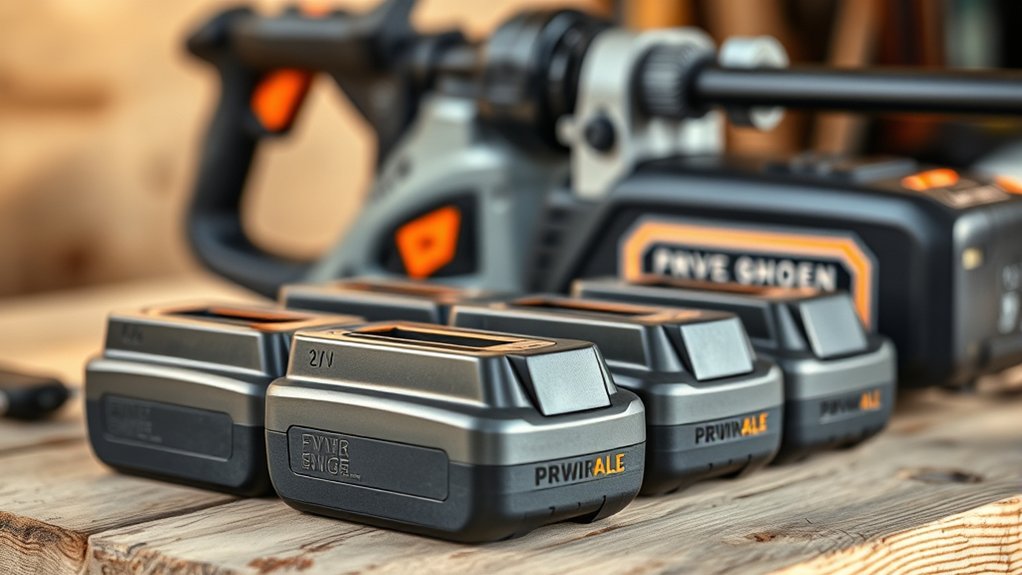
Choosing the right trimmer battery system starts with matching the battery’s voltage, capacity, and compatibility to your tool. Before you buy, consider how you maintain your yard and how long each session usually lasts.
Match your trimmer battery’s voltage, capacity, and compatibility to your tool and typical yard-care routine.
A higher-capacity battery can provide more runtime, helping you finish larger areas without frequent charging. However, added capacity may increase weight, so choose a balance that keeps your work comfortable.
Look for a system with dependable cells, efficient charging, and clear performance ratings. Lithium-ion batteries generally deliver consistent power, recharge quickly, and hold their charge during storage.
If you own several cordless tools from one brand, a shared battery platform can reduce costs and simplify charging over time. Think about service life, too.
Durable construction and proper storage can delay replacement, while Battery recycling keeps worn packs out of landfills. By choosing wisely, you’ll reduce your Environmental impact and enjoy reliable trimming power whenever you need it.
Check Battery and Trimmer Compatibility
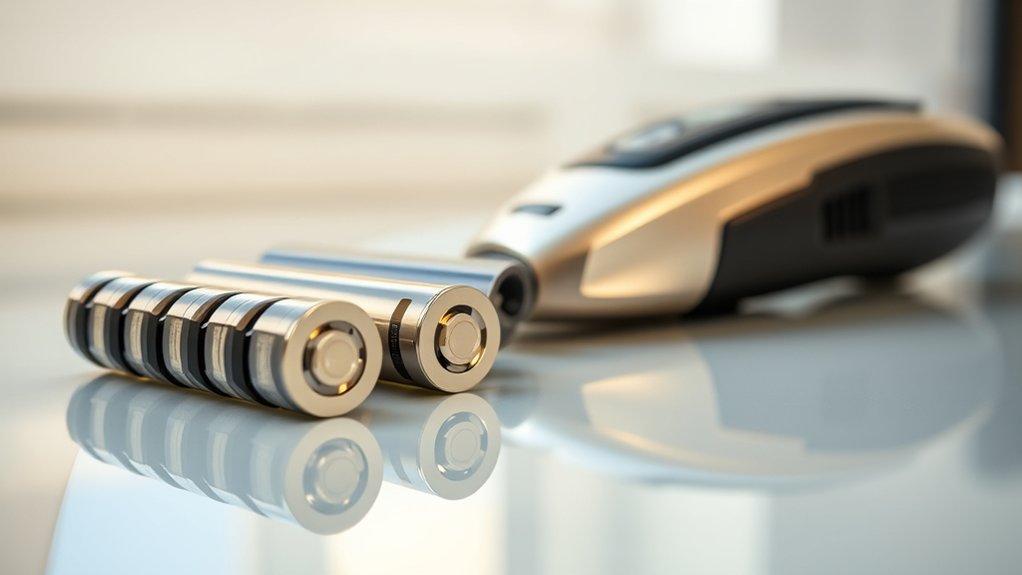
Before buying, make sure the battery’s voltage matches your trimmer’s requirements. Also, check that its shape, connector, and locking mechanism fit securely. Taking a moment to confirm these details can help prevent damage and ensure reliable performance.
Match Voltage Ratings
Match the battery’s voltage rating to your trimmer’s specifications to assure reliable performance and prevent damage. Voltage matching guarantees the motor receives the power it needs without overheating, stalling, or wearing out prematurely.
Check the voltage printed on your trimmer’s label, manual, or original battery, then choose an exact match. Battery compatibility depends on more than brand; even batteries that look similar may deliver different voltage levels.
Don’t substitute a higher-rated pack, which can harm internal components. A lower-rated option may produce weak cutting power and shorten runtime.
Use this guide before purchasing:
| Trimmer rating | Correct battery |
|---|---|
| 12V | 12V pack |
| 18V | 18V pack |
| 20V | 20V pack |
| 40V | 40V pack |
Always follow the manufacturer’s voltage guidance for safe, consistent operation.
Confirm Battery Fit
Once the voltage matches, confirm that the battery physically and electronically fits your trimmer. Check the manufacturer’s model list, connector shape, terminal layout, and locking mechanism before you buy.
A battery may share the correct voltage yet fail to slide into the compartment or communicate with the tool’s electronics. Don’t force an incompatible pack, since loose connections can cause overheating, poor performance, or permanent damage.
Inspect the battery’s dimensions and weight, too. An oversized pack can prevent the cover from closing, while an unbalanced one may make trimming uncomfortable.
Choose the recommended charger and confirm that it supports the battery chemistry. Proper charging protects battery longevity and helps you get more useful charging cycles.
If possible, compare the old battery’s label with the replacement’s specifications, then test the fit securely before regular use.
Best 20V Trimmer Batteries
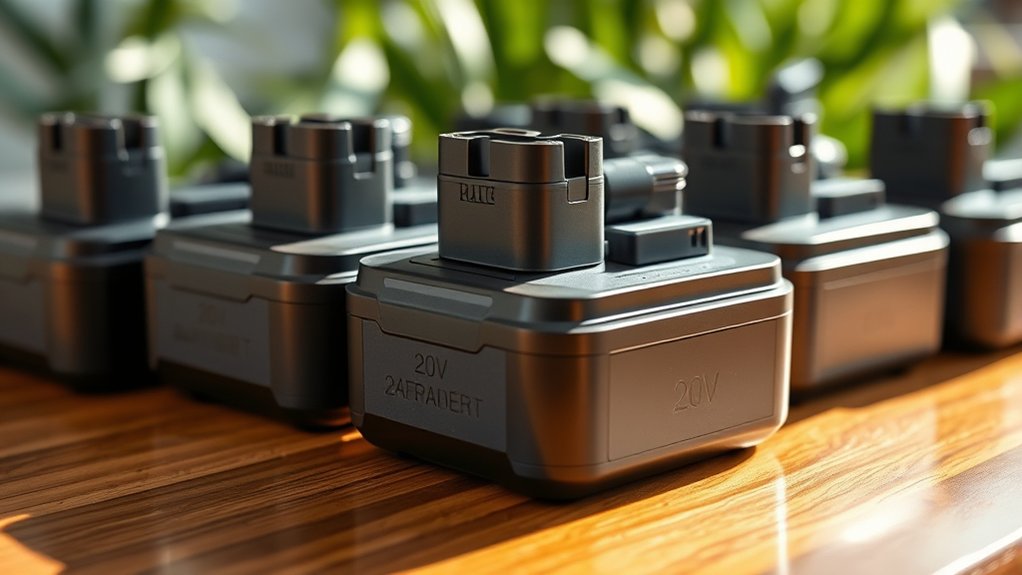
The best 20V trimmer batteries deliver dependable power without adding unnecessary weight to your tool. You’ll get a practical balance of cutting strength, portability, and runtime for routine grass, edging, and light brush work.
Choose a lithium-ion model with a clear charge indicator, because you can monitor remaining power and plan your work more effectively. Higher amp-hour ratings generally provide longer operation, although they may add weight and cost.
Make sure the battery matches your trimmer’s brand and voltage system before buying. Compatible designs usually install securely and communicate correctly with the charger.
For Battery safety, use the manufacturer’s charger, keep contacts clean, and avoid storing the pack in extreme heat or cold. You can also support Eco friendly power by choosing a rechargeable battery instead of disposable cells.
Store it partially charged in a dry location, and remove it from the tool when you won’t use it for an extended period. Never use a swollen or damaged pack.
Best 40V Trimmer Batteries
When you need more power than 20V models can provide, 40V trimmer batteries deliver longer runtimes for demanding yard work. You’ll compare options with the longest runtimes, fast-charging performance, and broad battery compatibility. This guide will help you choose a battery that keeps your trimmer running efficiently.
Longest Runtime Options
For the longest runtime, choose a 40V trimmer battery with high amp-hour capacity, such as a 4.0Ah or 5.0Ah model, so you can cover more ground between charges. A higher capacity helps you trim larger yards with fewer interruptions, though it also adds weight.
If you value maneuverability, compare 2.5Ah and 3.0Ah options for a lighter tool and adequate runtime on smaller properties. Brushless trimmers typically use stored power efficiently, extending each charge during demanding work.
Check the manufacturer’s runtime estimates, but expect thicker grass, wet conditions, and frequent starts to reduce them. Good battery safety practices matter: inspect the pack, keep contacts clean, and store it in a cool, dry place.
Modern charging technologies can improve battery health through temperature monitoring and balanced charging, supporting dependable long-term performance.
Fast Charging Performance
Runtime matters, but fast charging can get your 40V trimmer back to work sooner between jobs. Choose a battery that supports rapid charging without sacrificing cell health. A high-quality charger can replenish power quickly, helping you finish multiple trimming sessions with fewer interruptions.
Check the manufacturer’s stated charge time and compare it with the battery’s capacity. Some packs reach a usable charge in under an hour, while others need longer for a full cycle. You’ll also benefit from a charger that displays progress or signals completion, so you won’t leave the battery connected unnecessarily.
Good battery maintenance keeps charging performance consistent. Let the pack cool before charging, keep contacts clean, and store it properly. If you manage several batteries, dedicated charging stations can keep each pack organized, ready, and safely powered for your next job.
Top Battery Compatibility
Top battery compatibility lets you use one 40V power pack across compatible trimmers, blowers, and other outdoor tools from the same brand. Before buying, check the manufacturer’s battery platform and confirm that the pack fits your trimmer model.
Some brands offer universal 40V systems, while others limit compatibility to specific generations or tool lines. You’ll save money and storage space when one battery supports several devices, but don’t assume every 40V pack delivers identical performance.
Compare amp-hour ratings to match runtime with your yard’s size and workload. Battery durability also matters, especially if you’ll switch the pack between tools frequently.
Finally, review warranty coverage for both the battery and charger. Clear terms protect your investment and help you choose a dependable, compatible power system.
Best High-Power 56V Trimmer Batteries
When you need serious cutting power, 56V trimmer batteries deliver strong performance for thick grass, weeds, and larger yards. Their higher voltage helps your trimmer maintain consistent blade speed, even when you’re tackling dense growth or damp vegetation. Choose a battery with ample amp-hour capacity if you want longer sessions between charges, and check its weight to keep handling comfortable.
Look for lithium-ion models with efficient cooling, clear charge indicators, and protection against overheating, overloading, and deep discharge. Fast-charging compatibility can also reduce downtime when you’re managing extensive property.
Before buying, confirm the battery matches your trimmer’s brand and voltage requirements. 56V systems aren’t interchangeable with lower-voltage platforms.
You’ll extend battery life by storing the pack in a cool, dry place and avoiding complete depletion. When it eventually reaches the end of its service life, use Battery recycling programs rather than household trash.
Proper disposal reduces environmental impact and helps recover valuable materials for future products.
Best Trimmer Batteries for Small Yards
For a small yard, choose a compact trimmer battery that provides enough runtime for quick touch-ups without adding unnecessary weight. A 2.0Ah or 2.5Ah battery typically offers sufficient power for edging, spot trimming, and maintaining narrow borders. You’ll appreciate its lighter feel when shaping beds, clearing paths, or refining corners around patios.
Choose a battery with a clear charge indicator, so you’ll know when it’s ready before starting. Fast-charging compatibility can also help you finish routine work without lengthy interruptions. If your trimmer accepts multiple battery sizes, keep a compact option for regular maintenance and save larger packs for extended sessions.
Consider how your battery supports your garden design. Balanced weight and easy handling help you create crisp lines that improve lawn aesthetics without tiring your arms. Store the battery indoors, away from heat and moisture, to preserve capacity. With the right compact battery, you’ll handle frequent touch-ups quickly and keep your small yard looking polished.
Best Trimmer Batteries for Tough Growth
Tough growth calls for a high-capacity trimmer battery, typically 4.0Ah or more, to deliver sustained power through thick grass, weeds, and brush. Choose a professional-grade lithium-ion pack with high discharge capability, so your trimmer maintains cutting strength when its line meets dense stems.
A durable housing and impact-resistant design help the battery handle demanding outdoor work, while a clear charge indicator lets you monitor readiness without guesswork.
Prioritize Battery safety by selecting a pack with temperature, overload, and short-circuit protection. Keep contacts clean, inspect the casing before use, and remove the battery if you notice swelling, damage, or unusual heat.
Good Charging etiquette also protects performance: use the manufacturer’s charger, place the pack on a nonflammable surface, and let it cool before charging after heavy work. Store it in a dry, moderate-temperature location.
For tough growth, pair the robust battery with a sharp line, suitable cutting head, and steady technique to reduce strain on the tool and yourself.
Compare Runtime by Amp-Hour Rating
Compare amp-hour ratings to get a sense of how much energy each trimmer battery stores. A higher capacity usually means longer trimming sessions, but the tool’s power demands also play a role. Use the ratings as a general guide to estimate runtime and choose the battery that best suits your yard.
Amp-Hour Runtime Ratings
Amp-hour (Ah) ratings indicate how much charge a trimmer battery stores, so a higher rating typically delivers longer runtime between charges. When you compare models, a 4Ah battery generally runs about twice as long as a 2Ah battery under similar trimming conditions.
However, your actual runtime depends on grass thickness, cutting speed, attachment choice, and temperature. Check manufacturer runtime estimates, but treat them as guides rather than guarantees.
A higher Ah rating can reduce charging interruptions during larger jobs, while a lower rating may suit quick touch-ups and keep your tool lighter.
To support battery longevity, avoid draining the pack completely and follow the recommended charging procedure. You’ll also improve power efficiency by matching the battery’s Ah rating to your workload instead of carrying excess weight unnecessarily.
This approach helps you select confidently.
Battery Capacity Comparison
When choosing between trimmer batteries, use the amp-hour rating to estimate how long each pack may run before recharging. A 2.0Ah battery stores roughly twice the energy of a 1.0Ah pack, assuming both use the same voltage and deliver comparable performance.
A 4.0Ah option offers still greater capacity, though it may add weight, cost, and charging time. Compare batteries within the same voltage platform, because amp-hours alone don’t indicate total energy across different voltages.
Multiply volts by amp-hours to compare watt-hours more accurately. Also consider the trimmer’s motor, since Power efficiency affects how effectively it uses stored energy.
Higher capacity can support better Battery longevity when you avoid deep discharges and excessive heat. Choose the smallest pack that meets your workload while balancing portability, capacity, and value.
Estimated Trimming Duration
Estimate trimming duration by dividing the battery’s watt-hour capacity by the trimmer’s average power draw, then adjust for cutting conditions and motor efficiency.
To compare amp-hour ratings, multiply amp-hours by voltage to estimate watt-hours. For example, a 4-Ah, 40-volt battery stores about 160 watt-hours, while a 2-Ah battery stores 80 watt-hours.
If your trimmer averages 400 watts, those packs could provide roughly 24 and 12 minutes of active cutting, respectively.
Dense grass, wet growth, and frequent acceleration reduce runtime, so treat these figures as practical estimates rather than guarantees.
Choose higher capacity when you maintain larger areas, but keep in mind that extra weight can increase fatigue.
Proper charging, cool storage, and clean contacts support Battery longevity. Efficient cutting habits and a well-maintained motor also improve Power efficiency and extend each charge.
Check Charging Speed and Battery Life
Check how quickly a trimmer battery charges and how long it runs before choosing one. A short charging period helps you return to work sooner, especially when you forget to recharge after trimming. Look for specifications that state the required charging time, and compare them with the runtime you need for each session.
Battery longevity depends on more than one full charge. Choose a battery that maintains consistent performance across repeated cycles, rather than one that loses capacity quickly. Lithium-ion models often provide dependable output, but proper storage and charging habits also protect their lifespan.
Avoid leaving the battery completely drained or exposed to extreme heat and cold. These conditions can reduce its capacity and shorten its useful life over time.
Charging efficiency matters when you use your trimmer frequently. A battery that reaches full capacity quickly and delivers steady power can reduce interruptions. Check whether the charger signals completion and supports safe, balanced charging.
You’ll get more reliable daily performance when charging speed and battery life match your trimming routine.
Find the Best Trimmer Battery Value
Compare the battery’s price with its runtime, charging speed, durability, and warranty to find the best overall value. Don’t choose the cheapest option automatically; a low-cost battery may wear out quickly or require frequent replacement.
Compare price with runtime, charging speed, durability, and warranty to find lasting value—not merely the cheapest battery.
Instead, calculate the cost per use by considering how many trimming sessions each charge supports and how long the battery should last.
Check whether the manufacturer includes a charger, replacement guarantee, or responsive customer support. These benefits can reduce your long-term expenses and protect your purchase.
Also, confirm compatibility with your trimmer to avoid wasting money on an unsuitable model.
Look for batteries built with quality cells, sturdy housings, and eco friendly materials when possible. Responsible manufacturing adds value while reducing environmental impact.
When the battery reaches the end of its service life, use battery recycling programs rather than placing it in household trash.
A dependable battery that performs consistently, lasts for years, and comes with useful support often delivers better value than a cheaper alternative.
Frequently Asked Questions
How Should I Store a Trimmer Battery During Winter?
Store your trimmer battery in a cool, dry indoor location during winter, away from freezing temperatures, heat, and moisture. For safe battery storage, remove it from the trimmer, clean the contacts, and charge it to the level recommended by the manufacturer, often about 40–60%.
Don’t leave it fully discharged. Follow these winter precautions: use its original case, keep it away from metal objects, and inspect it before spring use.
Can Extreme Temperatures Damage My Trimmer Battery?
Yes, extreme temperatures can damage your trimmer battery. Heat accelerates chemical wear, while freezing conditions reduce capacity and may cause permanent damage if you charge the battery while it’s cold.
Protect battery lifespan by storing the pack in a dry, moderate-temperature location away from direct sunlight. Follow safe charging techniques: let a cold battery warm naturally before charging, avoid hot surfaces, and unplug it once fully charged.
These habits help preserve performance.
Are Aftermarket Trimmer Batteries Safe to Use?
Are aftermarket trimmer batteries safe to use? Yes, you can use them if they match your trimmer’s voltage, connector, chemistry, and protection requirements.
Choose reputable brands with built-in safeguards, clear certifications, and warranty coverage. Avoid suspiciously cheap or unmarked products.
Follow the manufacturer’s charging techniques, use the correct charger, and inspect batteries for swelling or damage.
Proper choices can protect performance and extend battery lifespan, while incompatible packs may cause overheating, poor operation, or fires.
How Do I Recycle an Old Trimmer Battery?
Take your old trimmer battery to a certified recycling center, retailer, or household hazardous-waste collection site. Don’t place lithium-ion or rechargeable batteries in your trash or curbside bin, because they can spark fires.
Cover exposed terminals with nonconductive tape, keep the battery dry, and store it separately during transport. Search your local government’s Battery recycling guidance for nearby options.
Proper Battery disposal protects workers, reduces pollution, and recovers valuable materials safely.
What Warranty Coverage Should I Expect for Trimmer Batteries?
You should expect a trimmer-battery warranty to cover manufacturing defects, not normal wear, misuse, water damage, or gradual battery lifespan decline.
Does a longer warranty prove better quality? Not necessarily; coverage terms matter more. Check the warranty period, replacement or repair policy, proof-of-purchase requirements, and exclusions.
Follow the manufacturer’s charging tips, because improper charging can void coverage. Many warranties last one to three years, though premium models may offer longer protection.
Conclusion
Choosing the best trimmer battery comes down to matching power, runtime, and compatibility with your yard’s demands. You’ll get the most value by comparing voltage, amp-hours, charging speed, and long-term durability before buying.
Whether you choose a compact 20V pack or a high-powered 56V option, the right battery can turn tough trimming into a breeze. Treat your battery system like the engine of your yard care, and you’ll keep every edge looking sharp with the best trimmer battery.