Top 3 Multi Tool Blade Types You Need
Choosing the right multi-tool blade can be frustrating, especially when one project involves cutting, scraping, and sanding. You’re not alone—many DIYers struggle to know which blade will deliver clean, efficient results without damaging the material.
This guide highlights the top 3 multi-tool blade types you need for common home improvement and workshop tasks. Each option is designed to help you work more confidently and get better results.
You’ll handle most cutting, scraping, and finishing jobs with three essential multi-tool blade types.
Choose wood blades with sharp, widely spaced teeth for fast cuts, notches, and flush work in lumber or plywood.
Use scraper blades to remove adhesive, paint, and caulk from smooth surfaces, adjusting pressure for delicate materials.
Pick triangular sanding pads to smooth edges, corners, and rough spots with controlled, light passes.
Always confirm compatibility, wear eye protection, and keep blades moving.
The following tips will help you choose and use each type confidently.
Key Takeaways
- Wood-cutting blades feature wide, aggressive teeth for fast plunge cuts, notches, flush cuts, and general lumber work.
- Scraper blades remove adhesive, paint, caulk, and stubborn residue from smooth surfaces using controlled, shallow-angle strokes.
- Triangular sanding pads smooth edges, reach tight corners, and refine surfaces with appropriately selected coarse, medium, or fine grits.
- Always confirm blade compatibility with your multi-tool’s mounting system and secure the blade firmly before operating.
- Wear eye protection, avoid forcing the tool, and replace dull or damaged blades to maintain control and safe performance.
Choose Wood Multi Tool Blades for Fast Cuts
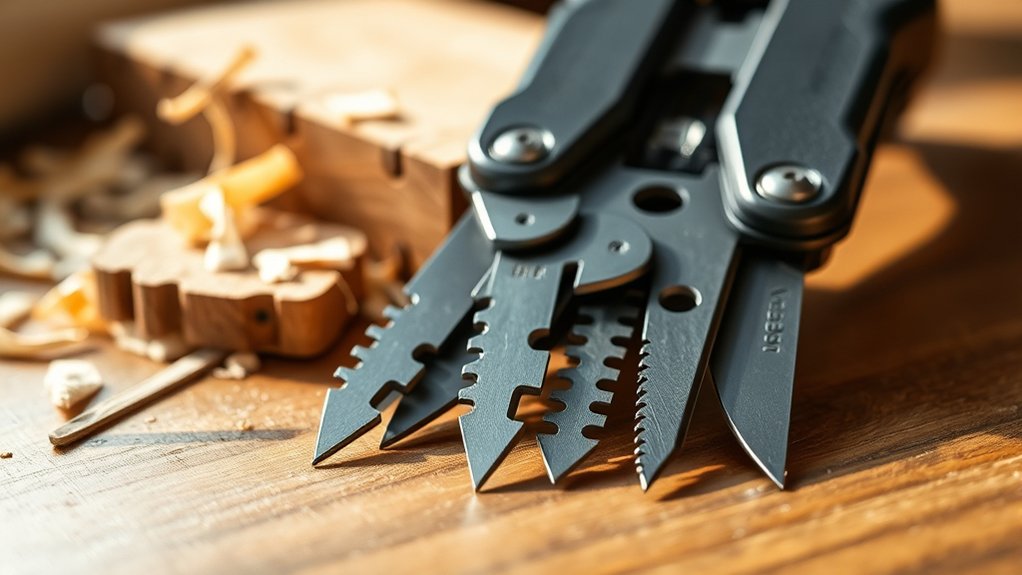
Choose wood multi tool blades with sharp, widely spaced teeth when you need fast cuts through lumber, plywood, or framing timber. Their aggressive tooth pattern clears sawdust quickly, so you can make efficient plunge cuts, notches, and short flush cuts.
Sharp, widely spaced teeth clear sawdust quickly, delivering fast, controlled cuts through lumber, plywood, and framing timber.
Select a narrow blade for tight openings or a wider model when you want stability across broad surfaces. Match the blade’s length to your material’s thickness; excessive reach can flex and reduce control.
Check blade durability before you buy. High-carbon steel works well for clean wood, while reinforced designs handle occasional nails and tougher debris better.
Don’t force the tool through the workpiece, because pressure overheats teeth and shortens service life. Keep the blade moving at a controlled speed, and replace it when cutting becomes slow or rough.
Review compatibility considerations carefully. Confirm the mounting interface fits your multi-tool, and verify the blade suits your tool’s oscillation angle and power.
A secure fit helps you cut accurately and safely.
Use Scraper Blades for Adhesive and Paint
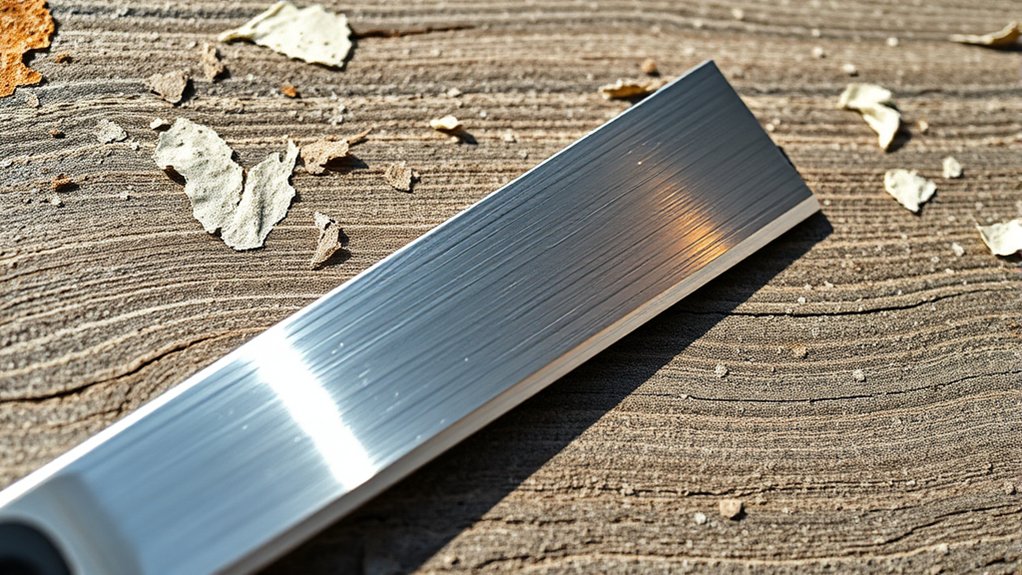
Use scraper blades when you need to remove adhesive, paint, caulk, or other stubborn residue from smooth surfaces. Hold your multi-tool at a shallow angle, apply steady pressure, and let the blade do the work. Keep the tool moving to avoid gouging wood, plastic, or finished surfaces.
| Task | Recommended approach |
|---|---|
| Dried adhesive | Use a rigid scraper and short passes |
| Loose paint | Choose a sharp, flexible blade |
| Caulk residue | Lift edges before scraping |
| Delicate surfaces | Reduce pressure and test first |
Before starting, check Blade compatibility with your multi-tool’s mount. A secure fit prevents wobbling and improves control.
Also consider Durability considerations: stainless steel handles moisture well, while hardened steel typically lasts longer against dense residue.
Replace bent or dull blades promptly. Forcing them can damage the surface and strain the tool.
Wear eye protection and clear debris frequently. Unplug corded tools before changing blades.
Clean the blade after use so residue won’t harden around its edge.
Pick Sanding Pads for Smooth Edges and Corners
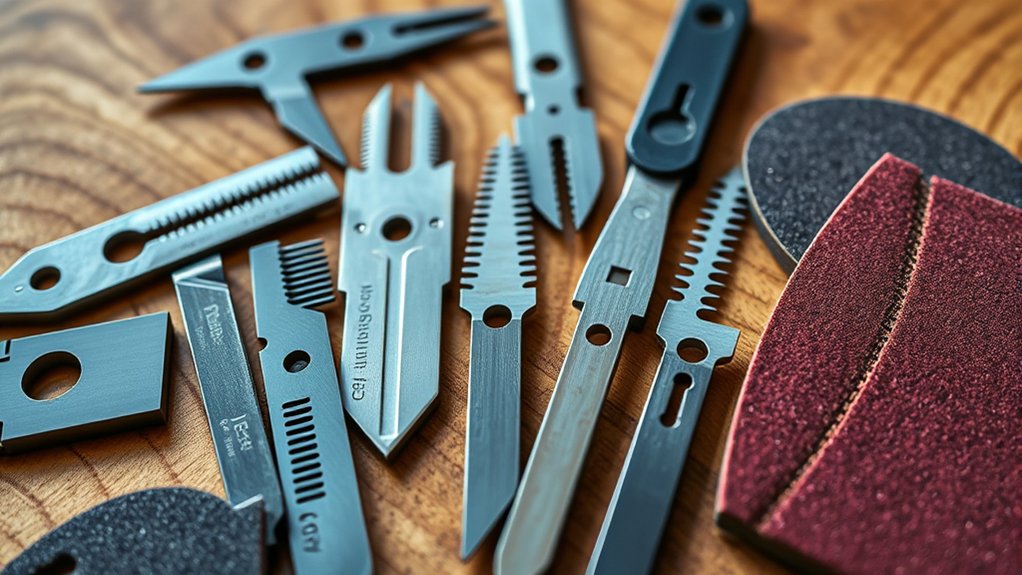
For smooth edges and tight corners, sanding pads give you better control than rigid blades and help prevent gouges. Choose a triangular pad for precise work around trim, cabinet corners, and small repairs.
Select the grit according to your material and goal: coarse paper removes rough spots quickly, while medium and fine grits refine the surface without leaving deep scratches.
Secure the pad firmly, then guide your multi-tool with light, steady pressure. Let the abrasive do the work instead of forcing the tool into the surface.
Secure the pad firmly and guide the multi-tool steadily, allowing the abrasive to work without forcing it.
Keep it moving to avoid creating dips, heat marks, or uneven patches. For edge finishing, sand with the grain whenever possible, and check your progress often by touch and sight.
Detail work becomes easier when you fold or replace worn abrasive sheets promptly. Use a vacuum or brush to clear dust between grits.
After sanding, wipe the area clean before painting, staining, or applying adhesive for a smoother, more professional result.
Frequently Asked Questions
Which Multi-Tool Blade Types Are Best for Cutting Metal?
For cutting metal, you’ll get the best results from bi-metal blades, which combine hardened high-speed steel teeth with a flexible alloy backing. Choose fine-tooth bi-metal blades for thin sheet metal and coarse-tooth versions for bolts, screws, or thicker stock.
Carbide-tipped blades offer superior Blade durability when cutting stainless steel, hardened fasteners, or cast iron. Apply steady pressure, use low speed, and follow proper Metal cutting techniques to prevent overheating and premature wear during demanding projects.
How Do I Choose a Blade Compatible With My Multi-Tool?
Check your multi-tool’s mounting system first, then match the blade’s interface, size, and intended task. Review your tool’s manual or manufacturer’s compatibility chart before buying.
Compatibility considerations include the connection pattern, shank shape, oscillation angle, and clearance around the clamp. Choose blade material based on your project: high-carbon steel suits wood, bi-metal handles mixed materials, and carbide lasts longer on hardened metal.
Don’t force an incompatible blade onto your tool.
Can Multi-Tool Blades Be Sharpened or Reused?
Yes, you can sharpen and reuse some multi-tool blades, but their material and condition matter. Carbide or diamond-grit blades generally aren’t practical to sharpen, while high-carbon steel blades may respond to careful filing or honing.
Use proper sharpening techniques, maintain the original tooth shape, and wear eye protection. Blade durability declines after repeated use, so replace blades with missing teeth, cracks, severe warping, or poor cutting performance rather than risking damage or injury.
What Safety Gear Should I Wear When Using Multi-Tool Blades?
Wear Personal protective equipment whenever you use multi-tool blades: safety glasses or a face shield, hearing protection, sturdy gloves, long sleeves, and closed-toe, slip-resistant shoes.
Choose a dust mask or respirator when cutting materials that create harmful particles. Keep loose clothing and hair secured.
Before changing blades, unplug or remove the battery, let the tool stop completely, and use safe blade handling techniques to prevent accidental cuts or starts.
How Often Should Multi-Tool Blades Be Replaced?
Replace multi-tool blades when cutting slows, edges snag, teeth look worn, or the blade flexes or overheats. There’s no universal schedule. Many users find that one quality blade lasts roughly 10–20 hours of demanding work, though wood, metal, grout, and abrasive materials can change that dramatically.
Track blade durability by noting the hours and materials used. Replace the blade sooner when cutting precision drops, because forcing a dull blade increases heat, kickback risk, and project damage.
Conclusion
With the right multi tool blades, you’ll tackle common jobs faster and with less frustration. Wood blades power through boards, scraper blades lift stubborn adhesive and paint, and sanding pads smooth edges that other tools can’t reach.
Surprisingly, oscillating multi tools can make up to 20,000 movements per minute, helping you finish detailed cuts quickly. Keep these three multi tool blade types nearby, and you’ll switch from rough cutting to clean finishing without slowing down or reaching for another tool.