How Does the dcbl770x1 Work?
Clearing leaves and stubborn debris can be frustrating, especially when a blower lacks the power or runtime to finish the job. You’re not alone—many people struggle to find a tool that combines strong airflow with easy control. The DEWALT DCBL770X1 is designed to make demanding cleanup faster and more manageable.
The DEWALT DCBL770X1 uses a 60V MAX battery to power a brushless motor and axial fan. When you squeeze the trigger, electronic controls regulate current, increasing motor speed and airflow.
Shaped blades draw in surrounding air, then push it through the tapered tube for focused clearing. You can adjust power with the trigger, speed dial, and operating modes.
Keep the nozzle angled downward as you guide debris. Continue for details on runtime, maintenance, and performance.
Key Takeaways
- The DEWALT DCBL770X1 uses a brushless motor to drive fans that draw in and accelerate air through the blower tube.
- Its 60V MAX battery supplies cordless power, while electronic controls regulate motor speed and airflow.
- Squeezing the variable-speed trigger adjusts airflow, and the dial or mode switches help maintain selected operating settings.
- The tapered tube concentrates airflow for controlled clearing, including debris around curbs, gaps, shrubs, and structures.
- Attach the tube, insert the charged battery, point safely, start gradually, and remove the battery before cleaning or storage.
How the DCBL770X1 Moves Air
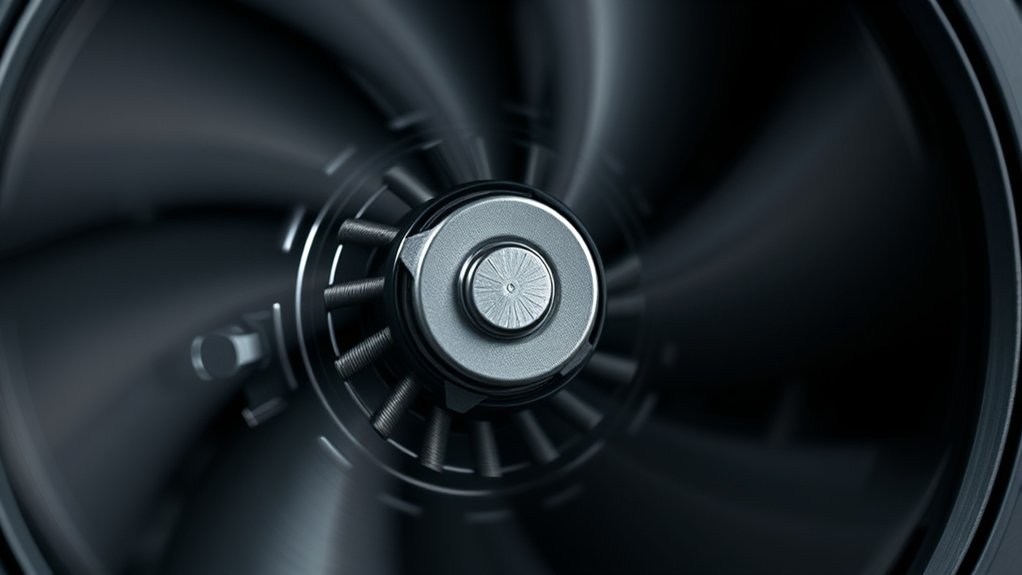
The DCBL770X1 moves air with a brushless motor that drives its axial fan, creating a focused stream through the blower tube. As you squeeze the trigger, the fan accelerates and pulls surrounding air into the housing. Its shaped blades then push that air forward, while the tapered tube concentrates the flow for controlled clearing.
The brushless motor powers the axial fan, drawing in air and directing a concentrated stream through the tapered blower tube.
You can adjust the trigger to match the task, from gentle movement around flower beds to stronger airflow across driveways. The unit’s electronic controls help maintain responsive operation as you change speed.
Battery technology supports a cordless design, so you can move freely without managing a power cable. Motor efficiency also helps the system turn electrical input into useful airflow with less wasted energy.
Because the motor uses fewer wear-prone parts than a brushed design, you’ll experience smooth operation and consistent performance. The result is directed air that lets you clear leaves, grass clippings, and light debris efficiently.
How the Battery Powers the Motor
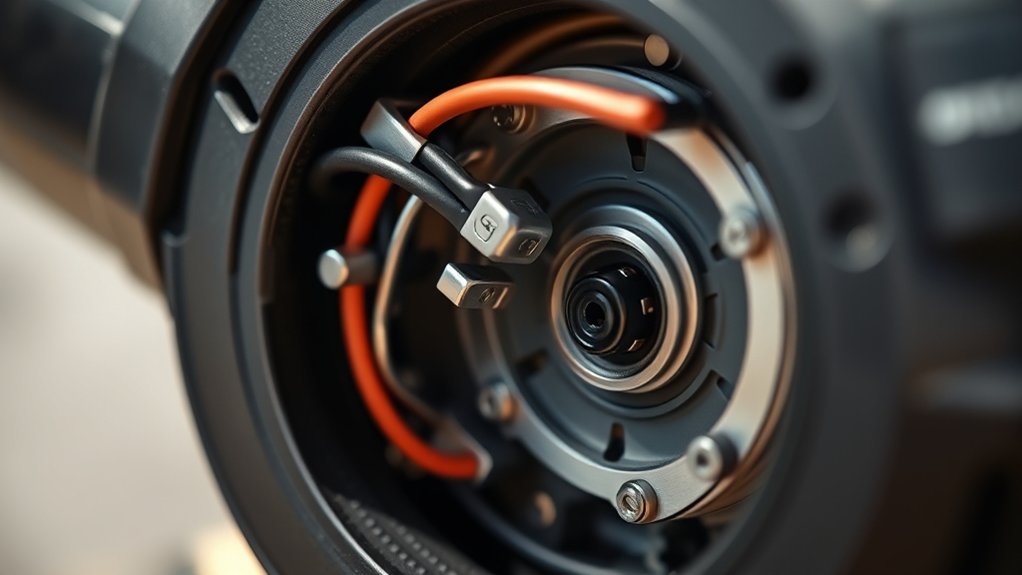
Your battery sends stored energy through the blower’s electrical system. The controller regulates the flow before delivering power to the motor. That power drives the fan, which creates the airflow you’ll learn about next.
Battery Energy Flow
When you pull the trigger on the DCBL770X1, energy stored in its 60V MAX battery flows through the electronic controls to the brushless motor. You control that flow with trigger pressure, while the circuitry regulates current for consistent operation.
Battery capacity determines how long you can work before recharging, and motor efficiency affects how effectively the pack’s stored energy becomes rotation. The system also monitors electrical demand, helping protect the battery and motor from excessive load.
| Component | Energy-flow role | User benefit |
|---|---|---|
| Battery pack | Stores DC energy | Longer runtime |
| Controls | Regulate current | Smoother response |
| Brushless motor | Converts electricity | Reliable operation |
As you work, the battery’s voltage gradually drops, so available runtime changes with workload, temperature, and battery condition. Keeping contacts clean and using a properly charged pack helps maintain efficient energy transfer.
You’ll notice power delivery separately in the next section.
Motor Power Delivery
Battery power reaches the brushless motor through electronic controls that switch and regulate current rapidly. When you squeeze the trigger, the controller meters energy from the battery to the motor’s windings.
These precisely timed pulses create a rotating magnetic field, which turns the rotor and drives the blower fan. As you increase trigger pressure, the controller sends more current, raising motor speed and airflow.
Release the trigger, and it reduces power immediately, helping you control output and conserve energy. The brushless design eliminates brushes that wear down and create friction, supporting Battery longevity and dependable performance.
Electronic switching also improves efficiency by limiting wasted power and heat. That efficient operation contributes to Noise reduction, so you experience smoother, quieter operation while clearing leaves, debris, or wet material.
How the Airflow System Works

You’ll see how the dual-fan system moves air through the DCBL770X1. Its airflow path efficiently directs debris toward the collection area. Next, you’ll learn how this design improves dust collection.
Dual Fan Operation
The DCBL770X1 uses a dual-fan system to move air efficiently through the blower and out the tube. As you operate it, one fan draws air into the housing while the second fan accelerates the airflow toward the outlet.
This coordinated action helps the blower maintain strong, consistent performance without relying on one fan to handle every task. You’ll notice smoother operation because the workload stays balanced between the two motors.
That balance can also support Battery longevity by reducing unnecessary strain during routine use. The paired design contributes to Noise reduction, since each fan can operate efficiently instead of working excessively hard.
You control performance through the variable-speed trigger, adjusting airflow to match your task while keeping energy use and sound at a practical level.
Airflow Path Design
Beyond the dual fans, the DCBL770X1’s airflow path guides air through the housing and into the blower tube with minimal resistance. As you activate the blower, shaped internal passages keep air moving smoothly from the intake area toward the outlet.
The tapered channel concentrates that flow, helping you direct a strong stream through the nozzle without unnecessary turbulence. Sealed joints limit leaks, so the motor’s work produces useful airflow rather than escaping inside the housing.
The layout also supports Battery safety by keeping moving air around heat-producing components and guiding warmth away during operation. Carefully formed surfaces contribute to Noise reduction, limiting harsh air disturbance as the stream travels.
You’ll feel the result as steady, controllable output at the tube, ready for clearing leaves and debris.
Dust Collection Efficiency
How effectively does the DCBL770X1 collect dust while it works? You’ll find that its airflow system directs debris away from your work area, helping you clear leaves, grass clippings, and loose material efficiently.
The blower’s focused air stream concentrates force where you aim it, so you can gather debris into manageable piles instead of scattering it.
Although the DCBL770X1 doesn’t use a vacuum bag for routine blowing, its design still supports clean operation by controlling how air moves around the motor and outlet.
This airflow helps protect internal components while maintaining consistent performance. Air filtration limits dust entering sensitive areas, which can support longer tool life.
You’ll also appreciate the controlled noise levels, particularly during extended cleanup. Keep the intake and outlet unobstructed to preserve airflow and collection efficiency.
What the DCBL770X1 Controls Do?
You control the DCBL770X1 through its trigger, variable-speed dial, and mode switches, which let you adjust airflow for clearing leaves, debris, and heavier material. Squeeze the trigger gradually to increase power, or ease off when you need more control around gardens, walkways, and delicate surfaces.
The variable-speed dial sets a preferred output, so you can maintain consistent airflow without holding the trigger at full pressure.
Use the mode switch to choose the appropriate operating response for lighter cleanup or demanding jobs. This flexibility helps you match performance to the task instead of wasting energy.
Battery efficiency improves when you select only the power you need, extending useful runtime between charges. The brushless motor design supports smooth, responsive operation while reducing maintenance demands.
You’ll also notice that the controls let you change airflow quickly as conditions shift. They don’t start the blower here; they simply prepare its output for controlled, efficient work.
How to Start the DCBL770X1?
To start the DCBL770X1, make sure the battery is charged and securely installed. Then, firmly attach the blower tube to the unit. Once everything is in place, press the power button to begin operation.
Check the Battery
Before starting the DCBL770X1, check that its battery is fully charged and properly seated in the blower. Press the battery into its compartment until it clicks securely into place.
Inspect the pack and contacts for dirt, moisture, cracks, or other damage. Don’t use a battery that looks swollen, overheated, or damaged.
If the charge is low, remove the pack and charge it with a compatible DEWALT charger, following the charger’s instructions. Let a recently used battery cool before charging it.
For effective battery management, store the pack in a dry, temperature-controlled location and keep its contacts clean. Power optimization starts with using a fully charged pack, which helps maintain consistent airflow and runtime.
Once the battery is secure, you’re ready to operate the blower.
Attach the Blower Tube
With the battery secured, attach the blower tube before starting the DCBL770X1. Align the tube with the blower’s outlet, then push it firmly into place. Turn the tube clockwise, if necessary, until the locking tabs engage and the connection feels secure.
Check the joint carefully; it shouldn’t wobble, loosen, or separate when you handle the tool. If your model includes a concentrator nozzle, fit it onto the tube’s end using the same push-and-lock method.
Keep the opening clear of leaves, dirt, and other obstructions. This step directs airflow efficiently and supports consistent performance.
It doesn’t involve air filtration, because the blower tube channels expelled air rather than cleaning incoming air. A tight fit can also limit vibration and contribute to noise reduction.
Don’t press the power button yet.
Press the Power Button
How do you start the DCBL770X1? First, inspect the blower and confirm that you’ve attached the tube securely. Insert a fully charged battery until it clicks into place.
Keep the blower pointed away from yourself, other people, pets, and loose objects. To begin operation, press the power button on the control panel.
The blower should start immediately, and you’ll hear the motor ramp up. If it doesn’t run, remove the battery, check its charge, and reinstall it firmly.
Keep your finger on the trigger or control as required by your model’s design, then adjust the speed setting for the task. Start at a low speed around delicate areas, and increase power gradually.
Release the control to stop the blower, and remove the battery before storing or servicing it.
How Airflow Moves Leaves and Debris
Airflow moves leaves and debris by creating a focused stream of air that pushes material across the ground. When you aim the dcbl770x1’s nozzle, you direct that stream beneath and around loose material.
Direct the dcbl770x1’s nozzle beneath loose debris to guide leaves and material smoothly across the ground.
The moving air lifts lightweight leaves, rolls twigs, and separates grass clippings from the surface. You can sweep in steady, overlapping passes, guiding everything toward a single pile instead of scattering it.
Keep the nozzle angled slightly downward for control, and adjust your position as the pile grows. Airflow also reaches into gaps between stones, along curbs, and beneath shrubs, where hands or rakes may struggle.
Clearing this material helps prevent damp layers from blocking leaf respiration and supports cleaner debris decomposition in compost areas. Watch for gravel, mulch, or small objects that the air may shift unexpectedly.
Use the stream to move debris safely away from doors, vehicles, windows, and other people. You’ll get cleaner results by working with the wind, not against it.
Air Speed vs. Air Volume
Air speed determines how forcefully the dcbl770x1 moves debris, while air volume controls how much material the stream can carry. You’ll use higher speed to dislodge wet leaves, gravel, or packed clippings from hard surfaces. A strong volume setting then helps you gather that material into manageable piles instead of scattering it.
Think of speed as impact and volume as coverage. When you clear corners, crevices, or dense debris, direct the nozzle closer and prioritize speed.
For lawns, driveways, and broad areas, keep the nozzle slightly higher so the large airflow sweeps across more ground. You’ll get better results by balancing both settings rather than maximizing either one.
Air filtration helps protect the motor from dust that could restrict airflow and reduce performance. Noise reduction features can make extended cleanup more comfortable, but you should still wear hearing protection when conditions demand it.
Adjust your technique as debris and surfaces change for efficient, controlled clearing.
Battery Runtime and Charging
Battery runtime depends on the battery’s capacity, airflow setting, debris load, and operating conditions. When you use the DCBL770X1 at a lower setting for light leaves, you’ll typically work longer than when you apply maximum airflow to wet, heavy debris.
A larger compatible battery can extend each session, while cold temperatures and clogged air passages may reduce available runtime.
For dependable performance, monitor the battery indicator and plan a recharge before the pack reaches empty. Charging methods include using a compatible DEWALT charger after the battery cools, then storing the pack in a dry, moderate-temperature location.
Don’t leave it in extreme heat or cold, and avoid using damaged batteries or chargers. To support battery longevity, remove the pack when you finish and keep its contacts clean.
Follow the charger’s status lights and rotate charged packs if you need longer work sessions. Let the blower and battery cool between demanding tasks to help maintain consistent operation and capacity.
DCBL770X1 vs. Gas Blowers
When you compare the DCBL770X1 with a gas blower, you’ll get quieter, emission-free operation and simpler starting without mixing fuel or performing engine maintenance. You can press the trigger and begin clearing leaves immediately, making this cordless model convenient for routine yard work. Its brushless motor delivers strong airflow without the vibration, fumes, and sharp exhaust odor associated with many gas machines.
You’ll also appreciate noise reduction when working near neighbors, pets, or outdoor living spaces. Although gas blowers may offer longer continuous operation with quick refueling, the DCBL770X1 avoids fuel storage and reduces operating interruptions when you keep charged batteries available.
Battery compatibility adds value if you already own compatible DEWALT 20V MAX batteries, though this high-demand blower uses two packs and may require additional investment. For small and medium properties, the DCBL770X1 offers cleaner handling and easier everyday use.
Choose gas power only when maximum runtime or heavy-duty airflow outweighs convenience, comfort, and neighborhood-friendly operation.
How to Maintain the DCBL770X1?
The DCBL770X1 needs little routine care, but a few simple habits will help preserve its airflow and battery performance. Remove the battery before cleaning or inspecting the blower. Wipe the housing and handle with a dry, soft cloth, and clear dust from the air intake and outlet. Don’t use water, solvents, or compressed air, which could drive debris into the motor.
For Motor maintenance, keep vents unobstructed and check regularly for grass, leaves, or packed dirt. Never operate the blower with damaged covers, a loose tube, or unusual vibrations. Inspect the tube and fasteners, then replace worn parts before use.
Follow Battery safety by charging the pack with the recommended charger, keeping contacts dry, and storing it in a cool, dry location. Don’t drop, crush, open, or expose the battery to heat. Remove it during transport and store it partially charged if you won’t use the blower for several weeks.
Frequently Asked Questions
What Is Included With the DCBL770X1 Purchase?
Your DCBL770X1 purchase typically includes the cordless blower, one 60V MAX 9.0Ah battery, and a fast charger. You’ll also receive the blower tube and related assembly components, usually packaged with the owner’s manual and warranty information.
Check the retailer’s listing to confirm the exact contents, since bundles can vary. For battery compatibility, verify that your existing FLEXVOLT batteries fit.
Noise levels may require hearing protection during operation.
Is the DCBL770X1 Compatible With Other DEWALT Batteries?
You’ll find battery compatibility pleasantly simple: the DCBL770X1 works with DEWALT 60V MAX FLEXVOLT batteries, not every DEWALT battery despite the brand’s wonderfully universal-looking lineup. You can use compatible 60V MAX packs, including higher-capacity options, but 20V MAX-only batteries won’t power this blower.
Check the label and manual before swapping packs. Choosing the correct battery preserves power efficiency, runtime, and safe operation while avoiding forced fits that could damage equipment.
How Loud Is the DCBL770X1 During Operation?
You’ll find the DCBL770X1 fairly loud during operation, with noise levels typical of a high-powered cordless blower. Its sound intensity can reach roughly 86 dBA, depending on your distance, speed setting, and surroundings.
At full power, you should wear hearing protection, especially during extended use. You’ll also create less noise by using lower settings for light debris.
Keep bystanders, children, and pets away while you’re working, since the airflow and sound can disturb them.
What Warranty Coverage Does the DCBL770X1 Include?
You’ll typically receive a three-year limited warranty covering defects in materials and workmanship for the DCBL770X1, though terms can vary by retailer, region, and registration status. The warranty doesn’t usually cover normal wear, misuse, unauthorized repairs, or consumable parts.
Check your included documentation and DEWALT’s official warranty page for exact details. Battery lifespan and Safety features may have separate coverage, so verify whether the battery and charger carry individual warranty periods.
Can the DCBL770X1 Be Used in Wet Conditions?
You can use the DCBL770X1 in light, damp conditions, but it isn’t fully waterproof. Its water resistance helps protect against occasional moisture, not heavy rain, standing water, or submersion.
Follow essential safety precautions: keep water away from the battery, charger, motor housing, and electrical connections. Don’t operate it during storms, and let it dry completely before storage or charging.
Stop using it if moisture enters the tool or unusual operation occurs.
Conclusion
The DCBL770X1 works like a quiet wind tunnel in your hands: its battery drives the motor, the fan pulls in air, and the tube concentrates it into a powerful stream.
You control speed and airflow with the trigger and settings, then recharge the battery when it runs low. Unlike a gas blower, it starts instantly without fuel or fumes.
Treat it well by clearing the intake, inspecting the tube, and storing it safely. With proper care, the DCBL770X1 will keep turning scattered leaves into orderly piles.