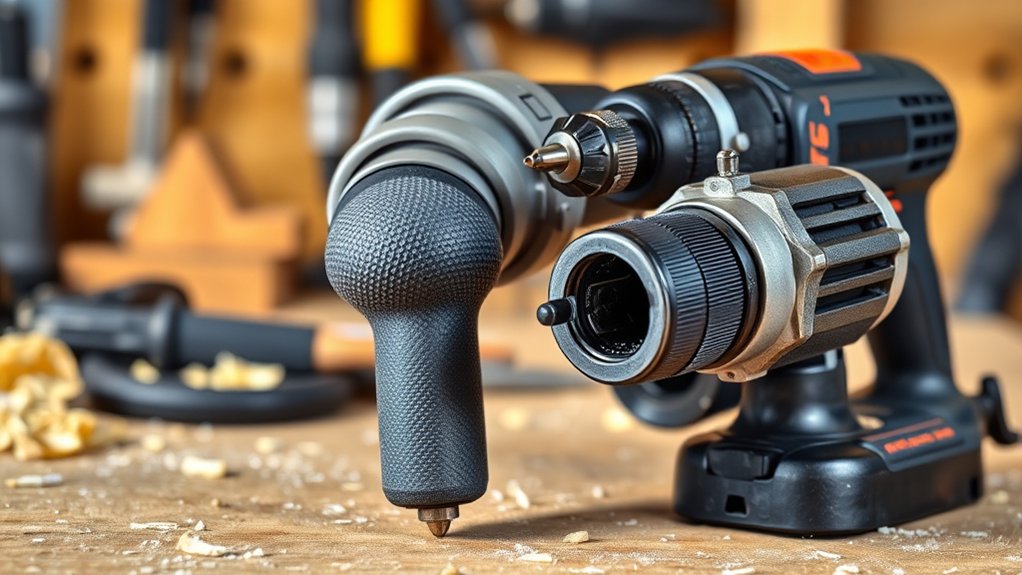
5 Ways a Hammer Drill Is Not the Same as an Impact Drill
Choosing between a hammer drill and an impact drill can be confusing, especially when both tools seem built for tough jobs. You’re not alone—many DIYers struggle to know which one will handle their project best.
A hammer drill and an impact driver aren’t the same in five key ways. A hammer drill pounds forward while rotating, so you can drill brick, block, and light concrete.
An impact driver delivers rotational impacts, giving you more torque for screws, lag bolts, and other fasteners.
Hammer drills use round-shank bits, while impact drivers use hex-shank bits.
The tools also produce different sounds and handle tasks differently. Keep going to see which one fits your project best.
Key Takeaways
- A hammer drill combines rotation with forward pounding, while an impact driver delivers rotational impacts to increase fastening torque.
- Hammer drills are designed for drilling masonry, whereas impact drivers excel at driving screws, lag bolts, and other fasteners.
- Hammer drills accept round-shank bits, while impact drivers use quick-release hex-shank bits.
- Hammer drills provide steadier progress in brick, block, and light concrete. Impact drivers are less suitable for masonry drilling.
- Impact drivers resist fastening kickback and reduce wrist strain, while hammer drills are optimized for controlled drilling rather than high-torque driving.
Hammer Drill vs. Impact Driver: Core Differences
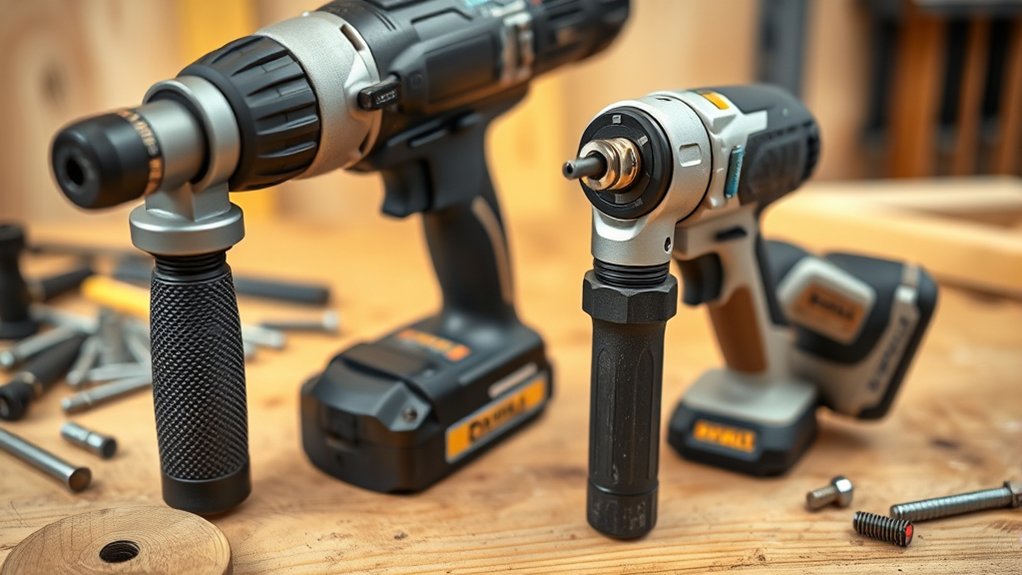
A hammer drill and an impact driver serve different purposes. You use a hammer drill when masonry demands forward pounding alongside rotation. Its internal mechanism helps the bit break through brick, block, or concrete, while its chuck accepts controlled drilling pressure.
Choose a hammer drill for masonry, combining forward pounding with rotation to penetrate brick, block, and concrete.
You choose an impact driver for driving screws, lag bolts, and other fasteners. Instead of hammering forward, it delivers rotational impacts that increase torque and reduce strain on your wrist when resistance rises.
Battery compatibility can influence your choice. If you already own cordless tools, select a model that shares your battery platform to reduce costs and simplify charging.
However, matching batteries doesn’t make these tools interchangeable. Each still performs best in its intended role.
Noise levels also differ during use. A hammer drill creates a sharp, repetitive pounding sound, especially in masonry.
An impact driver produces a loud rattling burst as its impact mechanism engages. Wear hearing protection, particularly during extended work or indoor projects.
Compare Bits, Chucks, and Accessories

Bits, chucks, and accessories reveal another key difference between these tools. When you use a hammer drill, you typically install round-shank bits in its keyed or keyless chuck.
That design accepts many general-purpose drill bits, countersinks, and hole saws, giving you flexibility for varied projects. You can also switch to specialty bits when needed.
An impact drill, often called an impact driver, uses a quick-release hex chuck. You’ll need hex-shank driver bits, drill bits, and socket adapters that can withstand its repeated torque pulses.
Standard round-shank bits won’t fit directly, so check accessory compatibility before buying.
Battery compatibility also affects your choice. Staying within one cordless platform lets you share batteries and chargers, but each tool still requires suitable accessories.
Noise levels may differ, too: impact mechanisms often produce sharper bursts, while hammer drills create a steadier rattling sound. Choose bits and attachments designed for each chuck to improve control, fit, and service life.
Which Tool Is Better for Masonry?
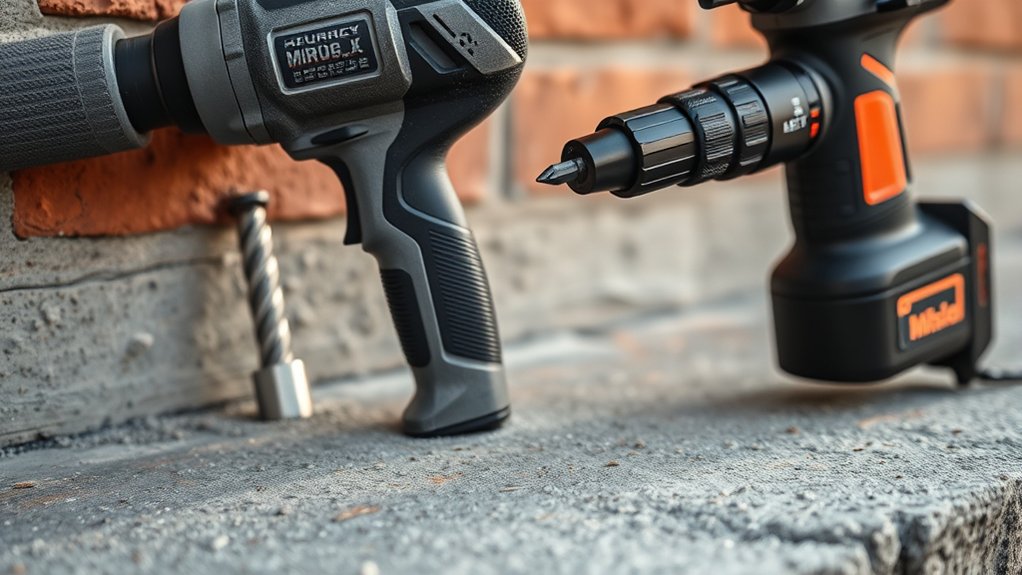
For masonry, a hammer drill is usually the better choice because its forward impact helps pulverize brick, block, and light concrete as the bit rotates. You’ll get steadier progress when drilling anchor holes, installing wall plugs, or mounting fixtures on masonry surfaces.
Select a carbide-tipped masonry bit, engage hammer mode, and apply firm, controlled pressure rather than forcing the tool.
An impact drill, often called an impact driver, doesn’t deliver the same consistent forward hammering action. Its rotating impact mechanism can make masonry drilling slow, awkward, and less predictable, especially in dense concrete.
You may also struggle to maintain Masonry precision when the tool twists aggressively during operation.
Before you start, check Surface compatibility. A hammer drill suits common brick and block, while a rotary hammer handles thick concrete, repeated drilling, or larger holes more efficiently.
Match the tool’s power, bit size, and operating mode to your material. You’ll reduce damage, improve control, and finish the job faster.
Why Impact Drivers Handle Fasteners Better
When your task shifts from drilling masonry to driving screws, an impact driver usually gives you better control and speed. Its hex chuck accepts driver bits quickly, while the compact body helps you reach tight spaces.
More importantly, the tool combines rotation with short, forceful impacts. That action transfers torque directly to the fastener, so you can drive long screws with less wrist strain and reduced bit slippage.
Combining rotation with forceful impacts, an impact driver delivers more torque while reducing wrist strain and bit slippage.
You’ll also find that an impact driver resists kickback better than a standard drill when a screw meets dense wood or a stubborn connection. Variable-speed triggers let you start gently, seat the head cleanly, and avoid stripping delicate screws.
Modern battery technology supports longer runtimes and delivers consistent power without forcing you to manage a cord. However, you should consider noise levels: the impact mechanism produces sharp bursts that can disturb others and harm hearing without protection.
Use suitable bits, steady pressure, and hearing protection for safer, cleaner fastening.
Choose by Project: Hammer Drill or Impact Driver?
Choose the tool that matches the material and task: use a hammer drill for masonry holes, anchors, and other jobs that require controlled impact while drilling. Choose an impact driver when you’re driving long screws, lag bolts, or construction fasteners into wood or metal. Its rotational impacts deliver high torque while reducing wrist strain.
For occasional household repairs, a compact impact driver handles assembly, decking, and shelving efficiently. For tile, brick, concrete, or block, select a hammer drill and the correct masonry bit.
Don’t use either tool as a universal replacement: a hammer drill can drive screws, but it’s less comfortable and precise, while an impact driver won’t create clean masonry holes.
Check Battery compatibility before buying a cordless tool. Matching your existing platform can save money and keep batteries interchangeable. Also compare Noise levels.
Both tools sound loud, but impact drivers produce sharp impact bursts, so wear hearing protection and warn anyone nearby during extended work.
Frequently Asked Questions
Can a Hammer Drill or Impact Driver Replace a Regular Drill?
No, you shouldn’t fully replace a regular drill with either tool. A hammer drill handles ordinary drilling when you switch off hammer mode, but its heavier design reduces convenience.
An impact driver excels at driving screws and bolts, yet its hex chuck limits your bit choices and can damage delicate materials.
For greater Drill versatility, keep a regular drill. Your Power comparison should guide occasional substitutions, not eliminate this dependable, general-purpose tool.
How Loud Are Hammer Drills Compared With Impact Drivers?
You’ll usually find hammer drills slightly louder than impact drivers, especially while hammering through masonry. Noise levels often reach roughly 95–105 decibels for hammer drills, while impact drivers commonly produce 90–100 decibels under load.
As the saying goes, better safe than sorry: wear hearing protection with either tool. Your sound comparison can change with bit type, material, speed, and distance, so test cautiously and avoid prolonged exposure near walls or enclosed spaces.
What Safety Gear Should I Wear When Operating Either Tool?
Wear protective eyewear to shield your eyes from flying chips, dust, and broken bits. Use hearing protection, especially during prolonged drilling or fastening, because both tools can produce damaging noise.
Put on sturdy, non-slip work gloves, but keep them away from rotating parts. Wear closed-toe, slip-resistant footwear and fitted clothing.
Secure loose hair and jewelry, inspect the tool and bit, clamp your workpiece, and disconnect power before changing accessories.
How Do I Maintain and Clean a Hammer Drill or Impact Driver?
Clean your hammer drill or impact driver after each use: unplug it or remove the battery, brush away dust, and wipe surfaces with a dry cloth. Don’t spray liquid into vents, switches, or the motor.
Inspect cords, chucks, bits, and fasteners, replacing damaged parts promptly. Follow the manual’s Lubrication techniques for chucks and moving components.
Store batteries cool and partially charged to protect Battery lifespan, and keep tools dry, organized, and protected.
Are Cordless Models Worth Choosing Over Corded Versions?
Cordless models are worth choosing when you value mobility, quick setup, and freedom from outlets. You’ll carry fewer accessories, work farther from power, and avoid managing extension cords.
However, corded versions deliver consistent power, unlimited runtime, and often lower costs. Check battery life before buying, especially for demanding projects, and consider weight comparison because batteries can make cordless tools heavier.
Choose cordless for convenience; choose corded for sustained, intensive drilling and dependable performance.
Conclusion
Choosing between a hammer drill and an impact driver comes down to your project. If you’re drilling into brick, block, or concrete, pick the hammer drill and use masonry bits.
If you’re driving long screws, bolts, or lag fasteners, choose the impact driver for controlled, high-torque performance.
Don’t put all your eggs in one basket. Each tool has a distinct job. Match the tool to the task, and you’ll work faster, safer, and smarter when choosing between a hammer drill and an impact driver.