How to Put Engine Coolant in a Car in 3 Easy Steps
How to Put Engine Coolant in a Car: If you’ve ever noticed your car overheating or worried about engine damage, you’re not alone. Many people struggle with maintaining the right engine coolant level, which is crucial for keeping your vehicle running smoothly.
Knowing how to put engine coolant in your car correctly can save you time, money, and headaches down the road.
To put engine coolant in your car, first make sure the engine is cool. Then locate and check the coolant reservoir level against the “Full” and “Low” marks.
Next, choose the correct coolant type recommended for your vehicle, and slowly open the radiator cap using gloves for safety.
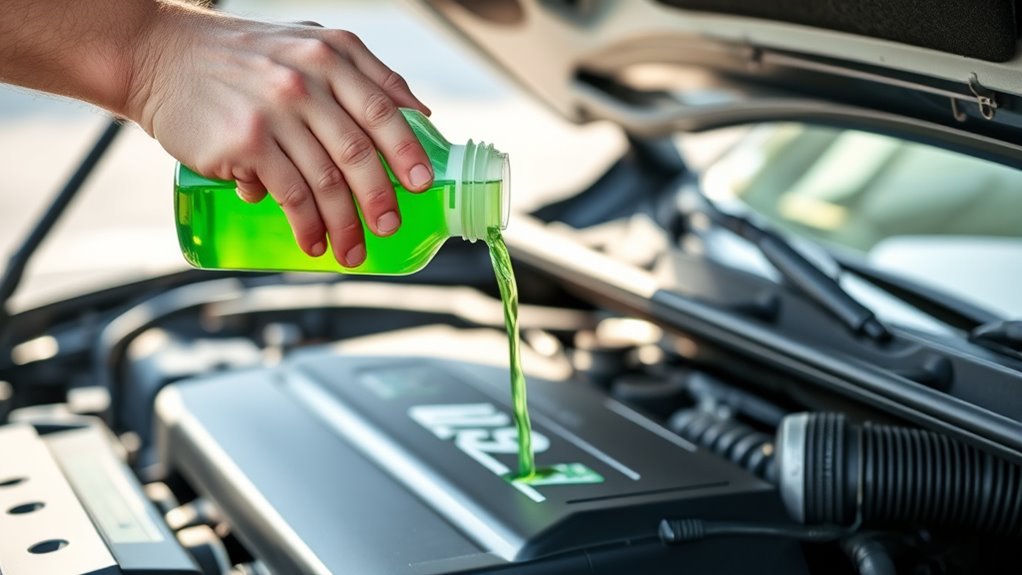
Finally, pour the coolant into the reservoir up to the proper level, securely replace the cap, and run the engine briefly to check for leaks.
Keep following for tips on avoiding common coolant issues.
How to Put Engine Coolant in a Car Key Takeaways
- Ensure the engine is completely cool before opening the radiator cap or coolant reservoir.
- Use the owner’s manual to identify the correct coolant type for your vehicle.
- Open the radiator cap slowly to release any built-up pressure safely.
- Pour coolant into the reservoir or radiator up to the recommended “Full” line using a clean funnel.
- Securely replace the cap, start the engine, and check for leaks or abnormal temperature readings.
How to Check Your Engine Coolant Level and Know When to Add More
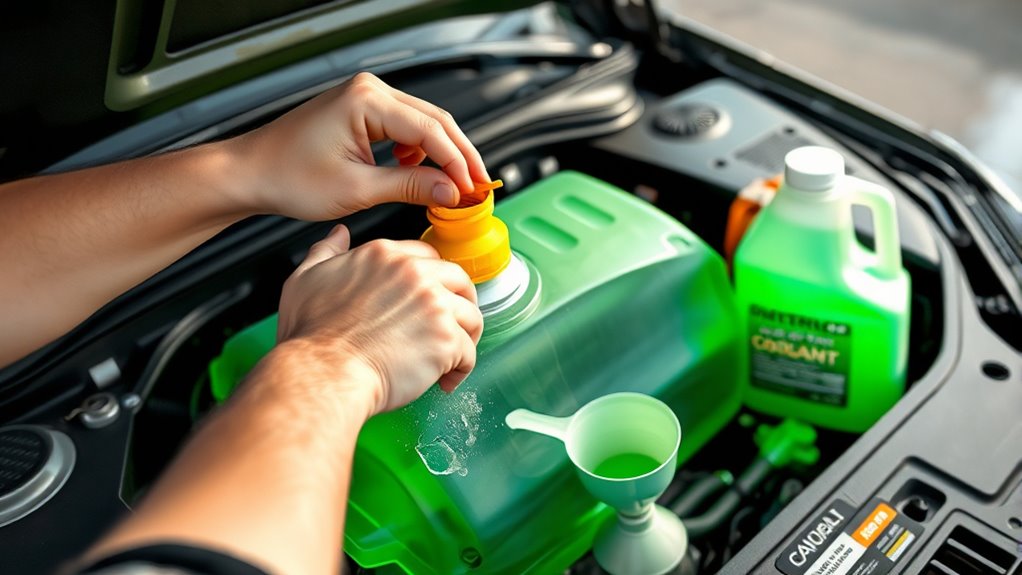
Before you add engine coolant, you need to check the current level to avoid overfilling. Start by locating the coolant reservoir, usually a translucent plastic tank near the radiator. Make sure the engine is cool, as fluid temperature affects the accuracy of your reading and prevents burns.
Always check the coolant level in the cool engine’s reservoir to prevent overfilling and ensure accuracy.
Check the markings on the reservoir labeled “Full” and “Low.” If the coolant is below the minimum line, it’s time to add more.
Keep in mind that different coolant types, such as ethylene glycol or propylene glycol, have specific recommendations for your vehicle. Using the wrong type can harm your engine. Always consult your owner’s manual before topping off.
Also, never open the radiator cap when the engine is hot. The pressurized fluid can spray out dangerously. Checking regularly ensures your engine stays properly cooled and prevents overheating problems down the road.
How to Add Engine Coolant the Right Way
When you’re ready to add engine coolant, make sure the engine is completely cool to avoid injury and guarantee accurate filling. Begin by identifying the correct coolant type for your vehicle. Consult your owner’s manual since using the wrong type can cause damage.
Always wear gloves and eye protection as part of basic safety precautions to prevent skin irritation and protect your eyes from splashes. Open the radiator cap slowly to release any residual pressure, then pour the coolant into the radiator or reservoir up to the recommended level.
Use a clean funnel to avoid contaminants entering the system. Avoid mixing different coolant types unless specified by the manufacturer, as this can reduce effectiveness. After filling, securely replace the cap.
Start the engine and let it run for a few minutes while checking for leaks. Following these steps ensures you add engine coolant correctly, maintaining your car’s cooling system and preventing overheating.
How to Prevent and Detect Engine Coolant Problems Early
If you want to keep your engine running smoothly, you need to watch for early signs of coolant problems and take steps to prevent them. Start by regularly checking your coolant level and inspecting for leaks, discoloration, or a sweet smell, which can indicate issues.
Use the correct coolant types recommended for your vehicle to avoid corrosion or overheating. Mixing incompatible coolants can cause deposits and blockages, so always stick to one type.
Pay attention to your engine temperature gauge; if it rises unexpectedly, it could signal coolant problems. Also, monitor for steam or puddles under your car after parking.
When it’s time to replace or dispose of old coolant, do so responsibly. Never pour it down drains or on the ground. Many auto shops offer proper coolant disposal services.
Detecting and preventing coolant issues early saves you costly repairs and keeps your engine in top condition.
Frequently Asked Questions
What Type of Engine Coolant Is Best for My Car?
You should check your car’s manual to find the best coolant color and antifreeze concentration for your engine. Different vehicles require specific types, like green, orange, or pink coolants, each with unique additives.
Using the right antifreeze concentration guarantees ideal freezing and boiling protection. Don’t mix colors, as that can reduce effectiveness. If you’re unsure, ask a mechanic or buy coolant labeled compatible with your car’s make and model.
Can I Mix Different Brands or Types of Coolant?
You might worry mixing different brands or types of coolant will ruin your engine, but it’s not always disastrous. However, coolant compatibility is essential. Mixing incompatible coolants can cause corrosion or reduce cooling efficiency.
Always follow mixing guidelines by checking your car’s manual and choosing coolants with similar chemical bases. When in doubt, stick to one brand or flush the system before switching to avoid costly damage and keep your engine running smoothly.
How Often Should I Completely Replace the Engine Coolant?
You should completely replace the engine coolant every 2 to 5 years, depending on your car’s make and coolant type. Regular coolant maintenance helps prevent corrosion and keeps your engine temperature stable.
Check your owner’s manual for specific intervals, but don’t wait too long. Old coolant loses effectiveness and can cause overheating. Staying on top of coolant changes guarantees your engine runs smoothly and avoids costly damage.
Is It Safe to Drive Immediately After Adding Coolant?
You can drive immediately after adding coolant, but you should keep an eye on the engine temperature. Make sure the coolant level is correct and the cap is securely tightened.
If you notice any coolant leaks or the temperature gauge rises unusually, stop right away and check for problems. Driving with low coolant or leaks can cause your engine to overheat and lead to serious damage, so always monitor your car closely after topping up.
What Are the Environmental Impacts of Disposing Old Coolant?
Disposing old coolant improperly can cause serious environmental hazards, contaminating soil and water with toxic chemicals. You shouldn’t just pour it down drains or on the ground.
Instead, you should look for coolant recycling programs or hazardous waste collection centers to handle it safely. By recycling coolant, you help reduce pollution and protect wildlife.
Always follow local regulations so you don’t contribute to environmental damage while maintaining your vehicle responsibly.
Conclusion
Just like watering a thirsty plant, your engine needs the right amount of coolant to stay healthy and run smoothly. I once ignored a low coolant light, and my car overheated on a hot day. Lesson learned!
By regularly checking and topping off your coolant, you’re giving your engine the care it deserves and preventing costly repairs down the road. Keep your engine cool, and it’ll thank you with reliable performance every time. Putting engine coolant in your car is a simple way to ensure it runs smoothly.