How to Clean the Engine of a Car in 3 Easy Steps
Cleaning your car’s engine can feel like a daunting task, and you’re not alone if you’ve ever put it off because it seemed too complicated or messy. Many people struggle with knowing where to start or worry about damaging sensitive parts.
But keeping your engine clean is key to maintaining your car’s performance and avoiding costly repairs down the road.
To clean your car’s engine in three easy steps, first guarantee the engine is cool and remove the cover carefully, checking for leaks or damage.
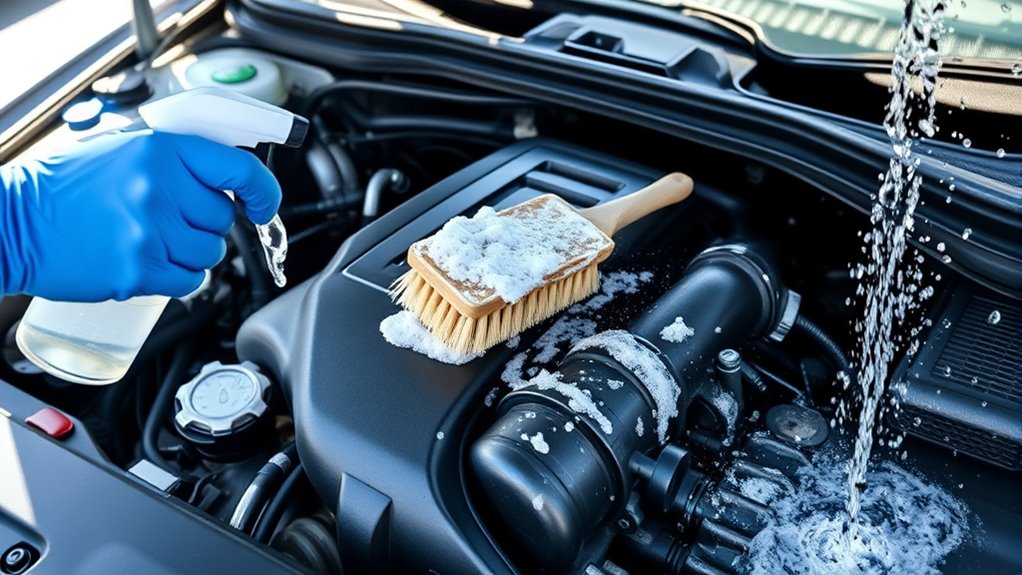
Next, use warm water, mild soap, and a soft brush to clean grime, protecting sensitive parts with plastic bags.
Finally, inspect spark plugs, belts, and fluids before reassembling and starting the engine.
Keep following along to find out how to keep your engine running smoothly and avoid costly repairs.
Key Takeaways
- Ensure the engine is cool and remove the engine cover carefully before cleaning.
- Cover sensitive parts like the battery and air intake with plastic bags to protect them.
- Use warm water, mild dish soap, and a soft brush to gently scrub the engine surfaces.
- Rinse with a damp cloth or low-pressure water, avoiding electrical components and soaking.
- Let the engine dry completely, then reinstall covers and start the engine to check functionality.
Get Your Engine Ready for a Safe Cleaning
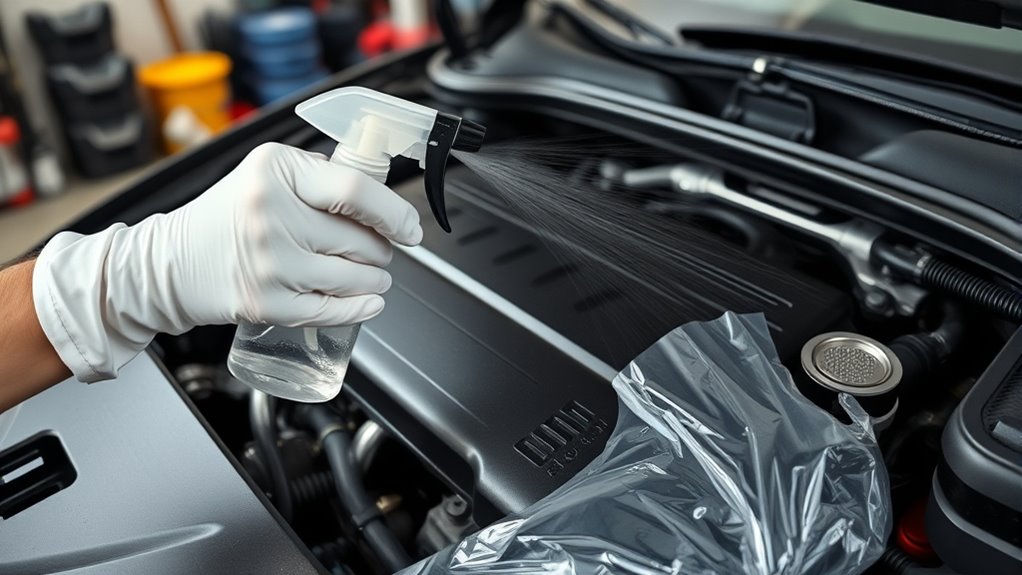
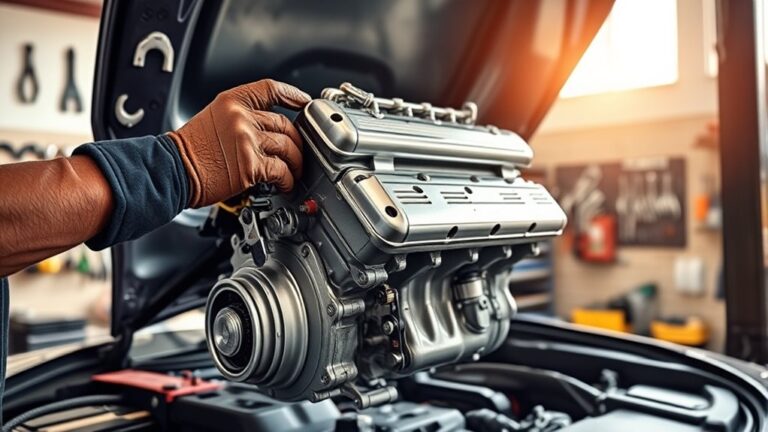
Before you begin cleaning, make sure your engine is cool to avoid burns and damage. Once cooled, start with engine cover removal if your car has one. This step exposes critical parts and makes cleaning more effective.
Gently unclip or unscrew the cover without forcing it, so you don’t damage any components. With the engine cover off, take a close look for any signs of oil leak detection. Spotting leaks early can prevent bigger issues and help you decide if professional repairs are needed before cleaning.
Pay attention to wet or greasy areas that don’t look normal. Removing debris and inspecting these spots gives you a safer, more thorough cleaning process. Preparing your engine properly sets the stage for better results and reduces the risk of causing harm during the cleaning. After this prep, you’ll be ready to move on with confidence.
How to Clean Your Car’s Engine With Household Supplies
Once you’ve prepared your engine by removing the cover and checking for leaks, you can start cleaning using simple household supplies. Begin with a mixture of warm water and mild dish soap to break down dirt and grease. Use a soft brush or sponge to scrub engine parts gently, focusing on greasy areas.
Start engine cleaning with warm water, mild soap, and a soft brush to gently remove grease and dirt.
For tougher grime, apply a homemade engine degreasing solution by mixing baking soda and water into a paste, then scrub those spots carefully. Avoid soaking electrical components.
Next, cover sensitive areas like the battery terminals and air intake with plastic bags to prevent water damage. Battery maintenance is crucial during this process; after cleaning nearby areas, wipe the battery terminals with a mixture of baking soda and water to neutralize corrosion, then dry thoroughly.
Rinse the engine lightly with a damp cloth or low-pressure water, ensuring you avoid drenching electrical parts. Finally, let everything dry completely before reinstalling the cover and starting your car.
Inspect and Maintain Your Car’s Engine After Cleaning
Although cleaning your engine removes built-up grime, you still need to inspect it closely to guarantee everything functions properly. Start by checking for any signs of damage or loose connections around the spark plug, as dirt and water could affect its performance. Make sure the spark plug wires are secure and free of corrosion.
Next, examine the engine oil level and quality. Cleaning may have disturbed seals or caused leaks, so topping off or changing the engine oil might be necessary to keep your engine running smoothly. Look for any oil leaks around the engine bay, which could indicate a problem.
Finally, inspect belts and hoses for cracks or wear, as these components can degrade faster after cleaning. Regular maintenance after cleaning assures your engine stays reliable and efficient. By taking these simple steps, you’ll extend your engine’s life and avoid costly repairs down the road.
Frequently Asked Questions
Can I Use a Pressure Washer to Clean My Car Engine?
You can use a pressure washer to clean your car engine, but you should be cautious because of risks like damaging sensitive components or forcing water into electrical parts. It’s better to use specialized engine cleaning tools designed to protect delicate areas.
If you do use a pressure washer, keep the pressure low, avoid direct sprays on electrical connections, and cover sensitive parts to prevent costly damage.
How Often Should I Deep Clean My Car Engine?
You should deep clean your engine every 12 to 18 months, depending on how often you drive and the conditions you face. Regular engine degreasing helps remove built-up grime and keeps things running smoothly.
Plus, it makes engine inspection easier, so you can spot leaks or wear early. If you drive in harsh environments or notice dirt buildup, consider cleaning it more often to protect your engine’s longevity.
Is It Safe to Clean the Engine When It’s Hot?
No, it’s not safe to clean the engine when it’s hot. Engine temperature plays an essential role in cleaning safety because a hot engine can cause burns or damage sensitive components.
You should always wait until the engine cools down completely before starting any cleaning. This way, you avoid warping metal parts, cracking plastic, or causing electrical issues. It ensures a safer and more effective engine cleaning process.
What Are the Common Mistakes to Avoid When Cleaning an Engine?
Don’t make the mistake of flooding your engine like it’s a tsunami. Too much water can cause serious engine corrosion. Avoid spraying electrical parts directly and never clean when the engine’s hot. Damage is almost guaranteed.
Also, don’t forget proper disposal of dirty water and cleaning agents to protect the environment. Taking these precautions helps you keep your engine safe and your conscience clear while you clean.
Can Engine Cleaning Improve My Car’s Performance?
Yes, cleaning your engine can improve your car’s performance. When you remove dirt and grime, you help prevent engine oil contamination, which keeps the engine running smoothly.
Also, clearing away battery corrosion ensures better electrical connections, reducing starting issues. By keeping these components clean, you help your car operate more efficiently and avoid potential damage.
Just be careful not to let water get into sensitive parts during cleaning.
Conclusion
Now that you know how to clean your engine with simple household supplies, you’re ready to keep it running smoothly. Treat your engine like a garden; regular care and attention help it thrive.
After cleaning, inspect it carefully to catch any issues early. With these easy steps, your car will thank you with better performance and longevity.
Don’t forget, a clean engine is like a fresh breeze under your hood, keeping everything cool and efficient. Keeping your engine clean is key to maintaining your car’s health and performance.