How to Keep Squirrels Out of Your Car Engine Step by Step
If you’ve ever found signs of squirrels nesting under your car hood, you’re not alone. Many people struggle with keeping these curious critters out of their car engines. It’s frustrating because squirrels can cause costly damage by chewing wires or building nests in tight spaces.
Luckily, there are effective ways to protect your vehicle and keep those pesky squirrels at bay.
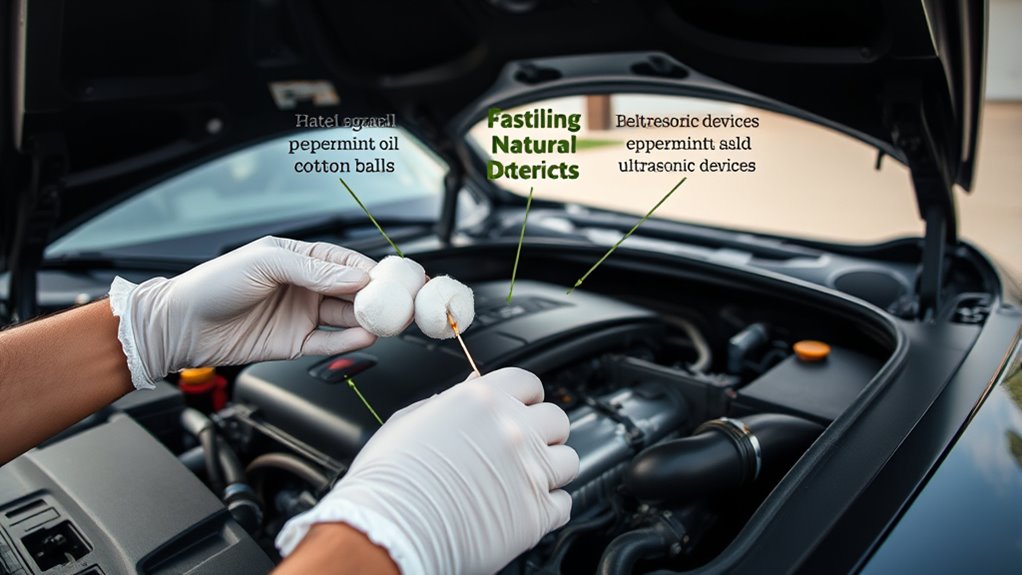
To keep squirrels out of your car engine, start by trimming nearby tree branches to block access. Next, seal any gaps around wiring or vents with steel mesh or silicone. Use natural repellents like peppermint oil and consider ultrasonic devices that emit high-frequency sounds.
Regularly check under the hood for nesting signs and clean debris safely, disconnecting your battery first. Consistent maintenance prevents damage and discourages squirrels.
Follow these steps closely, and you’ll find more ways to protect your vehicle.
Key Takeaways
- Trim tree branches near your driveway to block squirrel access to your car engine area.
- Seal engine bay entry points with steel mesh and high-temperature silicone to prevent nesting.
- Regularly inspect under the hood for nesting materials, chewed wires, or droppings during cold months.
- Apply natural deterrents like peppermint oil or use ultrasonic repellents around the engine compartment.
- Remove nests safely by disconnecting the battery first and clearing debris with gloves to avoid electrical hazards.
Reasons Squirrels Target Car Engines in Cold Weather?
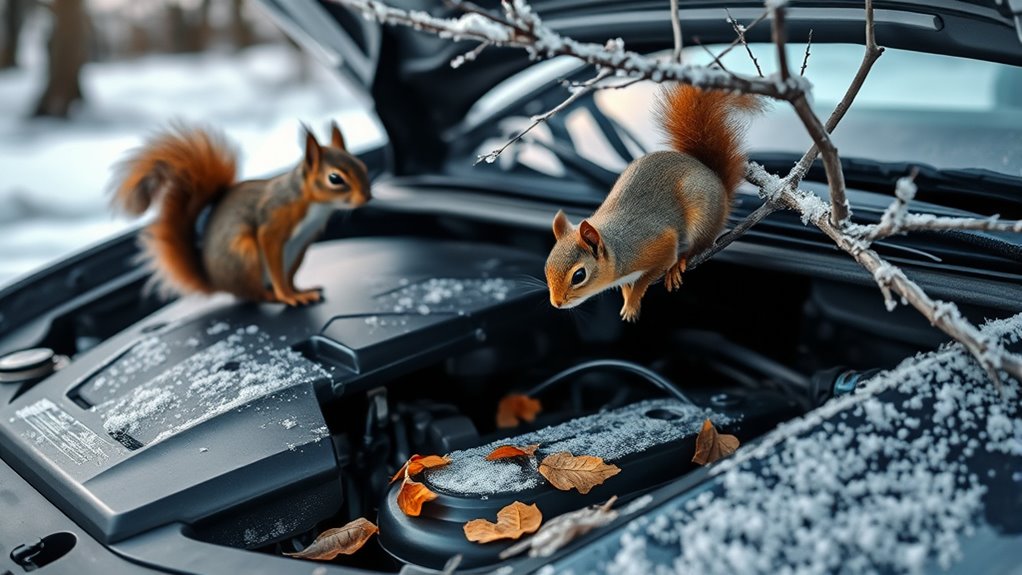
Because car engines provide warmth and shelter, squirrels often seek them out during cold weather. When temperatures drop, you’ll notice these critters turning to your car engine as a cozy refuge from the cold. Their natural nesting habits lead them to enclosed, protected spaces. Your engine compartment fits the bill perfectly.
Since squirrels have a diet rich in nuts, seeds, and occasionally small insects, they often stash food near their nests. Your engine bay offers a safe spot to store these snacks, away from predators and harsh weather.
You’ll find that squirrels prioritize warmth and safety over comfort, so your parked car becomes an ideal temporary home. Understanding their nesting habits and diet helps you realize why they’re drawn to your vehicle in winter. This knowledge is essential for preventing damage and keeping squirrels out of your car engine during cold months.
How to Spot Signs of Squirrel Activity Under Your Car Hood
When squirrels seek warmth and shelter in your car engine, they often leave behind clear signs of their presence. You can catch these early to prevent damage. Start by checking under the hood for nesting materials like leaves, twigs, or shredded insulation.
Look for chewed wires or plastic components. Droppings or urine stains can also indicate frequent visits. You might notice grease smudges or footprints on engine parts, or odd smells from nesting or urine.
If you have bird feeders nearby, squirrels might be attracted to the area, increasing the chance they investigate your car. Also, poorly maintained tree trimming can allow easy access from overhanging branches to your vehicle.
Keep an eye on these clues, especially during colder months when squirrels look for cozy spots. Spotting activity early lets you take action before costly repairs are needed.
Effective Physical Methods to Prevent Squirrel Nests in Your Car Engine
Although squirrels are persistent, you can take straightforward physical steps to keep them from nesting in your car engine. Start by trimming back any tree branches near your driveway or garage, since squirrels often use these as bridges to reach your vehicle.
Keeping trees well-maintained reduces easy access points. Next, reconsider the placement of bird feeders. While they attract birds, they also draw squirrels close to your car, increasing the risk of them exploring under your hood.
Maintaining trees and relocating bird feeders helps keep squirrels away from your car engine.
Position feeders far from your parking area or use squirrel-proof designs to minimize visits. Moreover, you can use physical barriers like mesh screens or wire wraps around vulnerable engine components, but be careful not to interfere with your car’s operation.
Regularly check under your hood, especially during colder months when squirrels seek warmth. By combining tree trimming and mindful bird feeder placement, you’ll greatly reduce the chances of squirrels turning your engine bay into their next nesting spot.
Step-by-Step Guide to Sealing Entry Points Around Your Car Engine
To keep squirrels out, you’ll need to identify and seal every possible entry point around your car engine. Start by inspecting the engine bay thoroughly, paying close attention to gaps and holes where squirrels might sneak in. Areas near wiring, vents, and hoses are common entry points.
Here’s how to secure them effectively: use steel mesh or hardware cloth to cover larger openings. Apply high-temperature silicone sealant around small gaps. Replace worn or missing grommets on wiring and hoses.
Check under the hood after moving bird feeders nearby, as they attract squirrels. Also, store lawn mowers and other equipment away from your vehicle to reduce hiding spots.
Sealing these points prevents squirrels from nesting and damaging your car. Regularly inspect and maintain these barriers, especially if you keep bird feeders close or have lawn mowers stored nearby. This proactive approach keeps your engine safe and squirrel-free.
Natural Repellents That Keep Squirrels Away From Your Car Engine
After sealing entry points, you’ll want to add natural repellents to discourage squirrels from approaching your car engine altogether. One effective method is to avoid attracting squirrels nearby by managing bird feeders carefully. Place them far from your vehicle, as they can draw squirrels closer to your car.
Seal entry points and keep bird feeders away to naturally repel squirrels from your car engine.
You can also use natural scents like peppermint oil or vinegar around your engine bay. Squirrels dislike these smells and tend to stay away. Furthermore, regular tree trimming near your parking area helps reduce easy access routes for squirrels to jump onto your car.
By cutting back branches that hang close, you limit their pathways and discourage them from exploring your engine compartment. Combining these natural deterrents with your sealed entry points creates a less inviting environment for squirrels, helping protect your car engine without harsh chemicals or traps.
Keep your surroundings tidy and apply these repellents consistently to maintain a squirrel-free zone.
Best Commercial Deterrents to Keep Squirrels Away
You can really boost your efforts by using commercial deterrents made specifically to keep squirrels away from your car engine. For instance, ultrasonic repellent devices, natural scent sprays, and electronic motion sensors all provide effective and targeted protection. Let’s take a closer look at how these tools work and figure out which one might be the best fit for you.
Ultrasonic Repellent Devices
Although squirrels are clever at sneaking into car engines, ultrasonic repellent devices offer a smart solution to keep them away. These devices emit high-frequency sounds that irritate squirrels without bothering humans or pets.
They’re widely used in pest control and even as bird deterrents, proving their versatility. When choosing an ultrasonic repellent, consider these factors:
- Coverage area suitable for your parking space
- Battery life or power source options
- Frequency range targeting squirrels specifically
- Weather resistance for outdoor use
- Ease of installation and maintenance
Natural Scent Sprays
When squirrels invade your car engine, natural scent sprays offer an effective and eco-friendly way to keep them at bay. These sprays use smells squirrels dislike, like predator urine or strong essential oils, to deter them without causing harm. Place sprays around your vehicle, especially near bird feeders and trimmed trees that attract squirrels. Reapply regularly, especially after rain.
| Scent Type | Effectiveness | Application Area | Notes |
|---|---|---|---|
| Predator Urine | High | Engine compartment | Mimics natural threats |
| Peppermint Oil | Moderate | Around car perimeter | Refresh often |
| Garlic Extract | Moderate | Near bird feeders | Repels rodents broadly |
| Eucalyptus Oil | Moderate | Near trimmed trees | Pleasant for humans |
Use sprays alongside tree trimming to reduce squirrel access points.
Electronic Motion Sensors
Since squirrels are quick to adapt to natural deterrents, electronic motion sensors offer a reliable, high-tech solution to keep them away from your car engine. These devices detect movement and emit a sudden sound or light, startling squirrels and discouraging them from nesting.
You’ll find them especially useful if you have bird feeders nearby or haven’t done recent tree trimming, both of which attract squirrels. To maximize their effectiveness:
- Place sensors near common entry points to your engine compartment
- Adjust sensitivity to avoid false alarms from small wildlife
- Combine with regular tree trimming to reduce access routes
- Keep bird feeders away from your parking area
- Check batteries regularly for consistent performance
Using motion sensors adds an effective layer of protection that natural scents alone can’t match.
Using Ultrasonic Devices to Deter Squirrels From Your Car Engine
If you want a hassle-free method to keep squirrels away from your car engine, ultrasonic devices offer a smart solution. These devices use ultrasonic technology to emit high-frequency sounds that are unpleasant to squirrels but inaudible to humans. By installing an ultrasonic device near your vehicle, you create an invisible barrier that deters squirrels from nesting or chewing on engine components.
Ultrasonic pest control is safe, non-toxic, and requires minimal maintenance, making it an excellent choice for anyone looking to protect their car without harmful chemicals or traps. You just need to guarantee the device is positioned correctly for maximum coverage and that it remains powered, typically via batteries or a plug-in source.
While ultrasonic devices are effective, combining them with other deterrent methods will improve overall protection. Remember, these devices don’t harm squirrels; they simply encourage them to find a less hostile environment, keeping your engine safe and hassle-free.
How to Safely Remove and Clean a Squirrel Nest From Your Engine
First, you’ll want to find exactly where the squirrel nest is tucked away in your engine compartment. Once you spot it, take your time and use gentle, safe methods to remove it—this way, you won’t damage your car or disturb the animals too much. After you’ve cleared it out, make sure to clean the area thoroughly to get rid of any leftover debris and help keep squirrels from coming back.
Identifying Nest Location
When you suspect squirrels have made a nest in your car engine, start by carefully inspecting the area around the battery, air filter, and under the hood’s insulation. Look for signs like chewed wires, nesting materials, or droppings.
Check these common nesting spots: near the battery compartment, where warmth attracts them; around the air filter housing, often a cozy spot; beneath hood insulation, where they hide safely; in wiring clusters, where they can build nests undisturbed; and close to bird feeders or overhanging branches, since tree trimming can reduce easy access.
Safe Removal Techniques
After locating the squirrel nest in your engine, you’ll want to remove it carefully to prevent damage to both your car and the animals. First, wear gloves and gently take out the nesting material, avoiding sudden movements that might scare the squirrels.
Place the nest away from bird feeders and garden shrubs to discourage them from returning. Use a soft brush to loosen debris but avoid harsh tools that can harm your engine components.
Cleaning Engine Area
Although removing the nest is an essential step, you’ll also want to thoroughly clean the engine area to eliminate any remaining debris, nesting materials, or droppings that could cause odors, damage, or attract other animals. Start by disconnecting the car battery to avoid electrical hazards.
Then, carefully remove any visible debris without spilling engine oil or disturbing sensitive parts. Use a vacuum or compressed air to clear hard-to-reach spots. Follow up with a gentle cleaning solution safe for engine components. Here’s what to focus on:
- Clear away nesting materials and droppings
- Inspect for signs of engine oil leaks
- Clean around the car battery terminals
- Remove any debris near belts and wiring
- Dry the area thoroughly before reconnecting the battery
Cleaning helps prevent further damage and keeps squirrels from returning.
How Regular Car Maintenance Helps Prevent Squirrel Damage
Since squirrels are attracted to the warmth and shelter of your car engine, regular maintenance plays an essential role in keeping them away. By sticking to a routine, you minimize the chances of squirrels making your engine their cozy hideout.
Regularly checking tire pressure and ensuring it stays within recommended levels not only keeps your car safe but also discourages rodents from nesting nearby. Proper maintenance improves fuel efficiency, meaning your car runs smoothly without overheating. Overheating is another factor that can attract squirrels seeking warmth.
Keeping your engine clean, inspecting belts, and sealing any openings during maintenance reduces inviting spaces for squirrels. When you catch issues early, like leaks or loose parts, you prevent smells or conditions that might lure them in.
What to Do If Squirrels Have Damaged Your Engine Wiring
If you find that squirrels have chewed through your engine wiring, act quickly to prevent further damage and safety hazards. Start by performing a thorough car inspection to assess the extent of the damage. Damaged wiring can cause electrical failures or even fires, so don’t delay repairs. Here’s what you should do:
- Disconnect the battery to avoid electrical shocks.
- Inspect all visible wiring for bite marks or frayed areas.
- Call a professional mechanic to repair or replace damaged wires safely.
- Consider bird removal and other pest control services to prevent future intrusions.
- Use protective wiring covers or deterrents to keep squirrels away.
Frequently Asked Questions
Can Squirrels Cause Engine Overheating?
Yes, squirrels can cause engine overheating. Their behavior often involves chewing on wires and nesting inside the engine compartment, which can lead to engine damage.
Damaged wires might disrupt the cooling system or sensors, causing your engine to run hotter than usual. If you don’t address squirrel behavior quickly, you risk costly repairs.
Are Squirrels Attracted to Specific Car Brands or Models?
You won’t find clear evidence that squirrels favor specific car brands or models. Squirrel behavior is more influenced by factors like warmth, shelter, and engine noise than car brand preferences.
If your car is parked in a quiet, wooded area, it might attract squirrels regardless of its make. So, don’t worry about your car brand being the issue; focus instead on minimizing inviting conditions for squirrels.
How Do Squirrels Affect Car Insurance Claims?
Imagine waking up to find tiny teeth marks and shredded wires under your hood. Squirrels can cause unexpected damage, leading you to file wildlife insurance damage claims. These claims cover repairs caused by animals, but frequent damage might raise your premiums.
You’ll want to document everything carefully and check if your policy includes wildlife coverage. Staying proactive helps you avoid surprise costs and keeps your car running smoothly despite these furry intruders.
Can Squirrel Nests Lead to Fire Hazards in Cars?
Yes, squirrel nests can lead to fire hazards in cars. Their nests often contain dry leaves, twigs, and other flammable materials that might come into contact with hot engine parts or electrical wiring.
If you don’t address this, it can cause sparks or even a fire. Regular nest removal is essential to keep your vehicle safe. So, make sure you check under your hood often and remove any nests you find promptly.
Do Squirrels Prefer Parking Garages Over Street Parking?
You might notice squirrels darting between cars in parking garages more than on streets. That’s no coincidence. Their parking habits lean toward garages because these spaces offer shelter from weather and predators, matching squirrel preferences for safety and warmth.
While street parking exposes them to noise and open spaces, garages provide quiet nooks, making them more attractive. So, yes, squirrels often prefer parking garages over street parking because it suits their instincts and survival needs.
Conclusion
Keeping squirrels out of your car engine is like building a fortress that’s strong, smart, and vigilant. By spotting signs early, sealing entry points, and using natural repellents or ultrasonic devices, you create a barrier squirrels won’t breach.
Regular maintenance acts as your watchtower, preventing costly damage before it happens. If squirrels do invade, removing nests and repairing wiring promptly will restore order quickly.
Stay proactive, and your car will remain squirrel-free and running smoothly all year round. Keeping squirrels out of your car engine is key to avoiding expensive repairs and ensuring peace of mind.