7 Steps to Know What Engine Your Car Has
Figuring out what engine your car has can be surprisingly tricky, and you’re definitely not alone if you’ve struggled with this before. Many people want to know more about their vehicle’s engine for maintenance, upgrades, or just plain curiosity but don’t know where to start.
To know what engine your car has, start by confirming its make, model, and year. Then, check under the hood for labels showing engine specs. Decode your VIN; the eighth character often reveals engine info. Look for engine stamps or casting numbers on the block, and use online tools to cross-check details.
Don’t forget to consult your owner’s manual or a mechanic for accurate confirmation.
Keep going, and you’ll uncover helpful tips to maintain your engine efficiently.
Key Takeaways
- Check your vehicle’s owner manual or registration for engine make, model, and specifications. This info is usually straightforward and easy to find.
- Locate and read engine labels or markings under the hood. These often show displacement and engine codes that can give you quick details.
- Decode the VIN, especially the 8th character, using online tools. This helps you identify the engine type and other important details.
- Use online databases or casting number lookup tools to find detailed engine information. These resources can be really helpful if you want to dig deeper.
- Consult a mechanic or dealership with your VIN for professional engine identification and confirmation. Sometimes, expert advice is the best way to be sure.
Confirm Your Car’s Make, Model, Year, and Engine Basics
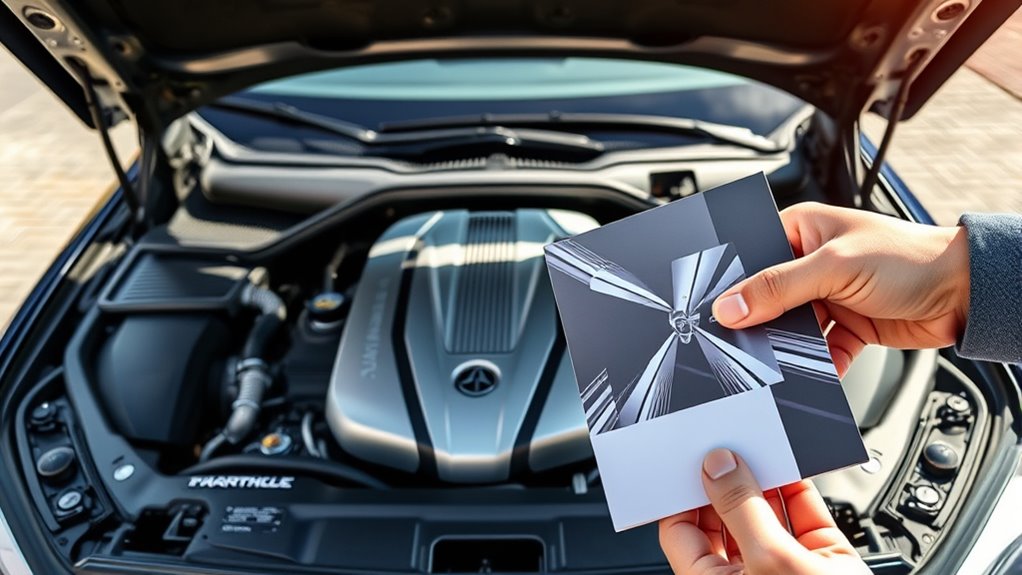
Before you plunge into identifying your car’s engine, start by confirming its make, model, year, and basic engine details. This foundational step sets the stage for understanding what powertrain you’re dealing with. You can usually find this information in your owner’s manual or vehicle registration. Knowing your car’s specifics helps you follow the right engine maintenance schedule and optimize fuel efficiency.
Once you have these details, you’ll better grasp how the engine works within your car’s design. For example, a 2015 Honda Civic with a 1.8L engine will have different maintenance needs and fuel economy expectations than a 2015 Honda Accord with a 2.4L. Confirming this upfront saves you from costly mistakes and keeps your vehicle running smoothly.
Check Under the Hood for Engine Labels and Specs
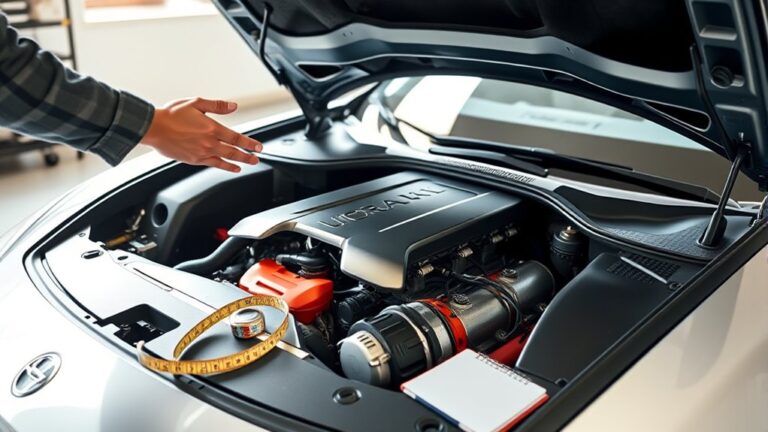
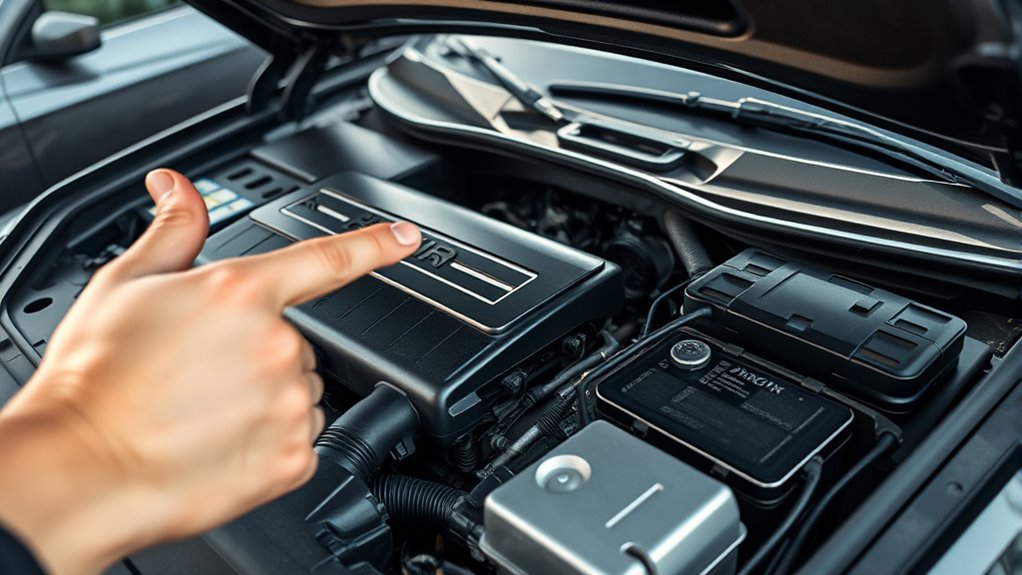
When you open your car’s hood, you’ll often find labels and plates that provide key engine information, such as displacement, horsepower, and engine code. These labels are usually placed on the valve cover, radiator support, or near the engine block. Checking them gives you a direct insight into what engine powers your vehicle.
You’ll also spot recommendations for engine oil type and viscosity, which are essential for maintaining peak performance and longevity.
Besides helping you identify your engine, these specs can hint at your car’s fuel efficiency. For example, smaller displacement engines typically consume less fuel, while larger or turbocharged ones might prioritize power over economy.
Make sure to note the exact numbers and codes on these labels so you can cross-reference them later if needed. This step is a straightforward way to confirm your engine type before moving on to more detailed checks.
Decode Your VIN to Reveal Engine Information
You can learn a lot about your engine by decoding your car’s VIN. The VIN has a specific structure that includes engine codes. All you have to do is find the right characters. Once you know where to look, you’ll uncover detailed info about what’s under your hood. It’s pretty straightforward once you get the hang of it!
Understanding VIN Structure
How can you quickly identify your car’s engine type without popping the hood? The answer lies in understanding your Vehicle Identification Number (VIN) structure. Your VIN is a 17-character code that encodes essential information about your car, including details that affect engine performance and fuel efficiency.
Within the VIN, specific characters represent the engine type, size, and sometimes the fuel system. By learning to read these characters, you can determine your engine’s specs instantly. This knowledge helps you assess how your car’s engine performs and its fuel efficiency, which is critical for maintenance and upgrades.
Locating Engine Codes
Where can you find the engine codes hidden within your vehicle’s VIN? Look closely at the 8th character of the 17-digit VIN; this spot often reveals the engine type installed in your car.
By decoding this character, you can identify specifics about your engine, such as its displacement, fuel system, and emission standards. Knowing your engine code helps you choose the right engine oil, ensuring peak performance and longevity.
It also informs you about the exhaust emissions controls, which is essential for passing inspections and maintaining environmental compliance. You can decode your VIN using online tools or your vehicle’s manual.
Once you locate and understand your engine code, you’ll have a clearer picture of your car’s engine specs and its maintenance needs.
Find Engine Stamps or Casting Numbers on the Block
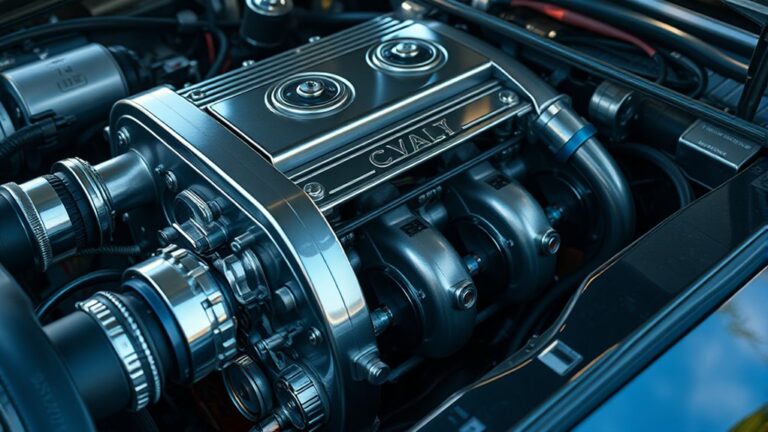
Although engine stamps or casting numbers may seem like small details, they hold the key to identifying your car’s engine type. You’ll want to start by inspecting the engine casting, the solid metal block forming the core of your engine. Look closely around the block for raised or engraved numbers and letters.
These numbers are the engine casting marks, which provide unique identifiers for your specific engine model. For effective stamp identification, clean the engine block surface first; dirt and grime can hide these essential markings. Use a flashlight to illuminate hard-to-see areas, focusing on flat surfaces or near the cylinder head, bell housing, or intake manifold.
Once you locate the engine casting numbers, jot them down carefully. These codes reveal details about the engine’s origin, manufacturing date, and specifications. They help you accurately pinpoint what engine your car has without guesswork.
Use Online Tools to Lookup Your Engine Type
Once you’ve gathered the engine casting numbers, you can quickly identify your engine type by using online lookup tools. These websites and apps let you enter the casting number and instantly provide detailed information about your engine, including its model, displacement, and year of manufacture. This saves you time and eliminates guesswork.
Knowing your exact engine type helps you choose the right engine oil, ensuring optimal lubrication and performance. It also lets you understand your car’s fuel efficiency better, as different engines have varying consumption rates. Some tools even offer maintenance tips tailored to your engine model, which can improve longevity and save money in the long run.
Most lookup tools are free and easy to use. Just input the casting number or vehicle identification number (VIN). This step is especially helpful if you’re buying a used car or restoring a classic, as it confirms the engine specs without relying solely on visual inspection.
Check Your Owner’s Manual or Manufacturer Info
Grab your owner’s manual and flip to the section that lists engine specifications. You’ll find detailed info about your engine type and size there. It’s a good idea to double-check these details against the manufacturer’s official documents to make sure everything matches up.
Locate Manual Section
Where should you start when trying to identify your car’s engine? The best place is your owner’s manual. Flip to the section that covers maintenance or specifications. This is usually near the front or middle.
Here, you’ll find essential details about engine oil type and recommended tire pressure, which often correlate with your engine model. Don’t overlook the manufacturer info pages; they sometimes include engine codes or descriptions.
If you can’t locate the right section, check the manual’s index under “engine” or “maintenance.” Using the manual guarantees you get accurate, vehicle-specific information straight from the source.
This saves time and avoids guesswork before moving on to more technical engine specifications later. Keep your manual handy. It’s your key reference for understanding your car’s engine.
Identify Engine Specifications
After locating the right section in your owner’s manual, focus on the engine specifications listed there. This info helps you understand key details like engine type, displacement, and fuel efficiency, which directly affect engine noise and overall performance.
Knowing these specs lets you anticipate how your car should sound and how efficiently it uses fuel.
Here’s a simple table to guide you:
| Specification | What to Look For |
|---|---|
| Engine Type | Inline, V6, V8, etc. |
| Displacement | Measured in liters (L) |
| Horsepower | Power output |
| Torque | Engine force |
| Fuel Efficiency | MPG or L/100 km |
Check these specs to match your car’s engine noise and fuel efficiency expectations accurately.
Verify Manufacturer Details
Although you’ve gathered basic engine specs, you should verify the manufacturer details to confirm your car’s exact engine model. Start by checking your owner’s manual; it usually contains detailed information about the engine type, recommended engine oil, and maintenance tips tailored for *maximum* fuel efficiency.
If the manual isn’t handy, visit the manufacturer’s website or contact customer service with your vehicle identification number (VIN) to get precise engine details. Knowing the exact engine model helps you choose the correct engine oil, which protects engine components and *guarantees* smooth performance.
It also aids in understanding how to *maximize* fuel efficiency, saving you money and reducing emissions. Verifying these details prevents costly mistakes and keeps your car running at its best.
Verify Engine Details With a Mechanic or Dealership
If you want to be absolutely sure about your car’s engine specifications, consulting a mechanic or dealership is the best move. These professionals have access to detailed databases and manufacturer records, so they can quickly confirm your engine’s exact model and specs. When you visit, ask them about engine oil specifications to guarantee you’re using the right type and grade for peak performance.
They can also provide tire pressure recommendations tailored to your engine’s power and load capacity, which helps with safety and fuel efficiency. Mechanics can physically inspect your engine to verify details that paperwork might miss, such as any modifications or replacements. Dealerships, on the other hand, can pull up your vehicle’s original build sheet.
Don’t hesitate to bring your Vehicle Identification Number (VIN) along. It speeds up the process. By verifying engine details with experts, you avoid guesswork and keep your car running smoothly.
Frequently Asked Questions
How Do Engine Types Affect My Car’s Fuel Efficiency?
Engine types directly impact your car’s fuel consumption because different engine designs use fuel differently. Smaller, efficient engines typically consume less fuel, while larger or turbocharged ones might offer more power but increase fuel consumption.
Hybrid or electric engine designs can drastically improve fuel efficiency compared to traditional gasoline engines. So, understanding your engine type helps you predict how much fuel your car will use and manage your driving habits to save on fuel costs.
Can I Upgrade My Engine Without Affecting Warranty?
You can upgrade your engine without affecting your engine warranty, but only if you guarantee upgrade compatibility. If the new engine or parts meet your car manufacturer’s specifications and are installed by authorized professionals, your warranty usually stays intact.
However, using incompatible upgrades or unauthorized mechanics can void it. Always check your warranty terms and consult your dealer before making any engine upgrades to protect your coverage.
What Are Common Signs of Engine Wear or Damage?
When your engine’s running rough, it’s like a ticking time bomb waiting to go off. You’ll notice dark, dirty engine oil or a drop in oil levels, signaling wear.
Overheating reveals problems with the cooling system, often causing steam or a burning smell. Strange noises, loss of power, or excessive exhaust smoke also point to engine damage.
Catch these signs early to avoid costly repairs and keep your ride smooth.
How Does Engine Size Influence Vehicle Performance?
Engine size, measured by engine displacement, directly affects your vehicle’s performance. A larger displacement usually means more power since it allows your engine to burn more fuel-air mixture, boosting horsepower.
When you compare horsepower, engines with greater displacement tend to deliver quicker acceleration and higher top speeds. However, bigger engines might consume more fuel, so you’ll want to balance power needs with efficiency depending on how you drive.
Are There Differences Between Diesel and Gasoline Engines?
Diesel and gasoline engines are like night and day. You’ll notice diesel engines produce louder engine noise and deliver more torque, making them perfect for heavy-duty tasks.
Gasoline engines run smoother and quieter, ideal for everyday driving. Plus, diesel engines often meet stricter emission standards due to advanced filters, but they can emit more nitrogen oxides.
Knowing these differences helps you pick the engine that suits your driving style and needs best.
Conclusion
So, now that you’ve cracked the code of your car’s mysterious engine identity, you’re basically a detective, minus the trench coat. Whether you’ve peeked under the hood, decoded the VIN, or bribed a mechanic for secrets, you’ve earned your engine know-how badge.
Next time someone asks, “What engine do you have?” you can confidently say, “Oh, just the one I uncovered after a seven-step treasure hunt.” Congrats, you’re officially a car whisperer who knows what engine your car has!