Checking Your Car Engine Oil in 3 Simple Steps
If you’ve ever felt unsure about how to check your car’s engine oil, you’re not alone. Many drivers struggle to keep up with this simple yet essential maintenance task. Knowing how to check your engine oil properly can save you time, money, and a lot of stress down the road.
To check your car’s engine oil in 3 simple steps, first park on level ground and let the engine cool for accurate readings.
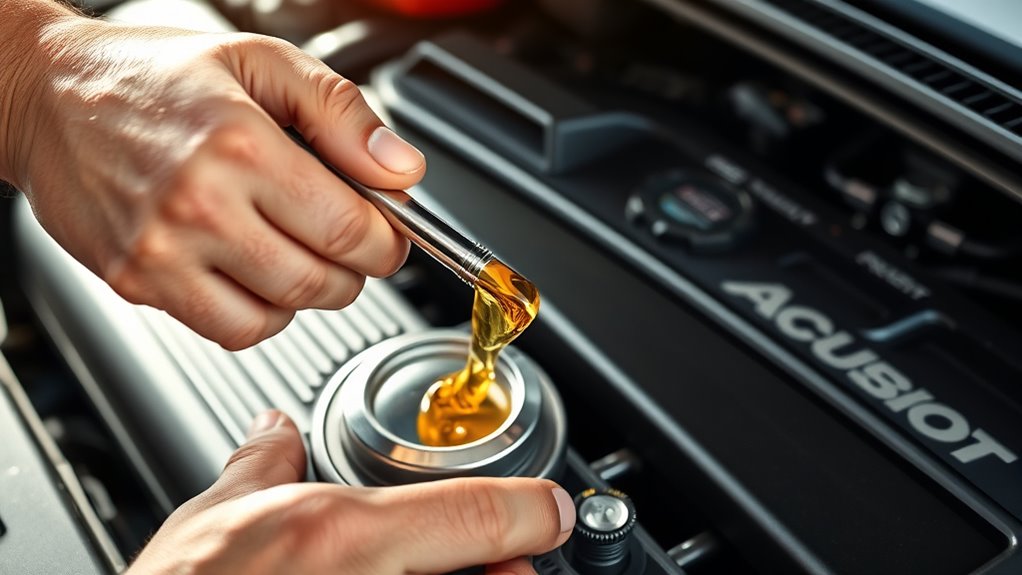
Next, pull out the dipstick, wipe it clean, reinsert it fully, then remove it again to check the oil level between the minimum and maximum marks.
If it’s low, add the recommended oil carefully, avoiding overfill.
Taking these quick steps helps keep your engine running smoothly and prevents damage.
Explore further to learn how to maintain ideal oil quality and safety.
Key Takeaways
- Park your car on level ground and turn off the engine. Wait 10 minutes for the oil to settle.
- Open the hood, find the dipstick, and wipe it clean before measuring.
- Fully reinsert the dipstick, then remove it to check the oil level. Make sure it’s between the minimum and maximum marks.
- Take a close look at the oil’s color and texture. Check for cleanliness and proper viscosity based on your manufacturer’s guidelines.
- If the oil is low, add the recommended type. Be careful not to overfill, and then recheck the level to make sure it’s right.
How to Check Your Engine Oil in 3 Easy Steps
Before you start driving, it’s important to check your engine oil to keep your car running smoothly. First, park your car on level ground and turn off the engine, allowing it to cool for a few minutes.
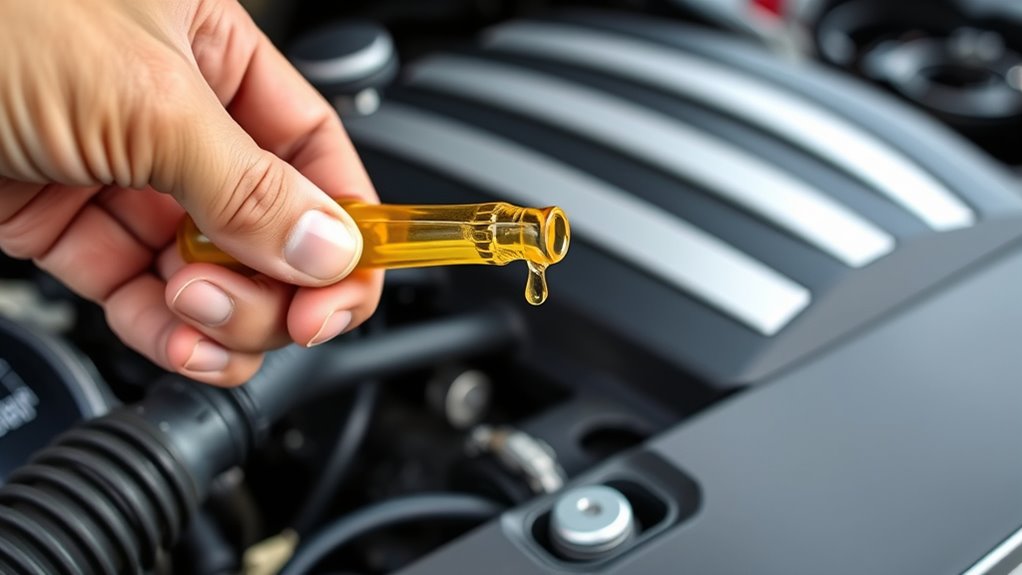
Next, locate the dipstick, pull it out, and wipe it clean with a cloth. Reinsert the dipstick fully, then pull it out again to check the oil level. You want the oil to be between the minimum and maximum marks.
Besides the level, pay attention to the oil’s color and texture. Dark, gritty oil means it’s time for a change.
Keep in mind that oil viscosity affects how well your engine oil lubricates your car, especially in different temperatures. Using the correct engine oil types recommended by your vehicle manufacturer guarantees proper performance.
Regularly checking oil helps you spot issues early and maintains your engine’s health.
Prepare Your Car to Check Engine Oil
Although checking your engine oil might seem straightforward, preparing your car properly guarantees accurate results. Before you start, make sure the engine is cool to avoid burns and get the most precise oil reading. Warm oil can give a false impression of the oil level and affect your understanding of the oil viscosity, which is essential for engine health.
Proper preparation also helps in early engine diagnostics by revealing potential issues.
Follow these steps to prepare your car:
Park your car on a level surface to guarantee an even oil distribution. Turn off the engine and wait at least 10 minutes so the oil settles in the oil pan. Open the hood and locate the dipstick, wiping it clean before checking. Check your owner’s manual for the recommended oil viscosity to compare with what’s in your engine.
These steps make your oil check reliable and help maintain your car’s performance.
Fix Low Engine Oil Levels Safely
If you find your engine oil level is low, you’ll want to address it promptly to avoid damaging your engine. Start by adding the correct type and amount of oil recommended in your owner’s manual. Avoid overfilling, as too much oil can cause engine issues.
If your oil is dirty or hasn’t been changed in a while, consider scheduling a full oil change instead of just topping off. This guarantees your engine runs smoothly and prolongs its life. You might also investigate using oil additives, which can improve oil performance and help reduce wear. However, use additives cautiously and only those approved for your vehicle.
After adding oil or performing an oil change, recheck the level with the dipstick to confirm it’s within the safe range. Fixing low engine oil levels safely keeps your car running efficiently and prevents costly repairs down the road. Always handle oil carefully and clean up any spills promptly.
Frequently Asked Questions
How Often Should I Change My Engine Oil?
You should change your engine oil every 3,000 to 7,500 miles, depending on your car’s make and engine oil viscosity. Always follow the oil change schedule in your owner’s manual to keep your engine running smoothly.
Thicker oil (higher viscosity) might need less frequent changes, while thinner oil requires more attention. Regular oil changes prevent engine wear and maintain performance, so don’t skip them or wait too long between services.
What Type of Oil Is Best for My Car?
Choosing the wrong oil type is like pouring syrup into your gas tank. It can be disastrous! To keep your engine purring, pick oil with the right viscosity, usually specified in your owner’s manual.
Synthetic oils offer better protection and last longer, but make certain your engine has synthetic compatibility. Don’t just grab any bottle. Matching oil viscosity and synthetic compatibility ensures your car runs smoothly and avoids costly repairs down the road.
Can I Use Synthetic Oil in Any Engine?
You can use synthetic oil in most engines, but you should always check your car’s manual for oil compatibility first. Synthetic benefits include better performance in extreme temperatures and longer engine protection.
However, older engines or those with high mileage might need special consideration. Using the wrong oil can cause issues, so confirm compatibility to enjoy synthetic’s advantages without risking damage to your engine.
What Are Signs of Engine Oil Leaks?
Wondering how to spot oil leak identification quickly? You’ll notice dark, greasy spots under your car or a burning smell if engine oil seals are failing. Your engine might run noisier or show a warning light on the dashboard.
If you catch these signs early, you can avoid serious damage. Don’t ignore puddles or low oil levels; these are clear clues that your engine oil seals might be compromised.
How Does Oil Quality Affect Engine Performance?
Oil quality directly impacts your engine’s performance because poor oil with incorrect viscosity can’t lubricate effectively, causing increased friction and wear. When contaminant buildup occurs, it clogs oil passages and reduces oil flow, leading to overheating and potential damage.
Using the right viscosity oil keeps your engine running smoothly, while clean oil prevents sludge and deposits that degrade performance. So, maintaining high-quality oil is essential for your engine’s health and efficiency.
Conclusion
Checking your engine oil is as easy as pie when you follow these simple steps. Keeping an eye on your oil level guarantees your car runs smoothly and prevents costly repairs down the road. Don’t wait for warning lights to flash like a red flag. Make it a habit to check regularly.
With just a little effort, you’ll keep your engine purring like a content cat for miles to come. Remember, regularly checking your car engine oil is key to maintaining your vehicle’s health and performance.