How to Drain Engine Oil From a Car in 3 Easy Steps
If you’ve ever tried changing your car’s engine oil, you know it can feel complicated and messy. You’re not alone—many people struggle with the process or worry about doing it wrong. But the truth is, draining engine oil from your car doesn’t have to be a headache.
To drain your car’s engine oil in three easy steps, first gather tools like a wrench, oil filter wrench, and a container. Then safely raise your vehicle and locate the drain plug and oil filter.
Next, loosen and remove the drain plug to let the oil flow into the pan. Then remove the oil filter to drain any leftover oil.
Finally, reinstall the plug securely, replace the filter, and dispose of the used oil properly. Keep going if you want tips on refilling and final checks.
Key Takeaways
- Park the car on a level surface, engage the parking brake, and make sure the engine is cool before starting.
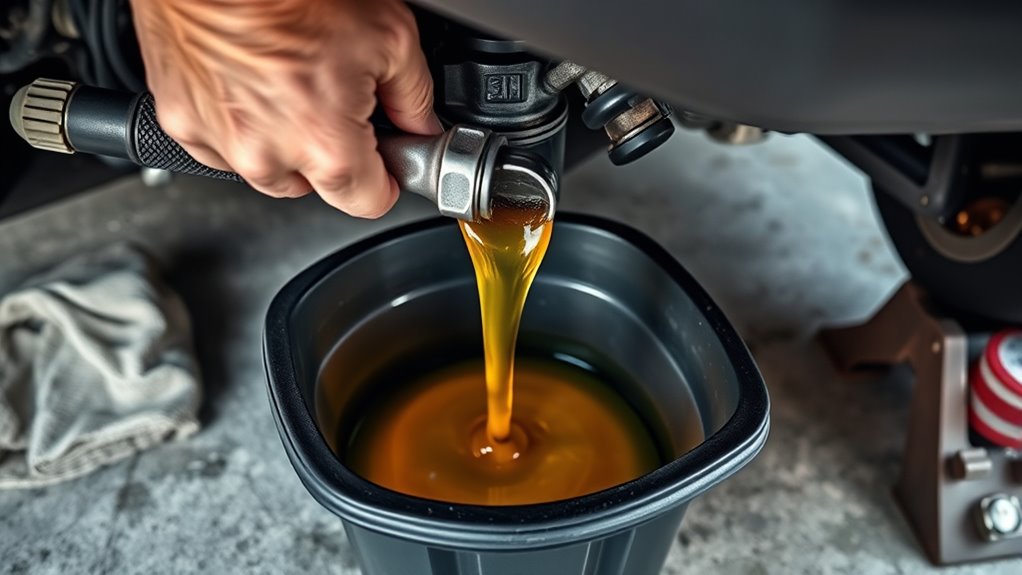
- Use a wrench to loosen and remove the drain plug. Let the oil drain into a catch pan.
- Remove the oil filter with an oil filter wrench while keeping the catch pan underneath to catch any residual oil.
- After draining, reinstall and tighten the drain plug securely by hand. Then, install a new oil filter.
- Dispose of used oil properly at recycling centers. Finally, refill with the correct oil type using a funnel.
Gather Tools and Prepare Your Car for Oil Change
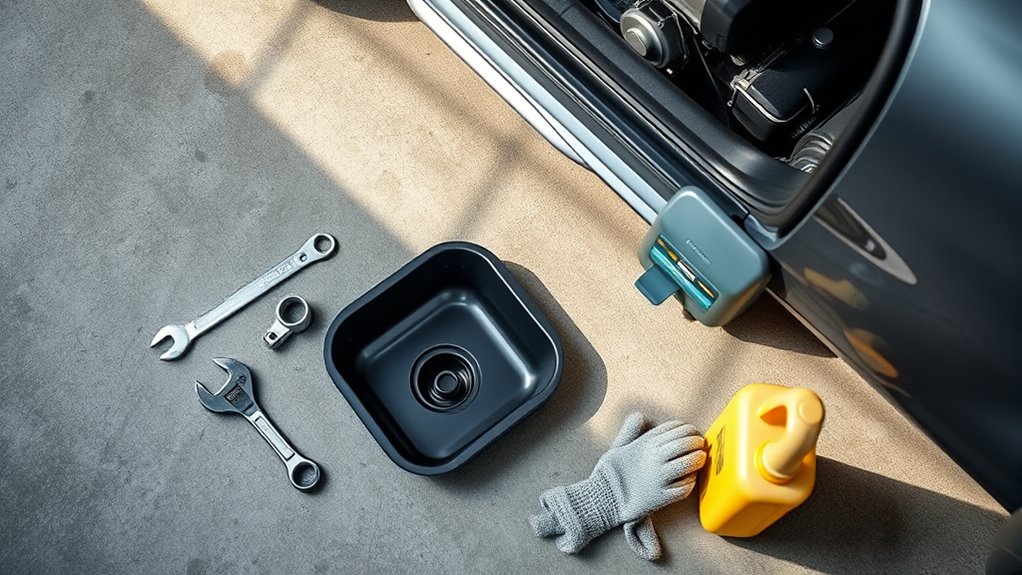
Before you begin draining your engine oil, make sure you have all the necessary tools and have properly prepared your car. You’ll need a wrench to loosen the drain plug and an oil filter wrench to remove the oil filter. Also, have a suitable container ready to catch the old oil.
Park your car on a level surface and engage the parking brake for safety. If your car is low, use ramps or jack stands to raise it. Never rely on a jack alone. Wearing gloves and having rags nearby helps keep things clean.
Double-check that the engine is cool enough to avoid burns. Locate the drain plug under the engine; it’s usually a large bolt at the lowest point, so the oil drains completely. Identifying the oil filter before you start helps streamline the process later.
Proper preparation guarantees a smooth, safe oil change without surprises.
How to Safely Drain Engine Oil Step by Step
Now that you’ve gathered your tools and positioned your car safely, it’s time to begin draining the engine oil. First, locate the drain plug underneath the car. Place your oil catch pan below it. Use a wrench to carefully loosen the drain plug. Don’t remove it completely yet to avoid sudden spills.
Once loosened, fully unscrew the drain plug and let the oil flow into the pan. Next, remove the oil filter, which may still hold some oil, so keep the catch pan underneath. Allow all oil to drain completely before replacing the drain plug and installing a new oil filter.
Here’s a quick guide to key actions:
| Step | Location | Tool Needed |
|---|---|---|
| Loosen drain plug | Under engine | Wrench |
| Remove drain plug | Under engine | Hands |
| Remove oil filter | Engine block | Oil filter wrench |
| Replace drain plug | Under engine | Hands |
Following these steps guarantees a safe, clean oil drain.
Dispose of Used Engine Oil and Add New Oil Properly
After you’ve drained the old oil, make sure you dispose of it properly by taking it to a recycling center or an auto shop that accepts used oil. Proper oil recycling helps reduce the environmental impact caused by improper disposal, such as soil and water contamination.
Never pour used oil down drains or on the ground. Once the old oil is safely handled, add new oil according to your car manufacturer’s specifications. Use a funnel to avoid spills and check your owner’s manual for the correct oil type and quantity.
After filling, replace the oil cap securely and start the engine to circulate the new oil. Then, turn it off and recheck the oil level with the dipstick, adding more if needed. Proper disposal and careful refilling not only protect the environment but also ensure your engine runs smoothly and efficiently.
Following these steps keeps you responsible and maintains your car’s health.
Frequently Asked Questions
How Often Should I Change My Car’s Engine Oil?
You should change your car’s engine oil every 3,000 to 7,500 miles, depending on whether you use synthetic or conventional oil. Synthetic oil lasts longer and handles heat better, so it needs changing less often.
Don’t forget to recycle your used oil properly to protect the environment. Check your owner’s manual for specific intervals, and stick to them to keep your engine running smoothly and avoid costly repairs down the road.
What Type of Oil Is Best for My Car Model?
Choosing the best oil for your car isn’t just about synthetic blends versus conventional oils; it’s about matching the right oil viscosity to your engine’s needs. You want oil that flows well in cold starts but also protects under high heat.
Check your owner’s manual for recommended viscosity grades, like 5W-30. Synthetic blends offer a balance of performance and cost, making them a great choice for many car models.
Can I Reuse the Oil Filter During an Oil Change?
You shouldn’t reuse the oil filter during an oil change. Proper oil filter maintenance means replacing it every time to guarantee your engine stays clean and runs smoothly.
Reusing filter concerns aren’t just about cleanliness. Old filters can clog and reduce oil flow, harming your engine. Always swap in a new filter to maintain optimum performance and protect your car’s longevity.
It’s a small step that makes a big difference.
What Are Signs My Engine Oil Needs Changing?
You’ll notice decreased oil viscosity, dirty oil color, and a burning smell when your engine oil needs changing. You’ll also see reduced engine performance, increased engine noise, and warning lights on your dashboard.
Over time, oil additives break down, reducing protection and causing wear. If your oil looks gritty or feels thick, it’s time to replace it to keep your engine running smoothly and avoid costly damage.
How Does Engine Oil Affect My Car’s Performance?
Engine oil directly affects your car’s performance by ensuring proper engine lubrication, which reduces friction and wear on moving parts. If the oil viscosity isn’t right, it won’t flow correctly, causing increased engine stress and reduced efficiency.
Using the correct oil viscosity helps maintain smooth engine operation, improves fuel economy, and prevents overheating. Neglecting this can lead to poor performance and costly damage over time.
Keep your oil in good condition for peak performance.
Conclusion
Changing your engine oil yourself saves money and helps your car run smoothly. Did you know that regularly changing your oil can improve fuel efficiency by up to 2%?
By following these simple steps, gathering your tools, safely draining the old oil, and properly disposing of it, you keep your engine healthy and the environment safe.
Taking a little time now means better performance and fewer costly repairs down the road. You’ve got this when it comes to how to drain engine oil from a car!